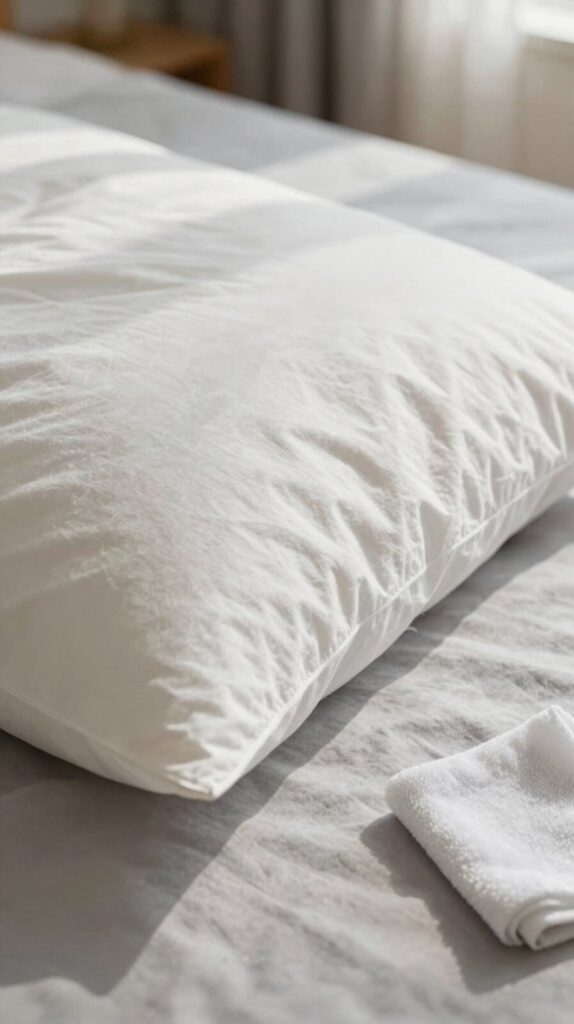

I’ll show you the fastest route: machine washing. First, check your pillow’s care label—it’s your roadmap. For most synthetic and down pillows, I load two together on a gentle cycle with mild detergent and extra rinse. Memory foam? Hand wash only. Toss wet pillows in the dryer on low heat with dryer balls for even drying. This takes hours, not days. But if your pillows are yellowed or stubborn, there’s a more intensive method worth exploring.
Check Your Pillow Label Before Cleaning
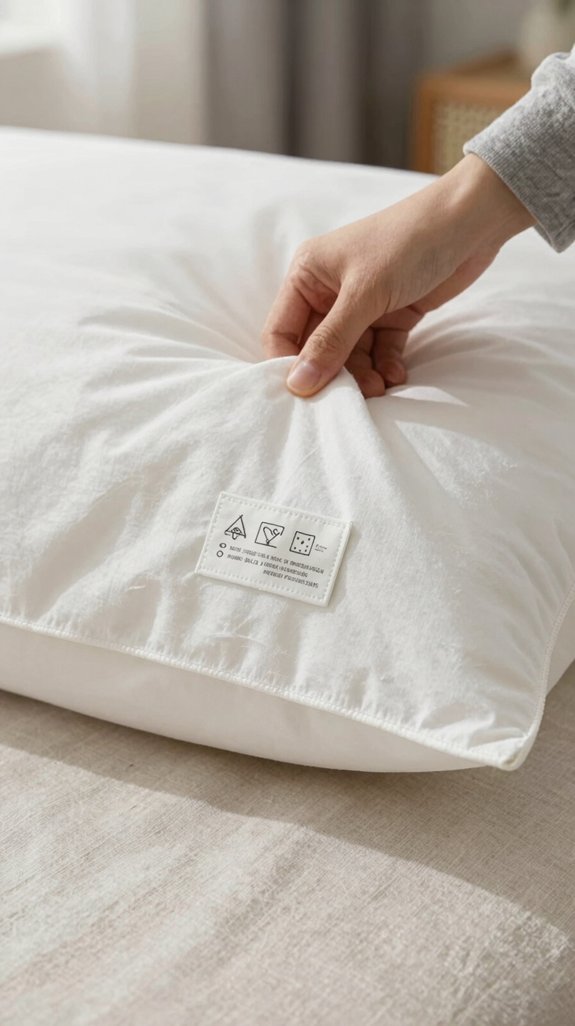
Before you toss those pillows into the washing machine, you’ll want to locate and review the care label—it’s your most important resource for maintaining hygiene, comfort, and longevity.
I’ve found that decoding these symbols prevents costly mistakes and preserves your investment. The label specifies your pillow’s filling type, whether down, polyester, memory foam, or latex, each requiring distinct cleaning approaches.
Temperature guidelines, cycle settings, and approved detergents vary considerably. If your label’s worn, I recommend photographing it for digital symbol decoding. International care labeling symbols defined by ISO 3758 offer a standardized system that simplifies pillow care across different brands and regions.
This preliminary step guarantees you’re implementing manufacturer-endorsed practices that eliminate allergens while protecting structural integrity and extending lifespan effectively. You might also consider pairing your freshly cleaned pillows with ceiling fans with integrated lighting to improve air circulation and create a more comfortable bedroom environment.

Specialty cleaner designed to safely clean down filled apparel and gear. Household detergents can damage the down by leaving behind water attracting residues

Breathable Material: EIUE bed pillow for sleeping goes with a breathable cotton cover and breathable down alternative microfiber, which is friendly to skin and ensures you a comfortable night's sleep.

Superior Comfort: Crafted with premium down-alternative filling, blending 40% 3D fiber and 60% 7D fiber, Sasttie queen size pillows strike a great balance of softness and plump firmness, offering an incredibly plush feel for the ultimate huggable comfort
Choose the Right Method for Your Pillow Type
Different pillow materials demand vastly different cleaning approaches, and I’ve learned that applying the wrong method can compromise your pillow’s structure, comfort, and lifespan.
Memory foam and latex pillows require gentle hand washing in lukewarm water—never machine washing. Feather and down pillows benefit from cold water and gentle machine cycles with extra rinses.
Memory foam and latex pillows require gentle hand washing in lukewarm water, while feather and down pillows benefit from cold water machine cycles.
Synthetic and cotton pillows tolerate warm water on gentle cycles with minimal detergent. I recommend consulting your pillow’s care label first, then selecting your cleaning method accordingly.
This precision prevents damage while ensuring ideal results for your specific pillow investment.

𝐒𝐓𝐀𝐘 𝐂𝐎𝐎𝐋 𝐀𝐋𝐋 𝐍𝐈𝐆𝐇𝐓-𝐈𝐍𝐍𝐎𝐕𝐀𝐓𝐈𝐕𝐄 𝐂𝐎𝐎𝐋𝐈𝐍𝐆 𝐓𝐄𝐂𝐇𝐍𝐎𝐋𝐎𝐆𝐘: Tired of waking up from night sweats or feeling overheated? QUTOOL cooling pillow provide the best sleep problem solution. It's features a double-sided cover: the cooling ice-silky side helps lower surface temperature by about 4-9℉, while the soft side made of 60% Polyester and 40% Rayon derived from Bamboo offers breathable, luxury-down-like comfort. Designed for hot sleepers who want lasting coolness. Perfect for wellness gifts.

𝐒𝐓𝐀𝐘 𝐂𝐎𝐎𝐋 𝐀𝐋𝐋 𝐍𝐈𝐆𝐇𝐓-𝐈𝐍𝐍𝐎𝐕𝐀𝐓𝐈𝐕𝐄 𝐂𝐎𝐎𝐋𝐈𝐍𝐆 𝐓𝐄𝐂𝐇𝐍𝐎𝐋𝐎𝐆𝐘: Tired of waking up from night sweats or feeling overheated? QUTOOL cooling pillow provide the best sleep problem solution. It's features a double-sided cover: the cooling ice-silky side helps lower surface temperature by about 4-9℉, while the soft side made of 60% Polyester and 40% Rayon derived from Bamboo offers breathable, luxury-down-like comfort. Designed for hot sleepers who want lasting coolness. Perfect for wellness gifts.

MEMORY FOAM PILLOW - Includes a premium breathable bed pillow for sleeping made for deep, restorative sleep with a plush memory foam inner and cool to the touch pillow cover. Suitable for standard, queen, or king size beds and smaller.
Machine Wash Your Pillows: The Fastest Approach
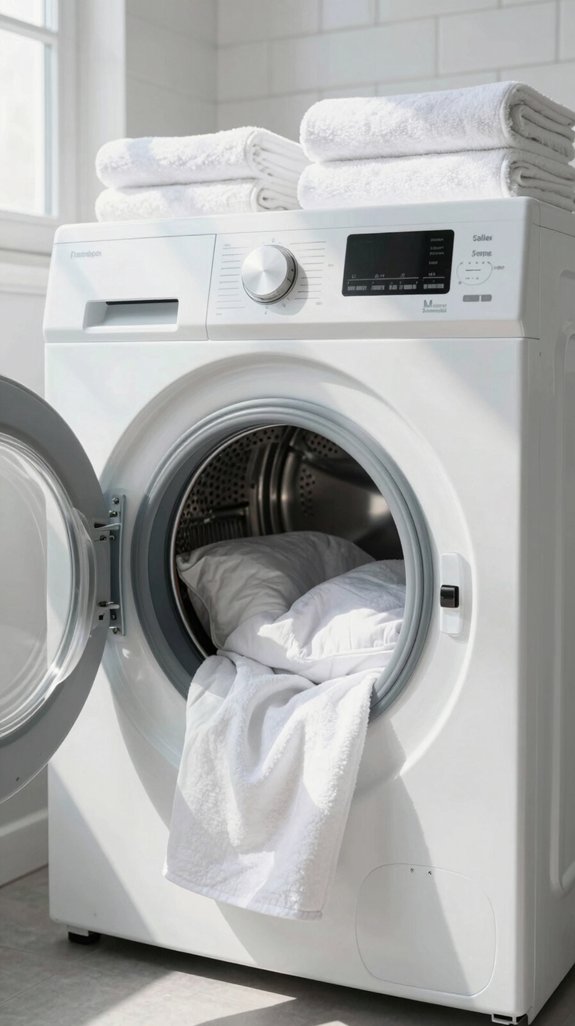
Once you’ve confirmed your pillows can handle machine washing, you’ll find that this method delivers the fastest path to freshly cleaned bedding.
I recommend washing at least two pillows simultaneously to maintain balanced drum rotation. Select a gentle cycle with warm water, adding an extra rinse to eliminate detergent residue from absorbent materials. Use mild, natural detergent exclusively. For enhanced results, consider pairing your pillow wash with curtain cleaning products to refresh your entire bedroom’s soft furnishings at once.
Immediately transfer wet pillows to your dryer on low heat, incorporating dryer balls to restore loft and guarantee even drying. This streamlined approach efficiently eliminates dust mites and bacteria while preserving your pillow’s structural integrity.

Easy Pour Bottle: You asked and we listened! Our re-designed 32-ounce bottle of washing detergent now has an easy-pour, drain-back spout with a convenient measuring cap. With only a tablespoon needed to hand wash your delicate items, this 32oz bottle of Heritage Park detergent can last up to 64 washes.

Refill - Reuse - Recycle. Our new 64oz. Refill Pouch uses 85% less plastic and can refill your 32oz bottle 2 times! With only a tablespoon or less needed to hand wash your delicate items, this 64oz Pouch can last up to 128 washes.

Woolite Gentle Cycle with Color Renew smooths fibers, removes pilling & fuzz, and revives colors
Hand Wash Delicate Pillows Safely
While machine washing works wonderfully for standard pillows, delicate materials like silk, down, or vintage fabrics demand a gentler hand-washing approach.
I’ll guide you through creating a mild detergent solution in lukewarm water, then submerging your pillow to gently saturate and clean it. I squeeze the soapy water through the fabric repeatedly, focusing on stained areas without wringing.
After soaking ten to fifteen minutes, I rinse thoroughly—typically three cycles—until water runs clear. Finally, I air dry flat in sunlight, fluffing periodically to maintain loft and prevent clumping.


SUPERIOR QUALITY WOOL – 100% New Zealand premium wool with no synthetic fillers, rolled into tight, extra-large balls and felted for a natural, long lasting product.

【Premium Wool】 Handmade from New Zealand wool, Dryer balls make them a perfect alternative to plastic dryer ball fabric softeners. They provide a natural and sustainable solution to soften clothes while being gentle on sensitive skin for a comfortable soft feel.
Deep Clean With the Pillow Stripping Technique
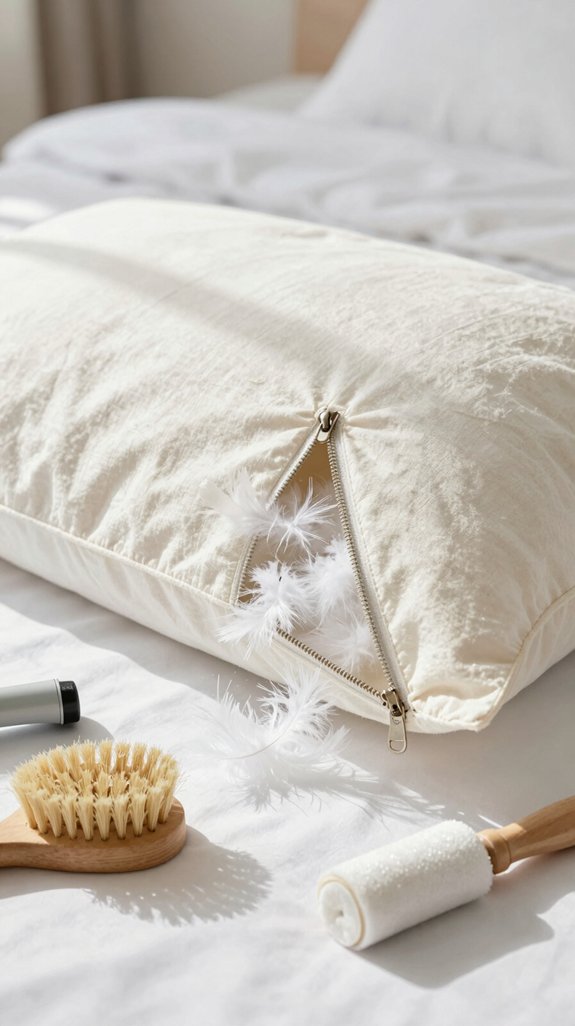
Hand washing addresses delicate fabrics beautifully, but it can’t penetrate the deep, stubborn buildup that accumulates in pillows over months or years.
I recommend pillow stripping—a transformative deep-cleaning method that targets embedded sweat, oils, allergens, and detergent residue. You’ll combine baking soda, borax, and liquid laundry detergent in the hottest water available, then submerge pillows for at least four hours.
Periodically agitate them to maximize ingredient penetration. After soaking, wash without additional detergent on a regular cycle with double-rinse, then dry with dryer balls.
This innovative technique restores pillows to their original pristine condition.

Restore loft and warmth while removing dirt and grime on down-filled jackets, vests, sleeping bags and pillows with this gentle down wash detergent

PEODUCT DATE AND PACKAGE: Every order include two duck feather down pillows, Standard Size is 20×26 inch.Two feather down pillows are vacuum packed and rolled in a PE bag for shipping purposes.

Specialty cleaner designed to safely clean down filled apparel and gear. Household detergents can damage the down by leaving behind water attracting residues
Use Baking Soda to Eliminate Odors
Because baking soda absorbs excess moisture and neutralizes both acidic and basic odors—rather than masking them like conventional air fresheners—it’s the ideal choice for restoring your pillows’ freshness.
I sprinkle baking soda directly across pillow surfaces, allowing it to penetrate fabric layers for two hours. This approach eliminates odor causes while reducing the moisture conditions bacteria need to thrive.
For enhanced results, I blend equal parts baking soda and cornstarch, maximizing dual-action benefits.
After settling, I thoroughly vacuum the entire surface, revealing pillows that are genuinely clean, dry, and refreshed—not simply covered in fragrance. For bedroom spaces seeking comprehensive organization and functionality, consider pairing this cleaning method with motorized TV lift cabinets to maximize both cleanliness and storage efficiency.
𝐒𝐓𝐀𝐘 𝐂𝐎𝐎𝐋 𝐀𝐋𝐋 𝐍𝐈𝐆𝐇𝐓-𝐈𝐍𝐍𝐎𝐕𝐀𝐓𝐈𝐕𝐄 𝐂𝐎𝐎𝐋𝐈𝐍𝐆 𝐓𝐄𝐂𝐇𝐍𝐎𝐋𝐎𝐆𝐘: Tired of waking up from night sweats or feeling overheated? QUTOOL cooling pillow provide the best sleep problem solution. It's features a double-sided cover: the cooling ice-silky side helps lower surface temperature by about 4-9℉, while the soft side made of 60% Polyester and 40% Rayon derived from Bamboo offers breathable, luxury-down-like comfort. Designed for hot sleepers who want lasting coolness. Perfect for wellness gifts.

Ideal Size: note that please confirm your style is the same as ours before purchasing, our cervical pillow case measures approximately 21.65 x 12.4 x 4.33 inches, expertly designed to fit a butterfly shape inner core of 57 cm in length, 33 cm in width, 13 cm in height; It's worth noting that our case only includes one pillowcase without an inner core; Our products are not compatible with other special shaped pillows or thickened pillows

PINK MEMORY FOAM PILLOW – Includes one 16" × 24" foam memory pillow made with high-quality foam that contours to your head and neck. Soft yet supportive design gives you a solid base for better rest and comfort in the bedroom.
Remove Yellow Stains From Sweat and Oils
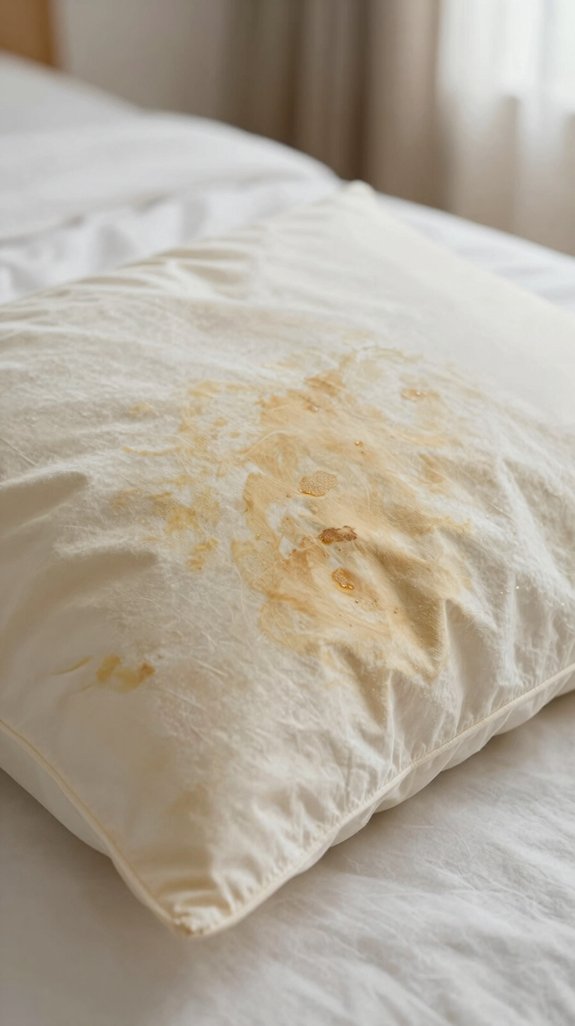
Over time, yellow stains from sweat and body oils accumulate on pillow surfaces, creating discoloration that regular vacuuming can’t address.
I’ve found that a 3% hydrogen peroxide solution diluted equally with water effectively removes these stubborn marks. The mild bleaching properties lighten discoloration without damaging delicate fabrics.
Before treating visible areas, I always test the solution on hidden pillow sections to confirm compatibility.
I spray the mixture directly onto stains and work it in with a damp cloth, witnessing visible lifting. The hydrogen peroxide’s disinfectant properties simultaneously eliminate bacteria contributing to staining, leaving pillows refreshed and restored.
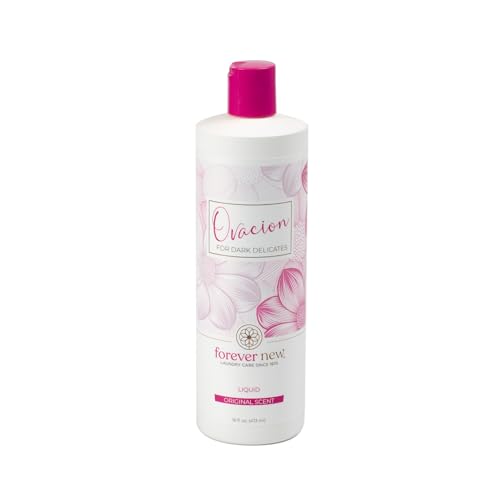
GENTLE CLEAN: Gentle laundry detergent liquid for machine or hand wash; delicate laundry detergent that cleans thoroughly and leaves no residue; helps maintain stretch and softness

【Sweet Dreams in Satin】Experience the pure luxury of butter-smooth satin. More breathable than traditional cotton, this satin toddler pillowcase helps maintain a comfortable sleep temperature, creating a soothing sleep environment that keeps your little one cozy all night long
【Sweet Dreams in Satin】Experience the pure luxury of butter-smooth satin. More breathable than traditional cotton, this satin toddler pillowcase helps maintain a comfortable sleep temperature, creating a soothing sleep environment that keeps your little one cozy all night long
Tackle Stubborn Odors Permanently
While yellow stains respond well to hydrogen peroxide treatment, persistent odors often require a multi-layered approach to fully eliminate.
I’ve found that combining white vinegar with baking soda during your wash cycle creates a powerful odor-neutralizing effect that targets deep-seated smells in fabric threads. Adding a splash of vinegar also acts as a natural fabric softener, enhancing freshness.
For stubborn cases, I spray Tide Ultra Oxy generously on problem areas before washing. This thorough strategy—pre-treatment, enzymatic action, and strategic additive layering—ensures your pillows emerge genuinely odor-free, not merely masked.
Using specialized cleaning brushes can help work these treatments deeper into the pillow fabric during the pre-treatment phase, ensuring maximum penetration of odor-eliminating solutions.

🐾 PREMIUM QUALITY WOOL: Made from 100% pure New Zealand wool, our reusable wool dryer balls is your eco-friendly solution to laundry care, as it replaces dryer sheets & liquid fabric softeners. Each set includes six extra-large, 3-inch dryer balls, a reusable drawstring cotton bag and an instructions manual
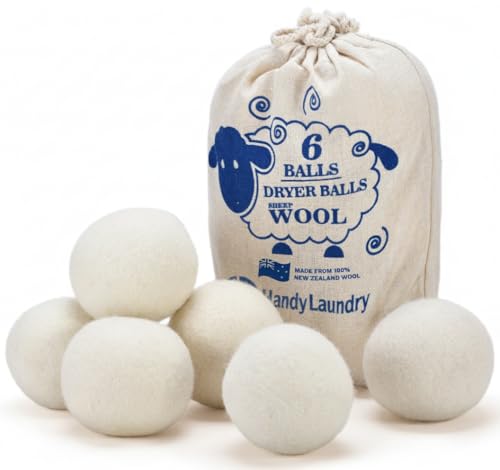
SUPERIOR QUALITY WOOL: 100% New Zealand premium wool with no synthetic fillers, rolled into tight, extra-large balls and felted for a natural, long lasting product
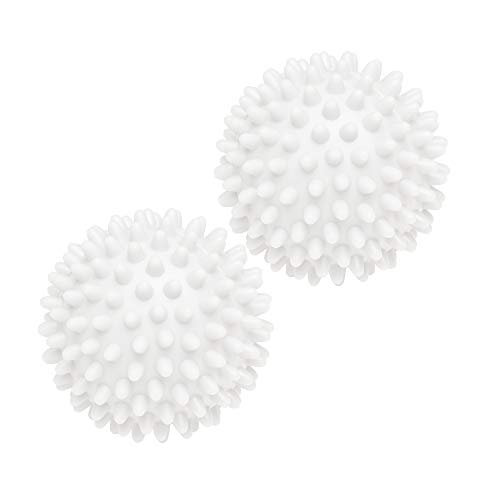
Dry Your Pillows Without Damage
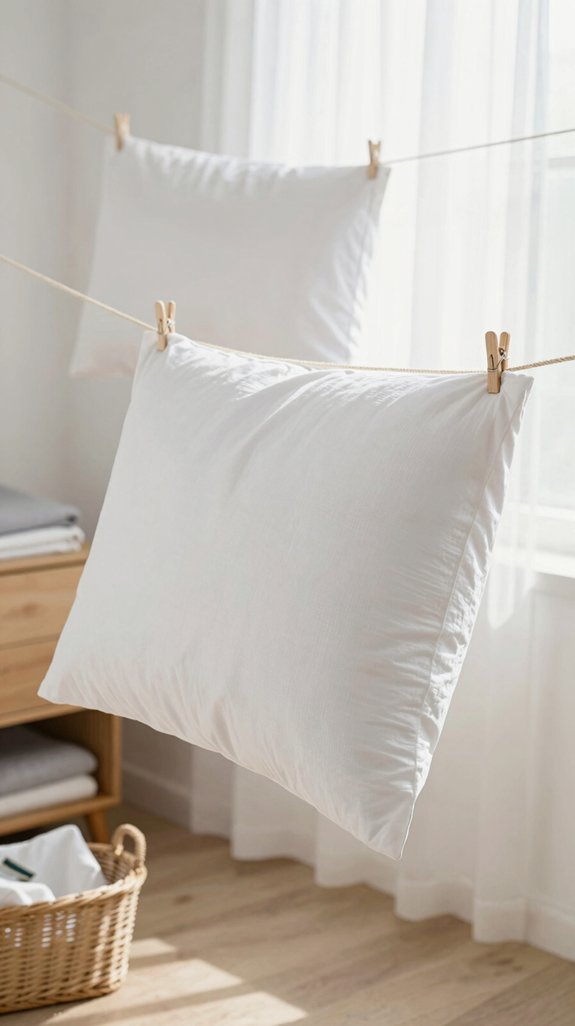
How should you dry pillows without compromising their structure and longevity?
I recommend using low heat or air-dry settings exclusively—high temperatures scorch delicate fills. For polyester and down pillows, I run multiple 50-minute cycles with dryer balls to prevent clustering.
I check dampness between cycles and balance the load with a bath towel for even drying. I manually fluff pillows beforehand to avoid lumps.
I add a fabric softener sheet for freshness, then remove pillows promptly upon completion.
This methodical approach preserves integrity while restoring loft and eliminating dust mites annually. For additional freshness, consider pairing this process with effective cleaning solutions designed specifically for household fabrics to maintain overall pillow hygiene.

Luxury Hotel Pillow Experience: Transform your bedroom with premium hotel-quality pillows crafted from 100% breathable cotton and filled with down alternative synthetic fiber; soft yet supportive comfort tailored for side and back sleepers

DURABLE MATERIAL: The composition notebook couch pillow covers is made of machine washable Polyester. Which has better visual experience and Polyester texture compared to traditional linen texture. Our composition notebook decorative pillow covers are of good workmanship. The pillow cases are tightly sewn without loose threads. Hard fabric makes it easier to maintain the plump shape of the pillow.

Unmatched Comfort: The MAGS jeans might feel like sweatpants, but they deliver the true style of premium denim. These super dark gray jeans combine comfort with undeniable swag.
Avoid Common Mistakes That Ruin Pillows
Since most pillow damage stems from preventable washing errors, I’ll walk you through the critical mistakes that compromise your pillows’ structure, comfort, and lifespan.
First, identify your pillow type—memory foam requires spot cleaning, while latex demands shredded variants. Always load two pillows together to prevent machine imbalance.
Skip vinegar and lemon juice; they degrade fabrics despite viral trends. Instead, use mild detergent sparingly. Opt for gentle cycles with cool water, avoiding high temperatures that damage down filling.
Finally, choose breathable pillowcases changed weekly to minimize body oil accumulation and maintain ideal loft.

𝐄𝐍𝐇𝐀𝐍𝐂𝐄𝐃 𝐂𝐎𝐎𝐋𝐈𝐍𝐆 𝐏𝐈𝐋𝐋𝐎𝐖𝐒: Both sides are designed with cooling silky ice fabric, QUTOOL cooling gel pillows for sleeping are perfect for a restful night's sleep. Say goodbye to overheating and night sweats with our innovative cooling technology. It offers the plush feel of a down alternative pillow, but with superior, lasting support. Perfect for wellness gifts.

MEMORY FOAM PILLOW - Includes a premium breathable bed pillow for sleeping made for deep, restorative sleep with a plush memory foam inner and cool to the touch pillow cover. Suitable for standard, queen, or king size beds and smaller.

Available in Multiple Colors: See All Buying Options to choose Black for a classic finish. Choose Grey for a versatile neutral look or Blue for a distinctive style that is easy to identify among your travel gear. Browse the available color swatches to find your preferred option. Every color offers the same flexible shape, memory foam support, soft fleece cover, and convenient snap closure.
When to Strip Instead of Regular Wash
Regular washing keeps your pillows fresh, but it won’t eliminate the deep-seated buildup that accumulates over months of use.
I recommend stripping when regular cycles fail to remove persistent stains and odors. This intensive method uses hot water, baking soda, and borax for a 24-hour soak, targeting dust mites, bacteria, and trapped oils regular detergent misses.
You’ll strip every six months for ideal cleanliness, or whenever discoloration appears despite routine washing.
The process revitalizes pillows’ appearance and extends their lifespan beyond typical replacement cycles, making it worth the investment.
How Often Should You Clean Your Pillows?
Your pillowcase needs washing at least once weekly—ideally every seven days—to prevent the accumulation of oil, sweat, bacteria, and dead skin cells that build up during sleep.
The National Sleep Foundation recommends this frequency based on our 49-60 hours of weekly bed contact.
For pillows themselves, I’d wash them every three to six months, adjusting based on material.
Polyester pillows handle 2-3 yearly washes, while down and fiberfill benefit from 3-4 cleanings annually.
Foam pillows require gentler annual spot cleaning.
Using protective covers and hypoallergenic cases extends pillow life while maintaining excellent hygiene standards for your sleeping environment.
Quick Maintenance Tips Between Deep Cleans
While washing pillows every three to six months keeps them hygienically sound, what happens in the weeks between those deep cleans matters just as much.
I’ve found that daily fluffing restores loft and prevents moisture accumulation, while airing pillows in sunlight naturally combats odors.
Every two to four weeks, I run them through the dryer for fifteen minutes to reduce internal moisture effectively. For immediate freshness, baking soda sprinkled on the surface absorbs bacteria and smells without water usage.
Investing in pillow protectors—changed weekly—shields against allergens while keeping pillows feeling newer longer. If you have pets, consider using pet safe cleaning solutions when spot-cleaning pillow covers to maintain a healthy sleep environment for both you and your furry companions.
Signs Your Pillows Need Professional Cleaning or Replacement
Even with diligent maintenance between deep cleans, pillows don’t last forever—and several telltale signs indicate when they’ve reached the end of their lifespan or require professional intervention.
Watch for persistent odors that withstand washing, visible lumps indicating deteriorated fill, or allergic reactions suggesting dust mite proliferation. If your foam has hardened or flattened permanently, support’s compromised.
Synthetic pillows typically need replacing every 1-2 years, foam every 2-3 years, and down every 5-10 years.
When home cleaning fails and odors, discoloration, or health concerns persist, professional cleaning or replacement becomes essential for peak sleep quality and wellness.
Frequently Asked Questions
Can I Wash Pillows With Other Laundry, or Should I Wash Separately?
I recommend washing pillows separately to protect them and guarantee peak cleanliness. Mixing pillows with other laundry risks damage, uneven cleaning, and compromises load balance—critical for maintaining pillow integrity and longevity.
What Temperature Water Is Safe for Washing Different Pillow Types?
I’ve discovered that like ancient manuscripts requiring careful handling, today’s pillows demand precise temperatures: cotton and synthetics tolerate 60°C, down permits 40°C maximum, memory foam needs room temperature hand washing exclusively, while silk demands delicate 30°C care.
How Long Does It Take for Pillows to Fully Dry Completely?
I recommend running 2-3 low-heat cycles spanning several hours for complete drying. You’ll want to manually assess interior moisture between cycles, as sensors detect only surface dampness. Tennis balls accelerate this process considerably.
Is It Safe to Use Bleach on White Pillows With Stains?
I’d recommend avoiding chlorine bleach; it weakens fibers and paradoxically yellows fabrics. Instead, I’ve found oxygen bleach delivers 40% superior whitening power while preserving your pillows’ integrity and longevity beautifully.
Can Dry Cleaning Be Used as an Alternative to Home Washing?
I’ve found dry cleaning offers a compelling alternative to home washing—it’s particularly advantageous when you’re uncertain about fabric compatibility. You’ll enjoy professional-grade results without risking damage from agitation or improper drying techniques that home methods demand.