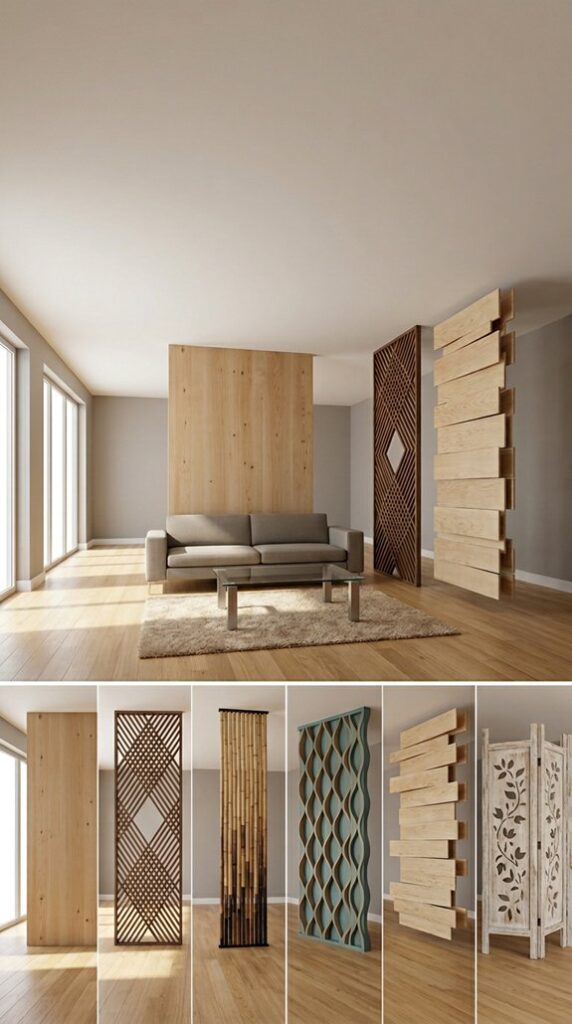
I’ve rounded up 16 wooden partition ideas that instantly reshape a living room while staying budget‑friendly and eco‑conscious. Choose from sleek slatted screens for bright, airy spaces, reclaimed‑wood dividers for rustic charm, or fold‑away panels that slide into a recessed wall for flexible open‑plan living. You can also opt for barn‑style sliding boards, built‑in LED lighting, bamboo‑style eco panels, custom‑milled screens, or hybrid wood‑and‑glass dividers. Keep reading to discover how each option balances privacy, light, and style.
How to Choose the Right Wooden Partition for Your Living Room
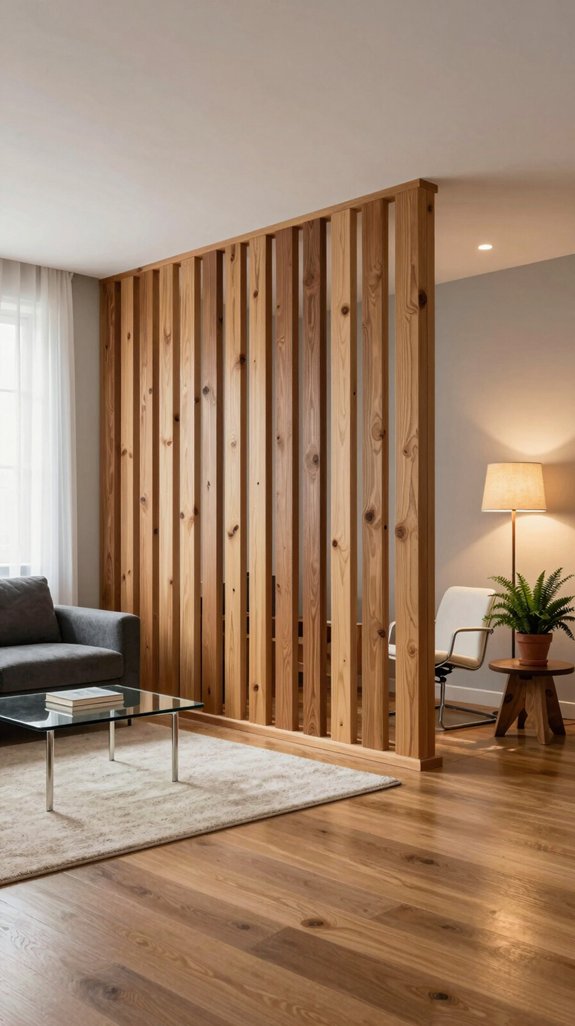
Ever wondered how to pick the perfect wooden partition for your living room? I break it down: first, map the space. Measure width, height, and traffic flow; a snug fit prevents bottlenecks.
Next, choose wood species. Bamboo offers eco‑modern lightness, walnut delivers depth, while reclaimed pine adds character.
Then, decide on panel style—slatted, solid, or perforated—each manipulates sightlines and acoustics differently. I prioritize modularity; movable sections let you reconfigure on demand, aligning with smart‑home routines.
Finish matters too: matte matte polyurethane resists wear, while a brushed oil accentuates grain.
Finally, test lighting. Natural daylight interacts with wood tone; a warm hue can soften harsh glare.
Follow these steps, and your partition becomes a functional art piece, not just a divider.

Classic Room Partition: Designed with four paulownia wood panels, this privacy wall features a stylish louvered slat design, creating a private space in your living room or office

STYLE: Introducing the Mahanadi screen and room divider. Like the Mahanadi river, this design moves north to south and east to west, creating a masterpiece. Crowned by an overall arched top, this new design will add beauty and intrigue in your home. The screen has 4 panels and measures 72 x 80 inches. Each panel measures 72 inches high x 20 inches wide. All panels are 0.75 inches thick and the screen weighs approximately 45 lbs.
Minimalist Wooden Slat Screens for Light‑Filled Spaces
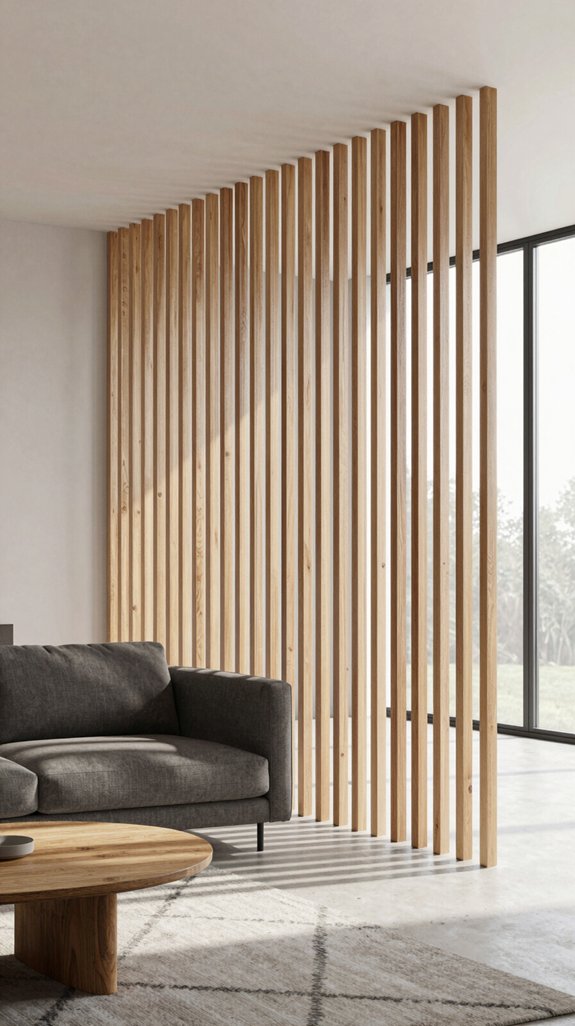
I’ve already mapped the space and chosen the wood, so now I’m focusing on minimalist slat screens that let light flood in. I space vertical slats 2 inches wide, spaced 1 inch apart, to create a breathable barrier that still defines zones.
The slats are brushed walnut, preserving natural grain while delivering a sleek, uniform finish. I mount them on a hidden steel track, allowing a smooth slide that opens the room entirely when desired.
Integrated LED strips along the top edge add a subtle glow at night without compromising daylight. I keep the frame thin—just ¼ inch—to maximize transparency.
This design balances privacy and openness, delivering a contemporary, airy aesthetic that feels both functional and sculpturally light.

Real Wood Wall Planks: 100% Real Barn Wood Wall Planks With Natural Knots and Dents, the Surface Of Wood Shiplap Planks Is Processed With High Temperature Carbonization, the Real Wood Wall Shiplap Planks Is Non-Toxic, Sterilized and More Safe For Children, Voc Free Process Ensures These Stick on Shiplap Planks For Walls Are Safe To Use In Home

Privacy & Space Division: This wood room divider serves as a reliable privacy screen, creating independent spaces without permanent installation. Each panel measures 66.9"" H x 15.75"" W, perfect for defining a quiet workspace in your home office, a private dressing area in the bedroom, or a discreet partition in restaurants

ECLECTIC ROOM DIVIDER AND FOLDING PRIVACY SCREEN: Designed with a free-spirited charm where vibrant hues, eye-catching patterns, and whimsical accents transform your space and showcase your personality
Reclaimed‑Wood Room Dividers That Add Rustic Charm
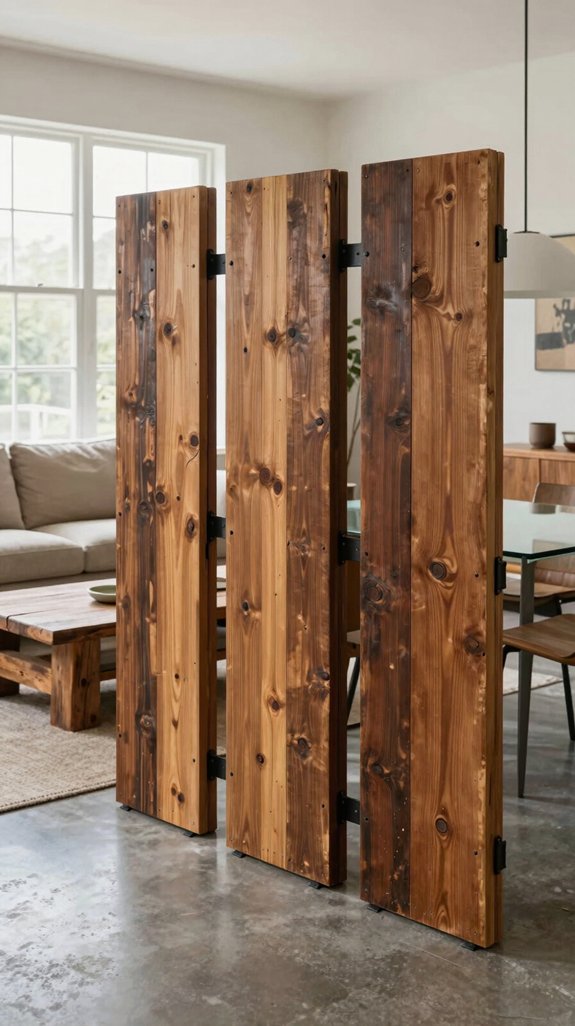
A handful of reclaimed‑wood planks can instantly give a room divider a rugged, lived‑in vibe while still feeling modern.
I source weathered beams, salvaged pallets, and drift‑wood slats, then treat them with clear oil to preserve texture.
I arrange the pieces in overlapping layers, creating a semi‑transparent screen that filters light and defines space without blocking flow.
The natural knots and grain become visual accents, while the irregular edges add an avant‑garde edge.
I integrate hidden brackets for easy mounting, and I experiment with reclaimed metal hardware to reinforce the industrial aesthetic.
decorative screens can also serve as functional art, subtly guiding traffic while adding visual interest.

【Foldable and Portable Room Separators Divider Wall, Wide-Apply for Various Scenes】Folds flat for compact storage, this 4 panel room divider can be widely used for bedroom, living room, dining room, dressing room, balacony, office, resturant ... .

Instant Setup & Space-Saving Storage: No assembly required - simply unfold this freestanding 4-panel bamboo room divider. Expands to 67"H x 61.4"W (each panel: 15.35"W) for large spaces. Folds flat in seconds when not in use, making it ideal for apartments, studios, or seasonal room adjustments.

Easy Installation:You can have these bamboo blinds in no time! They're designed for straightforward DIY installation and include all necessary hardware to fit most standard windows and doors. Please note: While suitable for both indoor and outdoor use, to maintain their durability and appearance, the window blinds should be protected from direct exposure to water.
Fold‑Away Wooden Panels for Flexible Open‑Plan Layouts
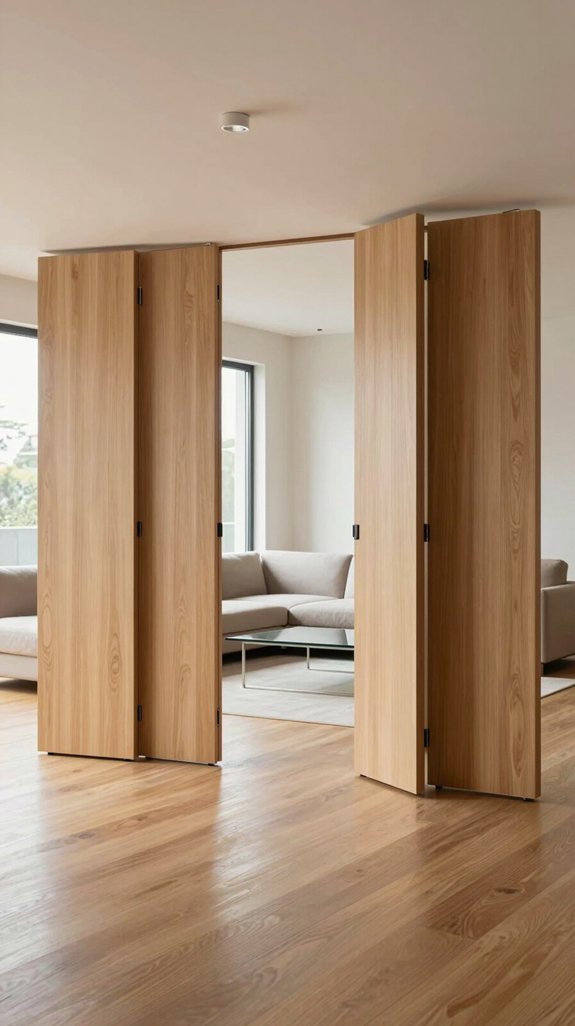
When you need instant privacy without sacrificing openness, I install fold‑away wooden panels that slide into a recessed wall cavity and pop out on demand.
I choose lightweight, engineered hardwood with a matte finish, then attach low‑profile hinges and magnetic catches for seamless operation. The panels fold flat against the wall, preserving sightlines, yet when closed they create a cozy nook for work or relaxation.
I integrate hidden tracks that glide silently, and I pair the wood with subtle LED strips for ambient lighting.
Because the system is modular, I can add or remove panels as the space evolves, keeping the layout fluid and the aesthetic sleek.
This solution delivers flexibility, style, and a tech‑savvy edge to any open‑plan living room.
wall‑mounted cabinets are also a popular choice for modern storage, offering sleek, space‑saving organization that complements the minimalist aesthetic.

NATURAL SPRUCE WOOD: Spruce wood surface texture is beautiful, the surface of the wood has a glossy feeling. It is good material with a delicate texture and natural fragrance, not easy to be rotten, but also has good toughness, flexibility, durability, sound insulation, heat insulation, and deodorization. Glue and paint coloring performance is good, not split when nailing.

NATURAL SPRUCE WOOD: Spruce wood surface texture is beautiful, the surface of the wood has a glossy feeling. It is good material with a delicate texture and natural fragrance, not easy to be rotten, but also has good toughness, flexibility, durability, sound insulation, heat insulation, and deodorization. Glue and paint coloring performance is good, not split when nailing.

MDF BARN DOOR: Sturdy, durable and structurally stable. MDF wood board is made by hot pressing technology, and the tight bond between the fibers makes MDF board have excellent flexural strength and rigidity, and can effectively prevent warping and cracking.
Sliding Barn‑Style Wooden Partitions for a Classic Look

Barn‑style sliding wooden partitions bring rustic charm and functional flexibility to any living room.
I love how the reclaimed‑plank panels glide on hidden tracks, letting me reconfigure space in seconds while preserving a timeless farmhouse vibe.
The hardware is low‑profile, matte‑black or brushed‑brass, and integrates seamlessly with smart‑home controllers for automated opening.
I choose tapered rails that hide the cut‑outs, creating a clean silhouette that feels both classic and avant‑garde.
The panels can be painted, stained, or left raw, letting me experiment with texture and color without sacrificing structural integrity.
By pairing the partitions with ambient lighting strips, I add a contemporary glow that highlights the wood grain.
This solution delivers heritage aesthetics, modern convenience, and endless design possibilities.
Consider using vertical wall‑mounted plant shelves to turn the partition into a living art display.
Add a touch of greenery with modular plant shelving for a fresh, organic vibe.

MODULAR ROOM DIVIDER STRUCTURE:Designed with a 3-panel folding configuration and detachable connection design, this room divider allows flexible layout adjustment and customizable privacy separation for apartments, bedrooms, and shared spaces.

3, 4, 5, 6 or 8 panels, black, honey, natural, walnut, white or rosewood

Classic Room Partition: Designed with five paulownia wood panels, this privacy wall features a stylish louvered slat design, creating a private space in your living room or office
Floating Wooden Shelf Walls: Storage + Divider
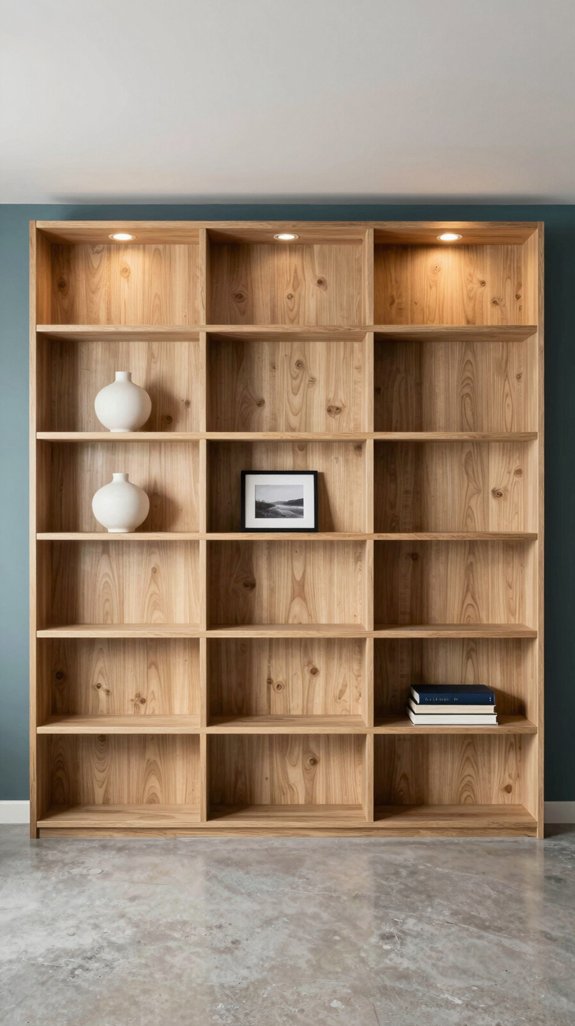
If I want a living‑room that both stores and separates, I install a floating wooden shelf wall. I choose sleek, reclaimed planks, anchor them with hidden brackets, and let the shelves appear to hover.
The design doubles as a storage grid—books, plants, tech—while carving a clean visual line between zones. I keep the depth under 12 inches, preserving floor space and maintaining an airy feel.
Integrated LED strips add ambient glow, turning the wall into a functional art piece. I stagger the shelves for asymmetrical rhythm, avoiding monotony.
The result is a minimalist, modular divider that adapts to changing needs, delivering both practicality and contemporary style in a single, elegant installation. Floating shelves are ideal for minimalist wall storage and can transform any space with sleek, functional design.

FRENCH COUNTRY ROOM DIVIDER AND FOLDING PRIVACY SCREEN: Designed with ornate details, soft hues, and timeless romance to create an elevated wholesome atmosphere

Premium Durable Pine Wood & Rattan Design Crafted from high-density solid pine wood (not common paulownia), our folding room divider offers superior durability and wear resistance. The natural wood grain and rattan weaving create a boho-style texture, while the warm, neutral tones deliver a cozy, organic touch to any space. This is a freestanding partition screen built to last

Versatile Pegboard Display: Each panel features a pegboard section for hanging tools, crafts, jewelry and accessories. Perfect for retail merchandising, craft shows, workshops, or home organization.
Geometric Laser‑Cut Wood Screens for Modern Drama
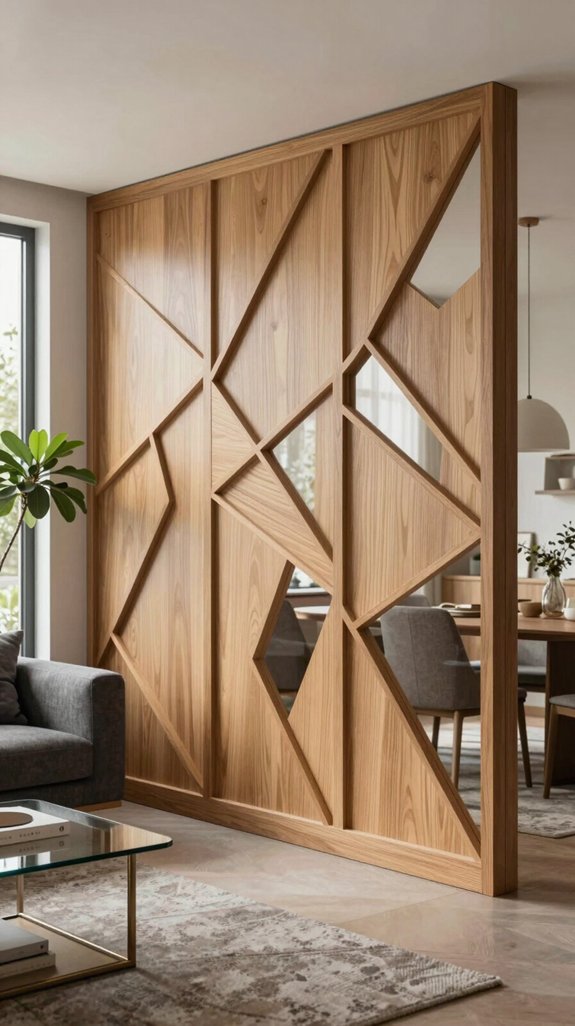
I love how a laser‑cut wood screen can instantly inject drama into a modern living room; the precise geometry creates a striking visual barrier while still letting light filter through.
I choose bold, interlocking hexagons or angular triangles that echo contemporary architecture, then let the CNC router carve clean, repeatable patterns. The resulting panels act as semi‑transparent walls, defining zones without sacrificing openness.
I pair dark walnut with matte black accents for a high‑contrast look, or opt for light oak to soften the effect. Because the design is modular, I can rearrange pieces to adapt to changing layouts or moods.
This approach delivers instant visual impact, tactile interest, and a tech‑savvy aesthetic that feels both artistic and functional.

Handcrafted Eco-Friendly Design: Our room divider is meticulously handcrafted by skilled artisans using 100% natural bamboo, including the frame. This ensures not only exceptional durability but also a truly eco-friendly and pollution-free product. The natural bamboo retains its rustic charm while providing a timeless aesthetic that complements any decor.

Natural Bamboo Handcrafted: Homscreener bamboo room divider is fully constructed with solid natural bamboo, including the entire frame, handcrafted by artisans with over 10 years of professional experience. 100% bamboo raw materials deliver non-toxic, pollution-free indoor use. Tightly woven bamboo panel block nearly 90% light for indoor privacy. Ideal for open-concept living rooms, bedrooms, offices, art studios and restaurant.Unfolded Size: 67''H x 70.8''W

Zero Assembly, Ready in Seconds: This 6 panel bamboo room divider arrives fully assembled and folds open instantly - no tools, screws, or setup time required. Unfold it right out of the box and position your new privacy screen wherever you need it. Standing 5.6 ft tall and expanding to 94.5 inches wide, this folding privacy screen creates an instant architectural feature in any room without a single step of installation.
Tall Wooden Bookshelves as Functional Room Separators
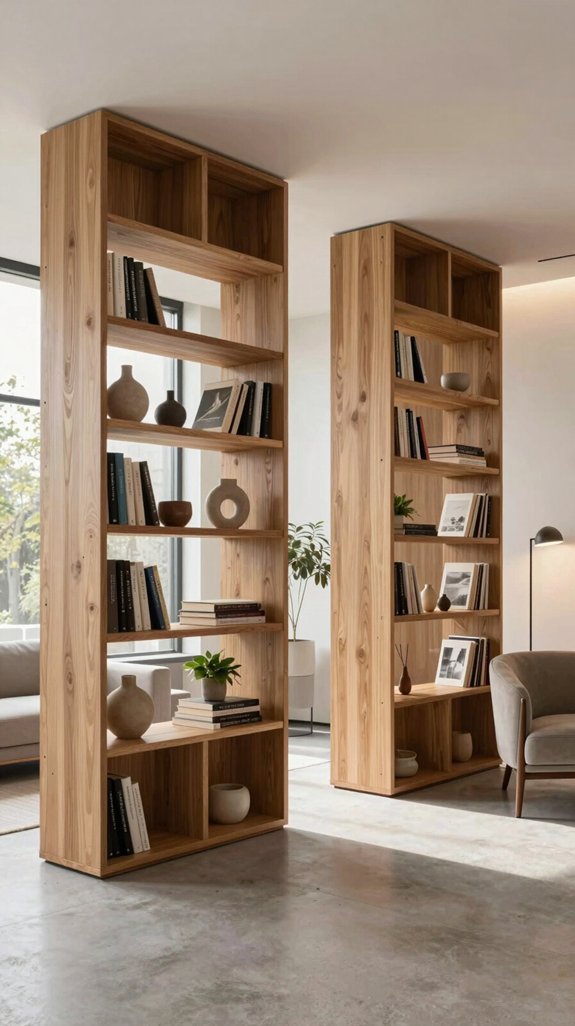
When space feels cramped, I reach for a tall wooden bookshelf that doubles as a room separator. I choose slim, floor‑to‑ceiling panels with clean lines, letting the grain act as a visual anchor while preserving sightlines.
Adjustable shelves let me showcase art, tech, or plants, turning storage into statement. I integrate recessed lighting to highlight each tier, adding depth without clutter. Modular units let me reconfigure the layout on the fly, catering to work‑from‑home or entertaining modes.
I favor sustainably sourced hardwoods finished in matte black or natural oak for a contemporary vibe. The result is a sleek, functional divider that organizes, stylizes, and subtly defines zones without sacrificing openness. Freestanding plant stands add a touch of greenery while maintaining open flow.

MDF BARN DOOR: Sturdy, durable and structurally stable. MDF wood board is made by hot pressing technology, and the tight bond between the fibers makes MDF board have excellent flexural strength and rigidity, and can effectively prevent warping and cracking.

Spruce Wood: Spruce wood is good material with a delicate texture and good fragrance, not easy to be rotten, but also has good toughness, flexibility, durability, sound insulation, heat insulation, and deodorization.Spruce wood surface texture is beautiful, the surface of the wood has a glossy feeling

Unfinished Barn Door is Made of 100% Natural Spruce. Surface is unfinished and ready to be stained. Unfinished door can be stained or painted to desired finish/color.
Curved Wooden Screens for Soft, Organic Flow
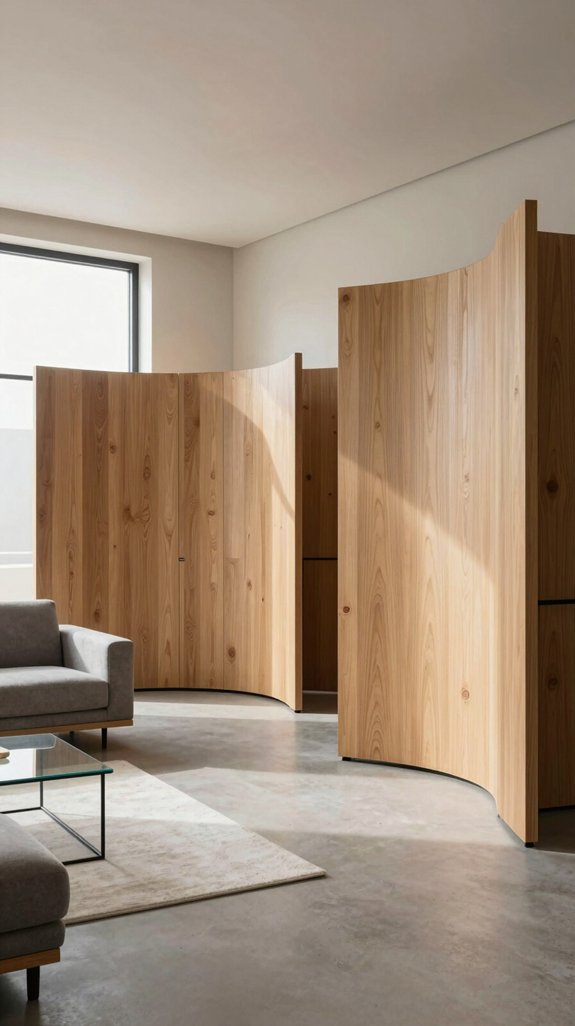
Because I love a gentle, flowing aesthetic, I opt for curved wooden screens that soften a room’s edges while keeping the space airy.
I choose thin, laminated veneers that bend without sacrificing strength, letting light glide across the curve. The organic arc creates a visual river, guiding the eye and inviting movement.
I pair matte finishes with subtle grain patterns to maintain a sleek, modern vibe.
Placement matters: I slot the screen between sofa and dining zone, establishing a fluid shift rather than a hard barrier.
I also integrate hidden LED strips along the inner edge for ambient glow, enhancing the curve’s depth.
This design delivers elegance, flexibility, and a fresh, sculptural presence that transforms any living area.
Choosing the right armchair can further enhance the comfort and style of the space.

Japanese-inspired room divider for creating privacy in small spaces, lightweight but stable frame made of wood with black finish

STYLE: Rajasthan - Antique Brown Handcrafted Wood Room Divider Screen. The screen has 4 panels each measuring 72 x 20 inches for an overall measurement of 72x80 Inches. All panels are .75 inches thick. The total weight is 50 pounds. Only in Rajasthan, the land of kings, could such a magnificently and intricate design be made in this screen.
DIY Pallet Walls: Budget‑Friendly Wooden Partitions
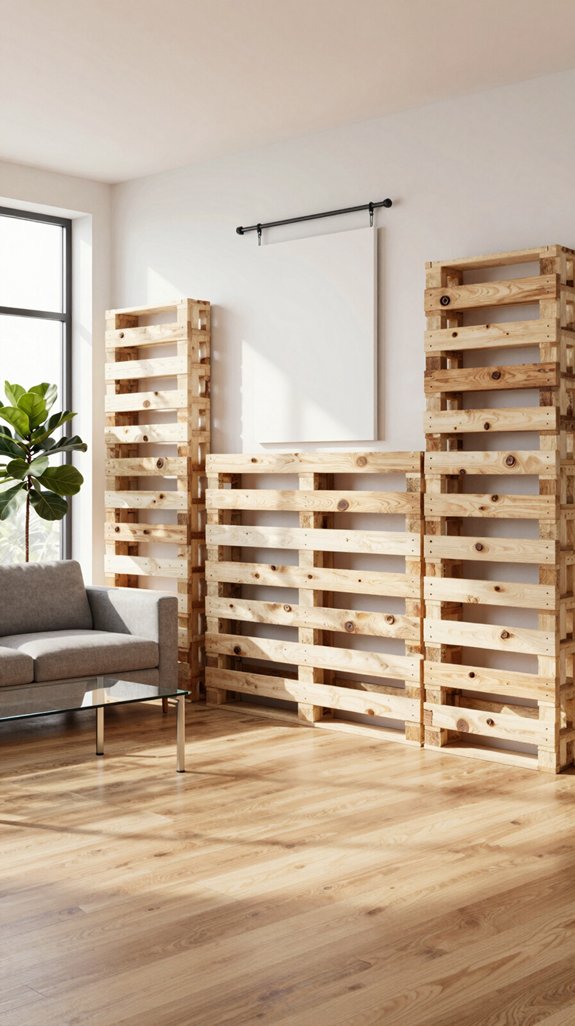
Curved screens give a room a fluid, airy feel, but if you’re hunting for a budget‑friendly alternative, pallet walls deliver the same sculptural vibe without the price tag.
I start by sourcing clean, reclaimed pallets—look for uniform slats and minimal nails. After sanding, I arrange the boards in a staggered pattern, creating depth and visual interest.
I attach the panels with hidden brackets, allowing easy removal for future reconfiguration. A quick coat of matte white or reclaimed wood stain unifies the look while preserving texture.
I add LED strip lighting behind the gaps for ambient glow, turning the partition into a functional art piece. This DIY approach saves money, reduces waste, and injects a raw, modern edge into any living‑room layout.
Chic Decorative Stools can also complement the space, providing stylish seating that enhances the overall aesthetic.

EASY TO INSTALL: 3/8'' Thickness & Various Lengths Ensures Sturdy Boards For A Lifetime Of Enjoyment

Lightweight & Installation-free:The partition room dividers can be used when unfolded, with two-way metal hinges at the panel links,Svimi room divider is made of paulownia wood, which is about 40% lighter than common wood. This material advantage not only makes this room divider beautiful and durable, but also easy to move and store, offering you freedom and flexibility. Let it add convenience to your life

Hand‑Carved Wooden Panels for Artistic Focal Points
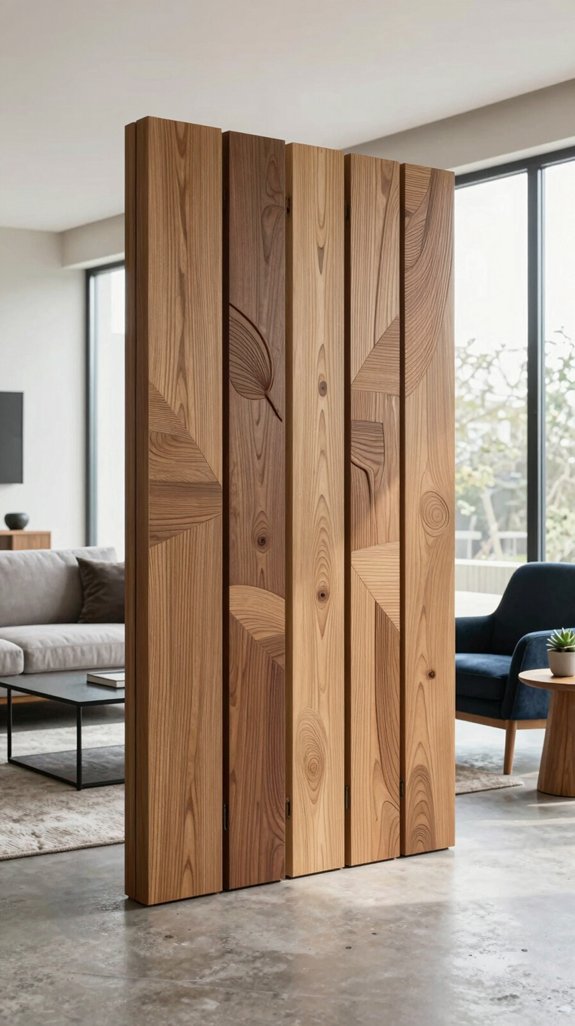
Ever wondered how a single carved panel can transform a living‑room into a gallery? I’ve started swapping flat walls for hand‑carved wooden panels, and the effect is instantly artistic.
I choose reclaimed walnut or bamboo, then commission a local artisan to carve geometric motifs or nature‑inspired silhouettes. The panels hang on a slim metal frame, letting light filter through the cut‑outs while casting dynamic shadows.
I treat the wood with a matte oil finish to preserve texture and depth. Because each piece is unique, the panel becomes a focal point that anchors furniture and sparks conversation.
I pair it with minimalist décor, letting the carving do the talking and keeping the room feeling airy yet sophisticated. This approach delivers high‑impact design without overwhelming the space.
You can also enjoy a chaise lounge while admiring the art.
Layered Wood Lattice for Privacy & Light
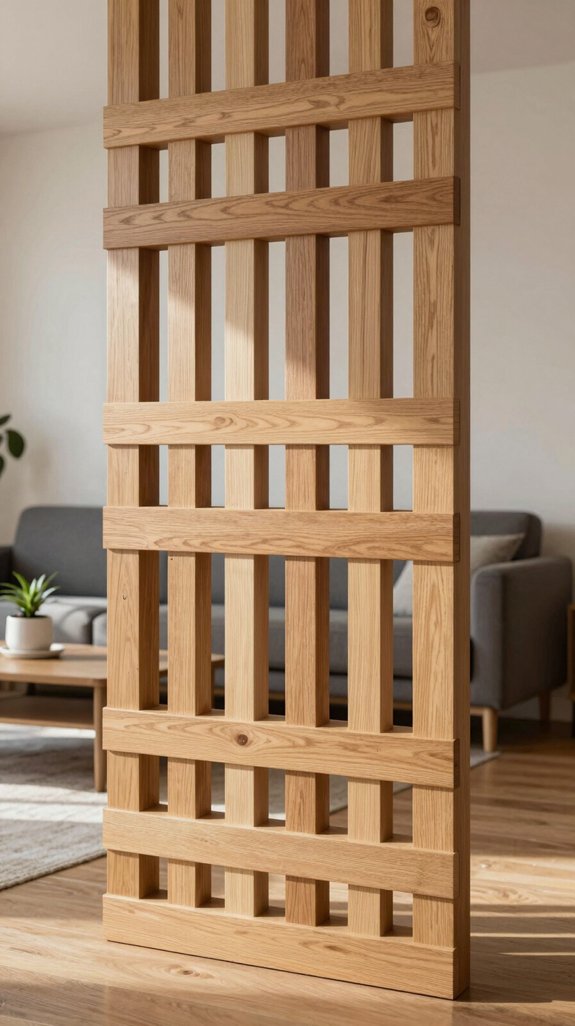
When I layer thin wooden slats in a staggered lattice, the screen instantly creates privacy while still letting soft daylight filter through. I choose reclaimed pine for its warm tone and cut each slat to 2 inches wide, then offset every row by half a slat to form a seamless grid.
The resulting pattern diffuses light, casting subtle shadows that add depth without sacrificing openness. I mount the lattice on a brushed-steel frame, allowing quick adjustment of spacing for varying privacy levels.
The modular design lets me swap slats for different finishes—charcoal, natural, or painted—keeping the space fresh. This approach merges functional screening with sculptural flair, delivering a contemporary, adaptable partition that feels both airy and intimate. Modern interior designers often incorporate adjustable privacy screens to customize openness on demand.
Wooden Partitions With Built‑In Lighting for Ambient Glow
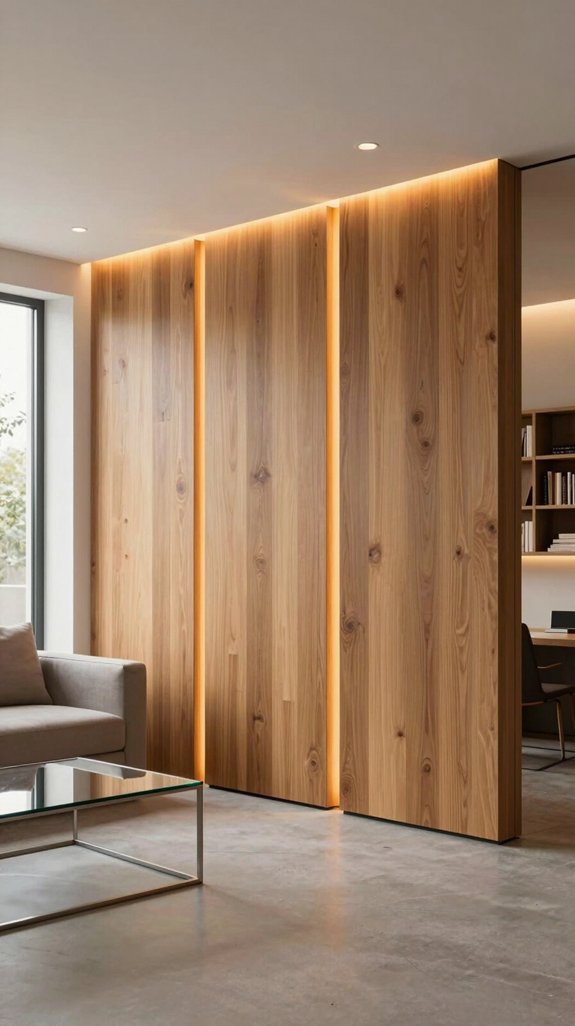
If I embed LED strips behind a thin veneer of reclaimed oak, the partition instantly becomes a soft, adjustable light source. I route the wiring through a concealed channel, letting the glow seep through natural grain without harsh glare.
The dimmer lets me shift from warm amber to cool daylight, matching moods or time of day. I pair the wood with frosted acrylic inserts, so light diffuses evenly across the surface, creating a floating effect.
Smart control integrates with voice assistants, so a simple command changes intensity or color temperature. This blend of timber and technology elevates a simple divider into a centerpiece that defines space while delivering ambient illumination.
Eco‑Friendly Wooden Bamboo‑Style Partitions
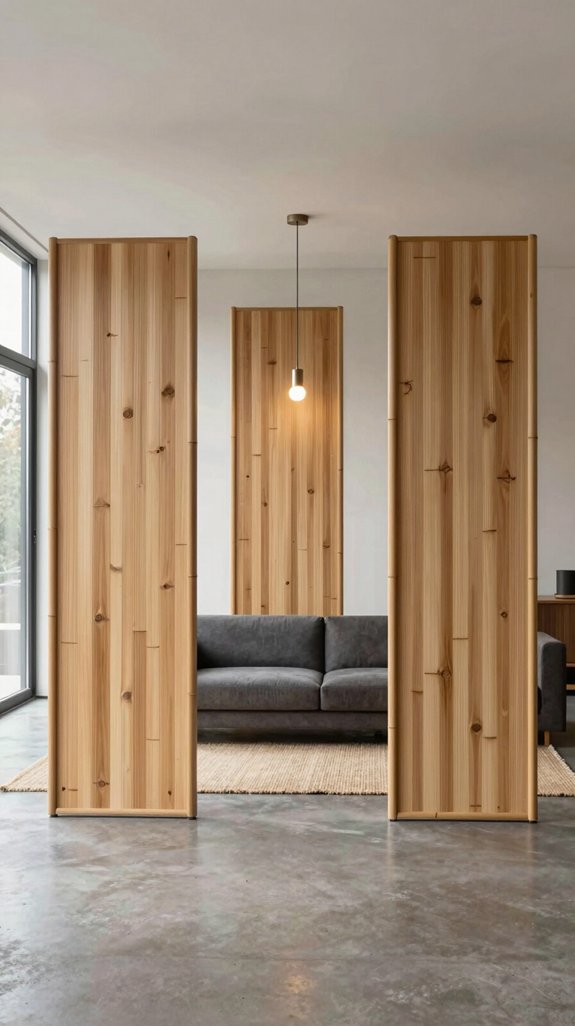
A few bamboo‑style panels can transform a living room into a sustainable sanctuary while keeping the vibe sleek and modern. I choose reclaimed bamboo composite boards because they’re fast‑growing, carbon‑negative, and boast a natural texture that feels warm yet refined.
I cut the panels to modular dimensions, then connect them with hidden steel brackets for a seamless, floating effect. The light‑permeable slats let daylight filter through, reducing artificial lighting needs.
I finish them with low‑VOC, water‑based sealants that protect against humidity without sacrificing indoor air quality. By arranging the panels in staggered layers, I create visual depth and a sense of privacy while maintaining an open, airy feel.
This eco‑friendly approach delivers style, sustainability, and cutting‑edge design in one package.
Custom‑Milled Wooden Screens Made for Your Space
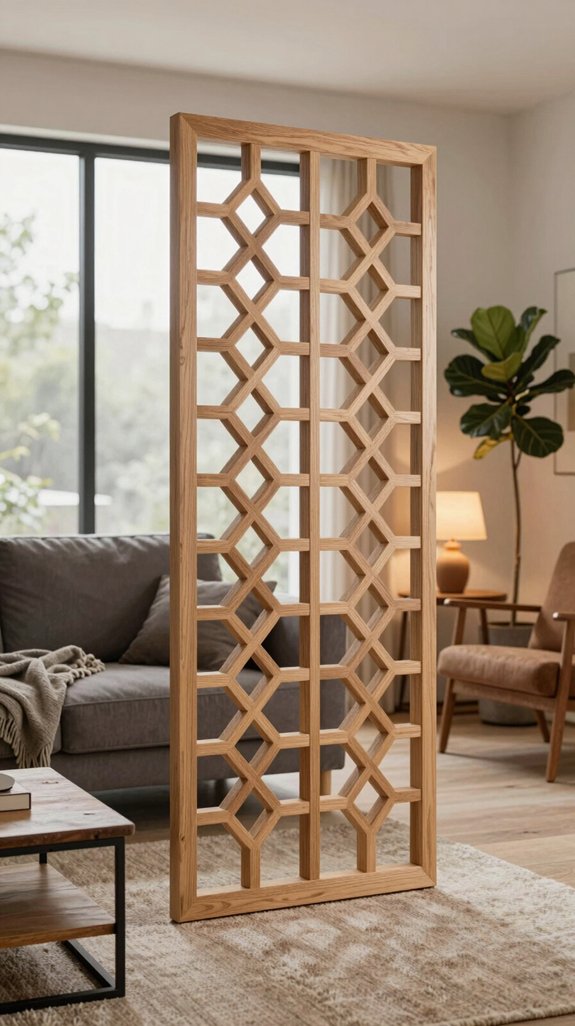
I’m designing custom‑milled wooden screens that fit your living‑room layout like a puzzle piece.
I start by scanning your floor plan, then generate a digital model that respects your circulation paths and focal points. Each screen emerges from CNC‑milled hardwood, allowing intricate lattice patterns, tapered edges, and seamless joints.
I match grain direction to natural light, creating dynamic shadows that shift throughout the day. Integrated mounting hardware stays hidden, preserving clean lines while ensuring structural integrity.
You can choose finishes ranging from matte oil to high‑gloss lacquer, all applied with low‑VOC products for a sustainable edge.
The result is a sleek, modular divider that elevates space, enhances privacy, and reflects your personal aesthetic without compromising functionality.
Mix Wood and Glass for a Modern, Elegant Divider
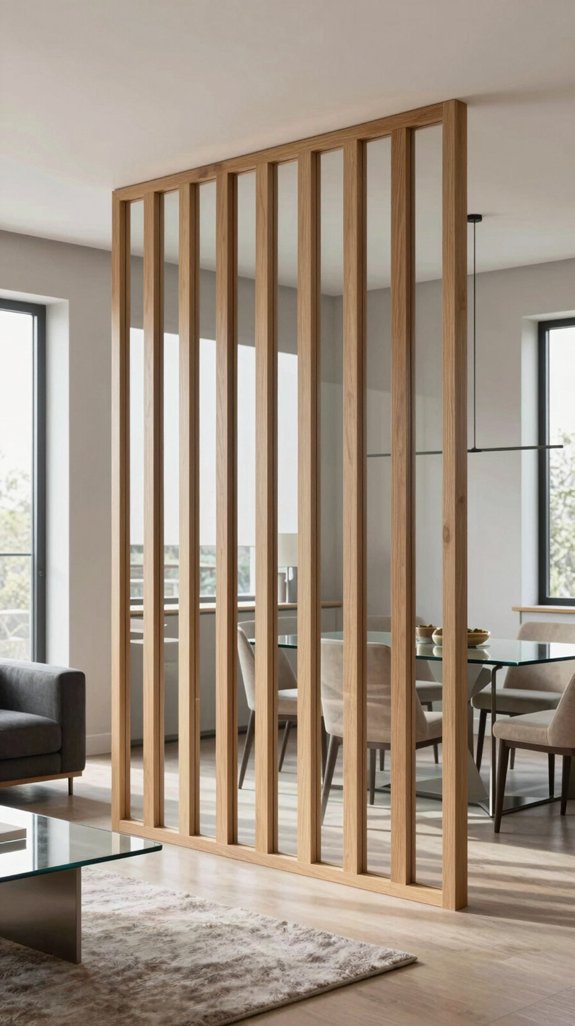
I love how a wood‑and‑glass combo instantly upgrades a living room into a sleek, airy sanctuary.
I pair warm walnut frames with clear tempered panels, letting light filter while preserving privacy. The wood anchors the space, the glass expands it—creating a visual flow that feels both grounded and open.
I choose slim, brushed‑steel hardware for a minimalist edge, and I stagger the glass panes to add depth without clutter.
I experiment with frosted sections for subtle diffusion, or bold colored glass for a pop of personality.
The result is a divider that feels high‑tech yet organic, a statement piece that adapts to any décor.
I’ve seen this mix transform cramped layouts into spacious, contemporary retreats, proving that elegance thrives on contrast.
Frequently Asked Questions
Can Wooden Partitions Support Heavy TV Mounts?
I know you might worry about wobble, but a well‑engineered wooden partition can absolutely hold a heavy TV mount if you reinforce it with studs, brackets, and proper anchoring—just verify the load rating matches your screen.
Do Wooden Dividers Affect Room Acoustics?
I find wooden dividers can dampen high‑frequency echoes, softening overall acoustics. Their mass and surface texture absorb sound, but thin panels won’t block low‑bass tones, so pairing them with acoustic backing yields the best balance.
How to Clean and Maintain Reclaimed‑Wood Surfaces?
I dusted my reclaimed‑wood coffee table with a microfiber cloth, then applied a citrus‑based oil weekly; it restores shine, prevents cracks, and keeps the grain vibrant—simple, sustainable care for any reclaimed‑wood surface.
Are Wooden Partitions Safe for Homes With Pets?
I assure you wooden partitions are generally pet‑safe if you finish them with non‑toxic sealants, avoid sharp edges, and secure them properly; regular cleaning prevents chewing damage and maintains hygiene for curious companions.
What Is the Typical Lifespan of a Custom‑Milled Screen?
I’d say a custom‑milled screen typically lasts fifteen to twenty years, assuming quality wood, proper sealing, and regular care. Think of it as a timeless piece—its endurance mirrors the resilience of your design vision.