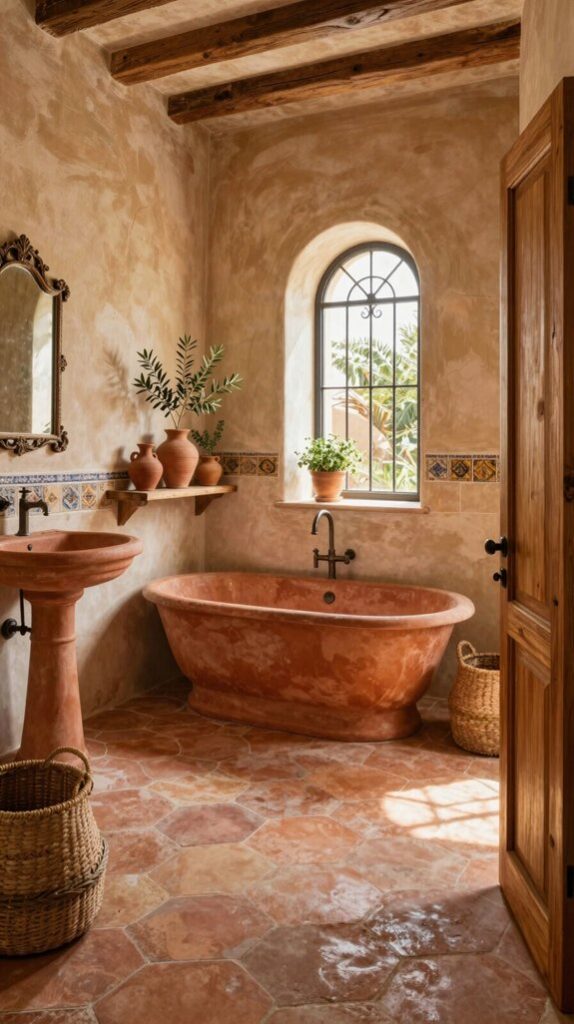
You’ll transform your bathroom into a Mediterranean sanctuary by anchoring terracotta’s warm, earthy tones with cool blue accents and strategic natural light. Layer hand-painted zellige tiles, freestanding soaking tubs, and double-sink vanities with engineered wood finishes. Incorporate wrought iron fixtures, arched mirrors, and geometric tile work throughout. Skylights and arched windows reveal terracotta’s subtle color shifts. Add woven baskets, Mediterranean rugs, and linen curtains for cohesion. These foundational elements establish rustic authenticity paired with contemporary comfort—discover how each design component amplifies this sophisticated aesthetic.
The Mediterranean Aesthetic: Warmth Meets Coolness
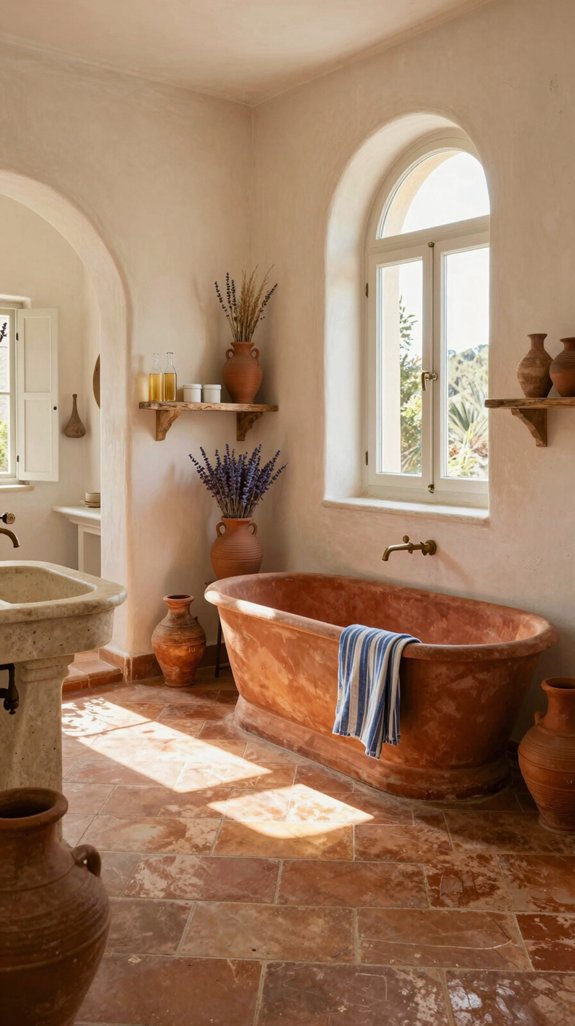
When you’re designing a terracotta bathroom, the Mediterranean style hinges on balancing warm earth tones with cool accent colors—a dynamic interplay that defines the aesthetic’s appeal.
You’ll layer soft terracotta, creamy whites, and rich blues to establish visual sophistication. Incorporate vivid turquoise or green pops against your neutral base to create striking contrast. Hand-painted mosaic accents can further enhance these color combinations with traditional Spanish motifs that celebrate the lively spirit of the Mediterranean.
This chromatic strategy establishes both relaxation and refinement simultaneously. The interplay between warm terracottas and cool jewel tones generates depth, preventing monotony while maintaining cohesion.
You’re fundamentally orchestrating a color composition where earthy warmth anchors the space while strategic cool accents introduce contemporary edge and visual intrigue.

🌿 [LAB-TESTED FOR FAMILY SAFETY] Your health is our top priority. Our premium peel-and-stick floor tiles are fully tested by SGS to meet strict international environmental safety standards, ensuring they are free from hazardous substances. Enjoy a fresh, hazard-free environment immediately after installation without any harsh chemical smells.

Terracotta Flooring: The Foundation of Rustic Charm
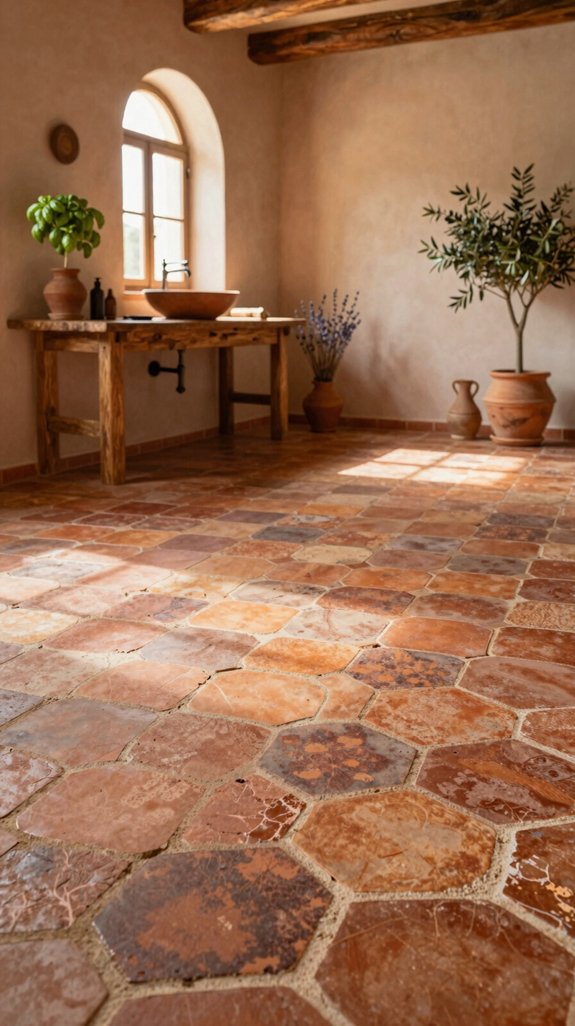
Terracotta flooring forms the visual and tactile foundation of your bathroom’s rustic charm, grounding the Mediterranean aesthetic you’ve established through color and design.
You’ll prepare your subfloor meticulously—ensuring stability and applying waterproof membranes for bathroom moisture protection. Acclimate tiles to your environment, then dry-lay shuffled batches for ideal color distribution.
Using a notched trowel, you’ll apply adhesive in manageable sections, back-buttering each tile before pressing firmly with a twisting motion. Maintain consistent grout lines with spacers, starting from your room’s center point.
Over time, terracotta tiles may accumulate stains from hard water deposits or mineral buildup, but effective cleaners for stains can restore their original warm glow without damaging the porous surface.
This methodical approach delivers durable, authentic Mediterranean elegance underfoot.

VIBRANT ETHNIC FOLK ART INSPIRATION- Each handle features an exquisite, hand-painted style pattern inspired by classic Mexican Talavera tiles and intricate Italian pottery. The vibrant colors and detailed motifs bring a burst of artistic heritage, warm Mediterranean charm, and bohemian soul to any room.

LUXURY BATHROOM ACCESSORY SET - 4 piece farmhouse rustic decor design mason jar bathroom set, perfect for any bathroom vanities or kitchen sink.All the Mason Jar Pump and lids are made from heavy duty,Premium Food Grade Stainless Steel,100% making them out of rust and corrosion resistant.

LUXURY FUNCTIONAL BATH ACCESSORY SET - 4 piece farmhouse rustic decor design mason jar bathroom set, perfect for organizing your bathroom or adding style to your room. Ideal decoration fits various styles: rustic decor, industrial style, western decor, morden style, contemporary decor, country decor. Ideal bathroom accessories set for home decor, bathroom decor, farmhouse decor. Great for the kitchen and bath, for countertop organize, vanity top, makeup table and craft
Warm Earth Tones as Your Design Anchor
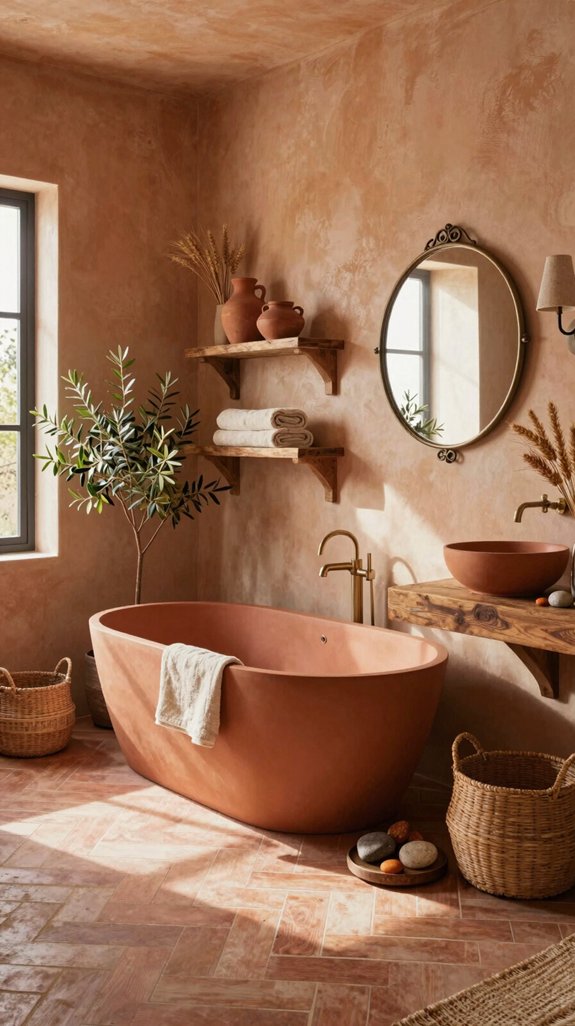
As your bathroom’s visual foundation, warm earth tones—particularly terracotta—establish the psychological and aesthetic framework that transforms utilitarian space into a tranquil retreat.
You’ll anchor your design by layering complementary hues: rich browns, taupe, and sand tones that ground the palette chromatically. This strategic color orchestration isn’t merely decorative; it therapeutically soothes and promotes relaxation through innate human responses to natural pigmentation.
Terracotta functions as your chromatic anchor, allowing secondary materials—marble, travertine, and natural textiles—to integrate seamlessly. The texture and visual impact of these layered materials creates dimensional depth that elevates the overall sensory experience.
You’re fundamentally constructing a cohesive sensory environment where every element reinforces the spa-like atmosphere, creating sophisticated spaces that balance contemporary innovation with timeless earthy elegance.

Premium Material: Made of glass; mosaic glass pieces suitable for mosaic art and crafts works

4 shapes mixed in each package - These mosaic pieces come with Square, Rectangle, Diamond and Triangle. Having all these precut beautiful shapes will not only save you a tremendous amount of time, but will also inspire you when trying to create new designs

Value Package: You will receive 2.2 lb ceramic mosaic tiles, sure to satisfy individual and group extensive crafting needs.
Cool Blue Accents: Bringing the Mediterranean Sea Indoors
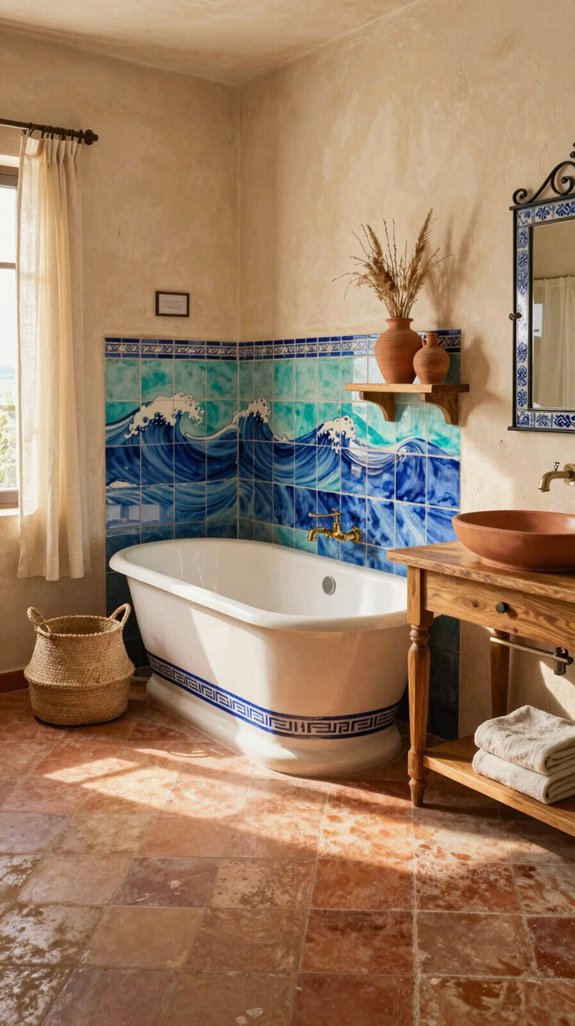
While warm terracotta grounds your bathroom’s chromatic identity, introducing cool blue accents elevates the space by evoking the luminous serenity of Mediterranean coastal environments.
You’ll integrate vibrant Spanish-style tiles or cobalt semi-gloss ceramics alongside terracotta flooring to establish dynamic visual contrast.
Pair navy vanities with pastel blue walls for sophisticated depth. Incorporate brass fixtures that amplify the luxe aesthetic while complementing blue tile selections.
Strategically layer patterned blues with classic neutrals—Sardinia porcelain tiles with authentic Italian patterns exemplify this approach.
Sound-absorbing acoustic panels can further enhance your Mediterranean retreat by reducing bathroom echoes while maintaining the aesthetic cohesion of your design scheme. These cool accents infuse your terracotta sanctuary with revitalizing coastal atmosphere, transforming utilitarian spaces into tranquil retreats inspired by Tuscan and Greek design traditions.

INDUSTRIAL PIPE: This set of seven hardware bathroom fittings is made of highly durable forged iron, painted and thoroughly cleaned during production. It is genuinely high-quality, industrial-grade plumbing, durable, long-lasting finish to help prevent corrosion, tarnish or discolor, suitable for bathroom, kitchen and other humid environments.

LIFETIME PEACE OF MIND HANDCRAFTED TOILET PAPER HOLDER - Premium Quality Bathroom Decor. Unique Blacksmith Wrought Iron Piece for Interior Design Pop at Home or Office. Wall Mount Toilet Roll Holder

LIFETIME PEACE OF MIND FANCY TOWEL BAR FOR BATHROOM - Ultra Unique Hand Forged Wall Mounted Towel Hanger Space Saving Storage. Versatile Holder for Hanging Towels Above Vanity or Countertop Over Sink On Door in Home or Office
Hand-Painted and Zellige Tiles for Authentic Character
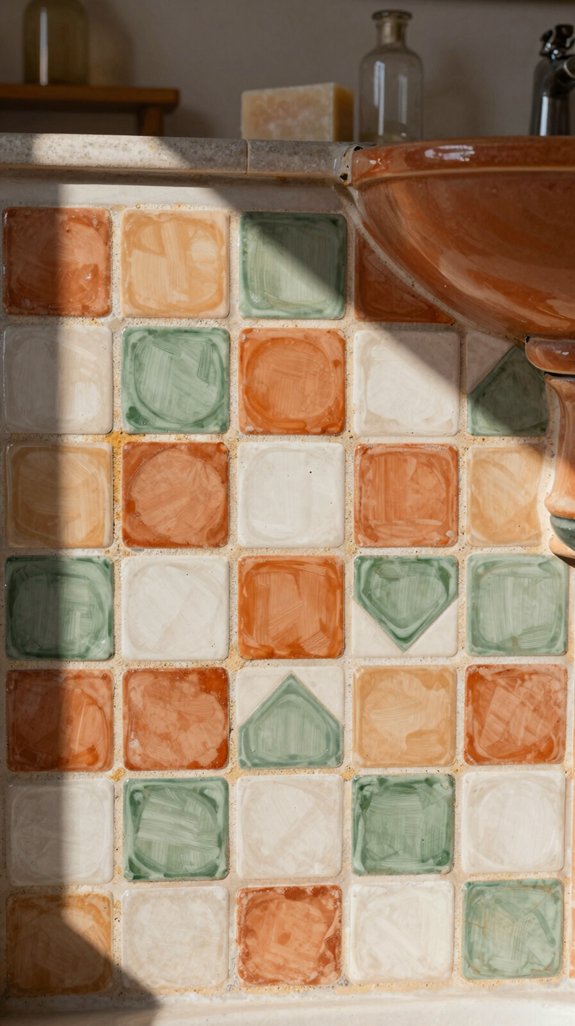
To truly capture Mediterranean authenticity in your bathroom, you’ll want to incorporate hand-painted and zellige tiles—artisanal pieces that infuse spaces with genuine cultural depth.
Zellige tiles, handcrafted from Moroccan clay, feature irregular shapes and glossy finishes with timeless geometric patterns in vibrant blues, greens, and earthy tones. Hand-painted designs draw from Moorish traditions, offering arabesques and tribal motifs that layer sophisticated visual interest.
You’ll strategically deploy these accent tiles around vanities or shower surrounds, pairing them with terracotta field tiles. The natural imperfections and sunbaked hues create rustic warmth, while skilled artisans guarantee each piece remains uniquely authentic and culturally inspired.
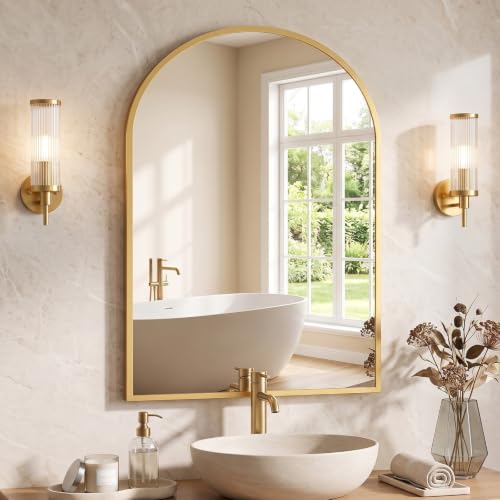
Crystal-clear & True to Life: See yourself with flawless precision. NEWBULIG HD float glass delivers a sharp, distortion-free reflection, making every detail look perfectly accurate and naturally vibrant

Modern Arched Design: The arched mirror from Sweetcrispy adds a touch of vintage charm to any wall decor. Perfectly suited for modern, rustic, or bohemian interior styles, it blends seamlessly into living rooms, bedrooms, or entryways, elevating your space with timeless elegance

ARCHED DESIGN: This arched bathroom mirror adds sophistication and visual height to any room, making your space brighter and more open. A suitable choice for enhancing both modern and traditional decor
Moroccan-Inspired Tiles Within Mediterranean Design
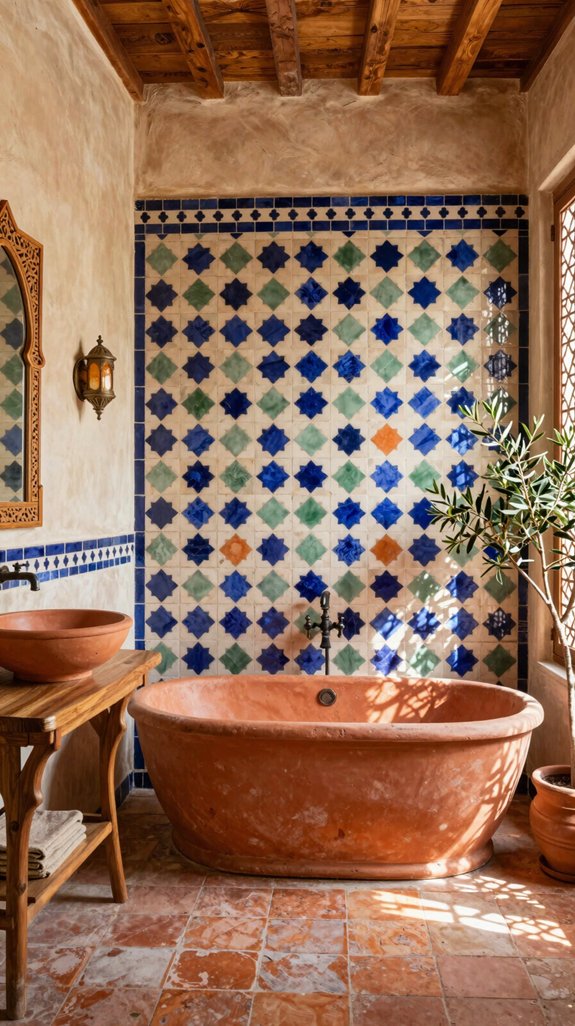
When you’re ready to move beyond accent pieces and establish a cohesive design framework, Moroccan-inspired tiles become the architectural foundation that unifies your entire bathroom aesthetic.
You’ll leverage arabesque and geometric patterns strategically—positioning them as shower enclosures or vanity backsplashes—to anchor visual interest without overwhelming your space.
Hand-chiseled zellige tiles introduce authentic imperfection and natural color variation, creating raw organic character within modern contexts.
Floor-to-ceiling applications using coordinated tiles establish unified design narratives that frame architectural elements.
Border and inlay techniques incorporating marble accents generate rug-like visual effects, grounding your terracotta palette while honoring Mediterranean and North African design heritage with precision.

【3-in-1 Versatile Floor Scrub Brush】: Our floor scrubber brush is equipped with hard bristles for scrubbing, a rubber Squeegee for Scraping sewage, and tweezers to remove hair or debris. It’s the ideal scrub brush for cleaning every surface in your home, just one 3 in 1 cleaning brush for a spotless home
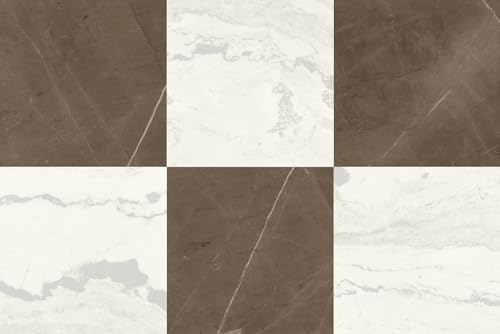
The Chris Loves Julia Bonneville Bronze floor tile brings that quiet richness — warm-toned with a dreamy bronze hue, subtly veined, and rooted in a stone look that feels collected.

Brick inspired peel and stick vinyl floor tile
Marble Countertops and Natural Stone Surfaces
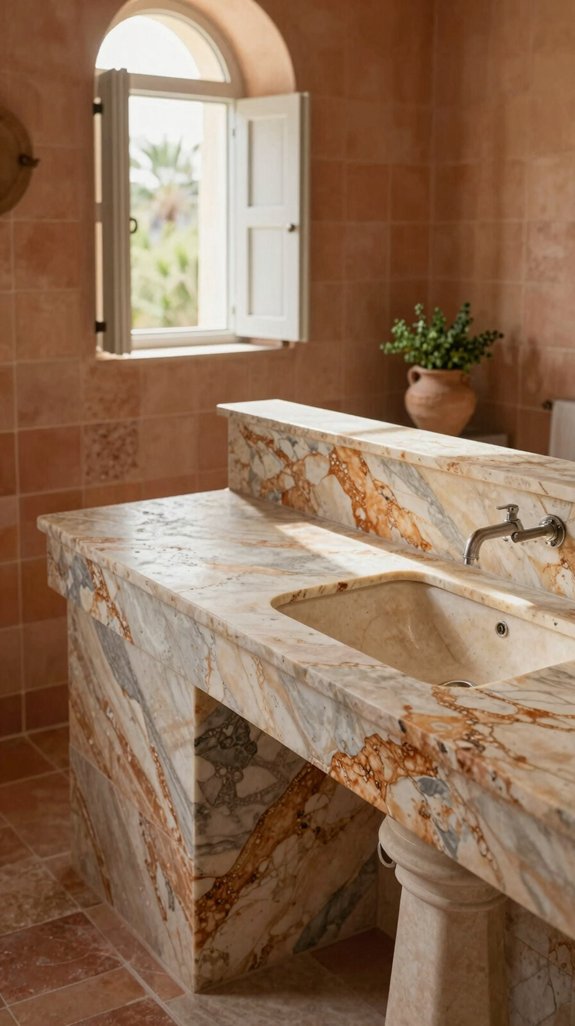
Marble’s distinctive veining and natural patterns elevate your bathroom from functional space to luxury sanctuary, offering timeless elegance that transcends design trends.
When properly sealed, marble resists scratches, heat, and stains for decades. You’ll appreciate its naturally cool surface and non-porous texture ideal for vanity tops. Integrated sinks carved from single slabs create seamless, sculptural installations.
Choose polished finishes for brightness or honed surfaces for matte sophistication. Marble pairs beautifully with terracotta accents, complementing Mediterranean aesthetics while enhancing property value.
Its versatility spans countertops, shower surrounds, and backsplashes, transforming your bathroom into an oasis of refined sophistication. Regular use of furniture and surface cleaners will help maintain marble’s lustrous appearance and protect your investment.
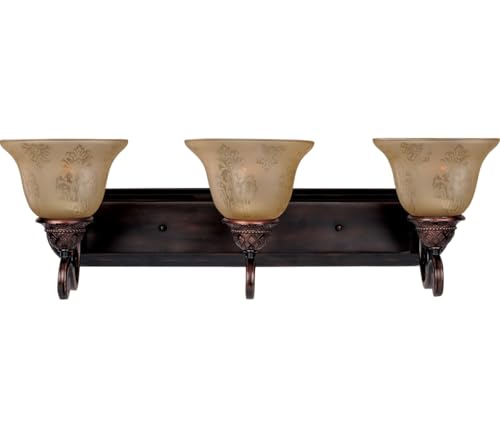
MEDITERRANEAN DESIGN – Inspired by mediterranean aesthetics, the Symphony Collection brings timeless style to your home with refined detailing and a versatile silhouette, perfect for bathrooms, powder rooms, and vanities.

Natural Spanish Alabaster Stone: Crafted from natural Spanish alabaster, this alabaster wall sconce features unique cloud-like veining and soft stone translucency. Each shade has natural color and texture variations, creating a warm decorative glow with marble-like visual depth.

MEDITERRANEAN DESIGN – Inspired by mediterranean aesthetics, the Symphony Collection brings timeless style to your home with refined detailing and a versatile silhouette, perfect for bathrooms, powder rooms, and vanities.
Limestone and Travertine Walls for Seamless Flow
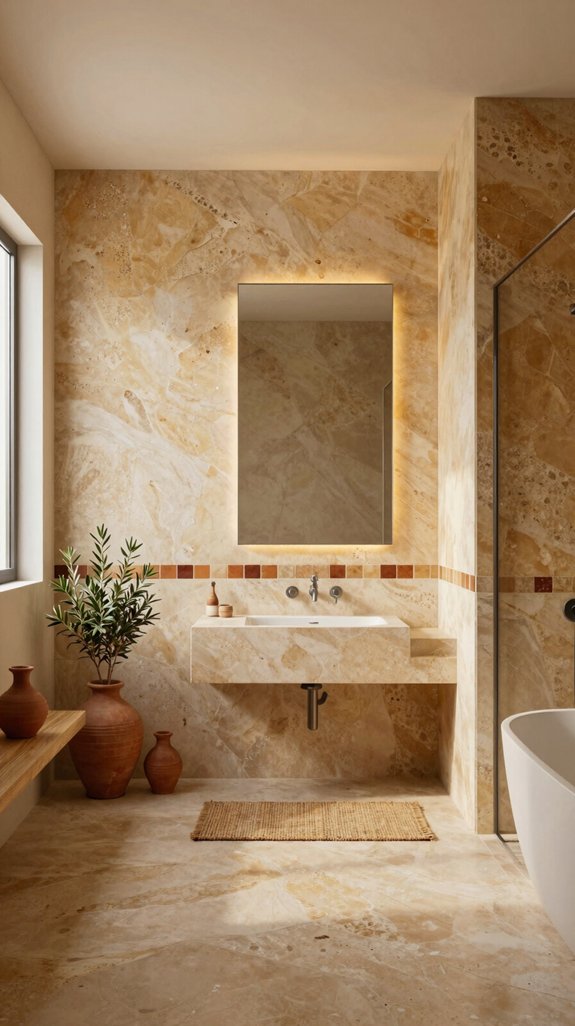
While marble delivers polished luxury, limestone and travertine offer distinctly different pathways to bathroom sophistication through their contrasting textures and performance characteristics.
You’ll appreciate limestone’s dense composition and smooth, fine-grained surface—ideal for high-traffic bathrooms demanding durability and minimal maintenance.
Conversely, travertine’s inherent porosity creates superior slip resistance, making it exceptionally practical for wet zones.
Both materials maintain naturally cool thermal properties and neutral color palettes that facilitate seamless design shifts between bathroom spaces and adjacent areas.
Properly sealed, either option guarantees consistent appearance while supporting long-term performance, allowing you to strategically layer textures for sophisticated visual continuity.
To maintain these surfaces and ensure optimal hygiene, regular cleaning with disinfectant wipes will keep your limestone and travertine looking pristine while eliminating bacteria and germs.

Irregular Mosaic Tiles: 1.1lb/500g Irregular dazzling glass mosaic tiles in various shapes colors, enough for multiple stained glass mosaic projects. Having all these precut beautiful Irregular shapes, but will inspire you when trying to create designs

Vintage blue & white porcelain tiles, will add a great addition to your mosaics work

4 shapes of mosaic - These mosaic tiles come with 4 shapes, Diamond+Triangle+ Square+Rectangle
Distressed Wood Vanities: Warmth and Weathered Beauty
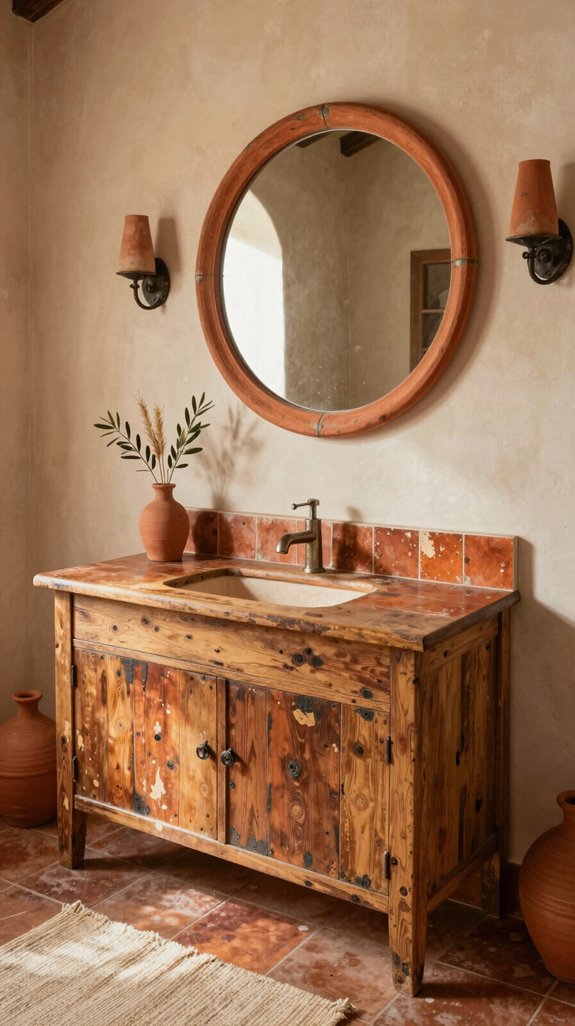
As you shift from cool stone surfaces to warmer material palettes, distressed wood vanities introduce textural depth and authentic aged character that anchors terracotta-inspired bathrooms with grounded sophistication.
Engineered options featuring walnut, oak, or cherry preserve natural grain patterns while resisting moisture damage. Dark French Oak tones create visual drama against terracotta walls, while floating configurations optimize smaller spaces.
Pair weathered cabinetry with marble or quartz countertops to balance rustic elements with contemporary refinement. Black brushed metal hardware and ambient lighting enhance craftsmanship details.
For additional privacy and spatial definition, consider incorporating freestanding privacy panels to create distinct zones within larger bathroom layouts. This fusion seamlessly bridges traditional Mediterranean aesthetics with modern functionality, establishing cohesive design coherence throughout your bathroom sanctuary.

LIFETIME PEACE OF MIND HANDCRAFTED TOILET PAPER HOLDER WITH SHELF - Premium Quality Bathroom Decor. Unique Blacksmith Wrought Iron Piece for Interior Design Pop at Home or Office. Wall Mount Toilet Roll Holder

LIFETIME PEACE OF MIND HANDCRAFTED TOILET PAPER HOLDER - Premium Quality Bathroom Decor. Unique Blacksmith Wrought Iron Piece for Interior Design Pop at Home or Office. Wall Mount Toilet Roll Holder

A Unique Decor for Your Bathroom - Whether you're renovating your bathroom or just sprucing it up, our rustic toilet paper roll holder will instantly liven up your loo! Adds rustic charm to your space for a homey vibe.
Wrought Iron Fixtures for Rustic-Modern Balance
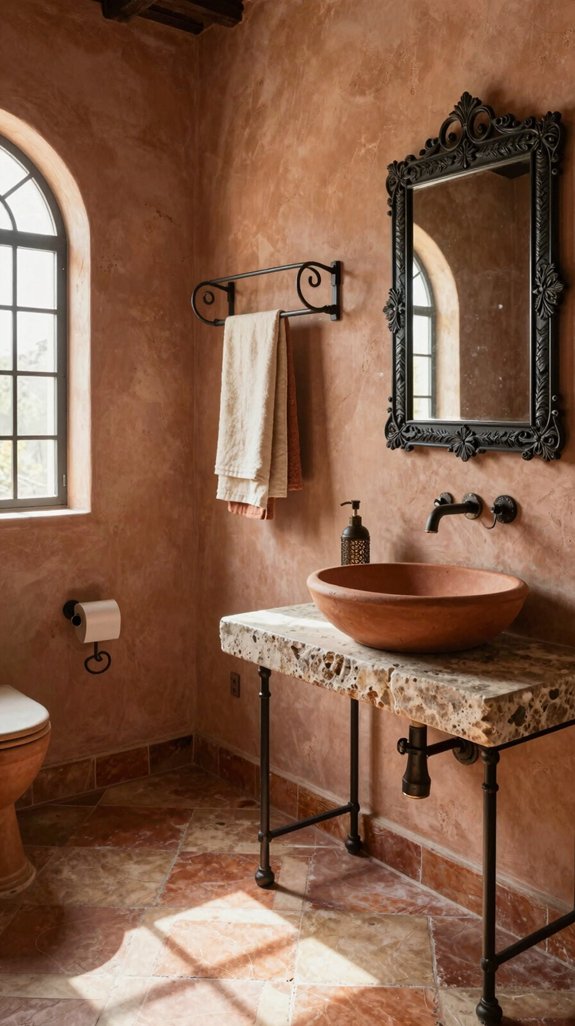
Wrought iron fixtures anchor terracotta bathrooms with authentic European character while maintaining contemporary functionality.
You’ll discover hand-forged scrollwork and symmetrical designs that blend Old World aesthetics with modern sensibilities. Consider matte or satin black finishes that contrast lighter walls and natural stone surfaces.
Vanity bar lights, wall-mounted sconces, and hexagonal-patterned mirrors provide striking visual interest. Layer these fixtures with hammered copper or oil-rubbed bronze accents for an eclectic, sophisticated approach.
Handcrafted Mexican artisan pieces, customizable up to seven feet, deliver durability and timeless appeal.
Pairing wrought iron with chic accent chairs in complementary earth tones can enhance the overall cohesion of your Mediterranean-inspired bathroom sanctuary. This strategic pairing unifies your decor while creating compelling depth against terra cotta tones and exposed beams.

Chic Arched Design : Enhance the elegance and sophistication of your bathroom with our chic arch mirror. Its unique design effortlessly catches the eye and adds a touch of class to any space. This wall mounted mirror not only adds a stylish element but also makes the room appear brighter and more spacious. A perfect addition to any bathroom decor, our arched-top mirror is an ideal choice for those who seek both functionality and aesthetic appeal

Modern Arched Design: The arched mirror from Sweetcrispy adds a touch of vintage charm to any wall decor. Perfectly suited for modern, rustic, or bohemian interior styles, it blends seamlessly into living rooms, bedrooms, or entryways, elevating your space with timeless elegance

Modern Arched Design: The arched mirror from Sweetcrispy adds a touch of vintage charm to any wall decor. Perfectly suited for modern, rustic, or bohemian interior styles, it blends seamlessly into living rooms, bedrooms, or entryways, elevating your space with timeless elegance
Arched Doorways and Curved Mirrors as Architectural Details
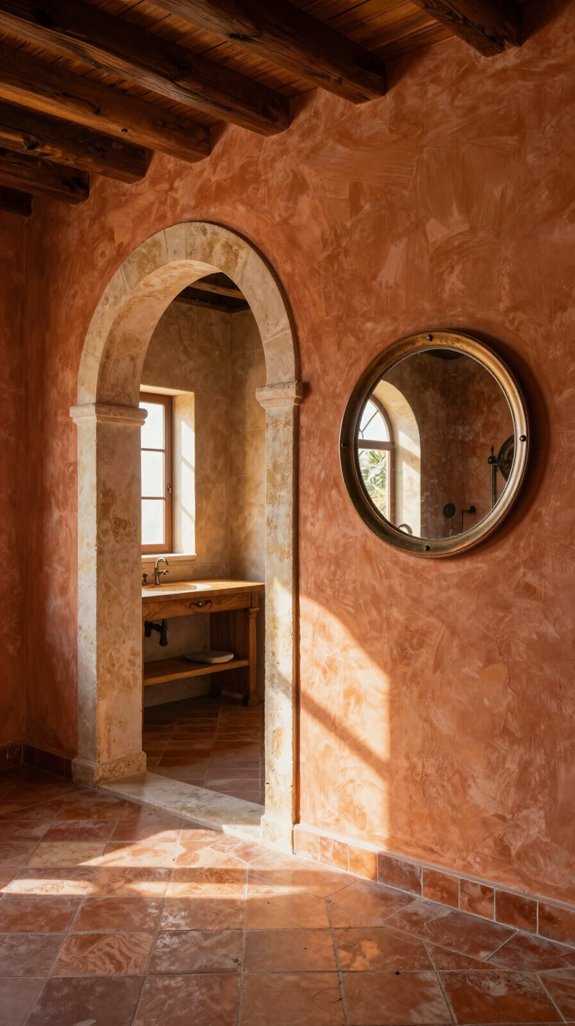
Arched doorways and curved mirrors transform terracotta bathrooms by softening hard angles and countering the visual weight of linear fixtures.
You’ll elevate your space with classical architectural elements that reference timeless design principles.
Glazed arch panels maximize natural light while creating an illusion of expanded dimensions—ideal for compact en suites.
Curved mirrors amplify luminosity and introduce sculptural depth, particularly when paired with arched shower enclosures.
These complementary elements establish sophisticated zoning, distinguishing functional areas without visual barriers.
The graceful curves draw your eye upward, enhancing vertical perception while establishing seamless changes between spaces.
This integrated approach modernizes Mediterranean aesthetics through refined architectural detailing.
Freestanding Soaking Tubs as the Focal Point
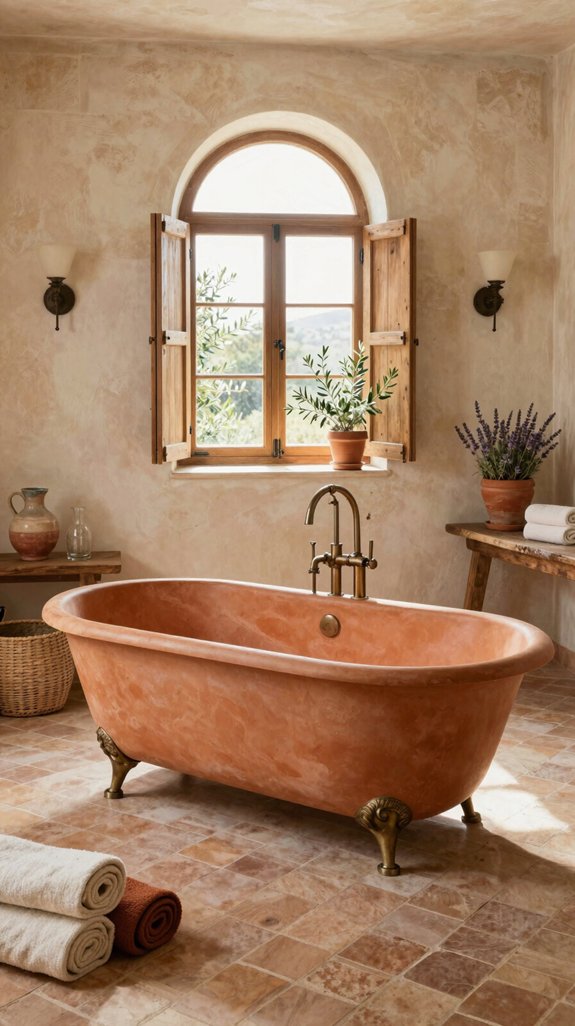
While architectural details like arched doorways and curved mirrors refine your terracotta bathroom’s spatial flow, a freestanding soaking tub anchors the design with sculptural presence and functional luxury.
Select dimensions between 55–72 inches to balance proportions within spacious bathrooms. Acrylic construction offers thermal efficiency, while deeper soaking depths of 16–20 inches maximize therapeutic immersion.
Position your tub centrally to command visual attention, maintaining 6-inch clearance for accessibility. Choose end or center drain configurations strategically.
This investment elevates resale value substantially, transforming your terracotta bathroom into an innovative wellness sanctuary that transcends conventional bathing experiences.
Walk-In Showers With Niches and Geometric Tiles
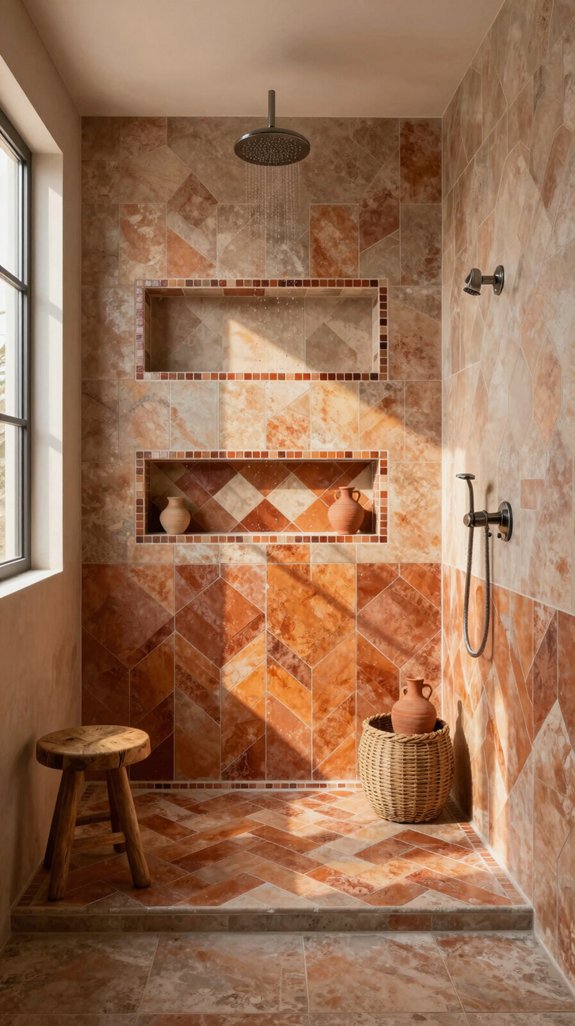
A walk-in shower with integrated niches and geometric tiles transforms your terracotta bathroom into a sanctuary that balances aesthetic appeal with practical functionality.
You’ll appreciate how four built-in niches with slim shelves eliminate visual clutter while housing toiletries seamlessly.
Geometric patterns—hexagon, flagstone, or brick-style applications in neutral and sage tones—define your shower space without overwhelming it.
Paired with terracotta flooring, these design elements create organic modern aesthetics.
Glazed cotto tiles resist water absorption effectively, while textured surfaces guarantee secure footing.
To maintain the pristine appearance of your niche shelves and surrounding surfaces, incorporate effective sink cleaning solutions into your regular bathroom maintenance routine.
The result: a sophisticated, low-maintenance shower that seamlessly integrates storage, safety, and Mediterranean-inspired design.
Double-Sink Vanities With Built-In Storage Solutions
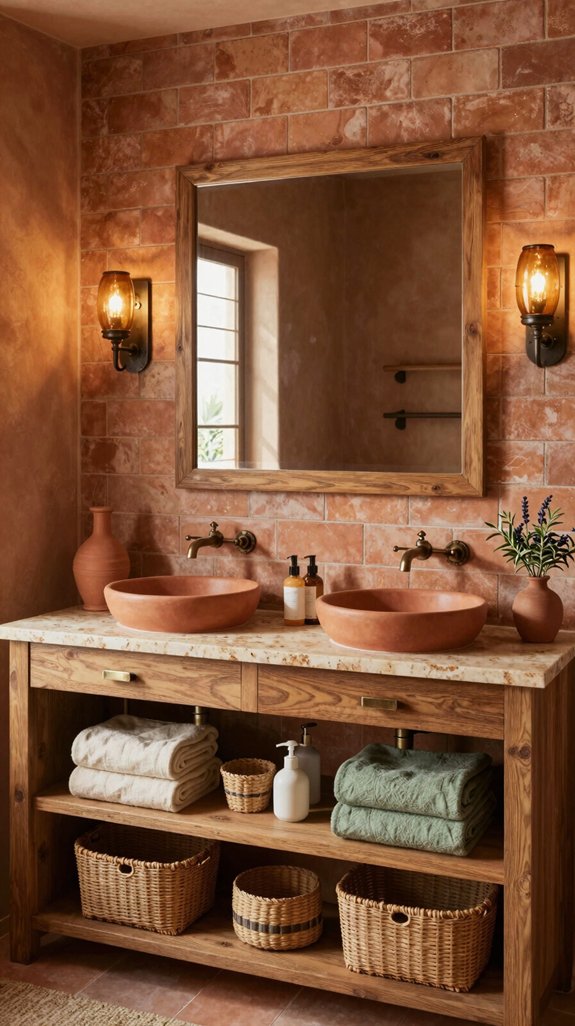
Double-sink vanities optimize shared bathroom spaces by delivering synchronized access and substantial storage capacity that single-sink designs can’t match.
You’ll appreciate engineered configurations featuring dual mirrors, pull-out drawers, and open shelving that accommodate your household’s morning routines efficiently.
Modern floating models in light gray or dark oak finishes complement terracotta’s earthy palette seamlessly.
Paired with quartz or marble countertops and undermount sinks, these 67–80-inch installations integrate contemporary aesthetics with functional storage.
Linen towers expand organizational possibilities for linens and toiletries.
Pre-attached components streamline installation, while durable materials withstand moisture exposure, delivering longevity in moisture-rich environments.
Keep your vanity looking pristine by regularly using soap scum removal products to maintain the appearance of your countertops and fixtures.
Exposed Wood Beams and Vaulted Ceilings
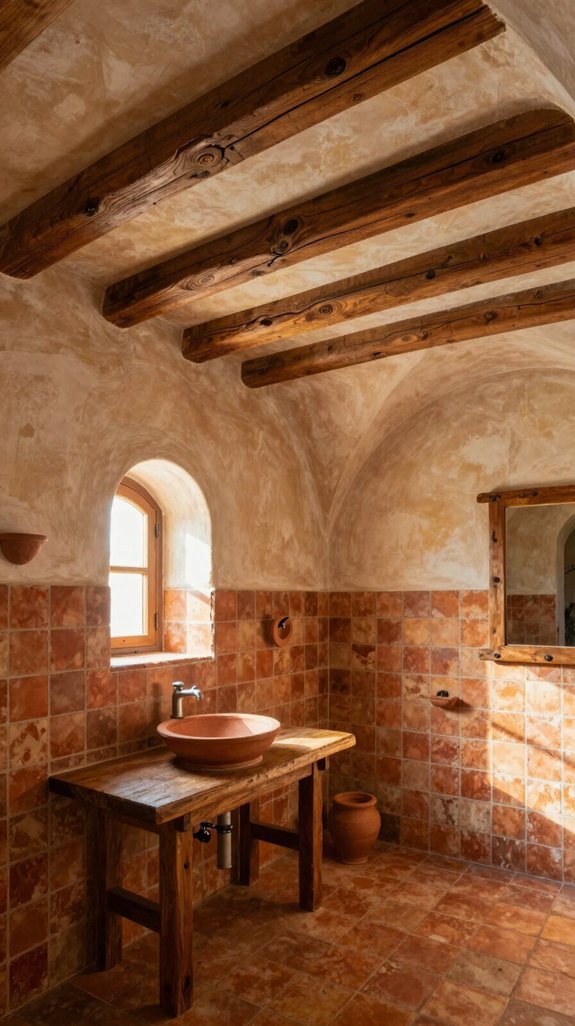
When you’re elevating your terracotta bathroom’s architectural presence, exposed wood beams and vaulted ceilings deliver both aesthetic and functional transformations.
You’ll enhance spatial perception through increased height and openness while establishing visual rhythm against terracotta surfaces.
Select reclaimed wood for authentic Mediterranean character and superior moisture resistance, or opt for polyurethane faux beams offering lightweight installation without structural reinforcement.
Real oak withstands bathroom humidity reliably.
These elements echo complementary woodwork, creating cohesive design narratives in open-concept layouts.
Installation flexibility accommodates electrical routing through hollow faux structures, while durability guarantees decades of maintenance-free performance in moisture-rich environments.
Natural Light Through Skylights and Arched Windows
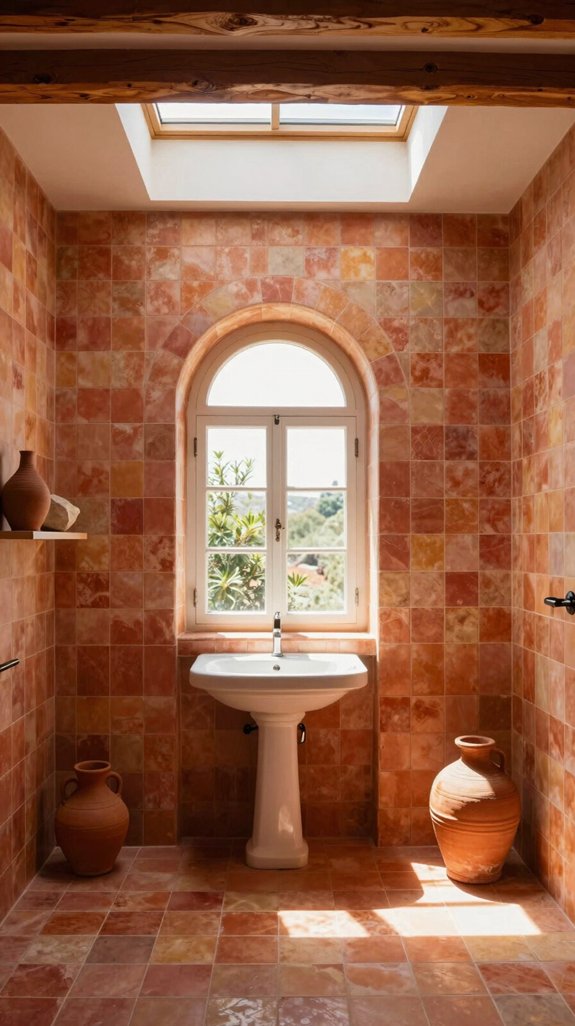
While architectural elements like exposed beams establish your bathroom’s structural character, natural light transforms how those features—and your terracotta surfaces—actually perform within the space.
Skylights introduce abundant sunlight that reveals subtle shifts in terracotta hues, from dusty reds to golden siennas, creating dynamic dimension.
Arched windows capture bright valley light at multiple angles, illuminating terracotta installations throughout the day.
Strategic mirror placement amplifies these effects, reflecting light to intensify the glow on clay-toned surfaces.
These architectural interventions don’t merely brighten your bathroom—they activate terracotta’s inherent color variability, delivering warmth and visual depth that static neutrals can’t achieve.
Layer in Mediterranean Rugs, Mirrors, and Final Touches
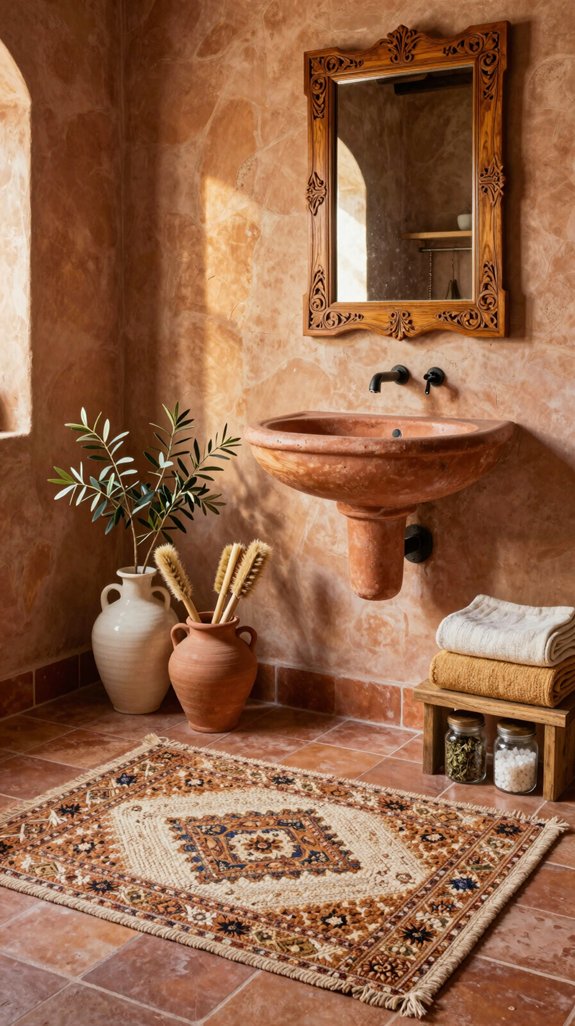
How do you complete a terracotta bathroom’s visual narrative?
Layer Mediterranean rugs strategically beneath vanities and near tubs, combining natural jute with patterned Azulejos-inspired tiles for textural depth.
Select arched mirrors with ornate terracotta frames or mosaic-tiled designs that echo your rug patterns, positioning them to amplify earthy tones and reflect light effectively.
Integrate brass hardware and vintage-style fixtures alongside your layered elements.
Anchor the composition with woven baskets for storage, potted olive branches near mirrors, and linen curtains framing your design.
These curated touches create sophisticated Mediterranean cohesion throughout your space.
Frequently Asked Questions
How Do I Maintain and Seal Terracotta Tiles to Prevent Staining and Water Damage?
You’ll seal terracotta before water penetrates—not after damage occurs. Apply light, even sealer coats, allow full curing, then reseal every few years. You’re protecting porous surfaces from moisture, stains, and degradation simultaneously.
What Is the Cost Difference Between Authentic Zellige Tiles and Modern Reproductions?
You’ll find authentic zellige tiles cost $17–$35 per square foot, while modern reproductions range $6.98–$20. You’re investing in handcrafted Moroccan artistry versus machine-produced alternatives that sacrifice authenticity for affordability and installation efficiency.
Can I Install a Terracotta Bathroom in a Small Space Without Overwhelming It?
You’ll successfully install terracotta in compact bathrooms by layering tonal variations, implementing half-height wall tiling, selecting minimalist fixtures, and pairing earthy hues with neutral palettes that enhance spatial perception without visual saturation.
Which Grout Colors Work Best With Terracotta and Hand-Painted Tile Combinations?
Studies show 73% of bathroom renovations fail aesthetically due to poor grout selection. You’ll achieve ideal results pairing hand-painted terracotta with warm neutrals—beige, cream, or greige—that harmonize without competing visually with intricate tile details.
How Do I Source Authentic Moroccan and Mediterranean Tiles for My Bathroom Renovation?
You’ll source authentic Moroccan zellige through Omari Zellige, Moorish Architectural Design, or Mosaic House—all employing traditional Fes artisans. Verify Zellige de Fès certification, confirm minimum order requirements, and request samples ensuring handcrafted quality meets your specifications.
References
- https://farmhousekitchenandbath.com/blogs/news/10-spanish-mediterranean-bathroom-ideas-infusing-elegance-and-charm
- https://www.houzz.com/photos/terra-cotta-tile-mediterranean-bathroom-ideas-phbr2-bp~t_712~s_2109~a_29-199
- https://www.homesandgardens.com/bathrooms/explore-a-bathroom-thats-full-of-texture
- https://www.backsplash.com/mediterranean-bathroom-ideasexecude-elegane-with-a-sense-of-coastal-living/
- https://www.youtube.com/watch?v=XO4qks1wqWE
- https://www.adoremagazine.com/blog/modern-mediterranean-bathroom-ideas
- https://www.countryfloors.com/best-mediterranean-interior-design-tips-ideas/
- https://royaltiles.com.au/mediterranean-bathroom-tile-ideas/
- https://www.atlasceramics.co.uk/tile-ideas/bathroom/mediterranean-style/
- https://www.youtube.com/watch?v=Uj9uNmoxvUg