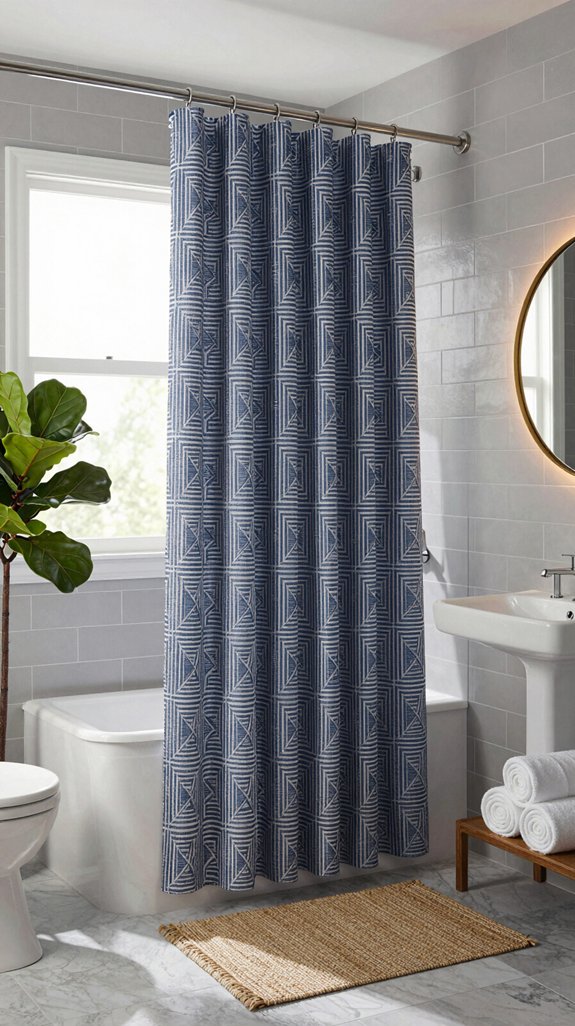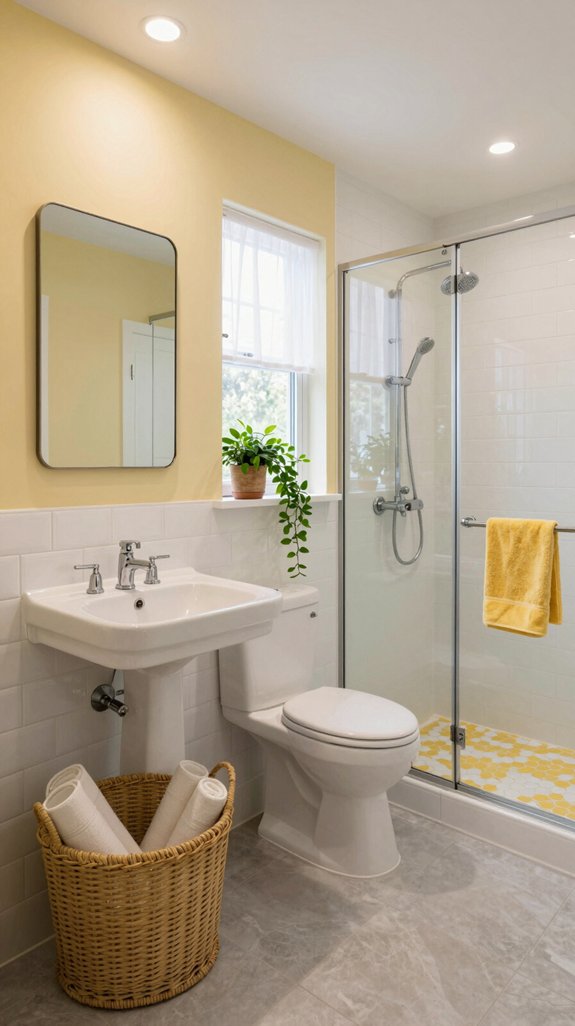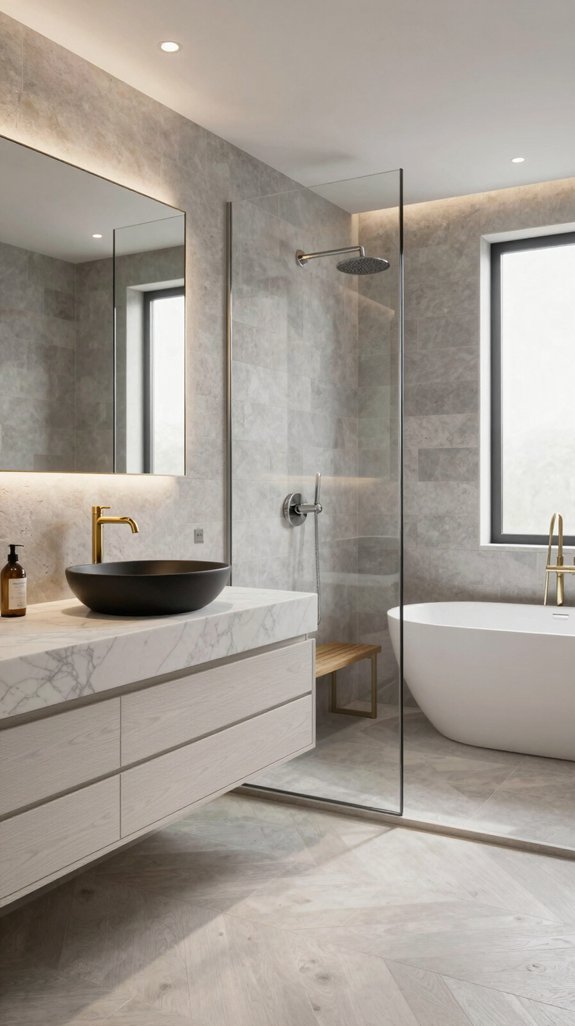
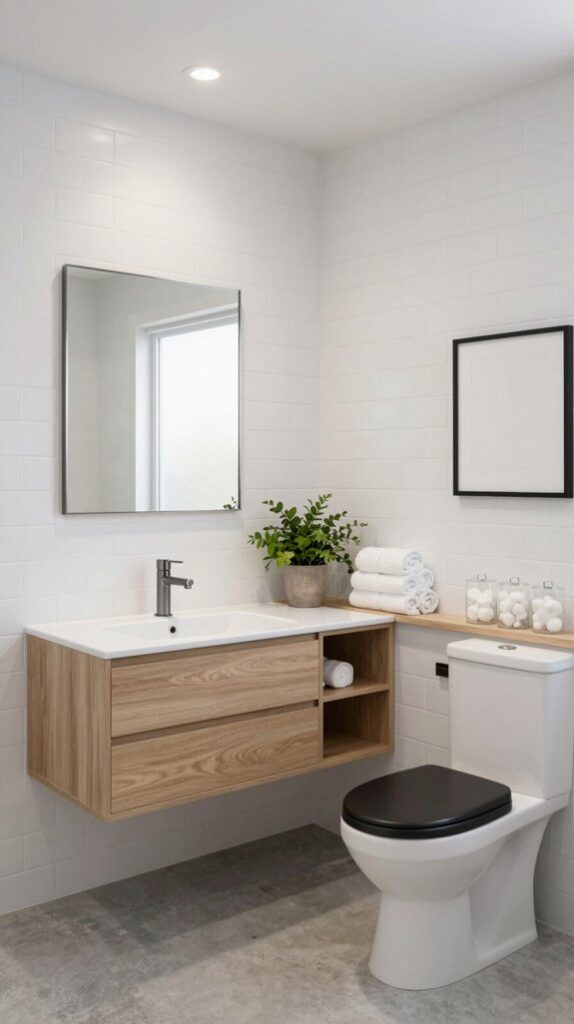
You’ll transform your bathroom into a serene minimalist sanctuary by anchoring neutral wall colors—think creamy whites and soft grays with high LRV values—that maximize light reflection in compact spaces. Layer in strategic LED lighting, glossy tiles, and mirrors to expand perceived dimensions. Unify your palette with muted tones and warm metallics like brushed brass. Combine marble with wood for textural contrast. Floating vanities and wall-mounted fixtures maintain clean lines while concealing plumbing. These foundational principles reveal countless sophisticated design possibilities ahead.
Start With Neutral Wall Colors for Minimalist Bathrooms
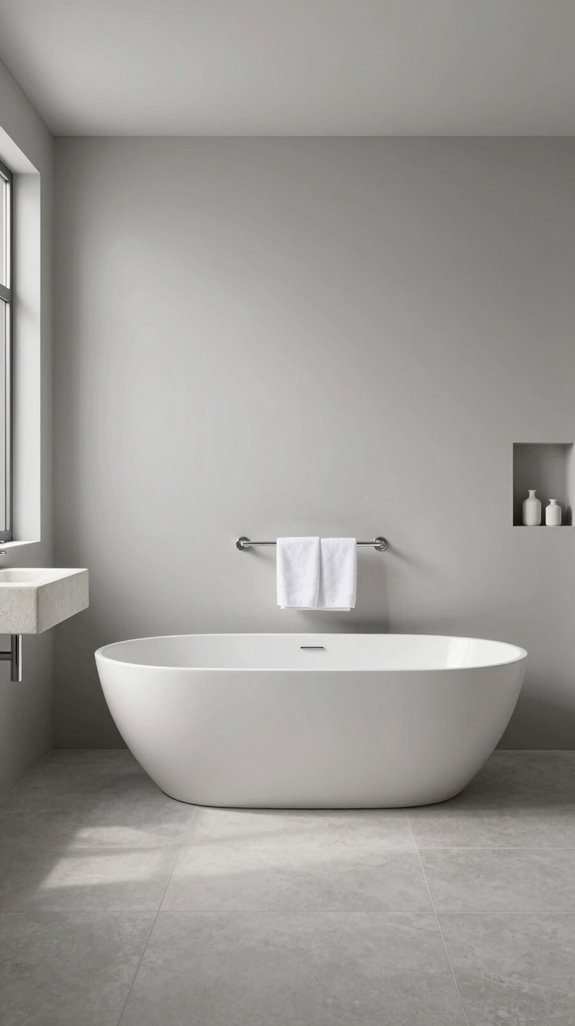
Neutral wall colors form the foundation of a clean, minimalist bathroom aesthetic, offering a versatile backdrop that won’t compete with fixtures or accessories.
You’ll find that creamy whites, soft beiges, and nuanced grays create serene environments while maximizing light reflection in compact spaces. Consider Benjamin Moore’s Angelica or Sherwin-Williams Dover White to establish architectural simplicity. These neutral hues offer timeless sophistication that elevates your bathroom design regardless of trends.
These palettes function as blank canvases, allowing you to update towels, artwork, and rugs without complete redesigns. You’ll appreciate how contemporary neutrals balance warmth and coolness, delivering sleek sophistication.
Opt for high LRV values above 80 to guarantee ideal illumination and spatial expansion in windowless bathrooms.
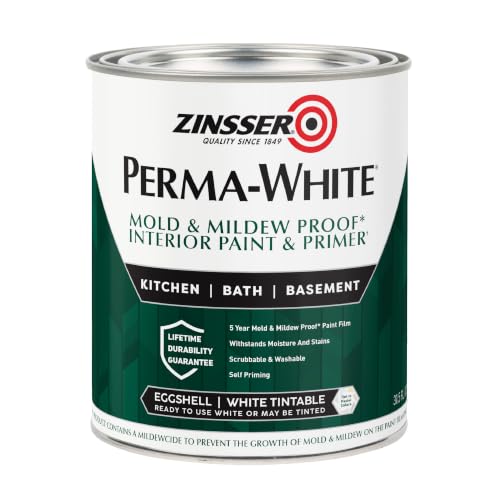
Self-Priming formula - requires no sanding

Wide Application - This touch up paint pen adheres to a wide range of surfaces, including tile, tub, bathtub, sink, enamel, porcelain and refrigerators. It allows you to easily repair scratches, stains, chips, spots, yellowing, and other surface paint imperfections
Choose Light Tones to Open Up Your Space
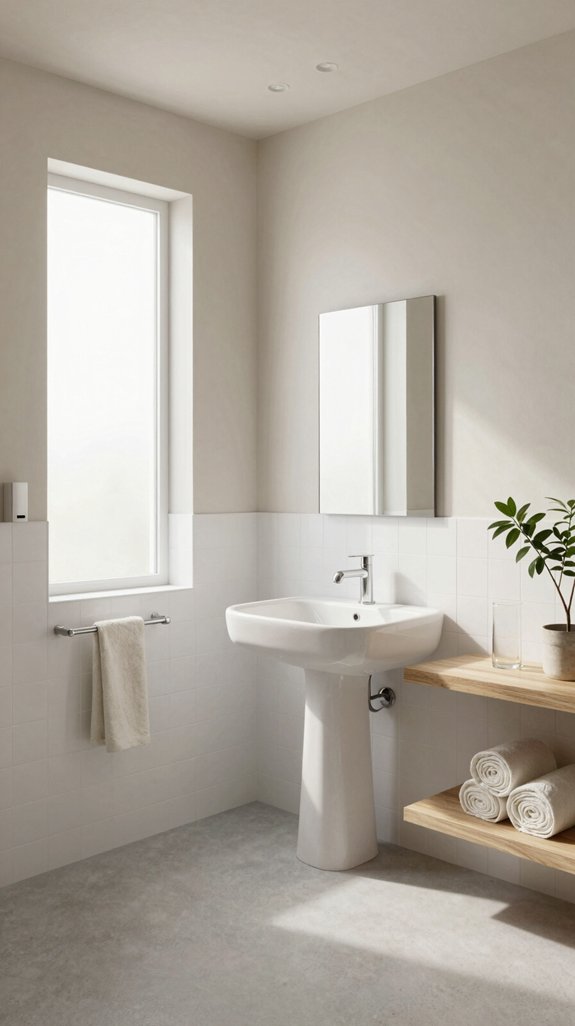
While neutral wall colors establish your minimalist foundation, light tones amplify that strategy by actively expanding your bathroom’s perceived dimensions.
You’ll create psychological depth through pale hues and cool color temperatures above 4000K, which energize spaces while maintaining clean aesthetic lines.
Strategic layering of LED strips and recessed lighting enhances airiness, customizable for both task functionality and ambient relaxation.
Mirrors paired with light finishes multiply reflective surfaces, amplifying openness beyond physical boundaries.
Metal fixtures in your bathroom should be protected with effective rust removal methods to maintain their polished appearance and longevity in humid environments.
This sophisticated approach transforms confined bathrooms into serene sanctuaries, where minimalist principles intersect with spatial perception, delivering both technical efficiency and visual expansiveness.
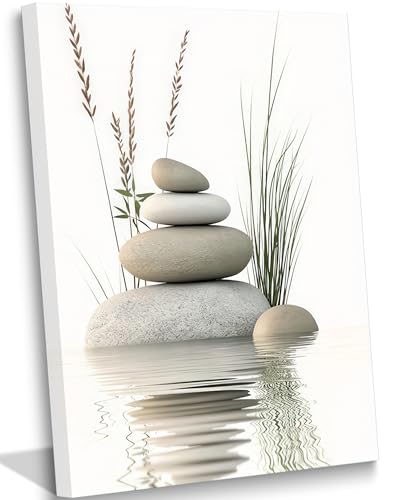
The Zen bathroom canvas wall art comes in three sizes: 12x16in, 16x24in, and 24x36in.

【Cloud-Like 5X Softness: Memory Foam Supreme Comfort】Made with premium memory foam that’s 5x softer than ordinary bathroom mat, providing a cushiony feel underfoot. The luxurious material gently conforms to your feet, offering unmatched comfort after every shower or bath
Keep Your Color Palette Muted and Unified
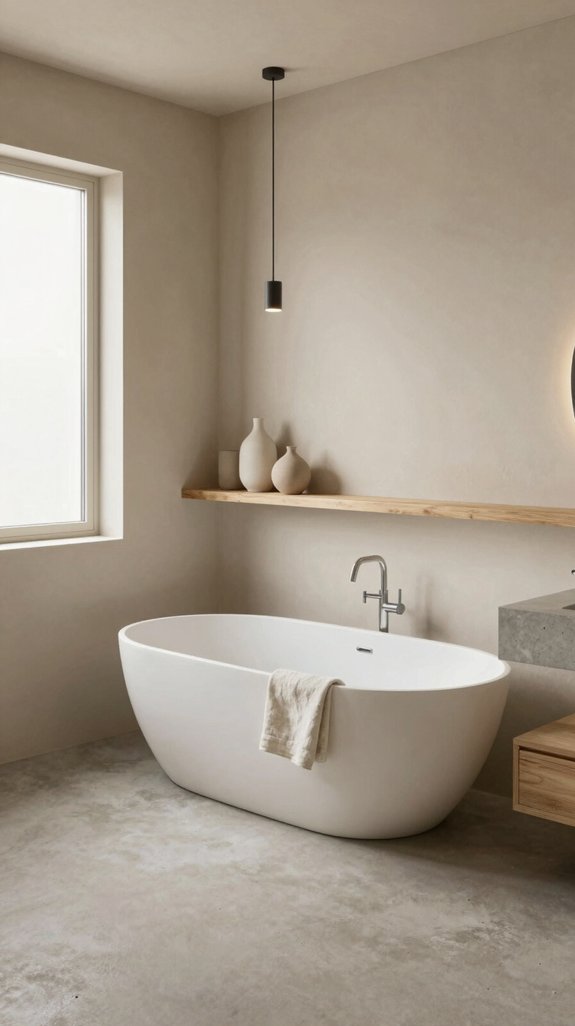
To maximize your bathroom’s clean aesthetic, you’ll want to establish a unified color palette that relies on muted, complementary tones rather than bold contrasts.
Consider pairing soft whites with warm grays, or combining muted sage with light beige for nature-inspired sophistication. Sky blue and pale blush create serene atmospheres while maintaining minimalist principles.
These cohesive schemes prevent visual fragmentation, allowing your space to feel intentionally designed rather than arbitrary.
Introduce metallic restraint through brushed gold or brass hardware—warm finishes prevent cool neutrals from appearing sterile while preserving your palette’s unified integrity. For additional visual interest within your neutral scheme, consider incorporating wall-mounted art rails to display curated pieces that complement your muted palette.
This strategic approach elevates contemporary aesthetics through refined color coherence.

CLOUD-LIKE COMFORT: Step onto plush thick microfiber that feels soft and gentle underfoot. Dense fibers and neatly finished edges create lasting comfort while maintaining a clean, refined look in your bathroom

Effortless Maintenance & Machine Washable: Crafted in soft light gray and sage neutral tones, this durable 3ft round area rug is designed for high-traffic spaces like entryway, living room, playroom and bedroom. Easily refresh with regular vacuuming or machine wash for deep cleaning—its light gray and sage print stays vibrant through everyday use
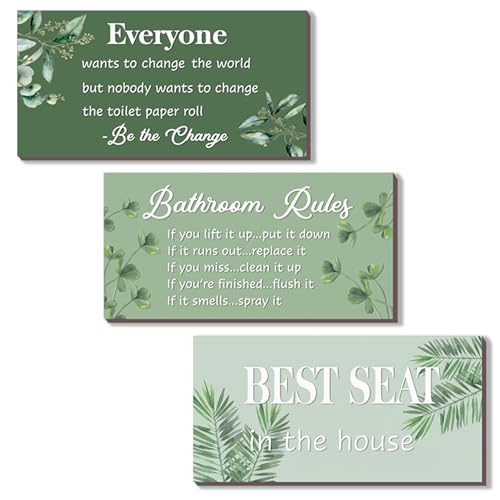
Sage Green Bathroom Rules Accessories: you will receive 3 pieces of rustic wooden green bathroom wall decorations in different styles, full of warm feelings, proper for you to bring your bathroom an attractive look, These green bathroom accessories will not only give you visual appeal but will also give you an warm and relaxing feeling
Warm Minimal Spaces With Buttery Limewash
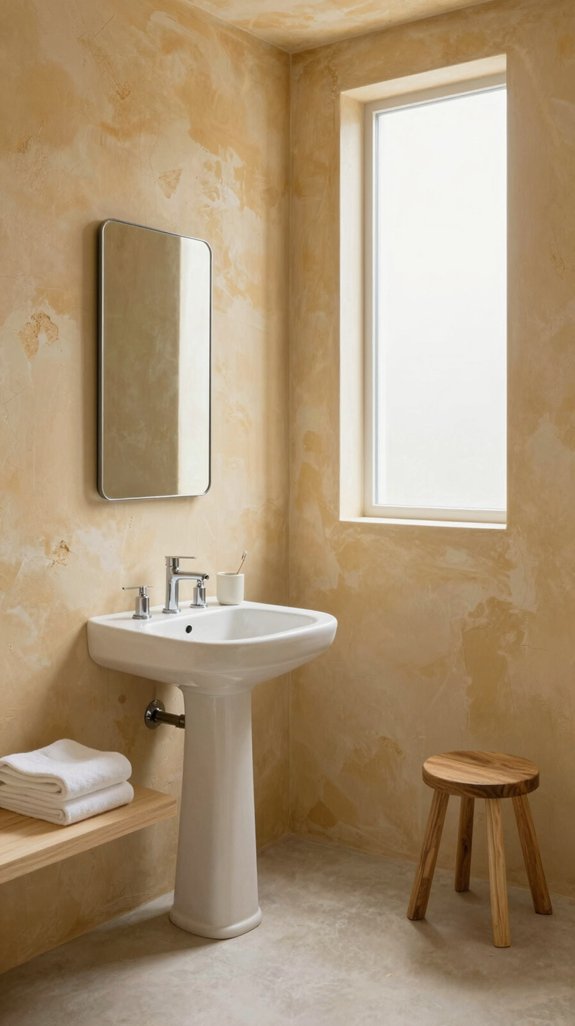
Limewash offers a transformative solution for bathrooms seeking warmth without compromising your unified color scheme. This breathable, porous coating infuses subtle luminosity and tonal depth into minimal spaces, creating visual interest through natural color variations that shift with light.
Unlike conventional paints, limewash resists blistering while regulating humidity through its non-film-forming structure. The matte finish with earthy aesthetic softens hard bathroom surfaces, establishing sophisticated ambiance.
Its moisture-wicking properties prevent condensation accumulation post-shower, while natural alkalinity resists mold proliferation—essential for humid environments.
You’ll appreciate the effortless maintenance: quick touch-ups require minimal preparation, preserving your space’s relaxed, refined aesthetic.
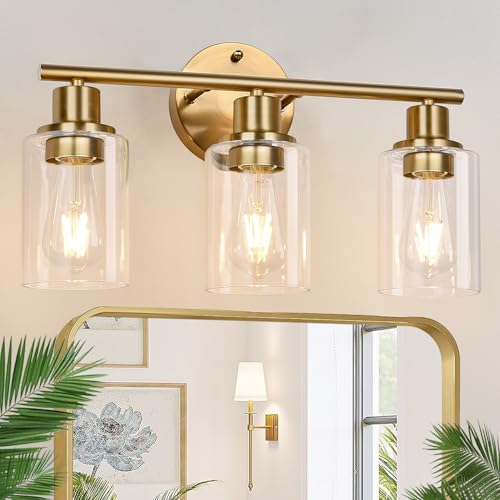
❤️【Upgraded Brushed Gold Finish】The brushed gold bathroom light fixtures feature a sleek brushed nickel finish lamp body accompanied by clear glass shades. The upgraded finish not only adds an elegant touch but also includes a scratch and tarnish-resistant coating, ensuring that the brushed gold bathroom light maintains its pristine appearance over time. This exquisite bathroom vanity light is suitable for various decoration styles, making it the perfect choice to enhance your home lighting.

【Eye-catching & Modern Design】- Advanced brushed gold texture coupled (high quality metal, anti-rust and won't fade) with transparent glass retro shade, showing a refined and modern style. It is suitable for wet places such as bathroom lights over mirror, laundry rooms, dining room, living room, corridor, cafe, basement, bar, club, office, library, and bedroom.
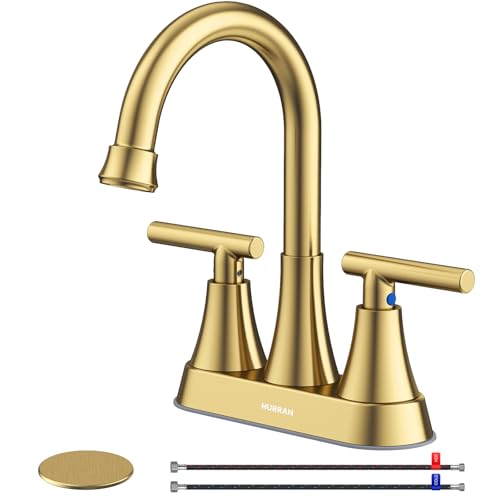
UNIQUE PATENTED DESIGN 4 INCH BATHROOM FAUCETS: Bathroom sink faucet body constructed from stainless steel, have registered with the CEC, meets lead-free standards. 2 pcs H/C 24-in bathroom faucet water supply lines. Matching-finish pop-up bathroom sink drain with overflow and built-in strainer, easy for daily cleaning.
Polish Your Palette With Subtle Metallic Accents
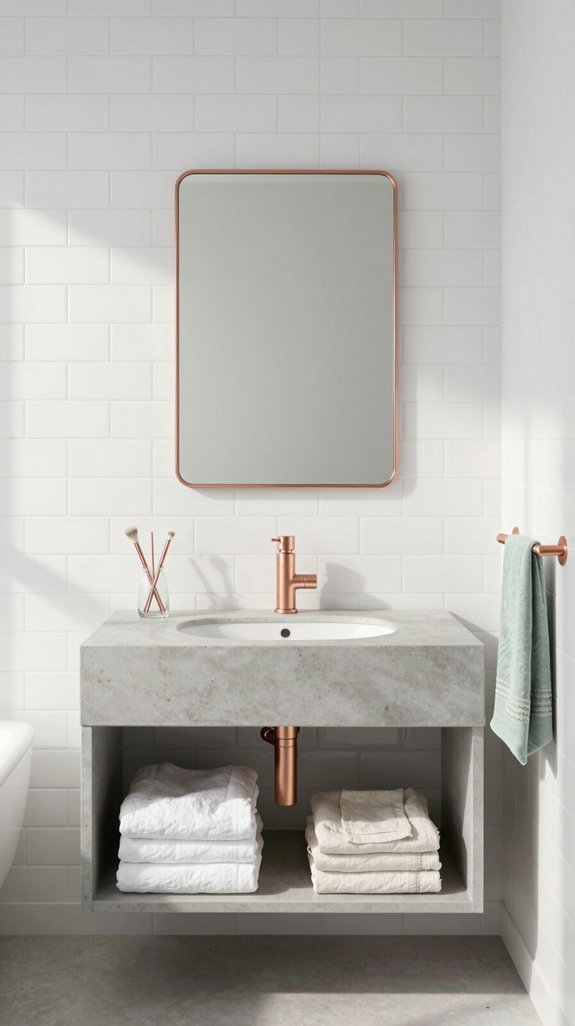
Once you’ve established your bathroom’s foundational aesthetic with limewash walls, metallic accents elevate the space through strategic fixture choices that complement rather than compete.
Select brushed brass or antiqued finishes that develop patina, harmonizing with warm undertones. Layer metallics across key touchpoints: your primary faucet, mirror frame, and hardware should share one cohesive finish, representing two-thirds of fixtures.
Reserve accent metals for remaining elements—soap dispensers, towel rails, or pendant lights—creating sophisticated visual rhythm. This restrained approach prevents overwhelming minimalist interiors while maintaining functional elegance throughout your sanctuary.

【SPACE-SAVING & MULTIFUNCTIONAL DESK】Maximize your living space with this 31.5 x 16 x 5.5 inch wall mounted floating desk. Designed to free up valuable floor space, this compact yet functional desk works perfectly as a writing desk, laptop workstation, or bedside table for bedrooms, apartments, dorm rooms, and small home offices. Featuring a modern fluted design and minimalist brown finish, it blends effortlessly with contemporary, elegant, and modern home décor styles while keeping your space clean, stylish, and organized

Elegant Compact Vanity for Modern Living - Upgrade your space with a sleek compact vanity designed to fit anywhere. Its floating, space-saving design adds modern charm without taking up valuable room — perfect for bedrooms, apartments, or studio spaces.
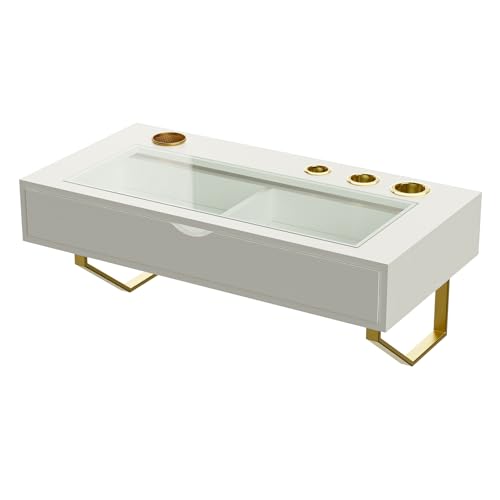
Versatile Design: This desk combines modern and classic design elements, functioning as either a writing desk or dressing table to suit various styles of home decoration
Install Hexagonal Tiles for Dimension Without Clutter
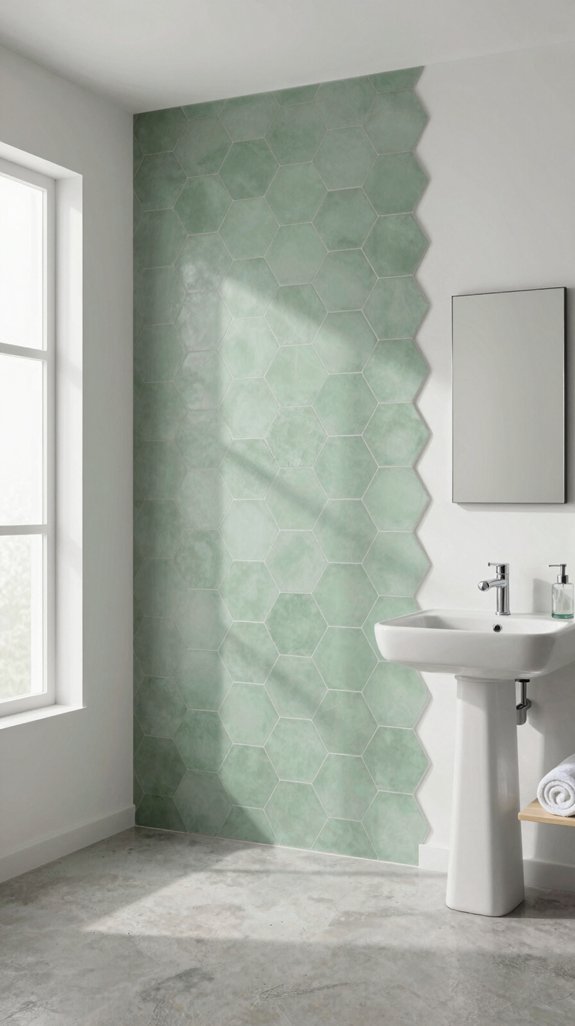
Hexagonal tiles deliver geometric sophistication that transforms your bathroom without overwhelming the senses.
You’ll appreciate how their six-sided structure creates visual depth while maintaining minimalist principles through straight-set or subtly offset patterns. Choose complementary grout colors to enhance cohesion rather than fragment the space.
The increased grout joints provide practical slip resistance on wet surfaces, making smaller mosaics ideal for shower floors.
Whether you select crisp white hexagons for classical elegance or dark oversized tiles for contemporary edge, these geometric elements adapt seamlessly to your design aesthetic while preserving the clean, uncluttered atmosphere you’re cultivating.

Use for a variety of indoor and outdoor project surfaces including wood, metal, plaster, masonry or unglazed ceramic

Use for a variety of indoor and outdoor project surfaces including wood, metal, plaster, masonry or unglazed ceramic

CONVENIENT SIZE - This Apple Barrel Acrylic Paint comes in a versatile 2 oz size that is great for basecoating, stenciling, and so much more
Use Subway Tiles for Minimalist Bathroom Contrast
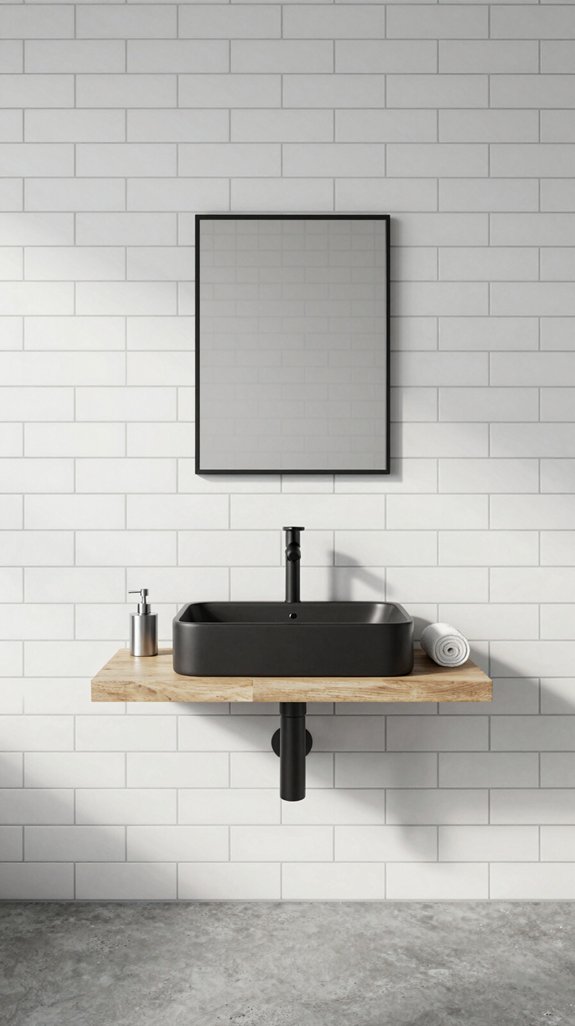
Subway tiles offer a timeless solution for achieving minimalist bathroom contrast through their rectangular geometry and adaptive versatility. You’ll find them available in classic white or vibrant hues, with gloss, matte, and textured finishes for customization.
White grout against dark tiles—like green or blue—highlights architectural patterns beautifully. Glossy surfaces reflect light, creating spa-like tranquility while elongating walls through vertical stacking.
These ceramic or porcelain tiles resist moisture, stains, and mildew, requiring minimal maintenance. Their standardized sizes reduce installation costs considerably, making full renovations budget-friendly.
You’ll achieve contemporary contrast by pairing neutral palettes with bold accents, delivering both aesthetic sophistication and practical durability. Consider incorporating decorative hanging clips to display minimal bathroom accessories and artwork that complement your subway tile design.

Beyond paint counter top paint pint color ash

𝐃𝐞𝐬𝐢𝐠𝐧 : Teal wallpaper offers a soft, comforting hue that brings warmth to modern spaces and adds a touch of comfort to everyday life

【Beach Sunset Seascape Black and White Picture size】Beach Wall Decor 20x40inches, this Beach Sunset wall art a pink and white palette that accentuates the serene atmosphere.
Select Marble Flooring to Reduce Maintenance
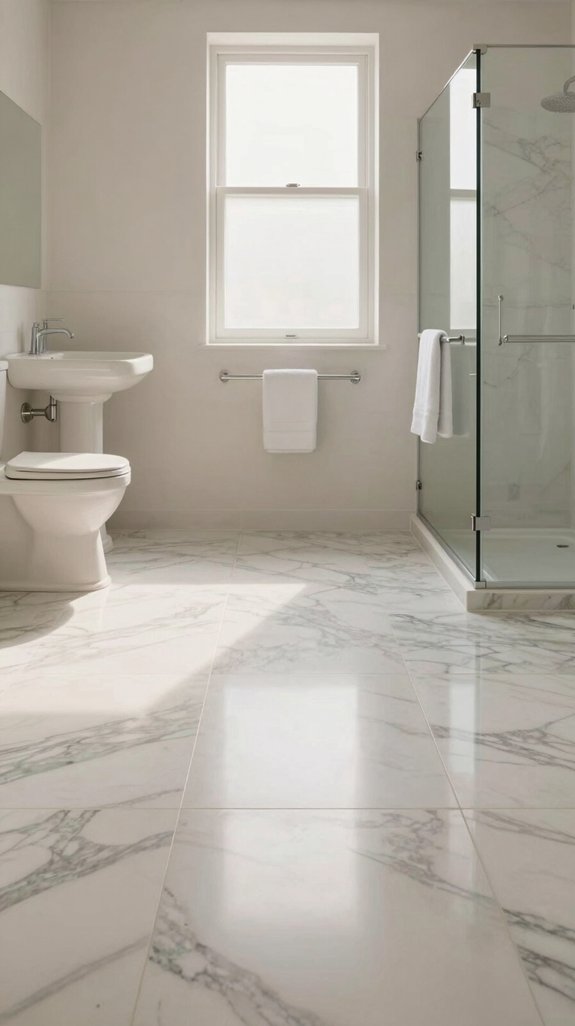
Marble’s natural durability makes it an exceptional choice for bathroom flooring that’ll maintain its pristine appearance for decades.
You’ll appreciate its inherent hardness, which resists scratches and chipping while enhancing property value. The material’s water-resistant composition performs exceptionally in high-humidity environments like showers.
Implement strategic maintenance: seal annually, wipe spills immediately, and use pH-neutral cleaners with microfiber mops. Deep clean every two weeks in primary bathrooms. For optimal results, always apply pH-neutral cleaning solutions specifically formulated for natural stone to avoid etching and discoloration.
While marble demands consistent upkeep, the minimal aesthetic payoff—combining elegance with functionality—justifies the commitment, delivering a sophisticated, enduring bathroom design.

Sage Green Bathroom Rules Accessories: you will receive 2 pieces of rustic wooden green bathroom wall decorations in different styles, full of warm feelings, proper for you to bring your bathroom an attractive look, These green bathroom accessories will not only give you visual appeal but will also give you an warm and relaxing feeling

🌿This is a Small size bath rug, 16X24 Inches, if you like our quality or style, variou sizes available, please make sure choose the right one🌿

Ultra-Soft Chenille Comfort: HOMEIDEAS bath rugs are made with thick chenille fibers that feel soft and cozy underfoot, helping create a warm and relaxing feeling after showers or daily bathroom use. Ideal for family bathrooms, guest bathrooms, and apartment spaces.
Update Your Fixtures With Warm Metal Hardware
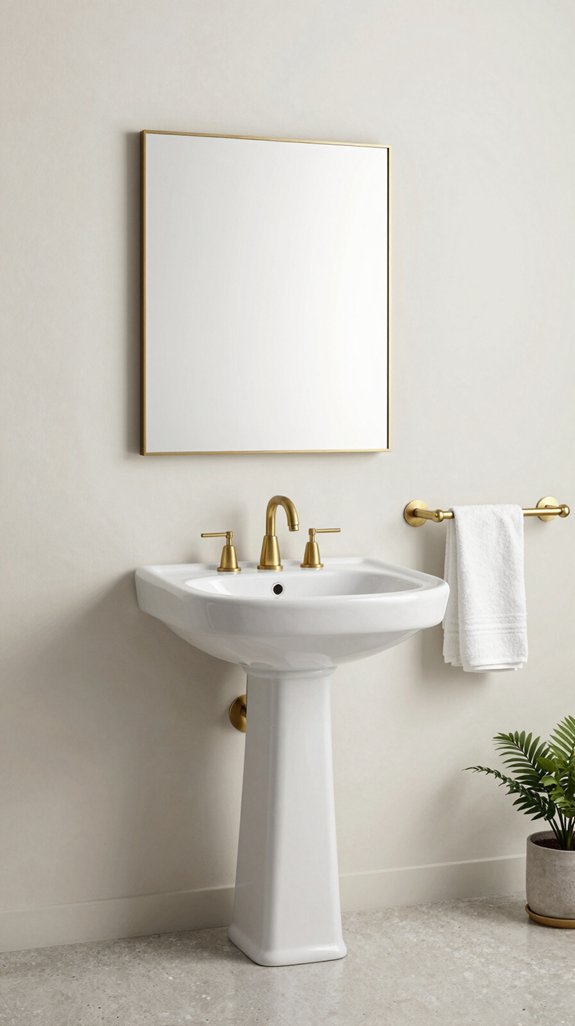
While marble flooring establishes your bathroom’s foundation, updating your fixtures with warm metal hardware elevates the entire design.
Consider brushed nickel‘s matte, textured silver finish with warm undertones—it pairs seamlessly with marble’s cool tones. Alternatively, champagne bronze complements stainless steel accents, creating sophisticated visual continuity.
For traditional aesthetics, oil-rubbed bronze offers timeless appeal. Employ mixing strategies by incorporating satin brass faucets with brushed nickel hardware across multiple surfaces, ensuring balanced distribution.
SpotShield technology on nickel finishes minimizes maintenance demands. Pairing your hardware with integrated lighting fixtures can enhance the ambient illumination while maintaining your minimalist aesthetic. Select complementary finishes that create intentional contrast without visual discord, establishing a cohesive, minimalist bathroom environment.

【5 Pieces Towel Bar Set】- Our bathroom hardware set includes 1 x towel bar(23.6-Inch), 1 x toilet paper holder, 1 x towel ring, 2 x coat hook, screw hardware pack(for screw-mount), and installation instructions. we give you a preferential combination to meet your needs.
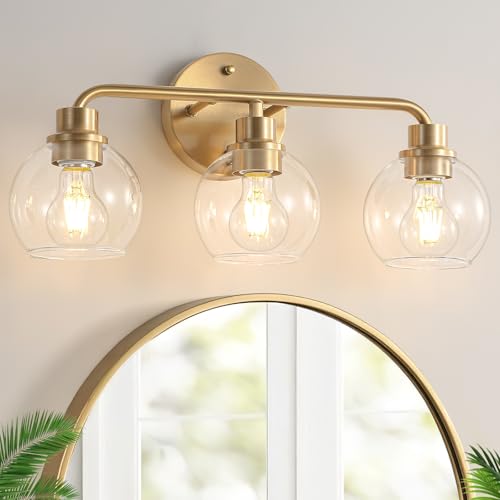
🏵️Stunning Pure Gold Color & Modern Design: Our 3-light gold vanity lights have a very pure gold color that will never let you down! Crafted from metal and globe glass shades, this gold wall mount light finished in a gold stylish appearance! Total brushed brass vanity light size 19.69 inch L x 6.96 inch W x 9.11 inch H.

Complete 5-Piece Bathroom Set: Instantly upgrade your bathroom with a coordinated set including a 23.6” towel bar, toilet paper holder, towel ring, and 2 robe hooks for a clean, unified look.
Hide Plumbing Behind Walls for Clean Lines
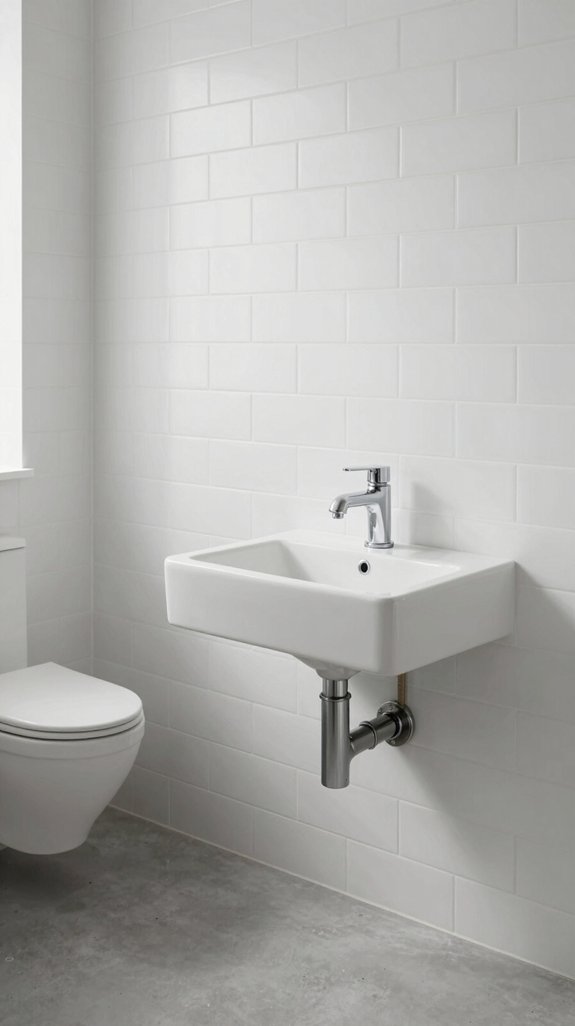
Beyond selecting the right fixtures, you’ll want to address what lies behind your walls—exposed plumbing that disrupts the minimalist aesthetic you’ve worked to establish.
Consider erecting plasterboard stud walls or pipe boxing systems that conceal pipework while maintaining accessibility for maintenance.
Alternatively, decorative cladding and waterproof panels offer sophisticated concealment without extensive framing.
Wall-hung vanities strategically hide floor plumbing, creating seamless visual flow.
For a contemporary approach, recessed flush-mount channels provide smooth surfaces that integrate seamlessly with your design.
These solutions deliver both functional efficiency and the clean-lined appearance essential to minimalist bathroom design.

Material: Medium Density Fiberboard, outlasts wood in damp bathroom environments

Elegant Modern Design: This round-shaped mirror features a stunning floating illusion, instantly elevating your space with a modern touch while hides the jewelry organizer behind the mirror

5 TIERS, 10 LBS PER TIER: Five 9.3-inch shelves stack 37.8 inches high and hold 10 lbs each, sized for bedside tables and vanities; Books, plants, photos and small collectibles stay supported
Add Chrome or Nickel Throughout for Cohesion
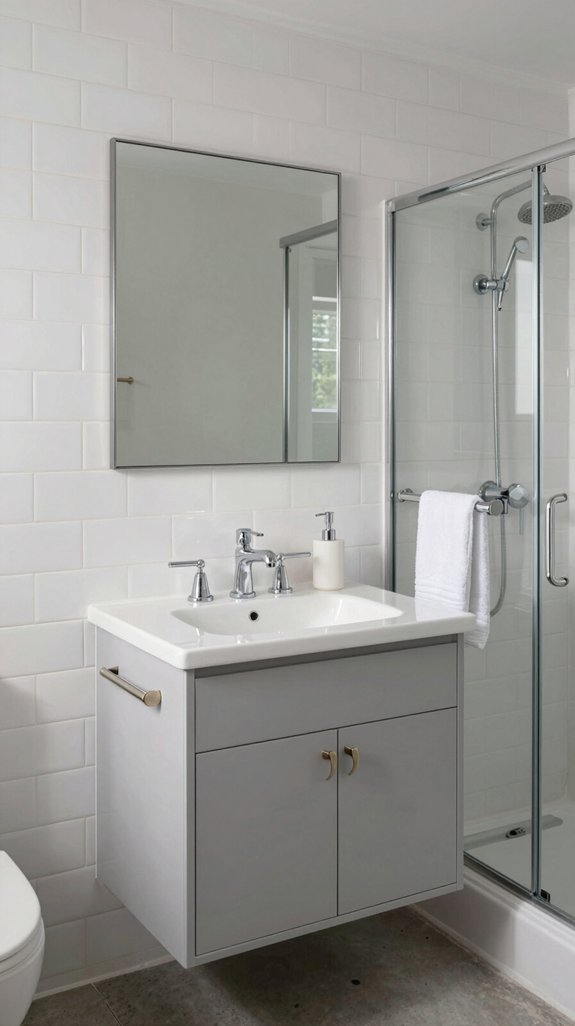
Two metal finishes dominate contemporary bathroom design: chrome and nickel.
You’ll achieve visual cohesion by selecting one finish throughout your space—applying it consistently across faucets, showerheads, and towel bars.
Chrome delivers a mirror-like, reflective aesthetic that amplifies minimalist interiors with its cool brightness. Nickel offers sophisticated elegance through its brushed finish, harmonizing seamlessly with stainless steel appliances.
While chrome requires frequent cleaning to eliminate water spots, nickel’s satin texture conceals fingerprints effectively. Both finishes demonstrate exceptional durability in moisture-rich environments.
Chrome remains more affordable and readily available, whereas nickel demands less maintenance in hard water conditions. For marble surfaces in your bathroom, consider marble polishing kits to maintain their shine and remove water spots alongside your metal fixture care routine. Your choice determines your design narrative.
Float Your Vanity to Open Small Bathrooms
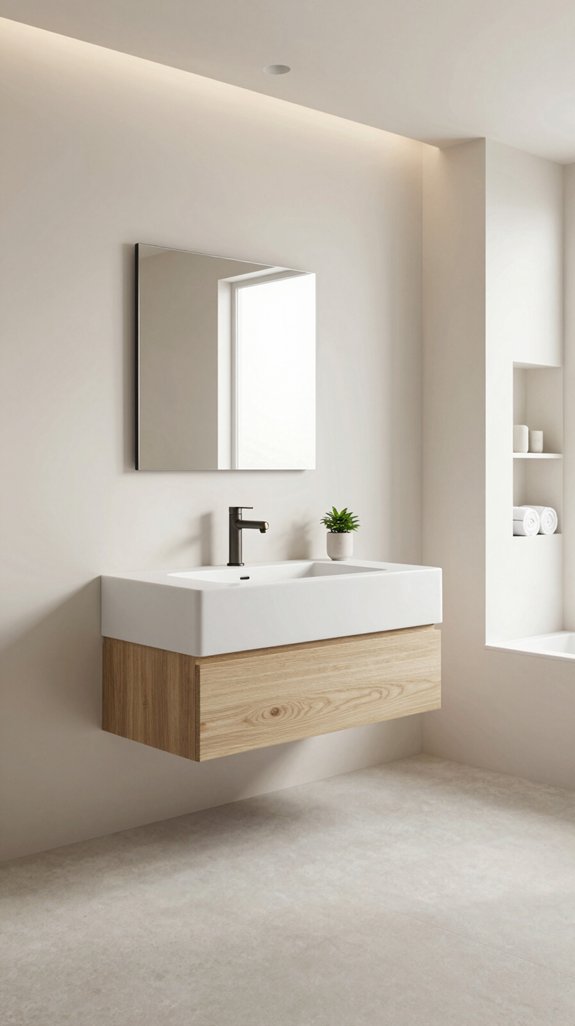
After establishing cohesion through your metal finishes, you’ll amplify that curated aesthetic by reconsidering your vanity’s placement.
Floating your vanity exposes flooring underneath, creating uninterrupted sightlines that visually expand confined spaces. This elevated installation allows light to reflect evenly across lower wall areas, maximizing brightness throughout your bathroom.
You’ll also gain practical advantages: sweeping and mopping become effortless, airflow increases, and moisture accumulation decreases considerably. Customize the height for ergonomic comfort or accessibility needs.
Paired with wall-mounted faucets, floating vanities maintain clean lines while delivering efficient storage through optimized compartmentalization, achieving minimal aesthetics without compromising functionality. Keep your bathroom surfaces pristine by using interior automotive cleaning techniques to remove dust and debris from tight corners and fixtures.
Choose Glass Doors to Maximize Light
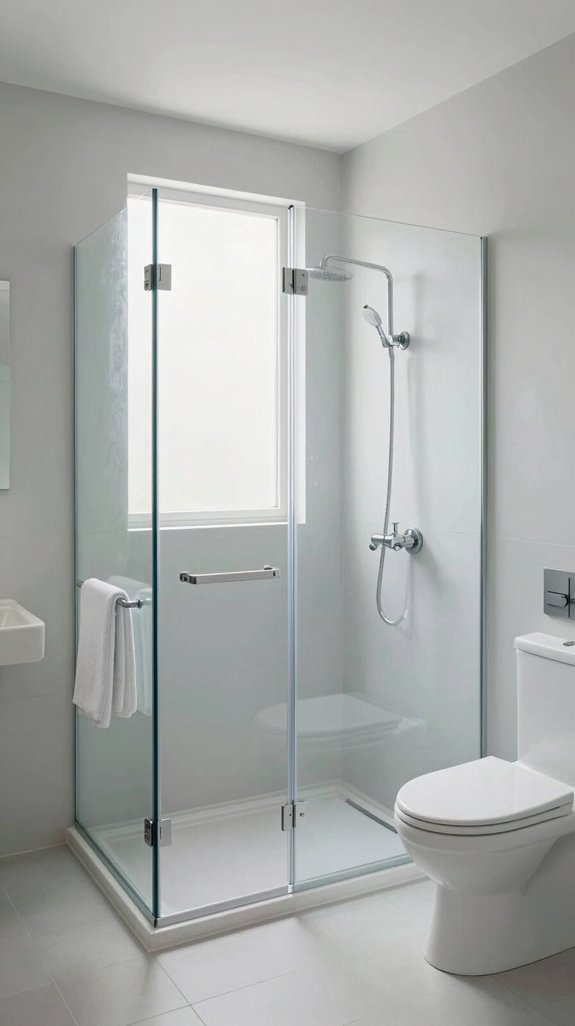
Glass shower doors amplify your bathroom’s luminosity by eliminating the visual barriers that curtains and opaque enclosures create. Frameless designs establish uninterrupted sight lines, reflecting both natural and artificial light to brighten compact spaces.
Transparency maximizes light penetration, while floor-to-ceiling panels enhance perceived height and openness. You’ll appreciate how glass seamlessly integrates into minimalist aesthetics without bulky framing.
Frosted options provide privacy while maintaining luminous diffusion. Beyond aesthetics, tempered glass resists scratching and chipping, and ShowerGuard technology seals surfaces against corrosion, minimizing maintenance demands compared to traditional curtains.
Add Wood Trim for Warmth Without Complexity
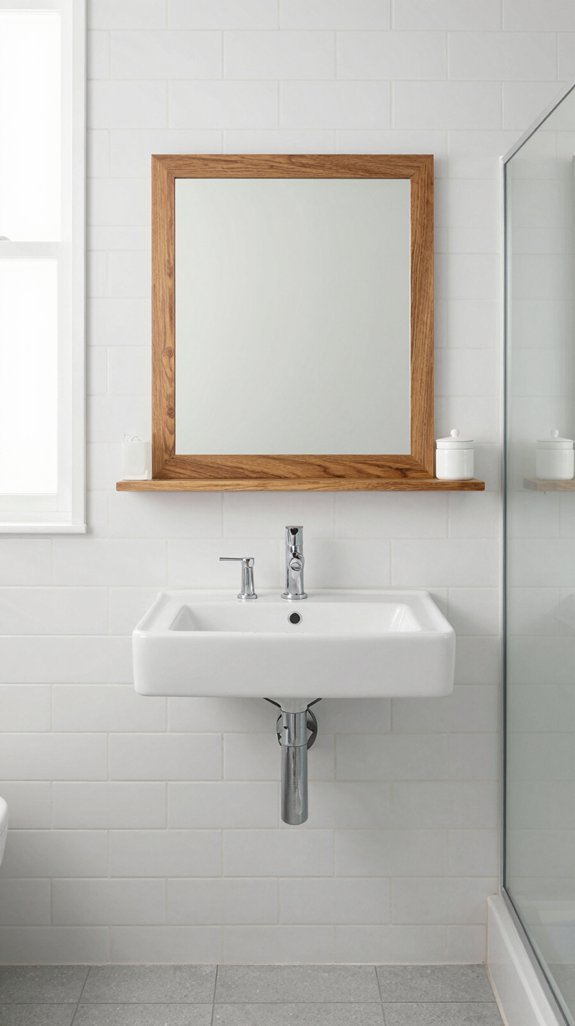
While frameless glass doors maximize light and openness, you’ll want to introduce warmth and visual interest through strategically placed wood trim.
Install baseboards using finish nails secured every 16 inches into studs, with wood glue reinforcing the bond. Precision matters—measure each wall section carefully and cut 45-degree miters for seamless corner joints. Dry-fit pieces beforehand to verify alignment.
After installation, sink nails below the surface using a nail set, fill holes with wood filler, and apply paintable caulk along top edges. This refined approach delivers warmth without cluttering your minimalist bathroom aesthetic.
Combine Marble With Wood for Texture
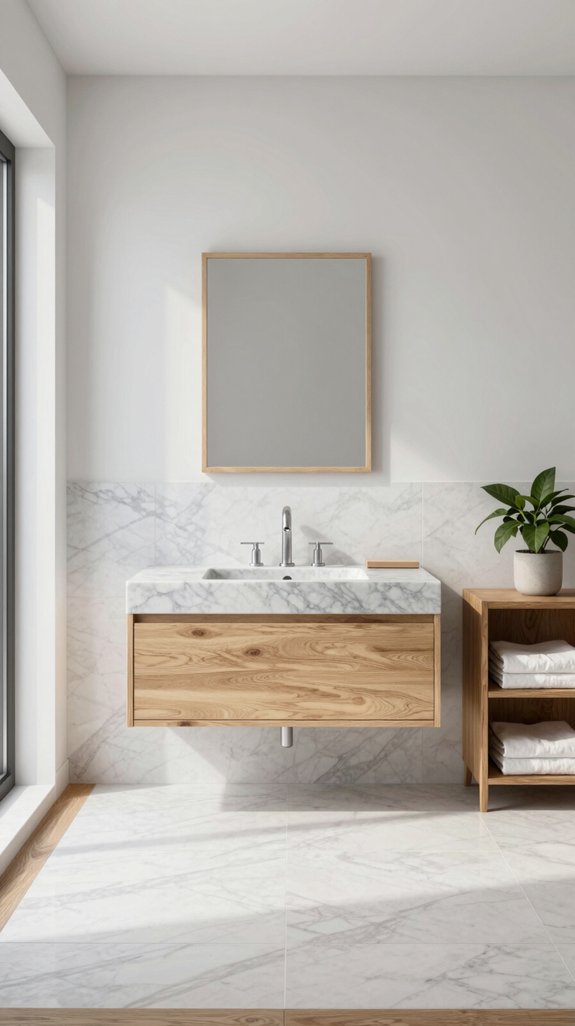
To elevate your minimalist bathroom beyond monochromatic restraint, you’ll want to introduce the textural contrast that marble and wood create together. This yin-yang harmony grounds clean aesthetics while maximizing visual interest.
Consider pairing light marble veining with dark wood for dramatic effect, or deploy wood-look porcelain stoneware flooring as your warm base. Marble-look stoneware on shower walls amplifies sophistication without compromising functionality.
Ultra-thin stoneware vanity tops coordinate seamlessly with your flooring palette. Integrate freestanding marble dividers alongside wooden furniture to achieve curated bespoke character. Keep marble surfaces gleaming with stainless steel cleaning sprays designed to maintain their lustrous appearance without streaking.
These material combinations deliver endless decorating possibilities while maintaining the serene simplicity you’re pursuing.
Choose a Design Philosophy: Japandi Minimalism
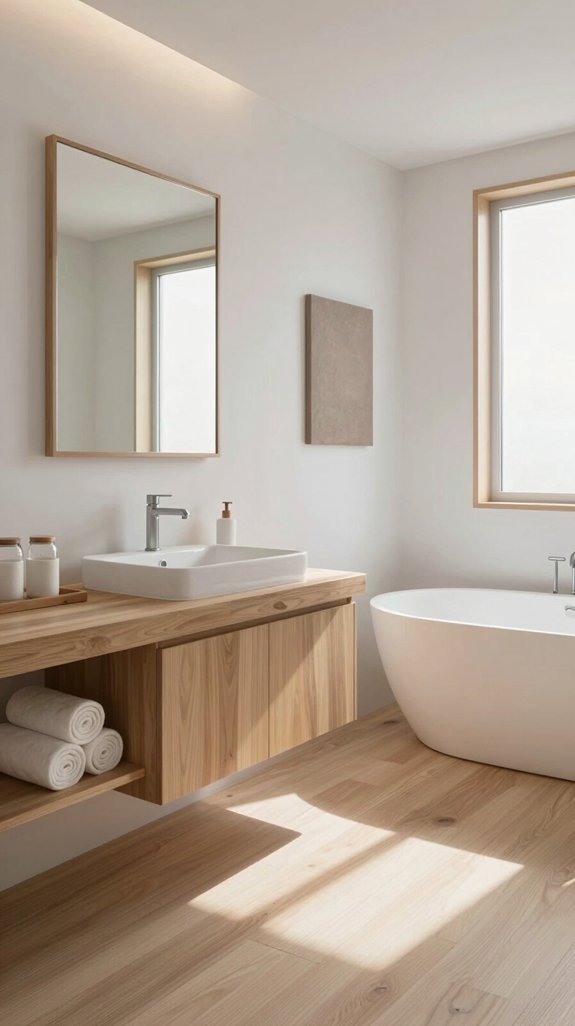
Marble and wood establish your textural foundation, but Japandi minimalism provides the philosophical framework that unifies your entire bathroom aesthetic. This design paradigm merges Japanese wabi-sabi principles with Scandinavian functionality, celebrating imperfections while maintaining purposeful elegance.
You’ll eliminate visual clutter through concealed storage and neutral palettes—soft whites, beiges, warm grays—creating a spa-like sanctuary. Every fixture serves dual roles: aesthetic statements and practical functions. Freestanding bathtubs become focal points; frameless mirrors reduce visual weight.
Natural materials flow seamlessly across surfaces. Strategic lighting and plant placement reinforce your connection to nature, establishing a cohesive design philosophy that prioritizes tranquility without sacrificing innovation or sophistication.
Consider an Open Wet Room Layout
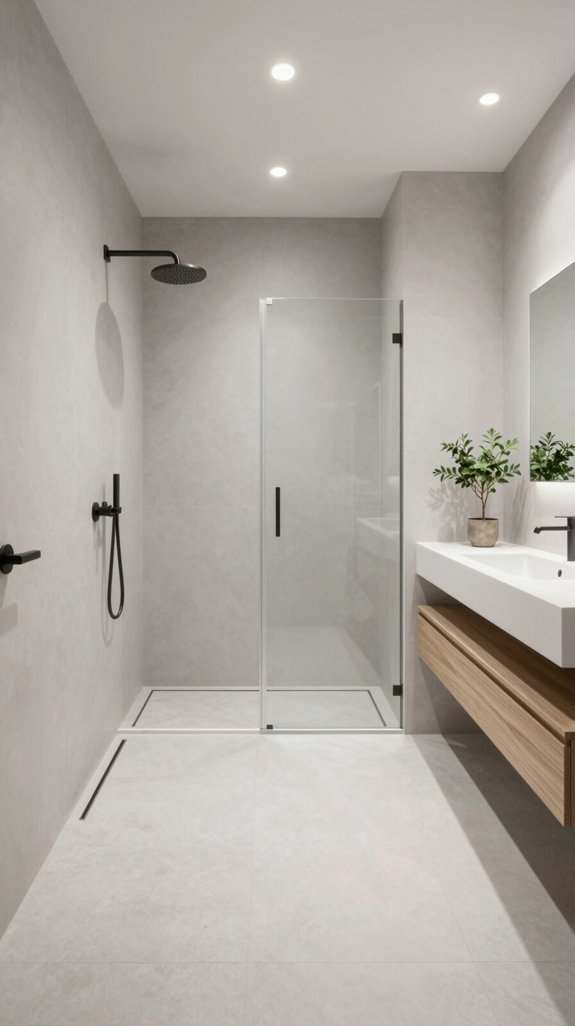
Because your Japandi-inspired bathroom demands uncompromising visual continuity, an open wet room layout amplifies the minimalist philosophy you’ve established through marble, wood, and purposeful design.
Eliminating shower enclosures and traditional fixtures creates seamless surfaces that enhance spatial perception while reducing visual clutter. This approach maximizes functionality in compact urban spaces through integrated drainage and waterproofed membranes.
The barrier-free design accommodates accessibility requirements while streamlining maintenance—fewer grout lines mean reduced mildew accumulation. Large-format tiles and unbroken flooring reinforce contemporary aesthetics, delivering the spa-like tranquility characteristic of refined minimalism. Strategic use of 3D wall art can introduce subtle textural depth without compromising the minimalist aesthetic, adding visual interest through dimensional surfaces.
Explore Zellige Tile for Earthy Tones
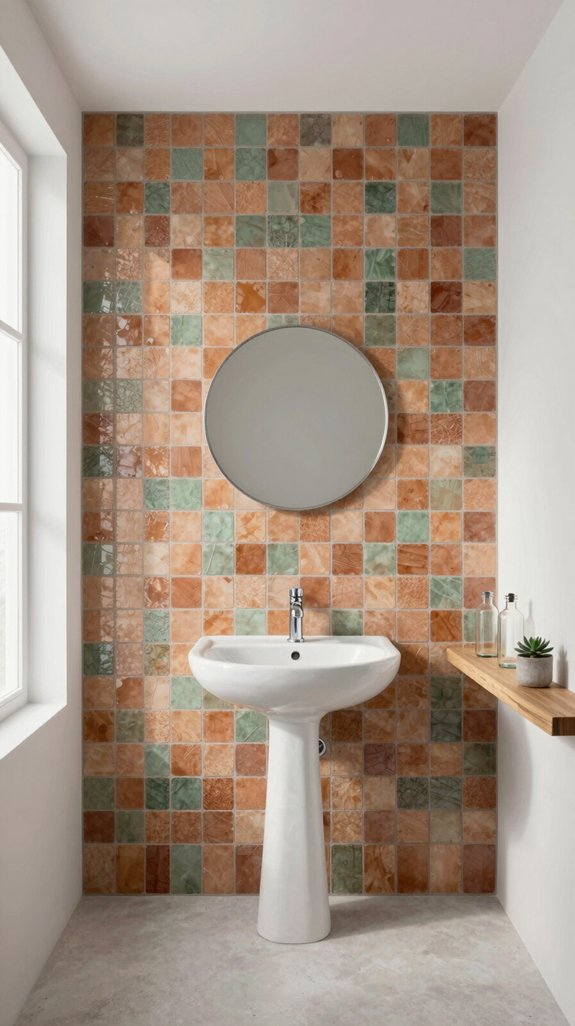
While your open wet room establishes seamless minimalism, zellige tile introduces authentic artisanal character through centuries-old Moroccan craftsmanship.
These handcrafted tiles feature subtle variations in tone and thickness that create luminous, vibrant surfaces without visual monotony. You’ll appreciate the glossy glaze reflecting light dynamically across undulating textures, adding sensory depth to minimalist spaces.
Consider sea green or alabaster tones paired with brass fixtures for sophisticated restraint. Install vertically as accent features behind freestanding tubs or throughout shower walls.
The slight irregularities guarantee no two installations remain identical, delivering bespoke elegance while maintaining your clean aesthetic vision.
Frequently Asked Questions
How Do I Maintain Marble Flooring to Keep It Looking Pristine in Humid Bathroom Environments?
You’ll maintain pristine marble by sealing every 6-12 months, immediately addressing spills, ensuring superior airflow with dehumidifiers, and employing pH-neutral cleaners. You’re preventing moisture absorption and etching through strategic humidity management.
What Lighting Options Work Best for Minimalist Bathrooms Without Adding Visual Clutter?
You’ll achieve minimalist aesthetics through integrated backlit mirror systems, ultra-thin linear LED vanity lights, and strategically positioned wall sconces that eliminate visual clutter while maximizing illumination efficiency through reflective surfaces.
How Can I Incorporate Storage Solutions While Maintaining a Clean, Uncluttered Minimal Aesthetic?
You’ll master the minimalist paradox by concealing storage vertically—floating cabinets, recessed shelves, and mirrored units compress functionality into walls. You’re eliminating visual noise while you maximize space through stackable organizers and pull-out mechanisms that won’t compromise your aesthetic.
What’s the Difference Between Japandi and European Spa Bathroom Design Philosophies?
You’ll find Japandi emphasizes wabi-sabi imperfection and minimalist sustainability, while European spa design prioritizes luxurious indulgence and ornamental aesthetics. Japandi celebrates natural asymmetry; European spas showcase polished, refined opulence.
Are Frosted Shower Curtains as Effective as Glass Doors for Creating Spaciousness?
You’ll find that 73% of designers prefer frameless glass doors for spatial perception. While frosted curtains diffuse light softly, glass’s transparency and clean lines create superior depth illusion, delivering your bathroom’s minimalist aesthetic innovation.
References
- https://www.extraspace.com/blog/home-organization/ideas-for-minimalist-bathroom-inspiration/
- https://www.homesandgardens.com/bathrooms/minimalist-bathroom-ideas
- https://www.domino.com/design-by-room/minimalist-bathroom-ideas/
- https://maamihome.com/en/journal/5-minimalistic-bathroom-ideas
- https://www.houzz.com/photos/small-bathroom-ideas-and-designs-phbr1-bp~t_712~a_30-231
- https://www.benjaminmoore.com/en-us/paint-colors/neutral-bathroom
- https://kaitlinmadden.com/paint-colors-for-a-small-bathroom-with-no-windows/
- https://www.farrow-ball.com/room-inspiration/bathroom-ideas/neutral-bathrooms
- https://www.housebeautiful.com/room-decorating/colors/g70063666/neutral-paint-colors-designer-favorites/
- https://oneweekbath.com/blog/insights/the-best-paint-colors-for-bathrooms/