You’ll start by mapping zones—seating, herb beds, a fountain—using a grid that aligns sightlines and lets you re‑configure paving with modular stone or hexagonal basalt. Choose warm ochre terracotta tiles in linear or diamond motifs, and herringbone reclaimed limestone for the patio. Add a mosaic‑tiled water feature, a classic stone fountain, and colorful ceramic pots with drip irrigation. Build a small olive‑oil tasting corner, seal all surfaces with UV‑stable polymer, and finish with vines, statues, and hidden speakers. Keep going for deeper details.
Plan Your Mediterranean Backyard Layout
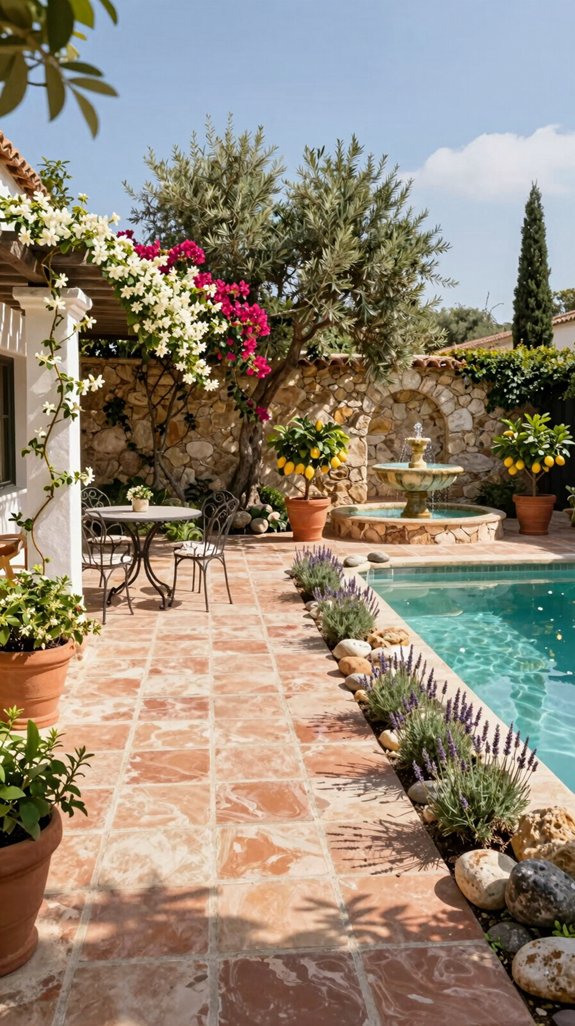
When you start planning your Mediterranean backyard layout, begin by mapping the main zones—seating, garden beds, and water features—so each flows naturally into the next. You’ll use a grid overlay to align sightlines, ensuring the pergola frames the patio while the olive grove borders the fountain. Apply modular paving that respects curvature yet supports easy reconfiguration. Integrate built‑in irrigation channels beneath stone pathways for seamless moisture control. Position lighting nodes at zone intersections, allowing programmable ambience that reacts to sunset hues. Prioritize low‑maintenance, drought‑tolerant plant palettes that reinforce the aesthetic while conserving resources. This systematic, adaptable framework yields a cohesive, innovative outdoor sanctuary.

𝐏𝐑𝐄𝐌𝐈𝐔𝐌 & 𝐃𝐔𝐑𝐀𝐁𝐋𝐄 𝐀𝐂𝐀𝐂𝐈𝐀 𝐖𝐎𝐎𝐃: Made from 100% natural acacia wood with a deep-oil finish, these interlocking decktiles are sturdy, water-resistant, and built for outdoor conditions. Sanded smooth for a premium wood grain look, a smooth-finished surface, and a noticeably smoother barefoot feel - comfortable for families and pets.

𝐏𝐑𝐄𝐌𝐈𝐔𝐌 & 𝐃𝐔𝐑𝐀𝐁𝐋𝐄 𝐀𝐂𝐀𝐂𝐈𝐀 𝐖𝐎𝐎𝐃: Made from 100% natural acacia wood with a deep-oil finish, these interlocking decktiles are sturdy, water-resistant, and built for outdoor conditions. Sanded smooth for a premium wood grain look, a smooth-finished surface, and a noticeably smoother barefoot feel - comfortable for families and pets.
Choose Terracotta Tile Colors and Patterns
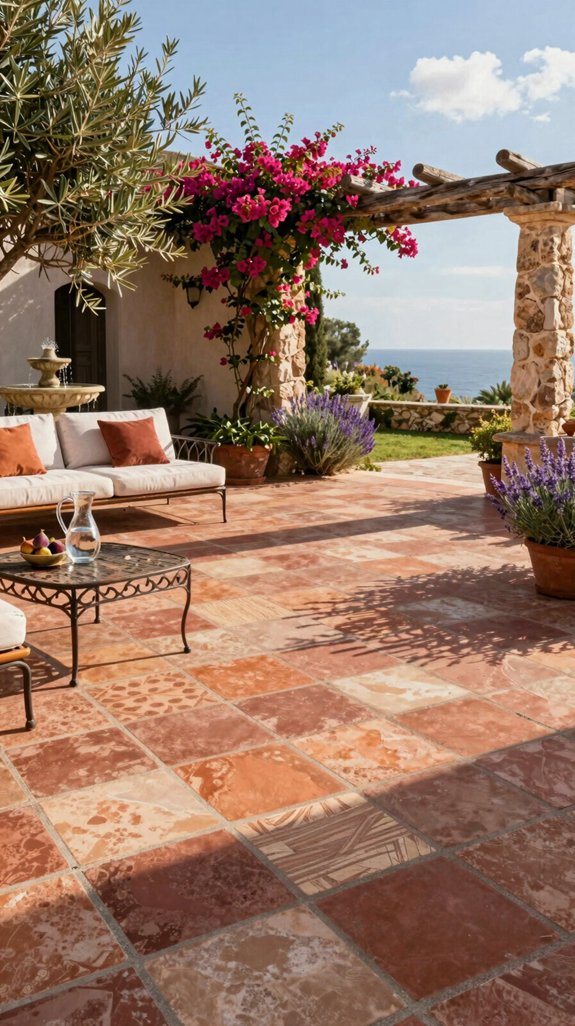
Mapping the zones has given you a clear framework, so now you can focus on the terracotta tiles that will tie the patio, pathways, and garden beds together. Choose a base hue that echoes sun‑baked earth—warm ochre or deep rust—to anchor the Mediterranean palette. Pair it with subtle linear or diamond motifs that echo classical mosaics while maintaining modern minimalism. Consider glazed finishes for slip resistance and weather resilience, and integrate contrasting grout tones to accentuate pattern geometry. Test sample sections under midday light to verify color shifts, then scale the chosen scheme across all hardscape surfaces for cohesive, innovative visual flow. While earthy terracotta tones dominate Mediterranean exteriors, you can introduce airy, relaxing spaces by incorporating sky-blue accents in nearby seating areas or garden structures to create visual interest and balance.

RELAXING WATER FLOW: Enhance your outdoor space with the Alpine Corporation 2 Tier Barrel and Pump Water Fountain. Water gently cascades from the pump spout into the rustic barrel tiers, creating a soothing and peaceful ambiance. Perfect for relaxing in your garden, patio, or yard, this fountain adds a tranquil touch to your outdoor oasis, helping you unwind and enjoy nature’s calming sounds.

RELAXING WATER FLOW: This 4 Tier Rock Water Fountain features a soothing waterfall cascade, where water flows from tier to tier, mimicking the sound of a real waterfall. Ideal for creating a tranquil atmosphere in your garden, patio, backyard, or porch. With its consistent water flow powered by a reliable pump, this outdoor fountain adds a calming element to your outdoor décor, making it perfect for relaxation and stress relief.

HANGING CUPS TIER DESIGN: Features 6 cascading cups that create a stunning waterfall effect for your home or garden. The soothing movement of water provides a peaceful ambiance, making it perfect for patios, entryways, yards, or indoor spaces.
Select a Stone‑Paving Pattern for the Patio
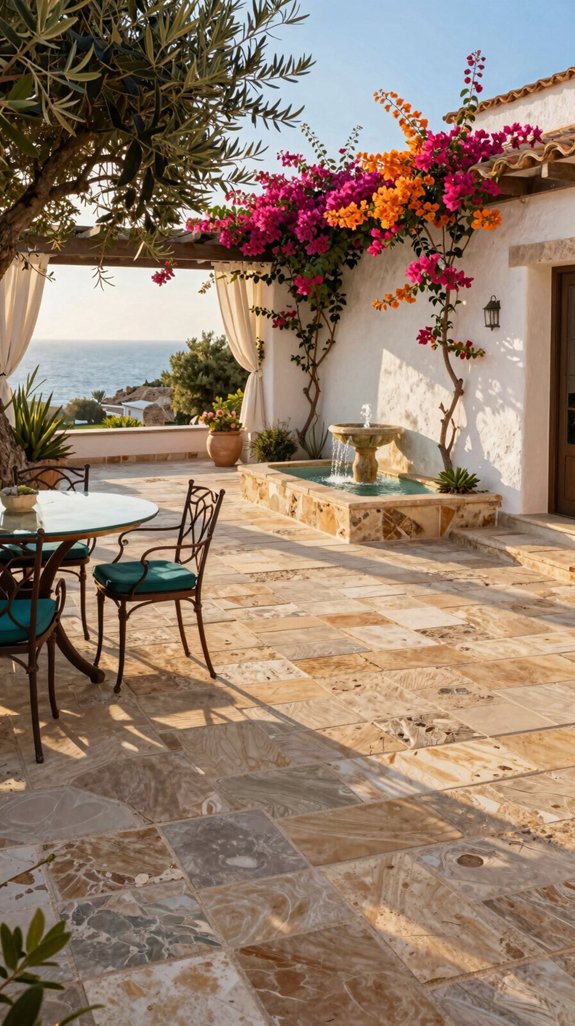
If you want the patio to echo the sun‑worn streets of a coastal village, start by choosing a stone‑paving pattern that balances texture and geometry. Opt for a herringbone layout with reclaimed limestone to create directional flow while preserving slip‑resistance. A modular hexagonal grid using basalt offers tactile contrast and efficient material usage. Integrate subtle grading so water drains toward perimeter drains, preventing pooling. Pair patterned sections with smooth border stones to frame seating zones and guide foot traffic. Select a muted palette of warm greys and ochres to harmonize with terracotta accents, reinforcing the Mediterranean narrative while supporting modern, low‑maintenance performance. To maintain the beauty of your stone surfaces, use essential brick surface cleaners periodically to remove weathering and preserve the warm patina of your patio.

The plant water Seeping device is made of high quality terracotta and has a sustainable and steady flow of water. The watering post can water your plants for a week. Size of watering pile: length 7 in. Caliber: 1.78 in

【Terracotta Watering Spikes】12 Pack plant watering devices, made from porous terracotta, can automatically seep water,these watering spikes deliver water directly to plant roots gradually, preventing over/under-watering & promoting healthier growth.

THE BEST FOR YOUR PLANTS: Stop fussing and take care of your plants with a consistent supply of water every day. Unlike traditional self-watering systems and devices, we use a simple terracotta feeder that can be refilled from the top for faster easier care than ever before.
Install a Mosaic‑Tiled Water Feature
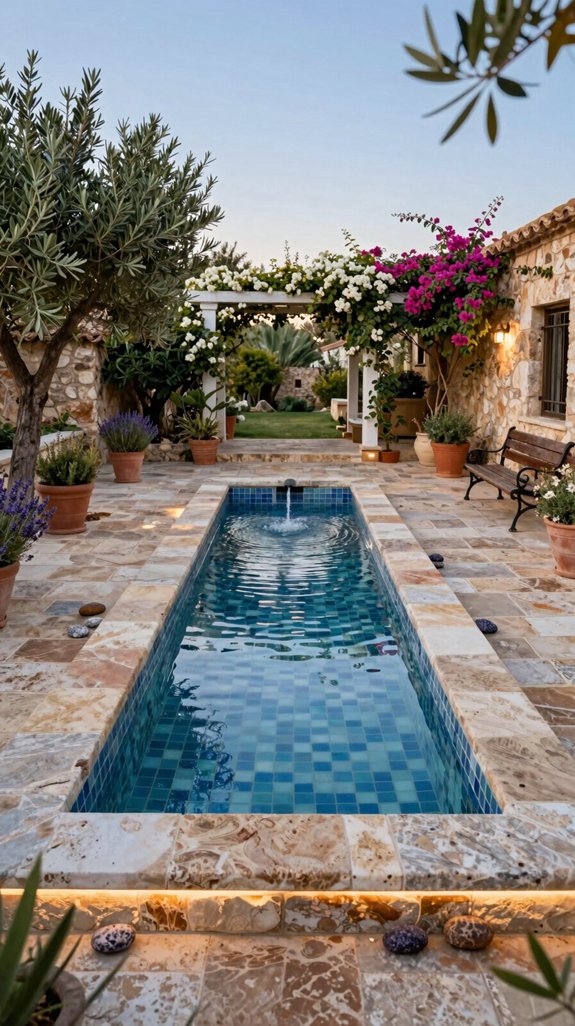
Even before the first stone is set, plan the mosaic‑tiled water feature’s layout, pump capacity, and drainage to guarantee seamless integration with the patio’s stone‑paving pattern. Sketch a grid that mirrors the existing tessellation, then select marine‑grade tiles in sun‑worn blues and terracotta glazes for visual cohesion. Choose a variable‑speed pump that matches the basin volume, ensuring a gentle cascade that avoids splashing onto surrounding pathways. Install a concealed reservoir beneath a raised slab, routing runoff through a discreet trench that feeds the garden irrigation system. Anchor the tile perimeter with silicone‑based sealant, then test flow rates before filling, adjusting for acoustic balance and energy efficiency.

Wet-Area Ready, No Sealing Required: Pre-finished with cured linseed oil — a natural plant-based wood finish — these tiles install straight from the box — no sealant, no prep, no waiting. Raised base channels water underneath for patios, balconies, pool surrounds, and shower floors

Box of 30 = 7.5 Sq Ft: Thirty 6x6-inch tiles cover 7.5 square feet (4 tiles per sq ft) — plan restaurant, kitchen, and patio floors with confidence.

𝐏𝐑𝐄𝐌𝐈𝐔𝐌 & 𝐃𝐔𝐑𝐀𝐁𝐋𝐄 𝐀𝐂𝐀𝐂𝐈𝐀 𝐖𝐎𝐎𝐃: Made from 100% natural acacia wood with a deep-oil finish, these interlocking decktiles are sturdy, water-resistant, and built for outdoor conditions. Sanded smooth for a premium wood grain look, a smooth-finished surface, and a noticeably smoother barefoot feel - comfortable for families and pets.
Add a Classic Stone Fountain
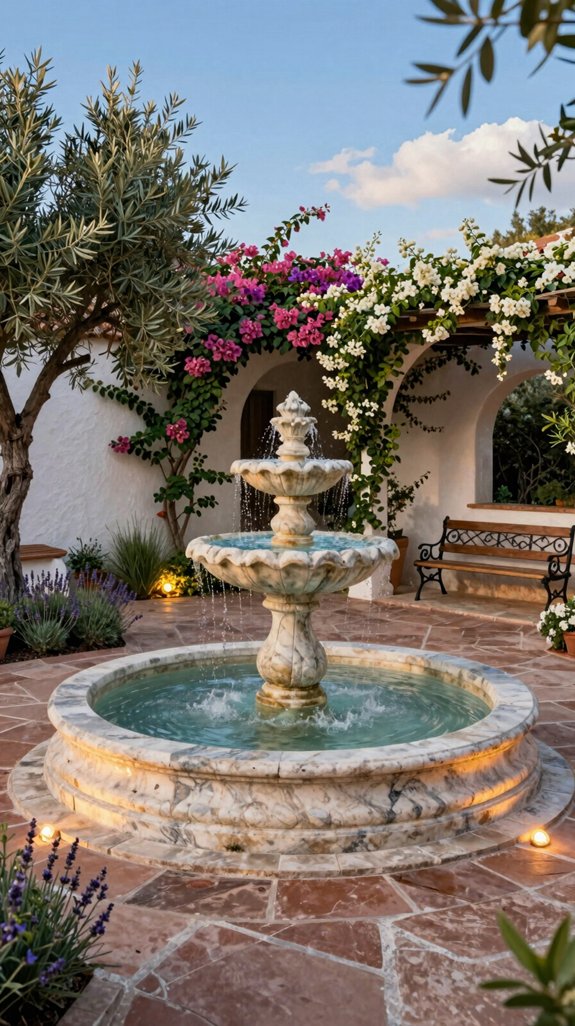
When you position a classic stone fountain, first map its footprint against the patio’s existing geometry so the basin aligns with the surrounding paving and sightlines. Choose a limestone or travertine core that echoes ancient courtyards yet tolerates modern traffic loads. Integrate a recirculating pump concealed within a recessed riser, routing tubing through discreet channels to preserve visual purity. Pair the fountain with low‑profile LED uplighting that highlights water texture while conserving energy. Anchor the structure with stainless‑steel brackets to prevent shifting on uneven soil. Keep the stone surfaces clean and well-maintained using driveway cleaning products designed to remove mineral deposits and algae growth without damaging natural stone finishes. The result is a timeless centerpiece that balances heritage aesthetics with contemporary performance.

1.Unique Design: Waterfall fountain features a modern yet timeless design inspired by natural waterfalls. Its tiered structure creates a mesmerizing visual effect. Perfect for yards, entryways, or poolside areas, complementing any landscape style.

Modern Outdoor Water Feature with Weather Resistant Construction: Made of durable weather-resistant resin, this fountain withstands rain, frost, and UV exposure while maintaining its elegant brown finish. Sized at 40.9 inches tall, it enhances outdoor spaces like gardens, patios, yards, porches, and living rooms with soothing water sounds

[Floating Solar Fountain] Powered by a 3.5W solar panel, this solar water fountain runs automatically under direct sunlight—no power supply needed. Designed to float on water surfaces, it adds dynamic movement and soothing sounds to bird baths, ponds, and pools
Build a Pergola Draped With Bougainvillea
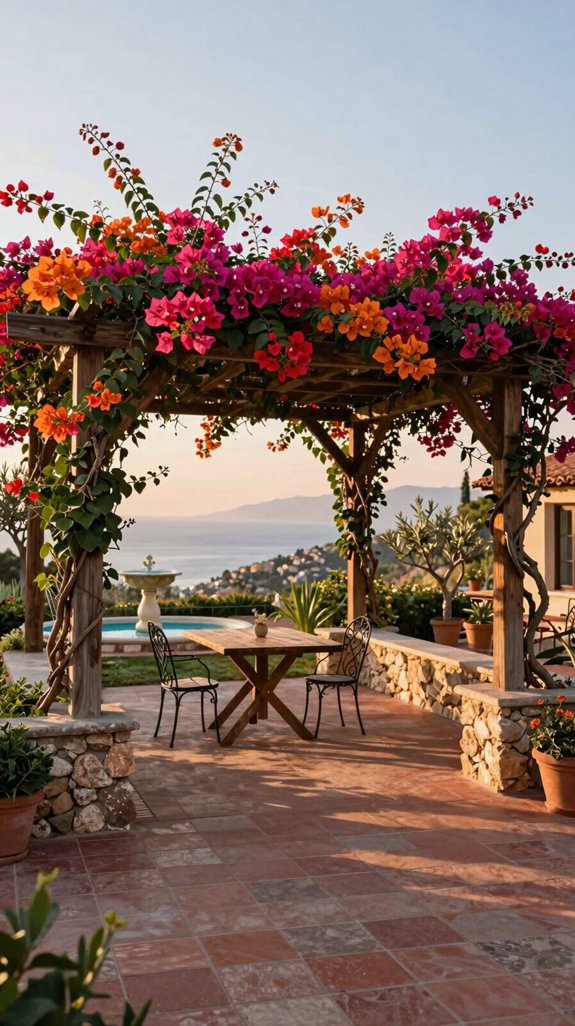
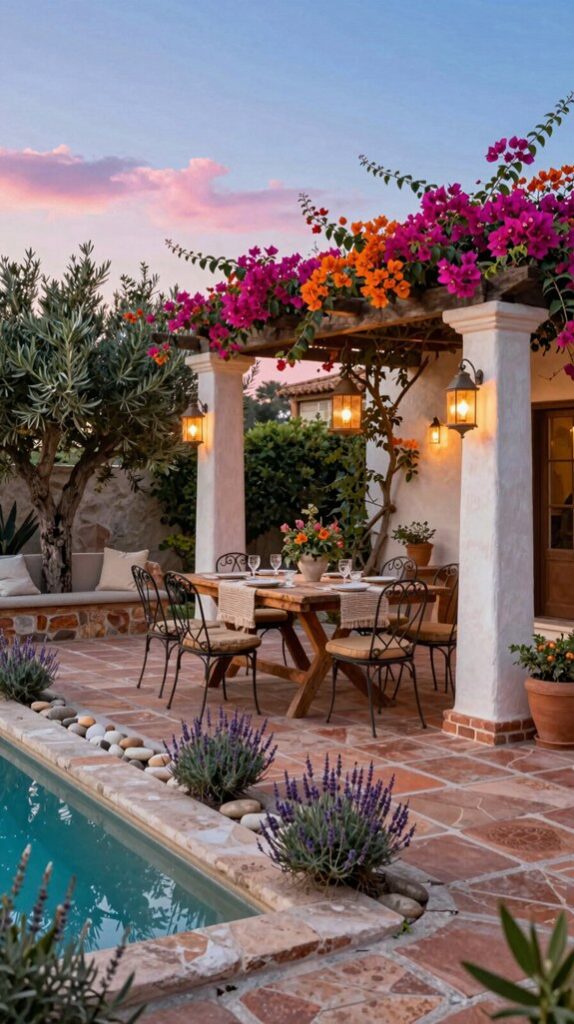
Choosing a sturdy, weather‑resistant timber or metal frame, you’ll anchor the pergola’s posts to the patio’s footing grid, ensuring each beam aligns with the existing paving lines for seamless integration. Next, attach a lattice of galvanized brackets that support bougainvillea vines while allowing airflow. Select a dwarf, fast‑growing cultivar, prune regularly, and train shoots onto the cross‑bars using biodegradable ties. Integrate a drip‑irrigation line beneath the lattice to deliver precise moisture, conserving water and promoting vibrant blossoms. Finish with a UV‑stable sealant that protects the structure and enhances the Mediterranean aesthetic, delivering both shelter and living décor. Consider incorporating weather-resistant outdoor cabinets nearby to store gardening tools, irrigation equipment, and maintenance supplies for convenient access during pergola upkeep.

【Keep Your Plants Watered While You're Away】Whether you're traveling, working, or simply busy, KIROYAL self watering spikes help provide consistent moisture for your plants. Enjoy worry-free plant care without daily watering.

[STURDINESS] Improved new material different from normal terracotta, strong but still release water enough for soil.

Custom layout: This watering system is equipped with freely spliced and adjustable water pipe components, completely breaking the space limitations of traditional watering equipment and achieving flexible design with adjustable distance and compact layout. Whether it's a small balcony flower box, desktop potted plant area, or a large courtyard flower bed or outdoor vegetable garden, it can be freely extended, shortened, and spliced through water pipes to create exclusive watering that fits the shape and size of the planting area
Hang String Lights for Soft Evening Glow

If you want a gentle, Mediterranean‑inspired ambience after sunset, start by mapping a low‑voltage LED string‑light circuit that follows the perimeter of your patio and the pergola’s lattice. Choose warm‑white 3000 K LEDs, connect them via weather‑rated connectors, and embed a dimmer with a programmable timer. Run the cable through discreet conduit, securing clamps at 30‑inch intervals to maintain tension without sag. Integrate solar‑charged batteries for off‑grid resilience, and align the lights with existing stone pathways to accentuate texture. To prevent tangling and damage when not in use, consider using cable management solutions to organize your string light wires during storage. The result is a uniform, low‑glare glow that frames your outdoor space, enhancing evenings while conserving energy.

Wet-Area Ready, No Sealing Required: Pre-finished with cured linseed oil — a natural plant-based wood finish — these tiles install straight from the box — no sealant, no prep, no waiting. Raised base channels water underneath for patios, balconies, pool surrounds, and shower floors

Earthy Rhythm Flow: A faux jute-inspired woven texture and repeating diamond pattern bring a quiet rhythm into the room, where terracotta brown and stone taupe tones soften the space with a grounded, lived-in warmth that feels natural the moment you walk in.

SET OF 4 COORDINATED DESIGNS: Includes four 20x20 inch covers featuring a peace dove with branch, Talavera tile florals, and Mediterranean medallion patterns in rich navy blue and warm terracotta orange for a layered, curated look
Place a Rustic Outdoor Kitchen Island
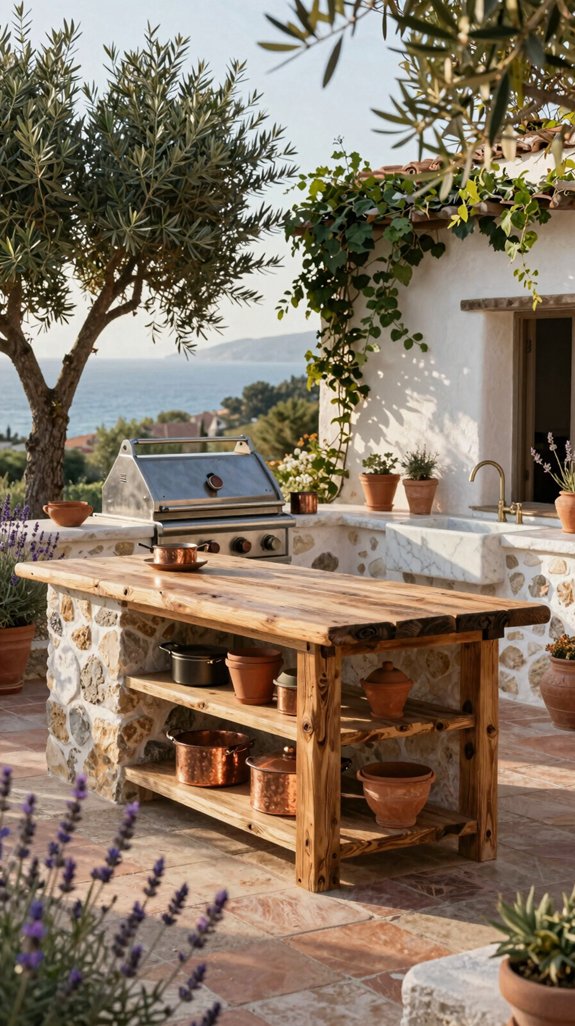
Ever imagined a Mediterranean‑style kitchen island that feels both rugged and refined? You’ll blend reclaimed stone, weathered timber, and brushed‑metal hardware to echo sun‑kissed villas while meeting modern workflow. Install a built‑in grill with ceramic burners, a chilled countertop for prep, and concealed storage for spices and tools. Integrate a discreet drainage channel beneath the sink, and route power through conduit‑clad cables for safety and aesthetics. Position the island near pergola shadows, allowing breezes to temper heat and glare. Pair it with low‑profile lighting and modular seating, creating a functional centerpiece that invites culinary experimentation and effortless entertaining. To maintain the pristine appearance of your outdoor kitchen and adjacent flooring, consider scheduling deep cleaning high traffic areas seasonally to preserve both aesthetics and durability.

A BACKYARD OASIS: The sound of water gently trickles down a series of cascading bowls, positioned on stacked rocks, while LED lights glow safely beneath the water of this outdoor water fountain

ZEN-LIKE FEATURES: Three tiers, each trimmed with small faux stone that increase in size, with a smooth, stone finish that complements any decor

CALMING, SOOTHING SOUND: Faux stone column with four bowls, illuminated by solar-powered LED lights for a decorative water feature during the day and night
Set Up a Low‑Maintenance Herb Garden
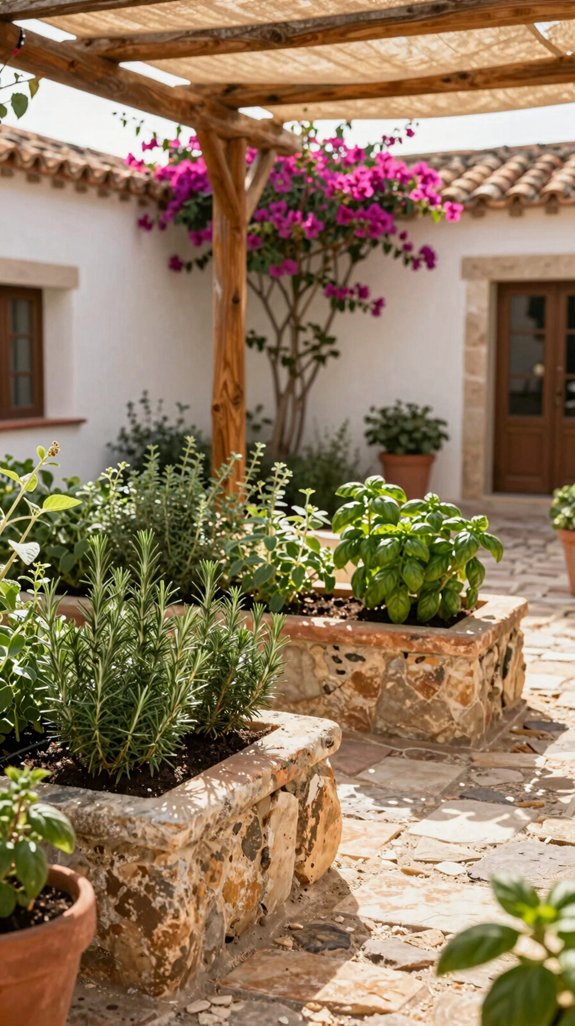
Your island’s pergola shade already creates a micro‑climate perfect for a low‑maintenance herb garden, so you can extend that culinary hub right to the ground. Choose dwarf, Mediterranean‑adapted varieties—oregano, thyme, sage, and mint—planted in raised, porous modules that drain excess water while retaining moisture. Install a drip‑irrigation loop with moisture sensors; the system throttles flow based on real‑time soil data, cutting waste. Use a lightweight, reflective mulch to moderate temperature swings and suppress weeds. Integrate modular, magnetic planters that snap onto the pergola’s steel ribs, allowing you to rearrange species for optimal sun exposure and harvest efficiency. Consider installing safety protectors around any raised bed corners to protect children and pets from sharp edges during garden maintenance and play. This setup blends functional engineering with sleek, garden‑ready aesthetics, delivering fresh flavors with minimal upkeep.

Boho Modern Style: This ceramic plant pot's clean lines and modern aesthetic make it a versatile addition to any space, whether decorating a living room bookshelf or adding a touch of glamour to a patio garden

🍀𝗦𝗶𝗺𝗽𝗹𝗲 𝗮𝗻𝗱 𝗘𝗮𝘀𝘆 𝘁𝗼 𝗨𝘀𝗲💦 With just 4 steps, you can get the terracotta plant watering globes keeping your plants watered. Refill from top as needed without taking them out.

𝐏𝐥𝐞𝐚𝐬𝐞 𝐧𝐨𝐭𝐞: 𝐓𝐡𝐞 𝐬𝐮𝐜𝐜𝐮𝐥𝐞𝐧𝐭 𝐬𝐡𝐨𝐰𝐧 𝐢𝐬 𝐟𝐨𝐫 𝐝𝐢𝐬𝐩𝐥𝐚𝐲 𝐨𝐧𝐥𝐲 𝐚𝐧𝐝 𝐢𝐬 𝐧𝐨𝐭 𝐩𝐚𝐫𝐭 𝐨𝐟 𝐭𝐡𝐞 𝐩𝐫𝐨𝐝𝐮𝐜𝐭. 𝐓𝐡𝐚𝐧𝐤𝐬 𝐟𝐨𝐫 𝐲𝐨𝐮𝐫 𝐮𝐧𝐝𝐞𝐫𝐬𝐭𝐚𝐧𝐝𝐢𝐧𝐠.
Plant Rosemary Shrubs for Year‑Round Fragrance
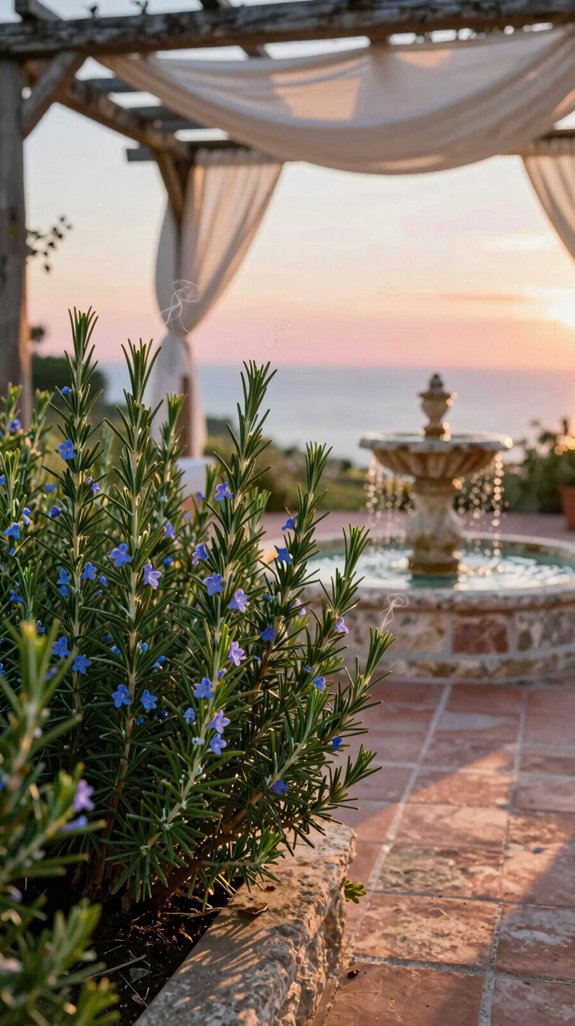
Because rosemary thrives in Mediterranean climates, you can plant compact, hardy shrubs in the pergola’s shadowed corners to guarantee a continuous scent year‑round. Choose a dwarf cultivar like ‘Blue Boy’ and space plants 2‑3 feet apart for optimal airflow and light diffusion. Amend the substrate with coarse sand and lime to mimic limestone soils, then water sparingly until roots establish. Integrate drip‑irrigation with moisture sensors for precise delivery, conserving water while maintaining vigor. Prune annually after flowering to stimulate fresh growth and preserve a tidy silhouette that complements modern pergola lines. If rosemary plants are damaged by spills or accidents, urine odor removers can help protect your investment in these aromatic shrubs. The resulting aromatic envelope enhances outdoor living, reinforcing a sophisticated, low‑maintenance Mediterranean aesthetic.

𝐏𝐑𝐄𝐌𝐈𝐔𝐌 & 𝐃𝐔𝐑𝐀𝐁𝐋𝐄 𝐀𝐂𝐀𝐂𝐈𝐀 𝐖𝐎𝐎𝐃: Made from 100% natural acacia wood with a deep-oil finish, these...
Grow Lavender Borders for Color and Scent
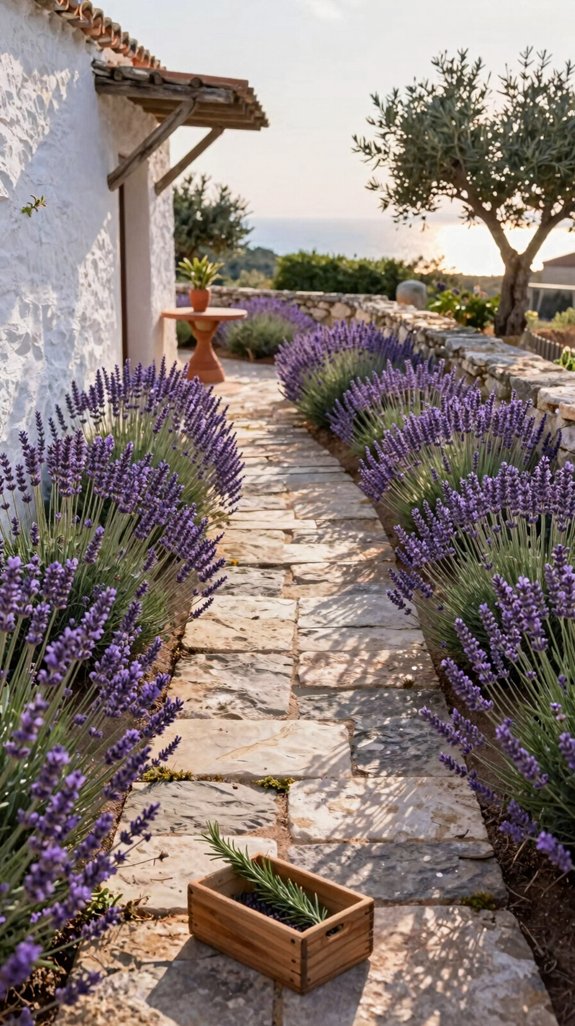
How can you create a striking, low‑maintenance border that delivers both vivid color and soothing fragrance? Select Lavandula angustifolia cultivars with compact growth and high pigment density; space them 30‑45 cm apart to promote airflow and uniform bloom. Amend soil with coarse sand and lime to achieve pH 6.5‑7.5, then install drip‑line emitters delivering 2 L h⁻¹ per plant. Prune after flowering, cutting back to the woody base to stimulate spring shoots. Pair with matte‑finished stone edging that reflects Mediterranean sunlight, while integrating a low‑profile sensor that logs moisture and temperature, enabling automated adjustments for peak scent intensity. Consider complementing your lavender borders with built-in storage solutions that keep garden tools and cushions organized in your outdoor seating areas.
Use Olive‑Tree‑Shaped Topiaries for Shade
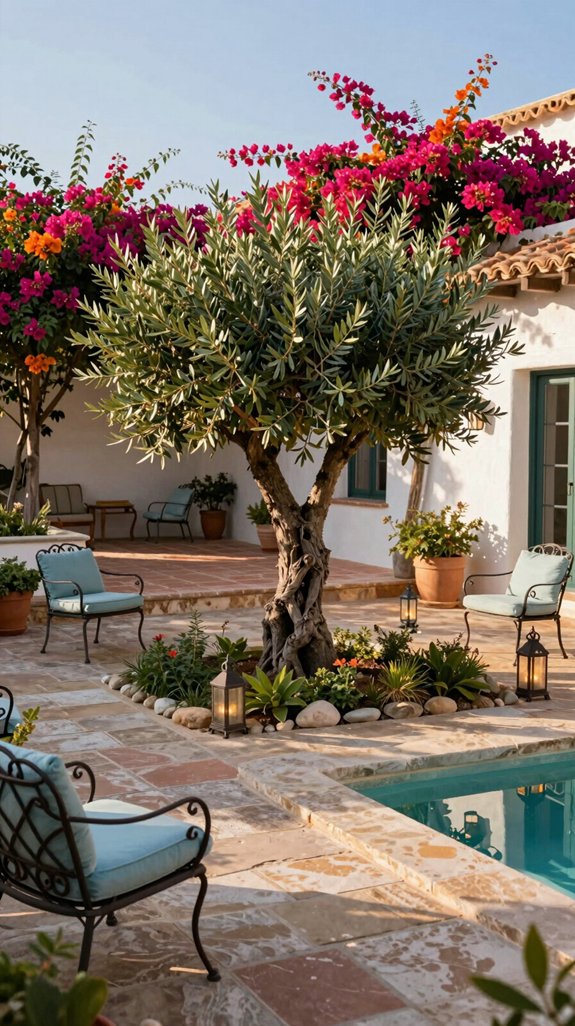
The lavender border’s aromatic sweep naturally leads to a need for cool, dappled light, and olive‑tree‑shaped topiaries answer that shade while preserving Mediterranean character. You’ll select dwarf Olea europaea cultivars, train them with flexible wire frameworks, and prune to a classic columnar silhouette. Integrate drip‑irrigation lines within the root zone to maintain moisture without overwatering. Position topiaries opposite sun‑facing seating, creating a dynamic light gradient that enhances thermal comfort. Their dense foliage filters harsh rays, yet leaves remain porous for airflow, reducing heat buildup. The structured forms of these topiaries create visual impact through texture, transforming your outdoor space into a layered composition of light and shadow. By combining precise horticultural techniques with minimalist design, you achieve functional shade that feels both timeless and cutting‑edge.
Incorporate Citrus Trees in Potting Zones
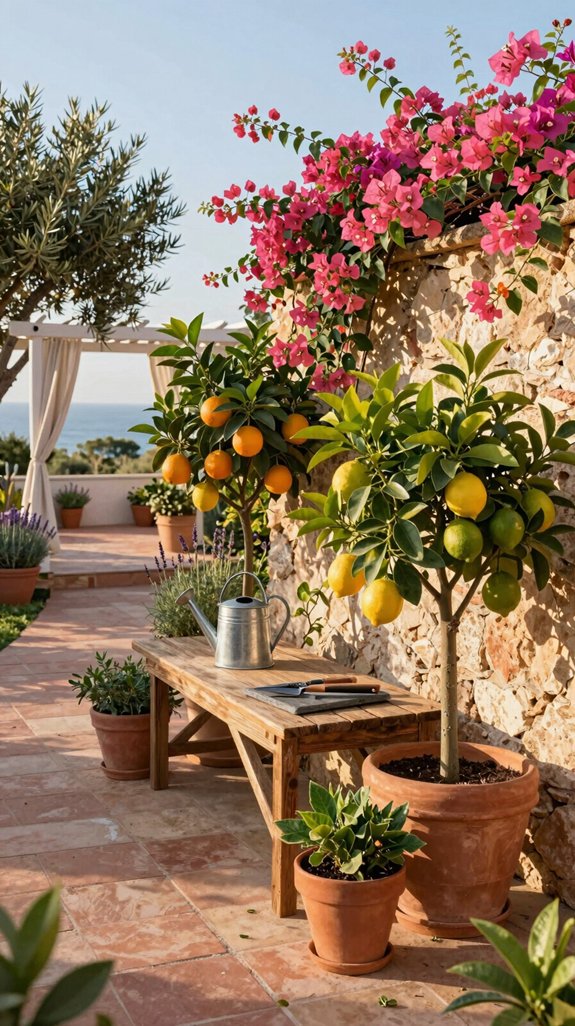
When you place citrus trees in dedicated potting zones, you create a vibrant, low‑maintenance source of fresh fruit that complements the Mediterranean palette while providing aromatic foliage and seasonal color. Choose dwarf varieties—Meyer lemon, calamondin, or orange—to fit compact, breathable containers with drainage layers of perlite and coconut coir. Position zones near south‑facing walls to capture solar gain, and integrate moisture‑sensing emit that trigger drip irrigation on a 2‑day cycle. Pair citrus pots with reclaimed terracotta or woven bamboo baskets for visual cohesion. Apply a slow‑release citrus‑specific fertilizer quarterly, and prune for airflow, ensuring fruit quality and pest resistance. For added convenience, install smart sensor kits throughout your potting zones to automatically monitor soil moisture and optimize watering schedules for healthier citrus growth.
Lay a Sand‑Raked Path to the Seating Area
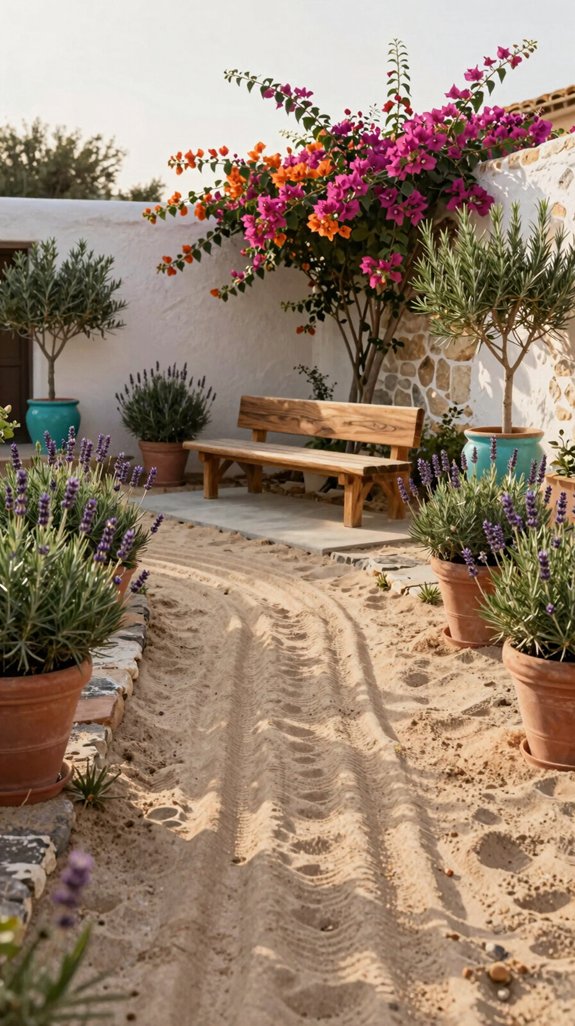
Because a sand‑raked path offers both tactile comfort and visual continuity, you’ll start by grading the terrain to a gentle 1‑2% slope toward the seating area, ensuring water runoff doesn’t pool on the surface. Next, lay a geotextile membrane to prevent weed intrusion, then spread a 2‑inch layer of coarse, washed sand. Use a vibrating plate compactor to achieve firm, even density while preserving a subtle undulation that mimics natural dunes. Rake the surface into a soft, sinuous pattern, creating micro‑ridges that guide foot traffic and enhance drainage. Finish with a low‑profile edging strip to contain the sand and define the walkway’s sleek, Mediterranean silhouette. Consider positioning a propane fire pit near the seating area to extend your outdoor gatherings into cooler evenings with adjustable warmth and clean heat.
Choose Wrought‑Iron Outdoor Furniture Sets
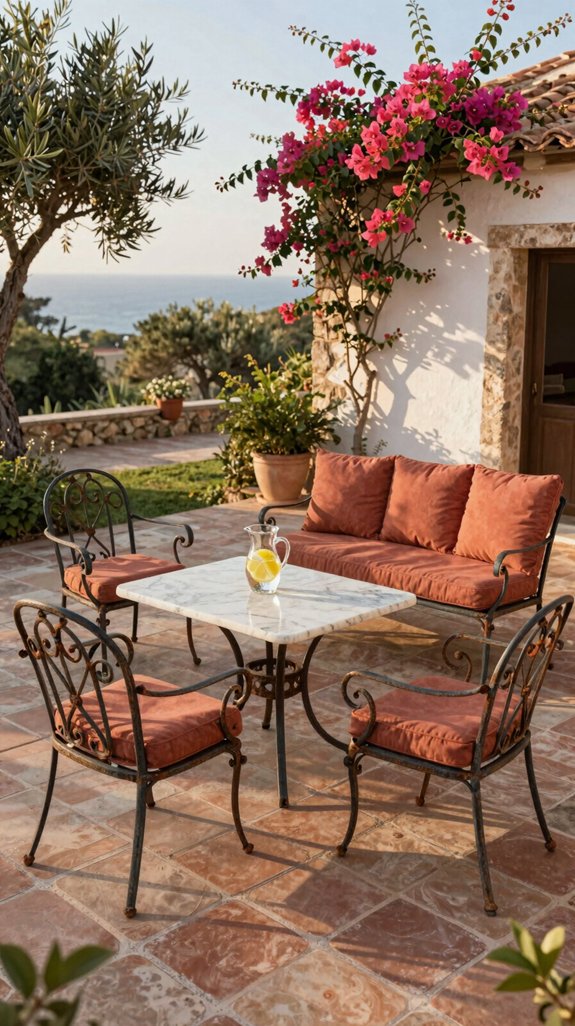
Looking for a centerpiece that blends timeless elegance with Mediterranean durability? Choose wrought‑iron outdoor furniture sets that marry structural integrity with artistic flair. You’ll appreciate the corrosion‑resistant alloy, powder‑coated finishes, and modular designs that adapt to terraces, courtyards, or pergolas. The iron frames support ergonomic cushions, while integrated steel brackets enable quick reconfiguration for dining, lounging, or social gatherings. Opt for perforated backrests to enhance airflow and reduce heat retention, preserving comfort under sun‑baked skies. Pair the set with reclaimed stone tables or mosaic tiles to reinforce the cohesive, innovative aesthetic that defines a modern Mediterranean escape. Consider complementing your furniture arrangement with gazebo kits to provide additional shade and structure for your outdoor entertaining spaces.
Add a Cozy Hammock Under the Pergola
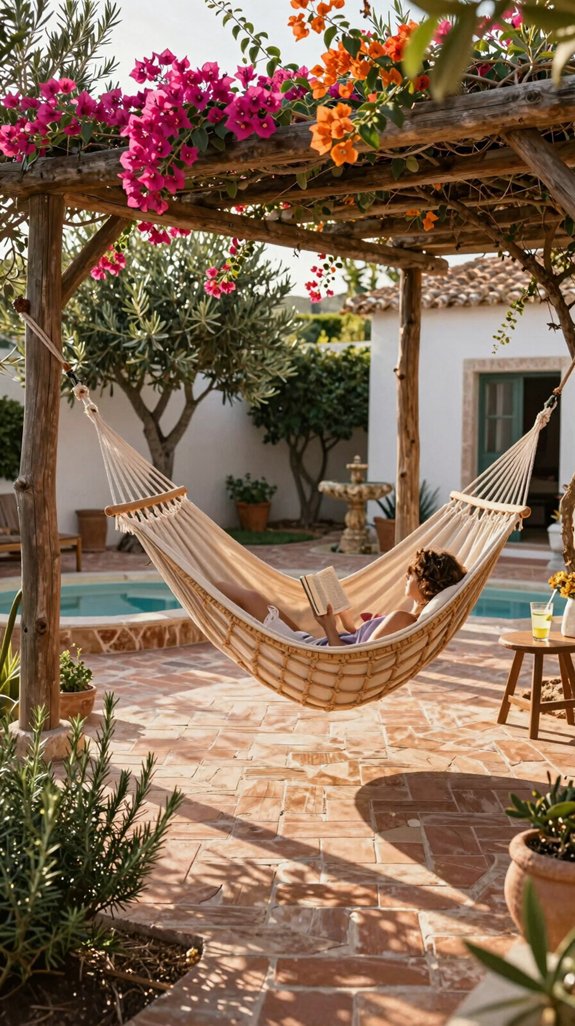
Wrought‑iron seating already anchors your outdoor space, and a hammock under the pergola extends that foundation into a relaxed lounge zone. Choose a weather‑resistant, UV‑stabilized fabric and a tension‑adjustable steel frame that integrates with the pergola’s beam geometry. Mount swivel brackets at a 45‑degree angle to balance load distribution and minimize sway, preserving structural integrity. Incorporate a quick‑release strap system for effortless setup and storage, while hidden cable routing keeps the aesthetic clean. Pair the hammock with ambient LED strips powered by solar panels, delivering programmable illumination that syncs with dusk. Like traditional garden arbors, pergolas provide essential structural framework that supports both climbing plants and functional outdoor furnishings. This fusion of engineering and Mediterranean charm maximizes comfort without compromising design coherence.
Install a Fire Pit With Mediterranean Tiles
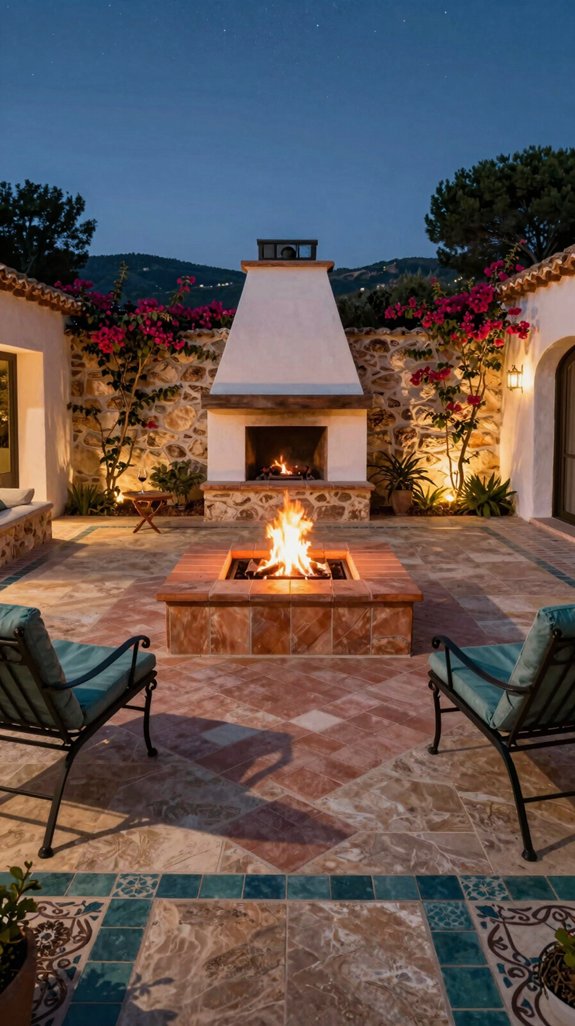
Ready to turn your patio into a Mediterranean hearth? Install a fire pit framed by hand‑cut terracotta tiles, then the ancient agora. Use a recessed steel ring for the burner, then lay a mosaic of glazed, sun‑baked tiles in a radial pattern. The tiles’ thermal mass distributes heat evenly, while their glazed surface resists spatter. Secure the tiles with high‑temperature mortar and a stainless‑steel mesh for structural integrity. Integrate a programmable gas valve to modulate flame intensity, and embed subtle LED strips beneath the tile edges for night‑time ambience. This design merges historic texture with modern efficiency, delivering a functional, visually striking focal point. For surrounding patio surfaces, consider using durable washable paints on any covered outdoor walls to protect them from heat exposure and maintain their appearance over time.
Use Colorful Ceramic Pots for Accents
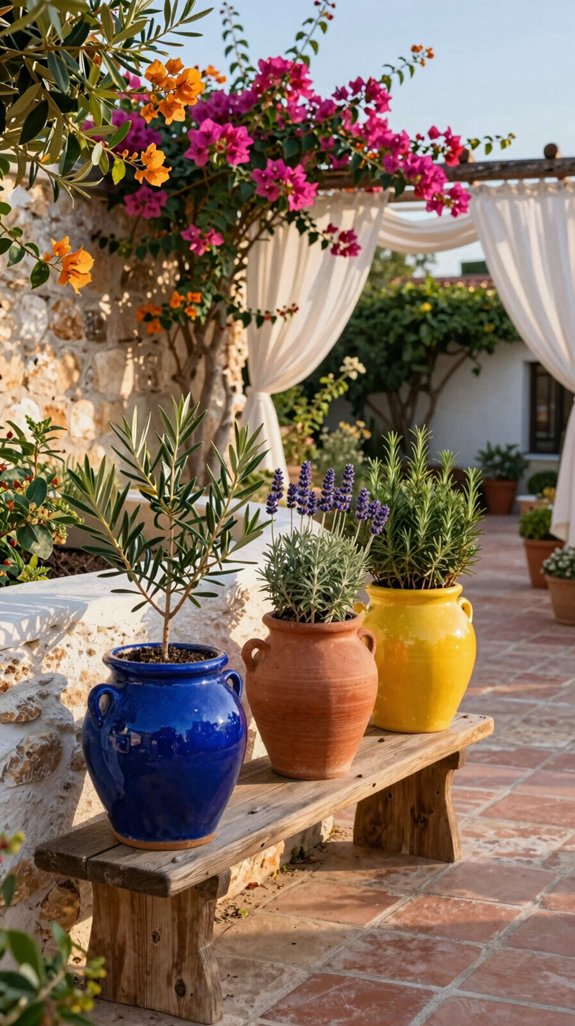
Scatter colorful ceramic pots across your patio to inject vibrant Mediterranean flair while serving practical purposes. Choose glazed terracotta with geometric motifs, then arrange them in clusters that follow the patio’s traffic flow, creating visual checkpoints and micro‑climates for herbs. Pair each pot with an integrated drip‑irrigation module, calibrating flow rates to soil type and plant water demand. Use modular mounting brackets that lock into a concealed concrete grid, allowing quick repositioning without re‑excavation. Select UV‑stable finishes to preserve chroma under intense sun, and embed discreet LED strips for night‑time ambience, turning functional horticulture into a dynamic, tech‑forward design element. Consider complementing your ceramic accents with vibrant saturated color on nearby structures like garden walls or pergolas to enhance the Mediterranean aesthetic while creating visual cohesion throughout your outdoor space.
Create a Small Olive‑Oil Tasting Corner
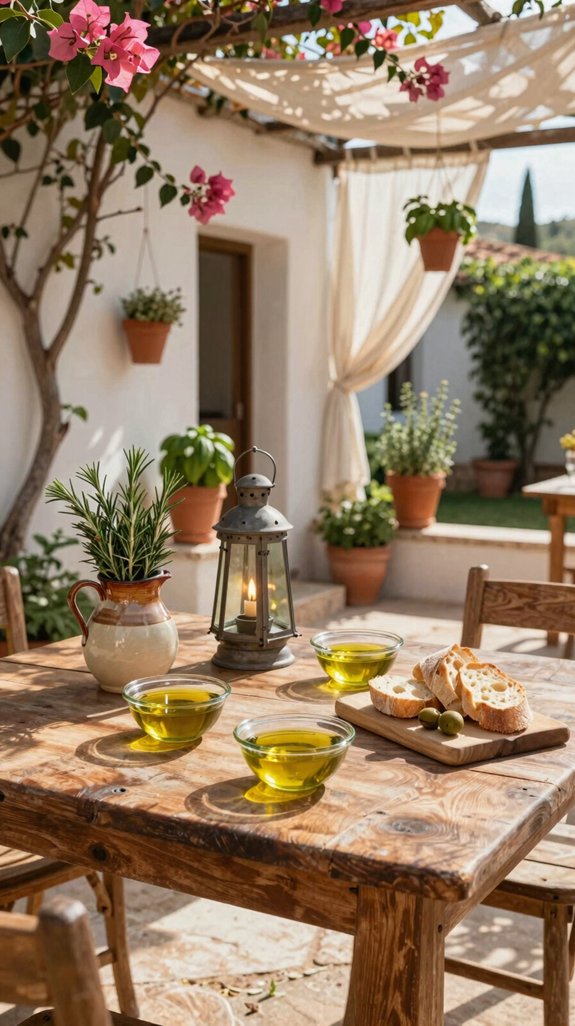
While you’re designing the patio’s flow, carve out a compact olive‑oil tasting corner that blends Mediterranean elegance with functional precision. Choose a weather‑resistant stone slab as a base, then embed a recessed, temperature‑controlled trough for oil samples. Install low‑profile LED strips beneath the slab to highlight the oils while preserving a sleek silhouette. Add a modular, brushed‑copper tasting table with built‑in magnetic slots for labeled glassware. Integrate a discreet, touch‑activated aroma diffuser that releases citrus or rosemary notes on demand. Use reclaimed terracotta tiles for the surrounding wall, providing texture and a subtle, earthy backdrop that enhances the sensory experience. Consider painting an accent wall behind the tasting area with olive green wall paint to create a cohesive Mediterranean aesthetic that complements the warm terracotta tones.
Apply a Weather‑Resistant Sealer to All Surfaces
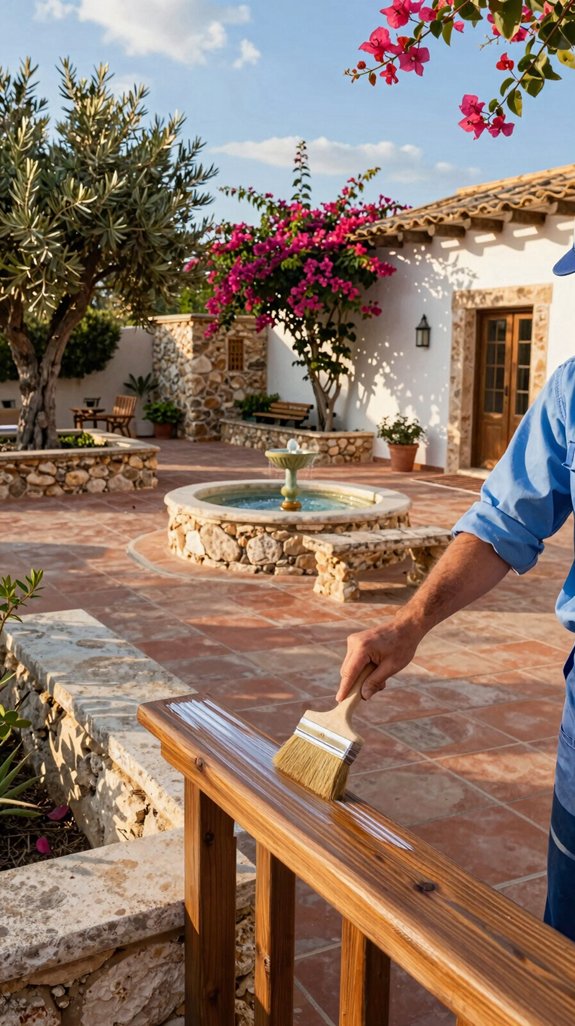
The olive‑oil tasting corner’s stone slab, copper table, and terracotta wall all face sun, rain, and spray, so sealing every surface is a must. Choose a breathable, UV‑stable polymer sealer that penetrates porous stone yet respects metal patina. Apply with a low‑pressure sprayer, ensuring even coverage and avoiding drips that could pool. Let the first coat cure 24 hours, then sand lightly with 320‑grit to create micro‑texture for adhesion. Follow with a second layer, this time adding a milder additive that repels salt and moisture. Finally, test water be and UV resistance before installing décor, guaranteeing durability and preserving the Mediterranean aesthetic. For adjacent relaxation zones, consider applying soft pink paints to create calm spaces that complement the warm outdoor environment.
Add Finishing Touches: Vines, Statues, and Music
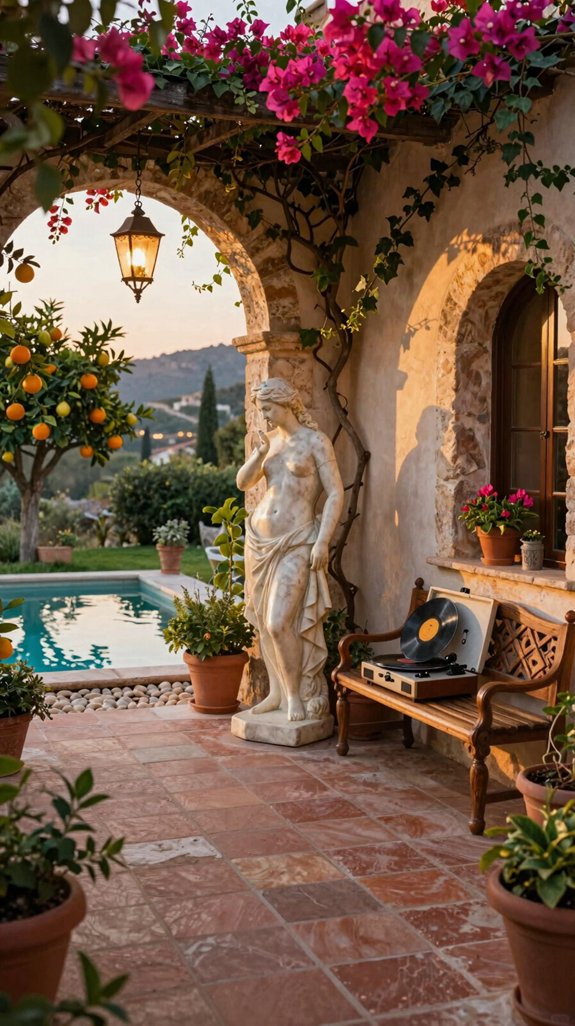
Even after the sealer has set, you can elevate the space by weaving hardy Mediterranean vines, placing weather‑resistant statues, and integrating subtle ambient music; each element should complement the sealed surfaces while enhancing the garden’s sensory experience. Choose drought‑tolerant vines such as bougainvillea or jasmine, train them on trellises that double as structural accents, and program automated drip irrigation for consistent growth. Select bronze or stone statues with patina‑resistant coatings, positioning them to cast soft shadows across tiled patios. Install weather‑proof speakers or hidden transducers, calibrating volume and frequency to blend with rustling foliage, creating an immersive, low‑maintenance soundscape that reinforces the Mediterranean aesthetic. For added warmth and ambiance, consider incorporating a fire pit ring as a focal point that safely contains evening fires while complementing your Mediterranean design scheme.
Frequently Asked Questions
How to Protect Outdoor Furniture From Mediterranean Humidity?
You should seal the furniture with marine‑grade varnish, apply UV‑blocking fabric covers, store cushions in breathable bags, and regularly clean with a mild salt‑water solution to prevent corrosion and mold.
What Is the Best Irrigation System for a Low‑Maintenance Herb Garden?
You should install a drip‑line system with pressure‑compensating emitters, programmable timer, and moisture sensor. It delivers water directly to herb roots, minimizes waste, and lets you maintain the garden virtually hands‑free.
Can I Use Solar Lighting for the Pergola Without Compromising Ambiance?
Absolutely—solar lights can flood your pergola with radiant, almost cinematic glow, preserving ambiance while slashing energy costs; choose high‑lumens LEDs, smart dimmers, and weather‑proof fixtures for seamless, innovative illumination.
Which Native Mediterranean Plants Deter Pests Naturally?
You’ll deter pests by planting lavender, rosemary, thyme, sage, and marigold; they emit aromatic oils that repel insects while thriving in Mediterranean climates, requiring minimal water and maintenance.
How to Choose a Fire Pit Size for a Small Backyard Space?
You pick a 3‑ft diameter pit, like the 2‑ft model a city‑dweller installed, because it fits a 6‑ft patio, leaves room for seating, and stays within fire‑code limits while delivering ample warmth.