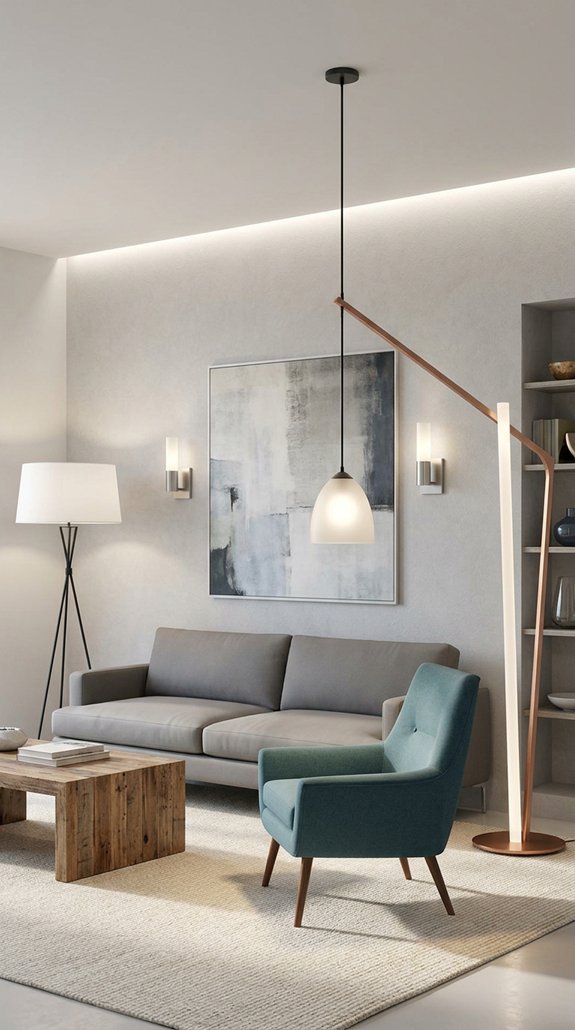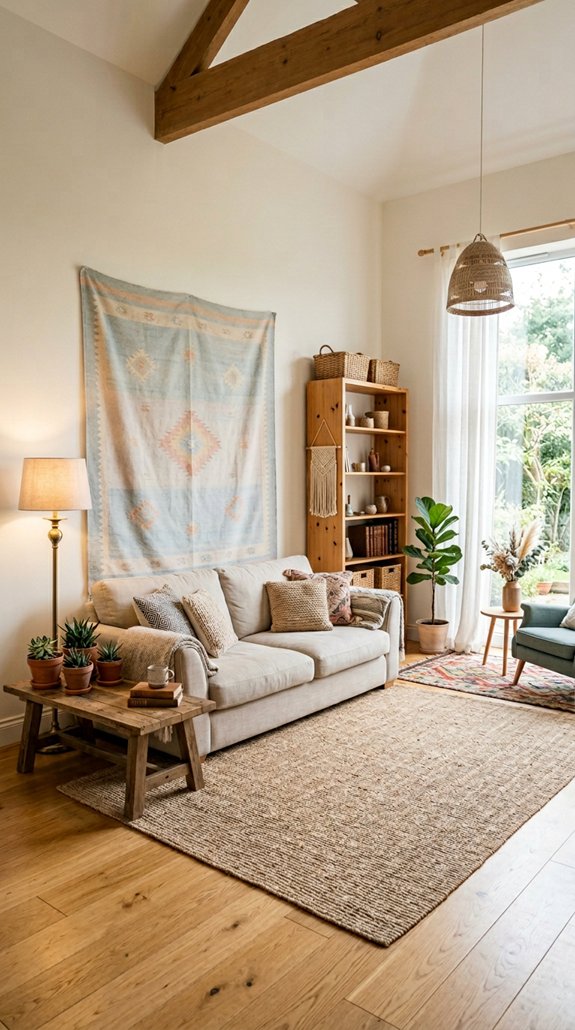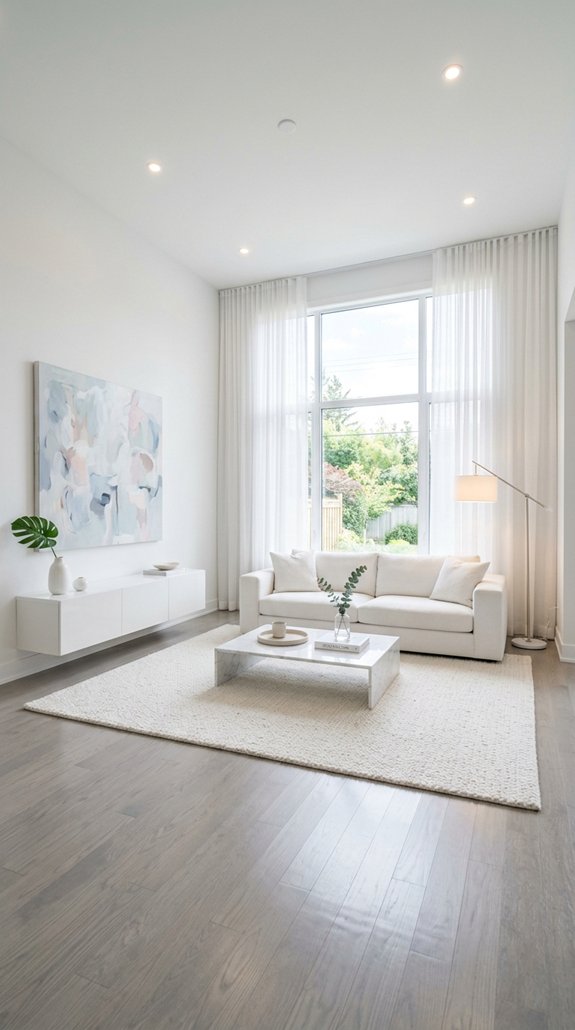
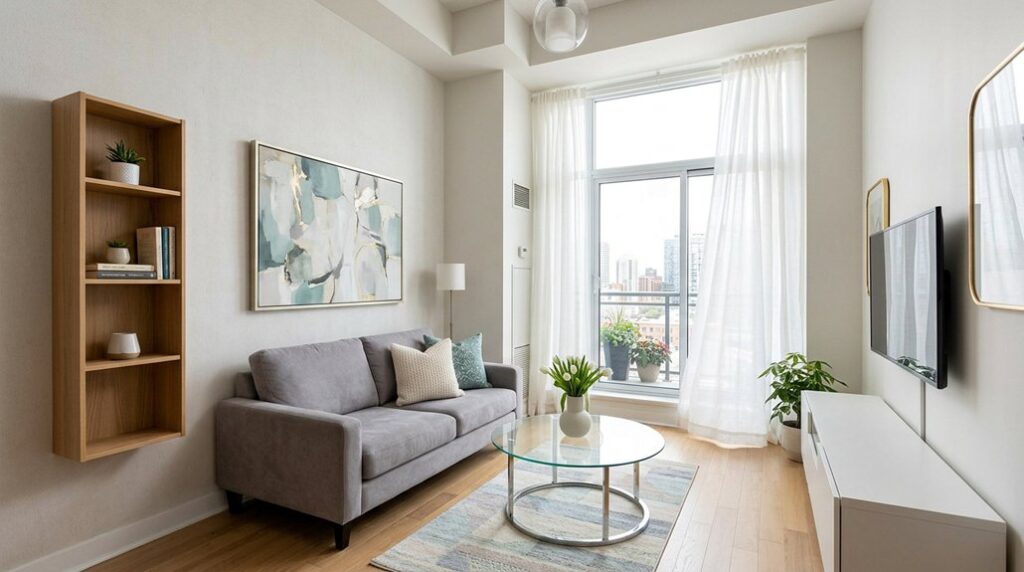
I’ll start by picking a low‑profile sofa with exposed legs; its slim arms and under‑30‑inch height keep the floor visible and the room airy. Pair it with a compact stone‑effect coffee table that resists scratches and adds a modern touch, and add a storage ottoman with hidden compartments for blankets and remotes. Use a single warm neutral tone from floor to ceiling, and sprinkle in a few sustainable wood pieces and biophilic plants to bring texture and wellness. I’ll show how nesting side tables, minimalist décor, and careful scaling balance negative space, and the next sections reveal even more ideas.
Furniture: Choose a Storage Ottoman With Hidden Space
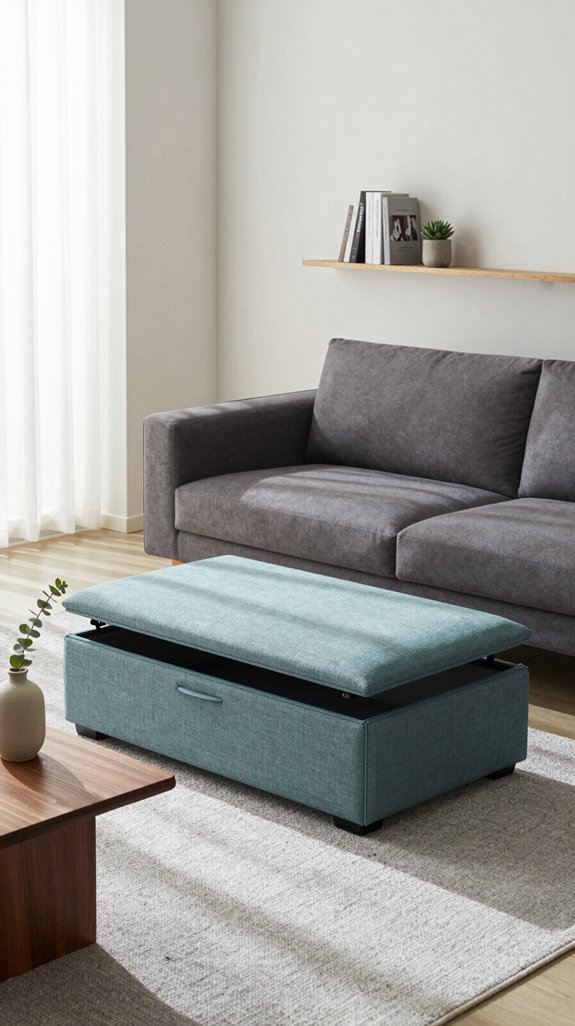
When you’re cramped for room, a storage ottoman becomes the multitasking hero that saves space and hides clutter.
I love how its hidden compartment stores blankets, remotes, and magazines while serving as a footrest or extra seat. Choose a round model under 19″ diameter for tight corners, or a rectangular one up to 42.5″ × 18.75″ × 16″ when you need more seating.
Most units hold 88‑264 lb, with heavy‑duty options exceeding 250 lb thanks to metal frames. Eco‑leather in White, Black, or Coffee Grey adds a modern touch, while performance velvet offers stain resistance.
Stylish storage ottomans provide a sleek aesthetic while delivering practical storage solutions.

M8-1.25 Metric Thread - CHECK BEFORE PURCHASE: Each furniture leg features an M8-1.25 metric threaded bolt with an approx. 1" / 25.38mm thread length. For direct replacement installation, your furniture must have matching M8-1.25 female threaded holes or inserts. The included mounting plate nuts provide an alternative installation option for suitable solid wood furniture bases.

High Quality- The furniture risers are made of solid rubber wood, which make them sturdy and durable. Each furniture leg is finished with smooth edge and nice painting.

Size information: Height 2",widest diameter 3.1",pre-drilled M8 Bolt
Furniture: Add a Small Stone‑Effect Coffee Table for Small Living Room Design
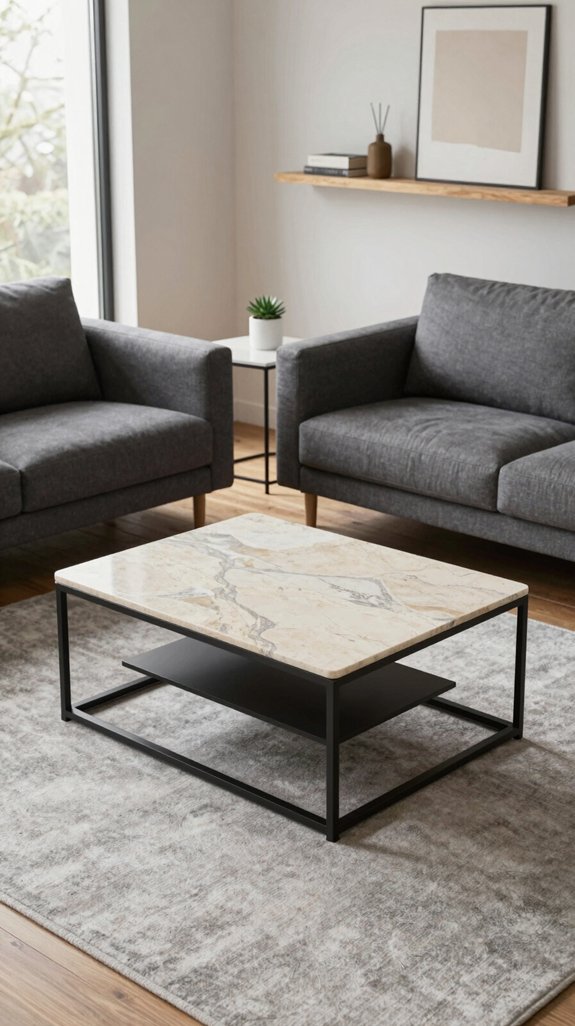
I love how a small stone‑effect coffee table instantly anchors a cramped living room without hogging floor space. Its compact, clean‑line silhouette adds visual lightness, while round or square tops keep traffic flowing smoothly.
Light‑colored marble or travertine reflects daylight, making the room feel larger, and subtle veining adds sophisticated character without extra décor. I choose a non‑porous, engineered stone surface because it resists scratches, stains, and everyday wear—perfect for high‑traffic zones.
Pairing the table with a brass‑finished base or a concrete pedestal injects modern flair, while a jute rug beneath ties the neutral tones together. This durable, minimalist piece offers timeless appeal and frees up floor area for flexible seating arrangements.
Stylish media cabinets can also complement the coffee table by providing organized storage for electronics. Media cabinets keep devices tidy while enhancing the room’s aesthetic.

Light Luxury and Minimalist Style - Using the newest sintered stone material, the beauty of whom lies in its texture and gloss charm. The patterns are casual, the surface is bright and smooth, clear like jade. The connected T -shaped leg full of geometry highlights the beauty of the structure. While greatly improving the stability, we hope to convey a minimalist inspiration to fashion home lovers

Sturdy Construction: Featuring a 6.7inch thick tabletop paired with reinforced support legs, this modern coffee table boasts exceptional structural stability. It can support a maximum weight capacity of 300 pounds. Additionally, non-slip pads on the leg bases enhance stability while protecting your floors from scratches.

Bold Architectural Block Design: Featuring a substantial 6.7" thick tabletop paired with two bold block-style supports, this modern coffee table creates a distinctive architectural silhouette. The clean rectangular profile and sculptural geometric base bring visual weight and minimalist character to modern, contemporary, and Mid-Century Modern interiors.
Furniture: Use Low‑Profile Sofas With Exposed Legs to Open Floor Space
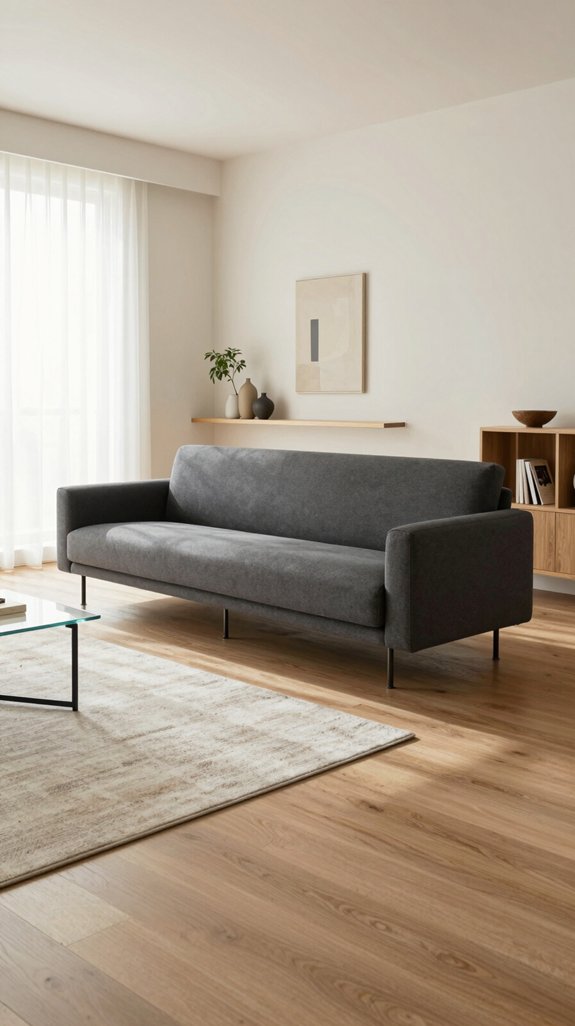
A low‑profile sofa with exposed legs instantly lightens a cramped living room, letting the floor peek through and creating an airy, open feel. I choose a sofa under 30 inches high, with tapered metal or wooden legs that keep the visual line slim and the space grounded. I keep the depth at 34‑36 inches and the width under 100 inches, then pull it 4‑6 inches off the wall so a 2‑3‑foot circulation lane remains. The slim arms and thin cushions reduce bulk while deep seats and plush cushioning preserve comfort. I pair it with an ultra‑low coffee table, a tall C‑table, and a low ottoman to maintain the vertical rhythm. This arrangement maximizes floor visibility, enlarges the room’s perception, and stays on‑trend with minimalist, space‑optimized living. Experience ultimate comfort with zero‑gravity recliners that simulate weightless seating.

GUIDE FOR A RELAXING AFTERNOON: Take your comfy blanket out of the hidden compartment, prop your feet up on this comfortable footstool, and then enjoy binge-watching your favorite show—here’re how to spend your time in total relaxation

STURDY & SPACIOUS DESIGN:Large 30-inch round ottoman features a solid wood frame, ensuring stability while protecting floors. Its generous size offers ample seating and hidden storage, seamlessly blending durability with functional elegance.

Multifunctional Design: Applicable to different scenarios. Not only does it serve as a comfortable foot rest when you flip the lid over to reveal a sturdy wooden tray that can be used as a coffee table, but also comes with storage space that will be perfect for holding drinks, snacks, clothes and more.
Furniture: Incorporate Nesting Side Tables for Flexible Surfaces
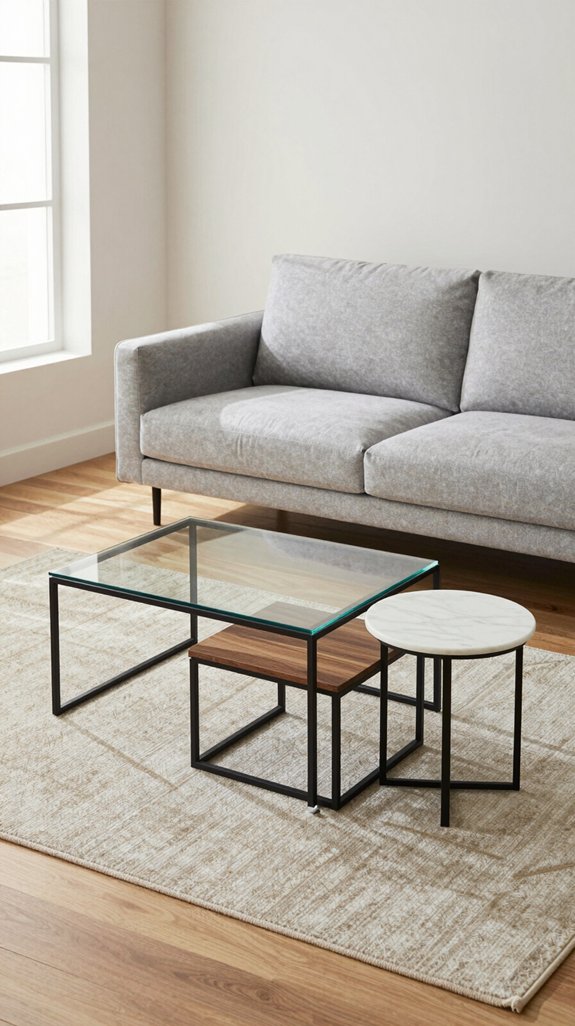
Nesting side tables turn a cramped living‑room corner into a versatile work zone, a snack bar, and a decorative display—all without sacrificing floor space. I love how the 24‑by‑16‑inch set expands to a 60‑inch surface, a 250 % boost while still occupying the footprint of a single table. I place the largest piece beside the sofa as a permanent end table, the medium one as a drinks station during parties, and the smallest as a laptop stand for remote work. The stackable design frees floor space, lets me pull extra surfaces for movie nights, and slides away when I need an open layout. I match the tables’ wood, metal, or glass finish to my décor, creating tiered visual interest and keeping the room tidy with built‑in storage for coasters and books. Ottomans with hidden storage provide an extra layer of functionality for keeping blankets and magazines out of sight.

[2-tier Storage] Our end table is solid and stable enough when being placed bottle, lamp, book and magazine. Space-saving and lightweight design, easy to move and carry.

[End Table with Charging Station] This side table with 1 AC outlets, 2 USB ports, and the 4.5 ft extension cord helps you charge your phone, tablet, lamp, and game console at the same time. Also, the distance between each outlet and port prevents adapters from blocking each other.

The small side table measures 11.8"Dx15.75"Wx15.75"H
Color: Embrace a Single Warm Neutral Tone From Floor to Ceiling
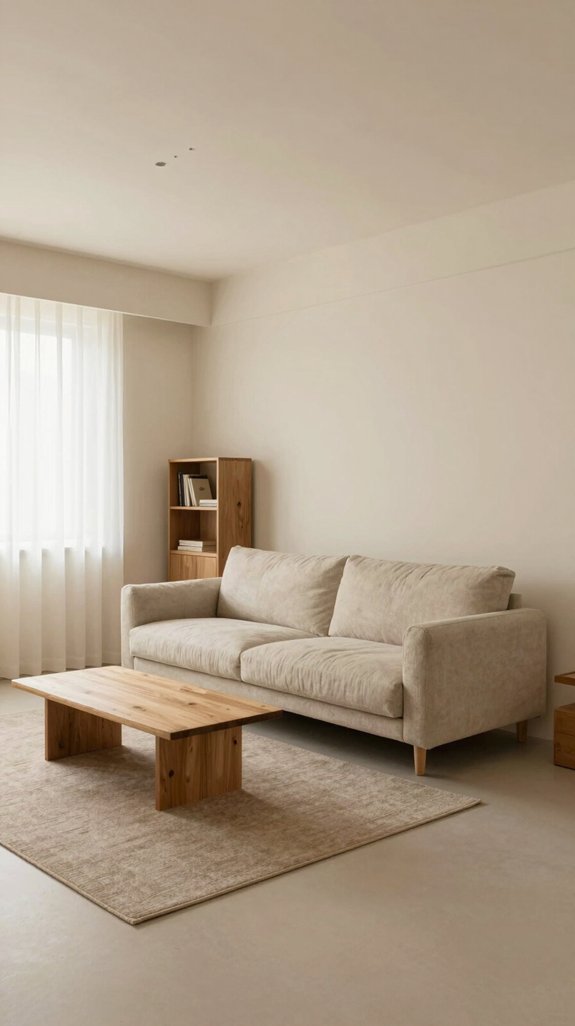
When I coat the walls, floor, and ceiling in a single warm neutral—like creamy beige or soft sand—the room instantly feels larger and more inviting, because the unified hue reflects natural light and eliminates visual clutter.
I choose a matte finish to keep surfaces soft yet durable, letting natural daylight bounce across the space.
By layering graduated tones—cream on the ceiling, a slightly richer beige on the walls, and a deeper sand on the floor—I create depth without breaking the seamless flow.
This monochromatic strategy works as a timeless backdrop, letting brass accents or a navy rug pop without overwhelming the compact layout.
The result is a cohesive, airy environment that feels both modern and snug, perfect for small living rooms.
Adding a well‑placed artful shelf can showcase décor while maintaining the open feel.

【Vibrant Celestial Design】 Elevate your space with U WONDERFUL’s Starry Sky Theme Flower Pots, featuring mesmerizing hand-painted galaxies, swirling nebulas, and shimmering constellations. The bold, boho plant pots blend cosmic wonder with playful artistry, creating decorative plant pots that transform indoor gardens, patios, or desks into whimsical sanctuaries. Each unique color burst and starry detail ensures your plants steal the spotlight—perfect for flower pots outdoor displays or cozy decorative plant pots indoor arrangements.

Vintage Design: Shaped like an old school can of coffee grounds, this ceramic planter brings a delightful touch of whimsy to your kitchen or dining table, making it a conversation starter
Color: Paint Walls White or Pastel in Small Living Room Design
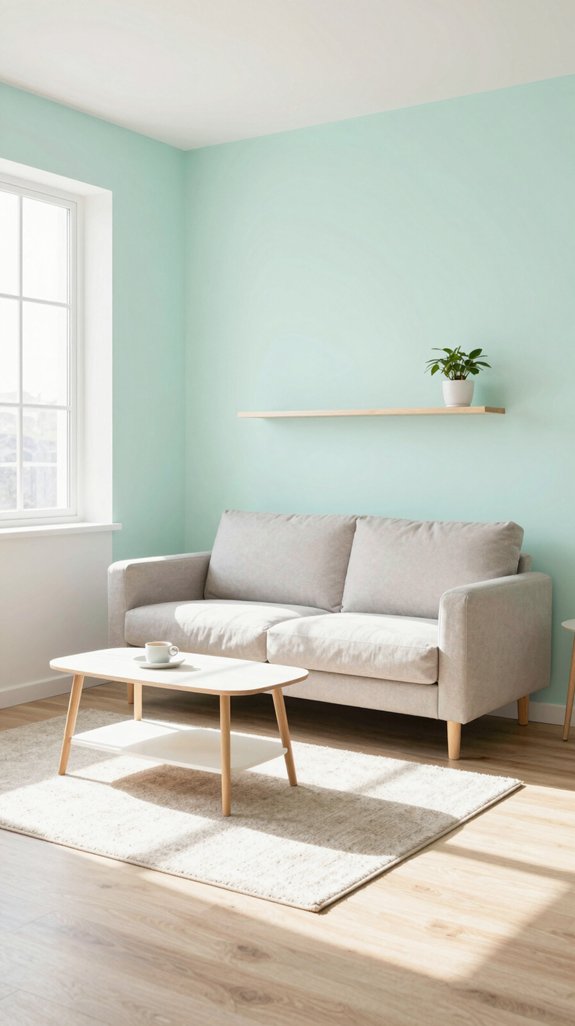
Swapping the single warm neutral for crisp white or a soft pastel instantly lifts a cramped living room, letting every square foot breathe. I’ve learned that white walls trick the eye into seeing more space, especially when natural light bounces off them.
In a north‑facing room I choose a warm‑toned white with subtle yellow undertones; for a south‑facing space a cooler, bluer white feels fresh. Pastels—think mint, blush, or powder blue—retain that light‑reflecting quality while adding a whisper of personality.
Both options give a neutral backdrop that lets textiles, rugs, and artwork pop without overwhelming the room. They highlight textures, from wood beams to sleek metal, and keep the vibe clean, relaxing, and endlessly adaptable for future design experiments.

Set of 4 wooden furniture legs.

【Packaging】You will receive 4 plastic furniture legs with M8 hanger bolts, 4 T-nuts. Furniture Legs Height: 2" / 50mm;Screw Bolts Length: 1" / 25mm;Top Width: 2" / 50mm;Bottom Width:1.8" / 46mm

Brand New Plastic Corner Furniture Legs
Color: Highlight One Accent Piece in a Coordinated Palette
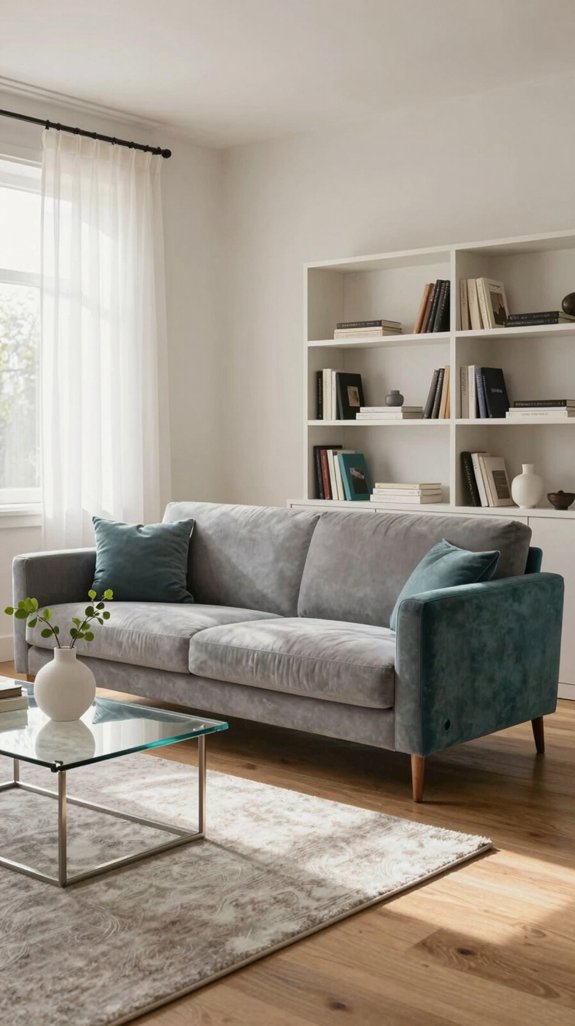
A single, well‑chosen accent piece can instantly transform a cramped living room, and I love picking one item that sings within a coordinated palette. I usually select a bold soft‑pink cushion or a lavender lamp against neutral walls, because the hue draws the eye and expands perceived space without clutter.
Pairing that piece with monochromatic grays, beige tones, or muted blues creates seamless depth; a marigold chair pops against crisp white, while a mauve rug warms a blue‑gray scheme. I limit the accent to one item, placing it near a window to reflect light and keep the room airy.
This strategy adds drama, respects scale, and stays on‑trend, delivering a fresh, innovative look in a small living area. Adding a mirror opposite the accent can double the visual impact and enhance the sense of openness.
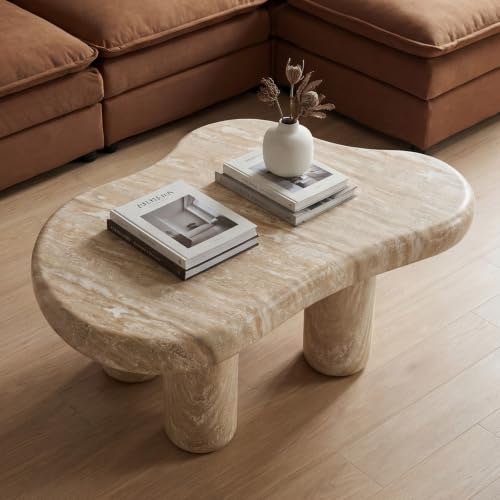
Sculptural Centerpiece: Elevate your living room with our Cloud Coffee Table, featuring a stunning cloud shape and 360° sculpted angles, measuring 39 inches long and 27 inches wide. This captivating piece acts as a perfect conversation starter and pairs beautifully with our ottoman coffee table.

☕【Unique Oval Coffee Table】Combining the very best of modern and organic motifs, this decorative coffee table boasts a long oval top, a rounded pedestal base, and a bold black colorway. Measuring 36"W x 24"D x 15H"( 61.6lbs ), it will easily be able to hold your books, drinks, snacks, and other household items while also infusing your decor with a subtle yet striking charm.

💗【No Assemble Needed】This coffee table does not require assembly. You can use it straight away after you remove the packaging.
Storage: Install Floating Stone Shelving to Keep the Floor Clear
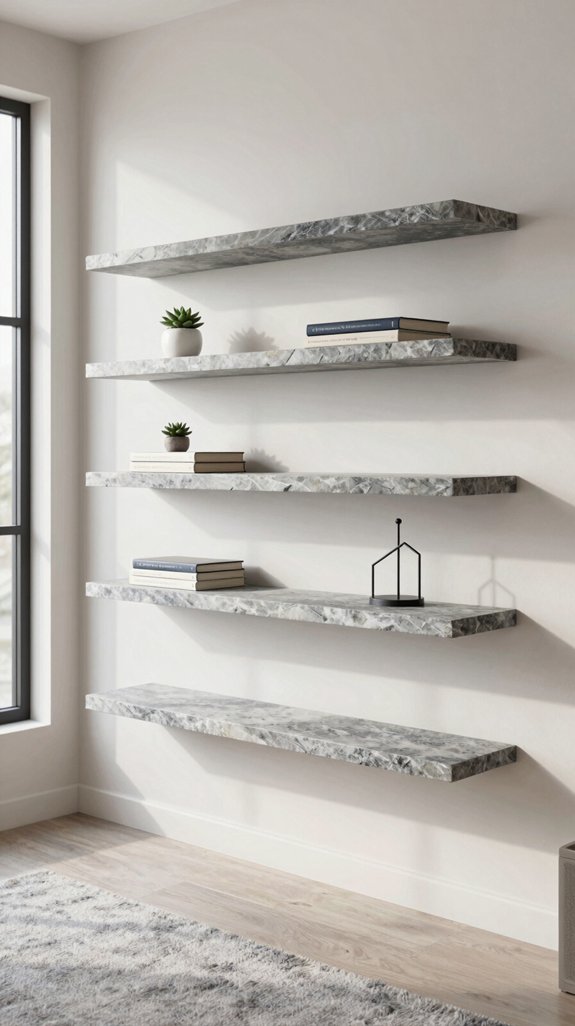
I love how mounting floating stone shelves directly to the wall instantly frees up floor space, letting the room feel larger without sacrificing storage. By using vertical real estate, I reclaim roughly 15 % of usable floor area, creating an illusion of spaciousness that’s essential in a compact living room.
The sleek, invisible brackets give a clean, contemporary vibe that pairs effortlessly with minimalist, bohemian, or industrial décor, while the stone’s texture adds depth and visual intrigue against painted or tiled backs. I customize length, depth, and spacing, even staggering pieces for dynamic composition, and I can swap finishes—from walnut to stainless steel—to match evolving tastes.
Installation is a quick DIY project: locate studs, secure anchors, and tighten hardware, ensuring sturdy support for lightweight books, plants, or art. Regular dusting keeps the look fresh, and the modular nature lets me adapt the layout as my needs change.
Floating shelves are perfect for showcasing media components without cluttering the floor.

【Compact Size】The Velvet Round Ottoman with Storage have 2 sizes: 14.76"L x 14.76"W x 17.32"H (big) 12.6"L x 12.6"W x 14.17"H (small) The nest packing very suitable for space saving when not in use

STURDY & SPACIOUS DESIGN:Large 30-inch round ottoman features a solid wood frame, ensuring stability while protecting floors. Its generous size offers ample seating and hidden storage, seamlessly blending durability with functional elegance.
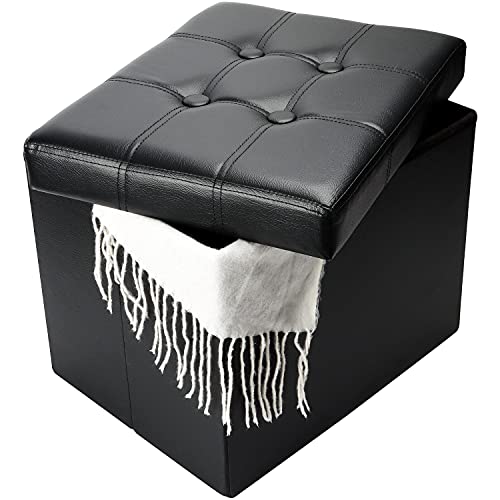
PERFECT FOOT REST STOOL: L17 x W13 x H13in, Specially designed size and high-quality thicker soft foam, bring more comfort for your foot rest. Spacious hidden storage room for sundries including clothes, blankets, children's toys or many other stuffs inside; organize your living room, bedroom and hallway.an
Storage: Hang Shelves Above Windows for Storage Without Crowding
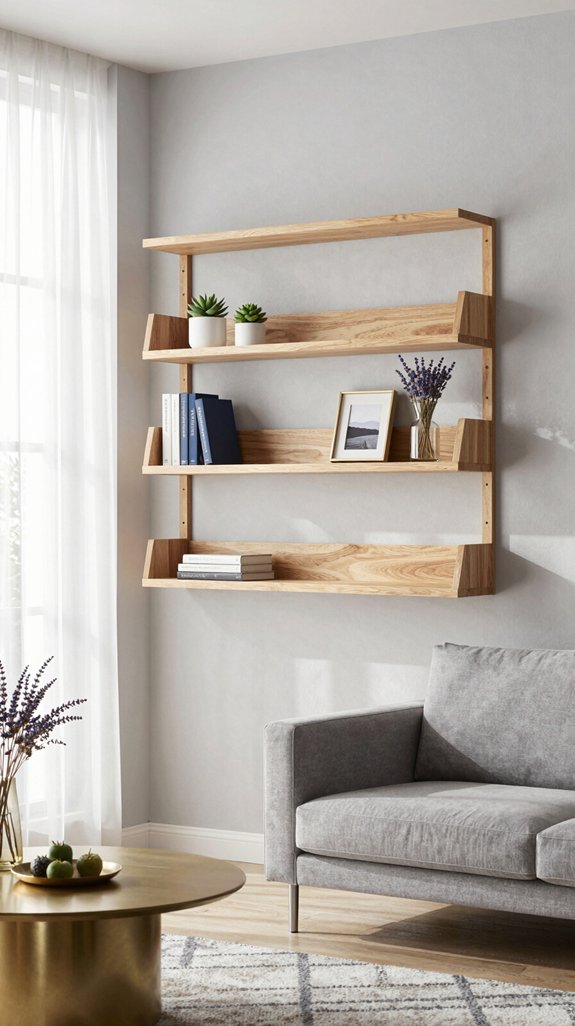
Floating shelves above the window instantly lift the eye, making the room feel taller and more spacious while keeping the floor clear. I install them high enough to elongate vertical sightlines, so light pours through unimpeded and the ceiling feels higher.
By choosing slim acrylic or thin‑wood boards, the shelves blend into the wall yet still bear books, décor, or a router without crowding the floor. I customize depth for heavy items and keep less‑used pieces up top, freeing drawers for daily essentials.
The mounts use simple screws or finish nails, avoiding glue that could damage drywall. I finish edges to match the room’s palette, turning storage into a stylish, airy display that maximizes every square foot of wall space.
Elevate your greenery with stylish multi‑level plant stands for displaying several plants in one footprint.

Stack Your Style: This bedside table set includes two stackable side tables that can be arranged together or separately to maximize your living space. Stack them together to create a 25.3″ tall table with 3 levels of storage with easy access to the open shelving.

Oval-Side Table Size:11.8''D x 15.7''W x 22.4''H

100% Solid Pine Wood: Crafted entirely from solid pine (no particle board or veneers), this wood side table brings nature indoors. Each piece showcases unique wood grains, knots, and color variations—authentic marks of real timber that ensure stability and a farmhouse charm that synthetic materials can't replicate
Seating Layout: Arrange Low‑Profile Seating to Preserve Floor Space
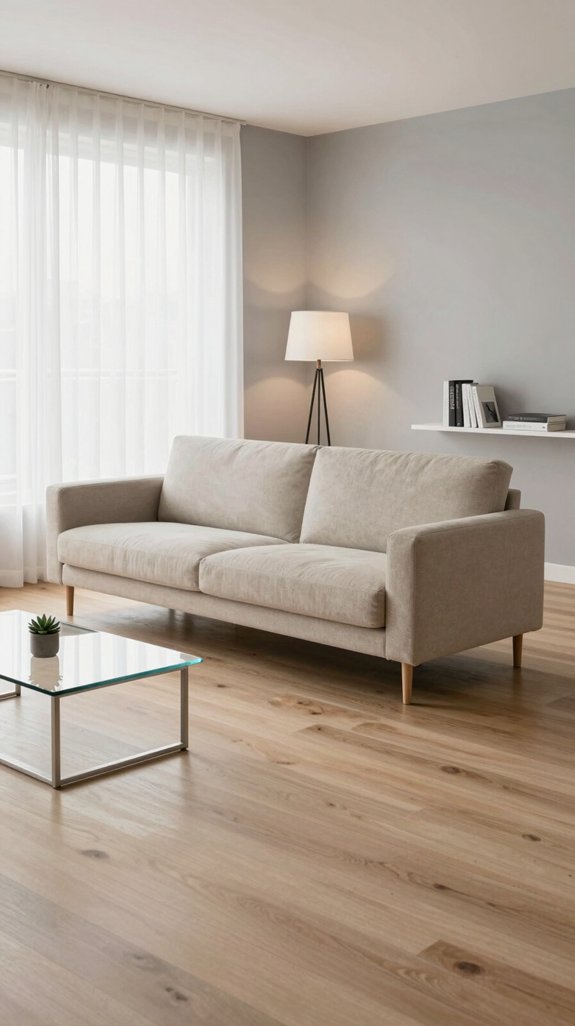
When you choose low‑profile seating, the room instantly feels more open because the slim arms and raised legs keep the floor visually clear.
I start with a low‑profile sectional that hugs a corner, its thin arms and raised legs creating a floating effect that preserves sightlines. The L‑shaped configuration defines a seating zone without blocking pathways, while a short side sits flush against the wall to maximize openness.
I pair the sectional with a central ottoman that doubles as a coffee table, keeping the floor uncluttered. For added flexibility, I add an open‑frame accent chair that swivels, letting me re‑arrange the conversational circle for movie nights or gatherings.
This modular, airy layout feels modern, spacious, and ready for any activity.
Stylish consoles with compact storage enhance the aesthetic while providing dedicated space for vinyl records.
Lighting: Add Repositionable Statement Lighting
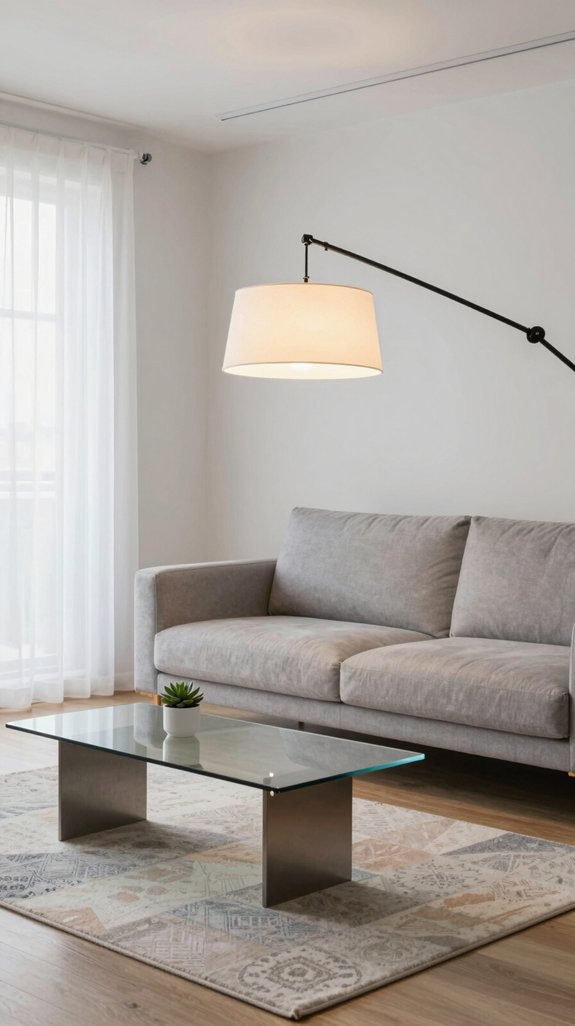
Because a small living room thrives on visual openness, I choose a repositionable statement light that delivers both drama and flexibility without crowding the space.
I pick a sculptural floor lamp with a clear acrylic shade, so its sleek silhouette adds height while the transparent material preserves negative space. The lamp’s 33‑inch diameter matches a 15 × 18‑foot layout, and I place it over the seating cluster rather than the room’s geometric center, creating an intimate lighting zone for conversation.
Because it’s freestanding, I can shift it to test new arrangements, no wiring needed—perfect for renters.
I also experiment with a retro Sputnik pendant or a matte‑black ring chandelier, each offering bold visual impact that integrates seamlessly with modern, space‑optimized interiors.
A modular activity table can double as a play surface while providing extra storage when folded away.
Lighting: Design a Corner Reading Nook With Dimmable Lighting and a Plush Accent Chair
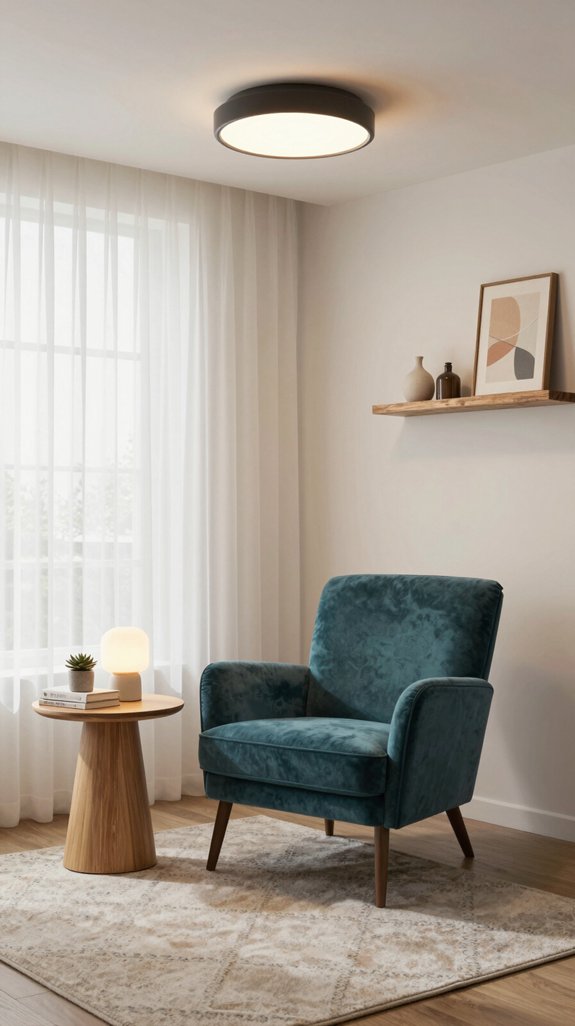
I start by picking a low‑traffic corner that catches natural light from the nearest window, then I place a sleek, C‑shaped rattan armchair in robin’s‑egg blue right against the angle, keeping the footprint tight while still feeling inviting.
Next, I install dimmable wall sconces on either side, letting me dial brightness from bright reading to soft ambience. A slim, adjustable pharmacy‑style floor lamp stands just behind the chair, its arm swiveling to follow my line of sight.
I add a low‑profile C‑shaped side table for a cup of tea and a few books, then layer a textured rug and plush pillows for comfort. The overall scheme stays minimalist, yet the coordinated colors and smart lighting create a focused, stylish nook that maximizes space without overwhelming the room.
Choosing a camelback sofa can further enhance the nook’s elegance while providing additional seating.
Floor & Wall: Choose Big Tiles to Keep the Color Flow Smooth
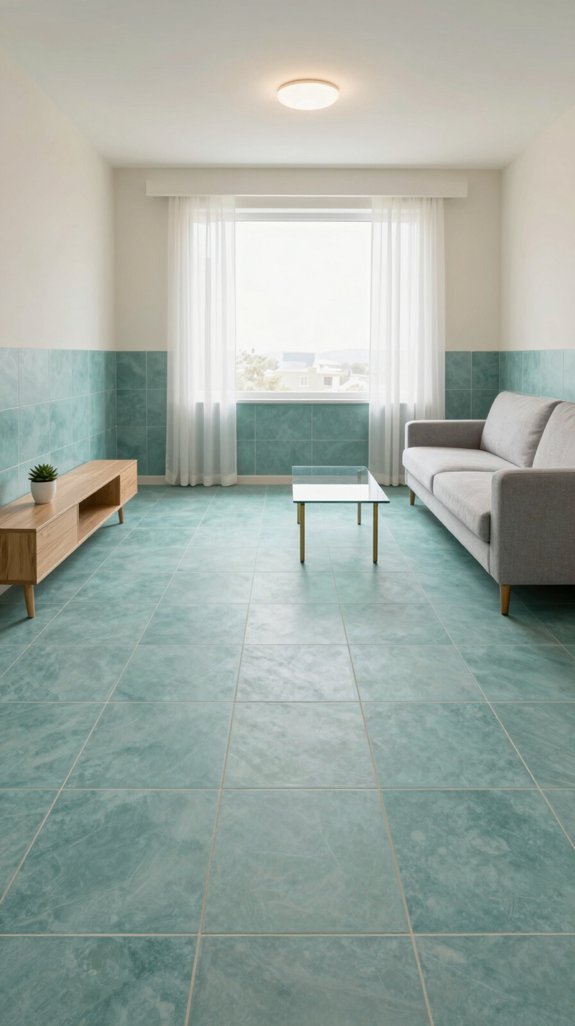
Big tiles instantly stretch a room’s visual limits, turning cramped walls and floors into seamless, airy canvases. I choose 600 mm + formats in light, neutral tones so grout lines disappear and the eye glides across uninterrupted surfaces. By installing rectangular tiles in a linear pattern along the longest wall, I elongate depth and make low ceilings feel taller. A subtle stone‑look finish reflects natural light, while a glossy sheen adds brightness without clutter. I keep the floor‑to‑wall connection flawless, creating a waterfall effect that unifies the space. The fewer grout lines also mean less cleaning and a sleek, contemporary look. This strategic, large‑format approach maximizes perceived space and delivers a sophisticated, modern aesthetic. Incorporating antique‑style accents can add timeless charm to the modern layout.
Textures: Add a Textured Throw and Woven Basket in Warm Neutrals for Depth
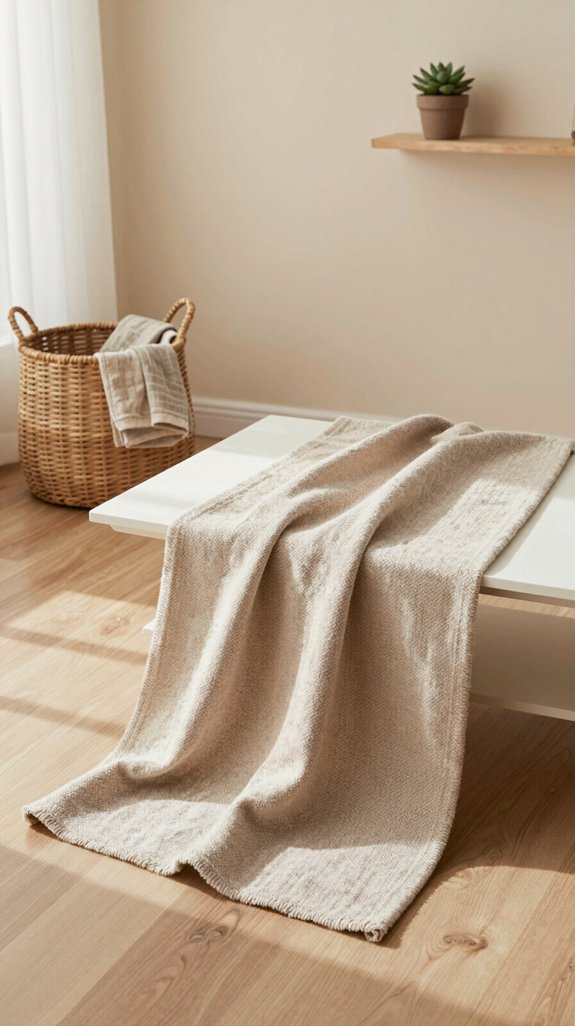
A well‑chosen textured throw paired with a woven basket instantly adds depth to a small living room without crowding the space.
I drape a chunky knit or velvet throw over a neutral sofa, letting its plush softness contrast the sleek upholstery and create visual layering.
Next to it, I place a jute or rattan basket in warm beige, taupe, or cream, storing magazines while introducing organic texture that grounds the floor.
By mixing smooth and rough surfaces, I achieve a multidimensional feel with just three to five texture layers, keeping the room airy yet inviting.
The neutral palette ties the elements together, preventing visual chaos and enhancing the sense of luxury in a compact space.
Consider adding a stylish decorative cushion to complement the textures and boost comfort.
Rug: Use a Jewel‑Tone Rug Sparingly to Avoid Visual Chopping
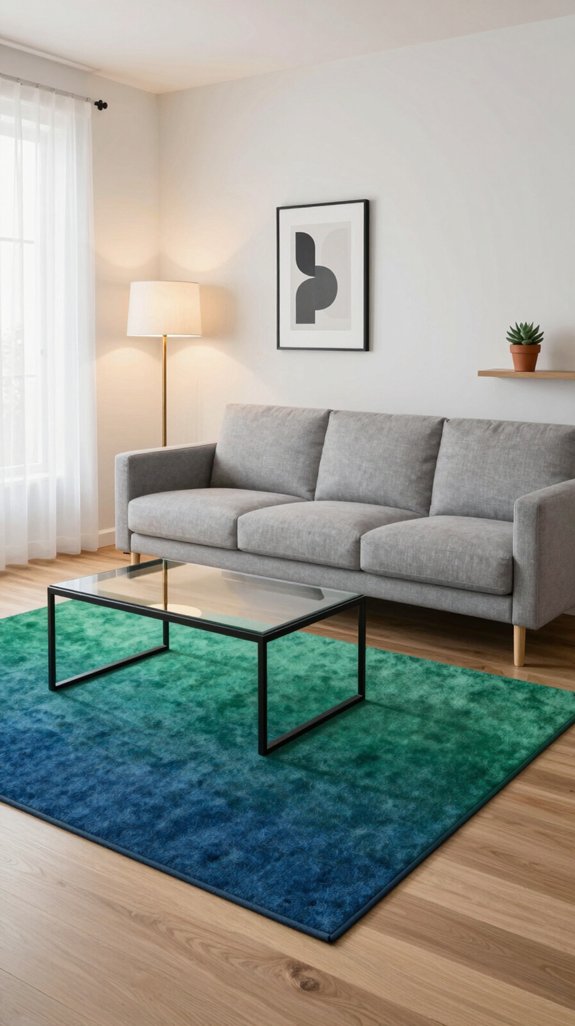
One or two jewel‑tone rugs can instantly elevate a tiny living room, but only when you keep them modest and purposeful.
I choose a single, low‑pile rug in emerald or sapphire, sized to cover 60‑75 % of the floor and leaving 18‑24 inches of bare wood around the edges.
I place it under the coffee table, aligning its edges parallel to the walls so the room feels unified rather than chopped.
A solid hue or a subtle, monochromatic pattern prevents visual clutter, while neutral walls balance the rich saturation.
The rug becomes a focal point that adds depth and warmth without overwhelming the space, delivering a luxe, trend‑forward look that stays airy and spacious.
Stylish runner rugs for hallways and kitchens can also serve as functional accents, protecting high‑traffic areas while enhancing overall décor.
Plants: Place a Tall Plant in a Corner for Liveliness and Vertical Interest
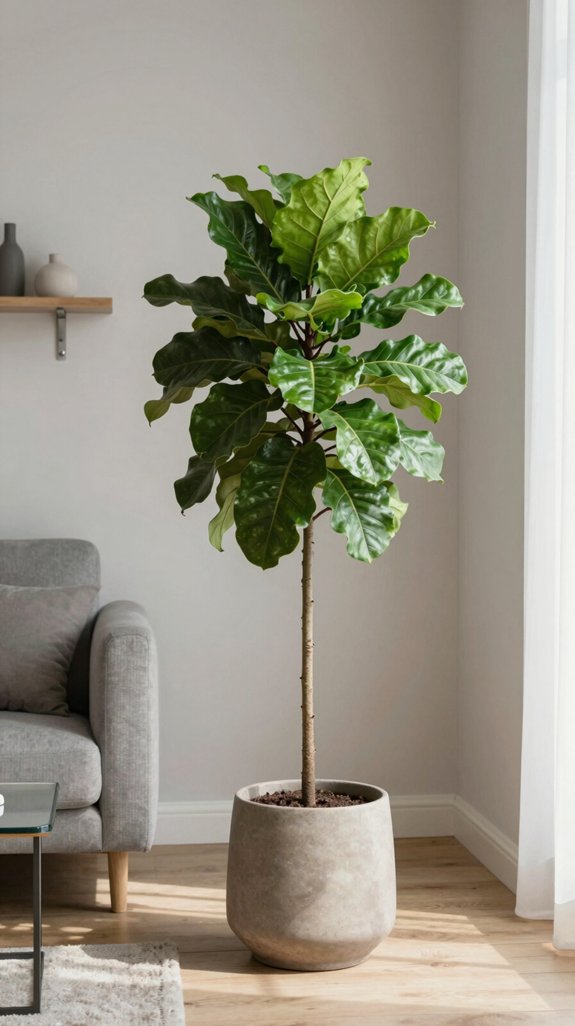
When I tuck a tall plant into a corner, it instantly lifts the room’s energy, drawing the eye upward and creating the illusion of extra height.
I choose an Umbrella Tree or a Monstera Deliciosa because their 6‑8‑foot reach adds vertical lushness without crowding the floor. The glossy, jagged leaves become a natural focal point, turning an empty nook into effortless statement piece that harmonizes with minimalistic décor.
Beyond aesthetics, the plant filters toxins, releases moisture, and boosts my mood, a benefit backed by NASA studies.
I pair it with a sleek, neutral pot that matches the palette, and position it in a low‑light corner to keep care simple.
This approach maximizes space, enhances chi, and delivers a fresh, innovative vibe.
Add a self‑watering pot to simplify maintenance and keep the soil consistently moist.
Corners: Turn Awkward Corners Into Reading Nooks With a Boucle Chair and Bookshelf
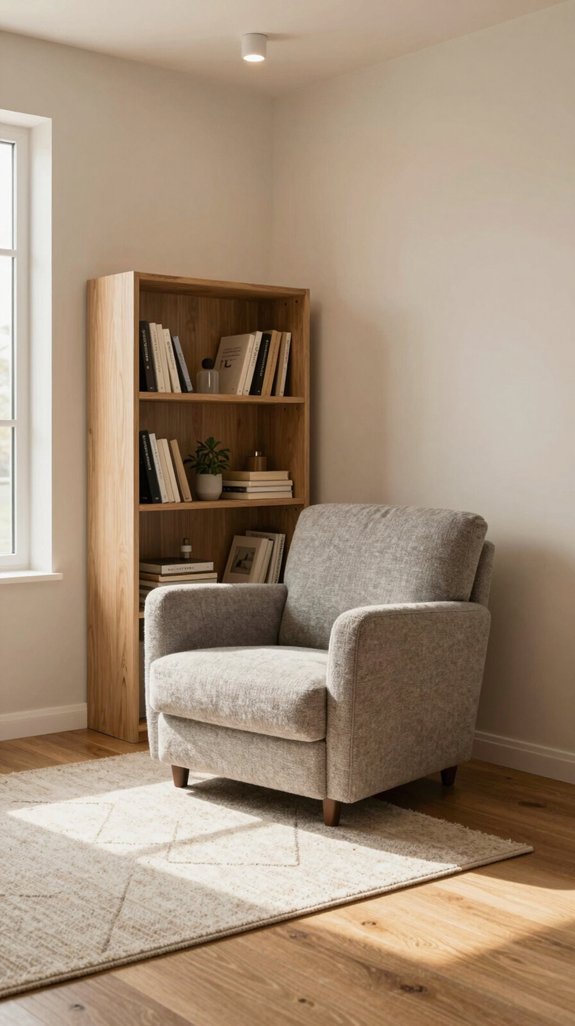
Transforming an awkward corner into a cozy reading nook starts with a compact boucle chair that hugs the space without overwhelming it. I choose a swiveling, rattan‑upholstered boucle seat in robin‑egg blue; its nubby texture invites a sink‑in feel while the slim profile leaves room for a low C‑shaped table lamp. Beside the chair I mount an open‑byby bookshelf, its shallow depth matching the window bump‑out so books sit within arm’s reach without crowding. Leather‑bound volumes add a tactile, immersive vibe. I layer a plush bolstered pillow and a soft blanket for extra warmth, then install a wall sconce flanking the nook for glare‑free illumination. The result feels innovative, space‑optimized, and perfectly tailored to a small living room. Add a wall‑mounted art rail to display rotating artwork without sacrificing floor space.
Fireplace: Select a Compact Gas Fireplace for a Homey Vibe Without Bulk
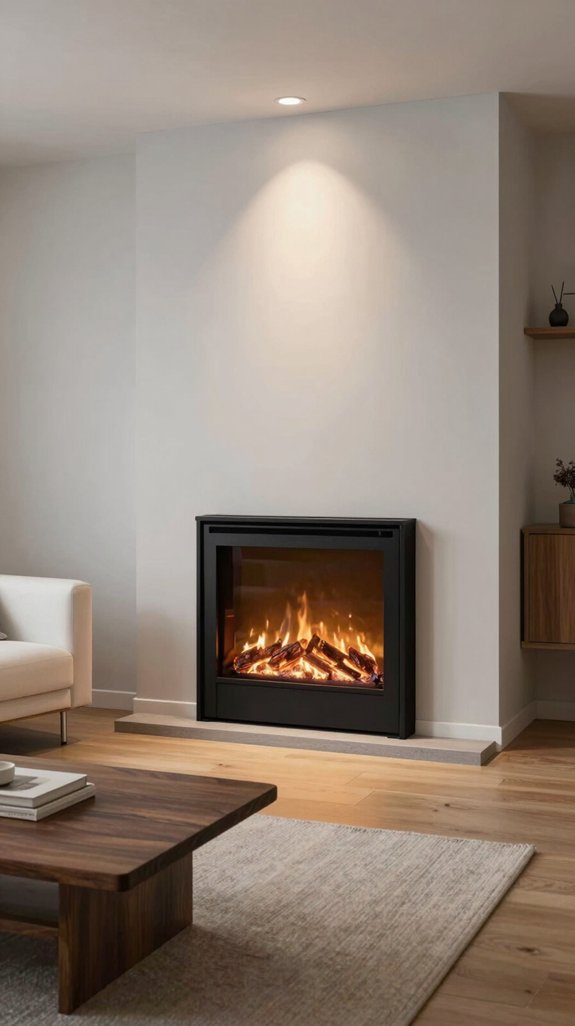
A compact gas fireplace can give a small living room a warm, inviting vibe without hogging precious floor space. I choose models that sit 70–120 cm wide and only 30–50 cm deep, like the SlimLine series or ONE6 wall‑mount, which slip into shallow wall cavities and leave the floor clear.
The 16‑in profile fits tight spots, while ventless options shave a few inches off depth. Heat output ranging from 13,400 to 35,000 BTU/hr keeps the room cozy without over‑powering it, and efficiency tops 79 %.
Installation is straightforward: direct vent sizes are modest, and many units fit standard masonry openings. Linear burners such as the Galaxy add a sleek media‑wall look, delivering homey flames without wood mess.
This space‑optimized, trend‑aware solution blends modern aesthetics with functional warmth.
Style: Go Japandi or Scandinavian for a Sleek, Functional Look
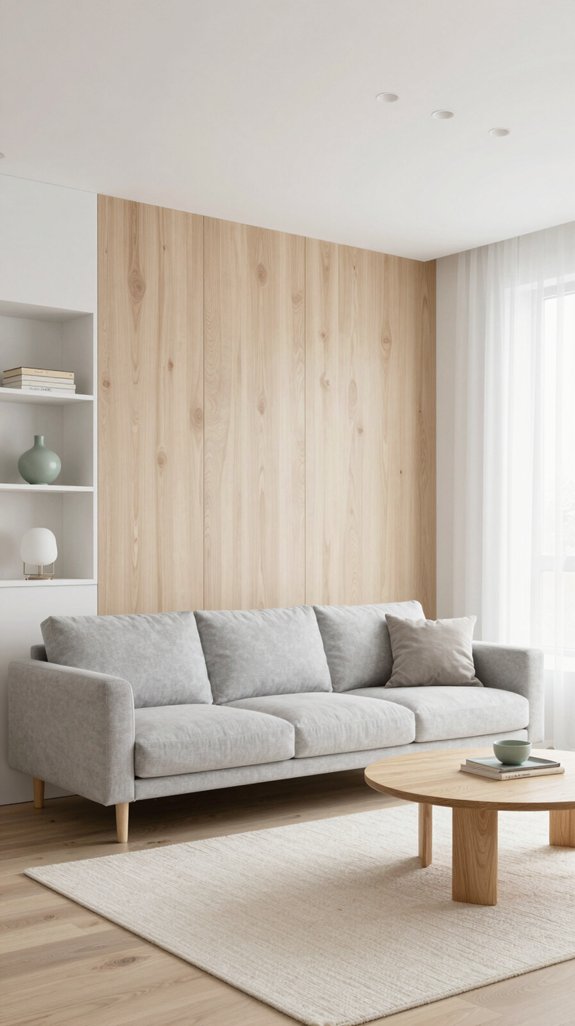
One of the easiest ways to make a cramped living room feel both sleek and functional is to blend Japandi’s clean lines with Scandinavian warmth.
I start with low‑profile, multi‑functional furniture—a coffee table that hides storage, a sofa that converts to a bed—so the floor stays open. Wall‑mounted desks and floating shelves give work and display space without sacrificing square footage.
I choose a neutral palette of warm beige, soft gray, and muted greens, punctuated by matte black hardware for subtle contrast. Natural wood tones in oak or ash tie the room together, while woven jute rugs and linen textiles add tactile depth.
Recessed lighting and a low‑hanging rice‑paper lamp amplify the airy feel, and a single handcrafted ceramic vase provides a focal point without clutter.
Minimalism: Keep Décor Minimalist-Focus on Clean Lines and a Few Key Items
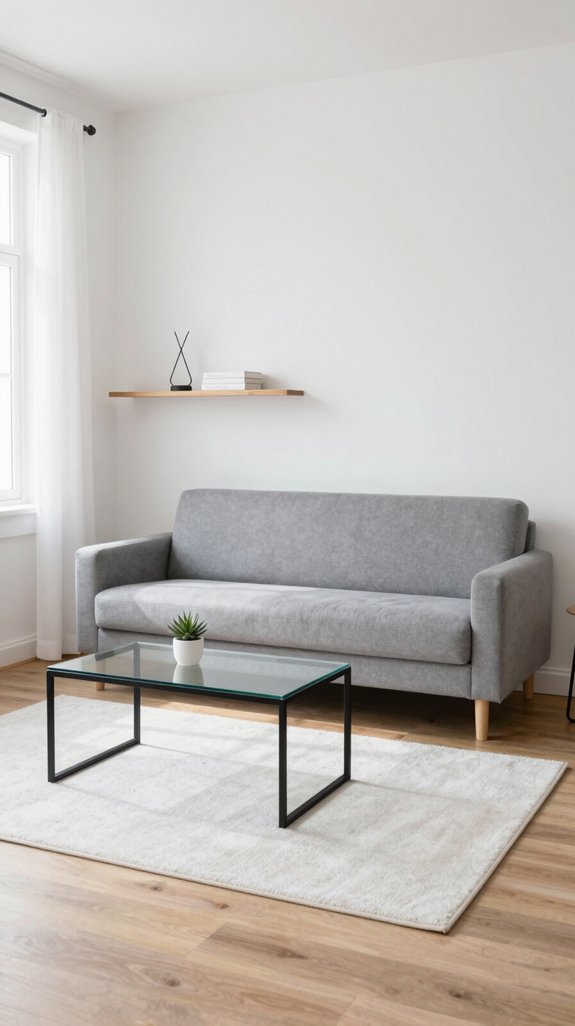
I strip the room down to its essentials, letting clean lines and a handful of purposeful pieces dictate the vibe. I choose a neutral palette—white, soft grey, cream—to amplify space and calm.
A sleek, low‑profile sofa with straight edges anchors the floor, while a simple geometric coffee table offers storage without visual weight. I add a sculptural floor lamp and a single textured pillow in muted tones, letting texture speak where color stays restrained.
Hidden compartments tuck away books and blankets, preserving uncluttered surfaces. Every item serves a clear function, and the remaining empty zones let natural light flow, highlighting architectural details.
This minimalist approach balances form and function, delivering a spacious, modern feel that feels both innovative and inviting. I also consider sofas upholstered with high‑performance fabrics to ensure durability and easy maintenance in high‑traffic areas.
Materials: Use Sustainable Wood and Biophilic Elements for Wellness and Texture
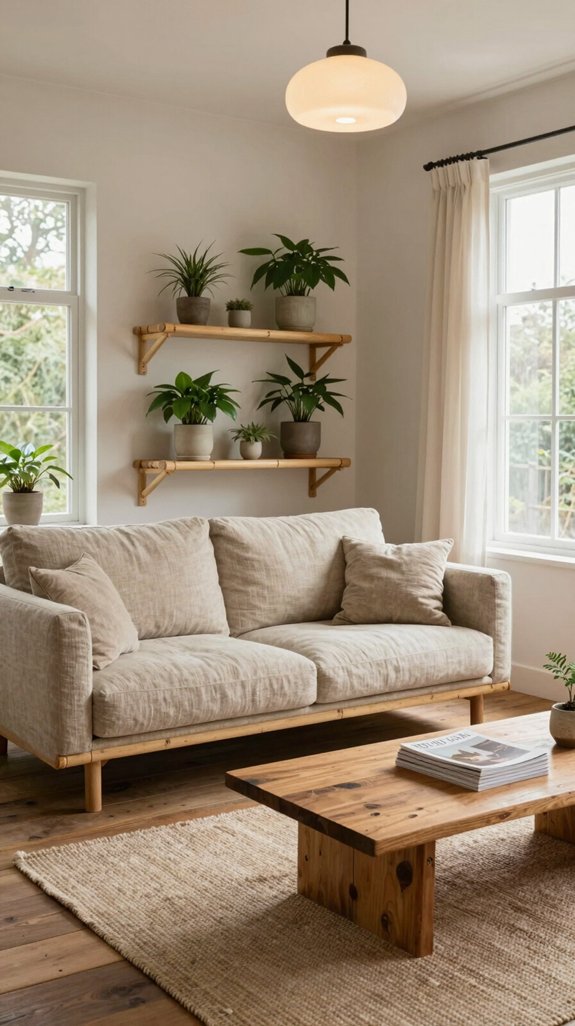
Sustainable wood and biophilic design are reshaping small living rooms into healthier, texture‑rich retreats. I choose reclaimed or FSC‑certified timber because it cuts carbon emissions up to 50 % and offers hypoallergenic, hygroscopic surfaces that balance indoor humidity.
The warm grain and varied finishes add depth without clutter, while smooth panels soothe stress, as UBC studies show. I integrate biophilic elements—live‑edge shelves, wood‑clad accent walls, and bamboo flooring—to boost focus and emotional balance.
These materials also improve acoustics and act as natural insulation, supporting Passive‑House standards. By sourcing locally, I reduce transportation emissions and keep the design fresh, innovative, and space‑optimized for a small room that feels both modern and restorative.
A living wall system can further enhance air quality and visual interest with vertical plant displays.
Scale: Select Appropriately Sized Furniture to Preserve Room Scale
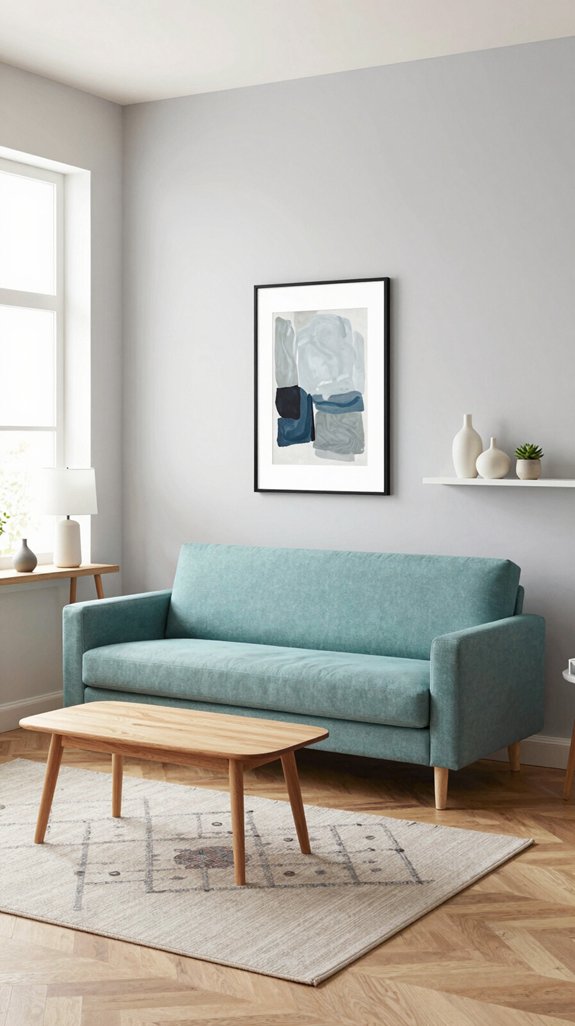
Choosing the right‑scale pieces keeps a small living room feeling airy instead of cramped. I start by measuring the wall and applying the two‑thirds rule: a 72‑inch sofa fits comfortably, occupying roughly two‑thirds of the length and leaving room for a rug that mirrors the same proportion.
My coffee table stretches at least half the sofa’s length—about 42 inches—and sits 16‑20 inches away, keeping the height within four inches of the seat cushion for visual harmony. I add an accent chair, 36‑40 inches wide, keeping a 42‑inch gap between chairs for the table.
A console, 14‑20 inches deep, sits 12 inches from seating, with six inches of clearance at each end. Walkways stay 32‑40 inches wide, ensuring traffic flows without bottlenecks. A well‑chosen pouf ottoman can double as extra seating and a stylish storage solution, enhancing functional flexibility in tight spaces.
Balance: Balance Negative Space With Selective Accessories for a Spacious, Cohesive Look
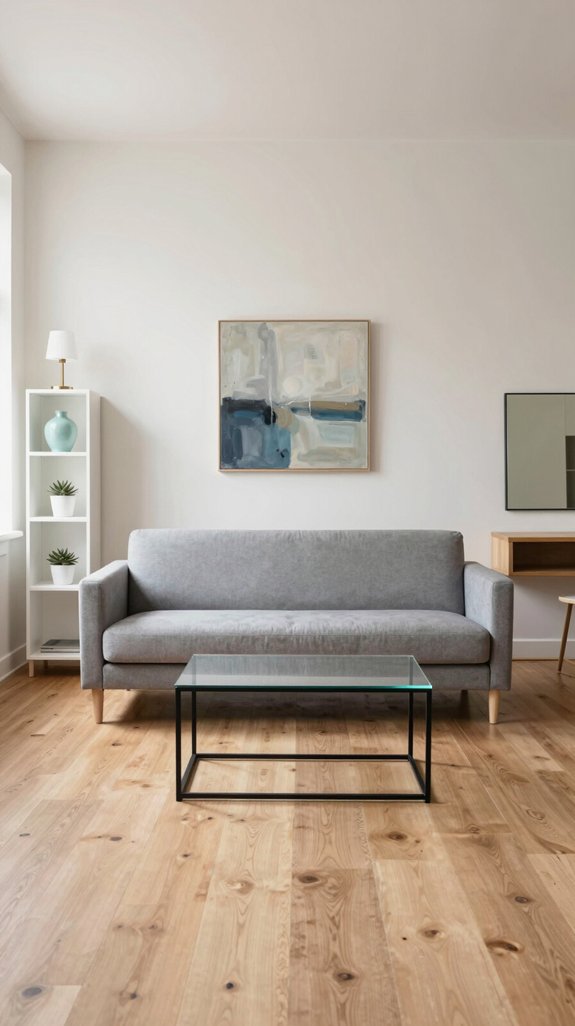
How can you make a tiny living room feel both airy and intentional? I start by treating empty areas as a design tool, not a flaw.
Wide gaps between the sofa and coffee table become intimate conversation zones while keeping the floor plan breathable.
I choose a single statement piece—like an oversized rug or bold artwork—and surround it with uncluttered wall space, letting the neutral palette act as a visual cushion.
Asymmetrical accessory placement, such as a pedestal vase on one side and bare wall opposite, creates purposeful calm.
Light-weight recessed lighting and slim floor lamps accentuate these voids without crowding.
Consider incorporating Japanese-inspired minimalism to enhance the sense of calm and order.
Frequently Asked Questions
How to Choose a Storage Ottoman Size for a Tiny Living Room?
I pick a storage ottoman that’s under 22 inches, fits a 12‑18 inch clearance, and holds at least 68 liters; a round 17‑inch cube with a hinged lid maximizes storage while preserving flow.
Can a Small Stone‑Effect Coffee Table Support Heavy Décor?
I’m laughing, but yes—my petite stone‑effect table holds hefty décor effortlessly, thanks to sintered‑stone strength, reinforced concrete cores, and iron bases; it’s a sleek, trend‑savvy, space‑saving powerhouse for modern interiors.
Will Low‑Profile Sofas With Exposed Legs Affect Comfort?
I think low‑profile sofas with exposed legs can feel airy and space‑saving, but you’ll need lumbar pillows or adjustable backs to keep comfort high, especially for seniors or tall users.
What Lighting Placement Avoids Glare in a Corner Reading Nook?
I place the lamp just behind and to the side of your reading spot, shoulder‑height, angled down 15‑20°, using a swing‑arm or gooseneck fixture with a dimmable, anti‑glare bulb for crisp, shadow‑free illumination.
How Many Plants Can a Small Room Hold Without Crowding?
I’d say three to four medium‑sized plants comfortably fill a modest room, especially if you opt for sleek hanging planters or tiered stands that keep the floor uncluttered while staying on‑trend.