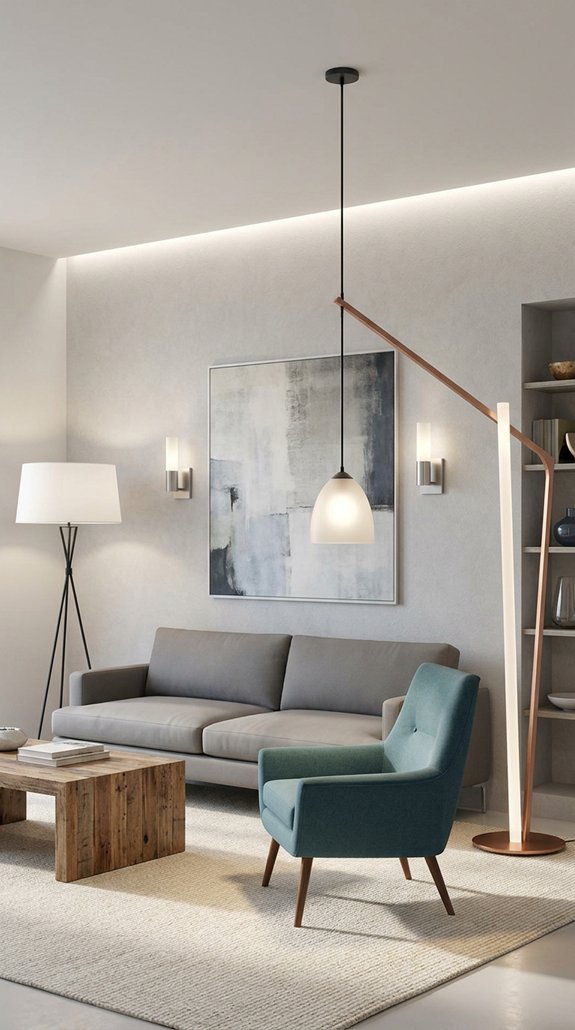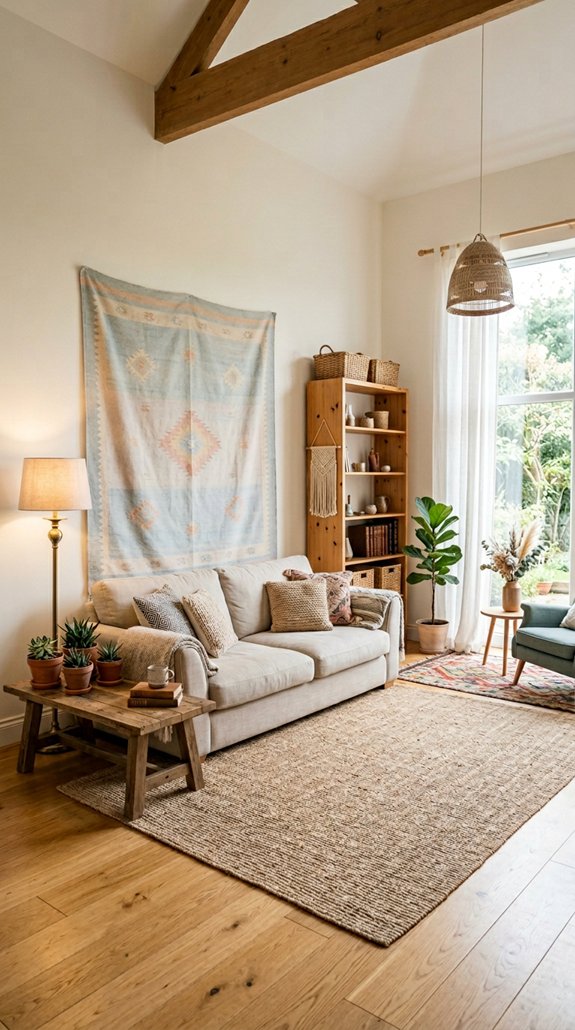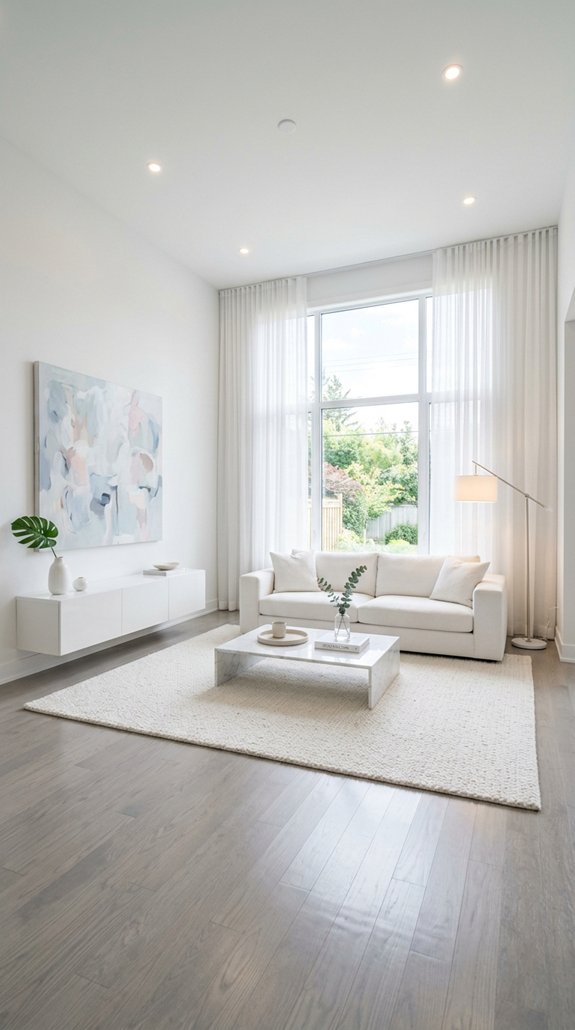
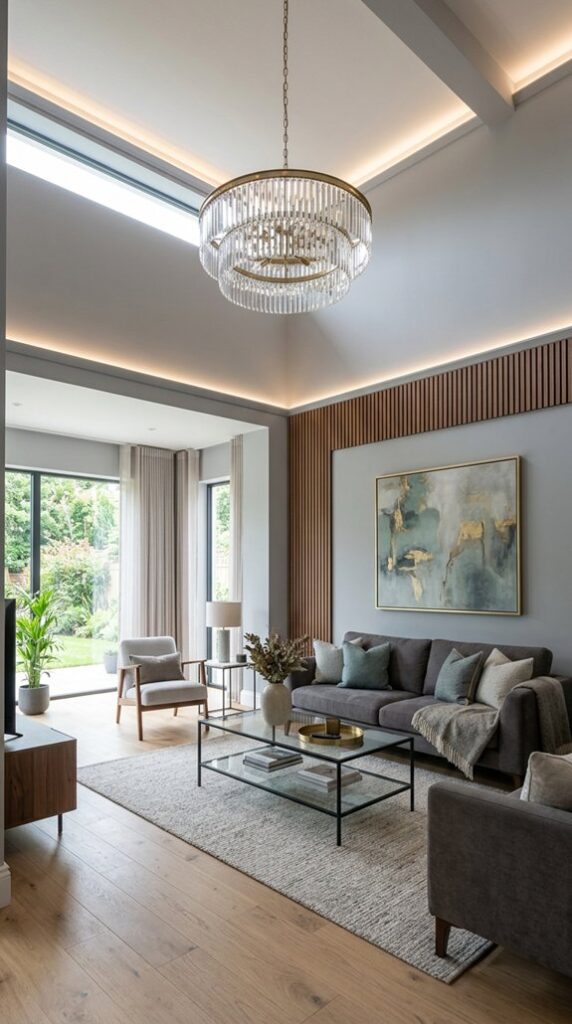

I’ll walk you through 22 fresh interior ceiling ideas that instantly lift a living‑room’s style, perception, and sustainability. Think minimalist flat white ceilings for a clean, bright look, subtle grey textured plaster that adds depth, soft pastel paints for calm color pops, and bold navy for drama. Warm wood beams bring natural coziness, while vinyl or PVC tiles offer easy maintenance. 3‑D wall‑ceiling hybrids create dynamic depth, color‑blocking sections define zones, and ceiling‑mounted plants add biophilic flair—plus more to discover.
Minimalist Flat White Ceilings – Clean, Bright Look
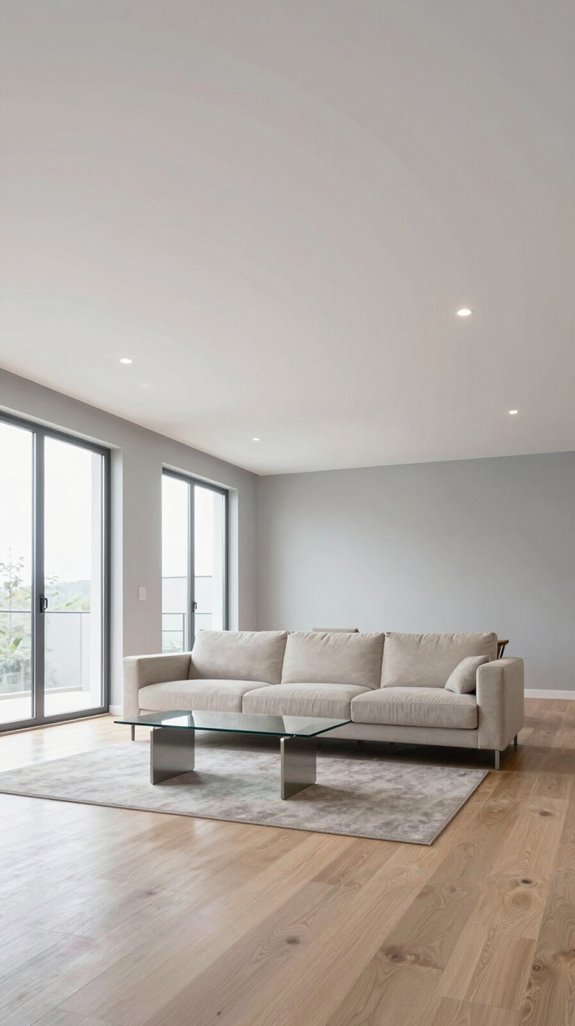
When I strip back the ceiling to a flat white, the room instantly feels larger and more luminous, letting natural light bounce off the surface and amplify the minimalist vibe. I choose a high‑gloss, low‑sheen paint that resists yellowing, ensuring the ceiling stays crisp year after year.
Integrating recessed LED strips along the perimeter creates a subtle halo effect without cluttering the visual field. I keep crown molding minimal—if any—so the ceiling plane remains uninterrupted, reinforcing spatial continuity.
Selecting a matte finish for adjacent walls prevents glare, while reflective floor tiles bounce light upward, enhancing the airy atmosphere. This approach satisfies contemporary design trends, delivering a clean, bright backdrop that elevates furniture and décor without competing for attention.
Reflective mirrors can be discreetly incorporated into ceiling designs, offering hidden storage while maintaining the sleek aesthetic.


Vertical aerosol for overhead professional projects
Subtle Grey Textured Plaster – Sophisticated Modern Finish
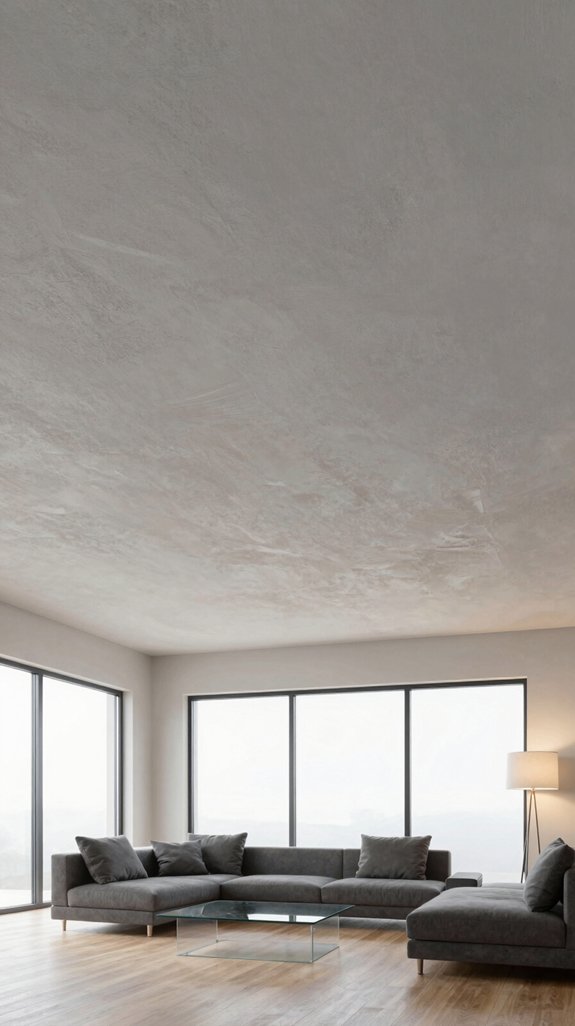
A subtle grey textured plaster instantly adds depth and sophistication to a living‑room ceiling, turning an ordinary surface into a refined backdrop that feels both modern and inviting.
I love how its soft, mottled finish creates a tactile illusion of light and shadow, expanding vertical space without overwhelming the room.
The muted hue pairs seamlessly with matte black fixtures, brushed brass accents, and sleek furniture, keeping the palette cohesive while allowing bold artwork to pop.
I recommend a thin, hand‑troweled application for a uniform grain, then lightly sand to reveal a whisper of texture.
This finish absorbs ambient light, softening glare and enhancing acoustic comfort—ideal for open‑plan layouts where style and function must coexist.

This wallpaper is printed on expanded vinyl


Silver grey concrete wallpaper use back-sticking technology with strong adhesion, no additional adhesive needed, just peel and stick,even beginners can do it, it's an economical and easy way to quickly upgrade walls and old furniture.
Soft Pastel Paints – Gentle Color Pops for Calm Ambiance
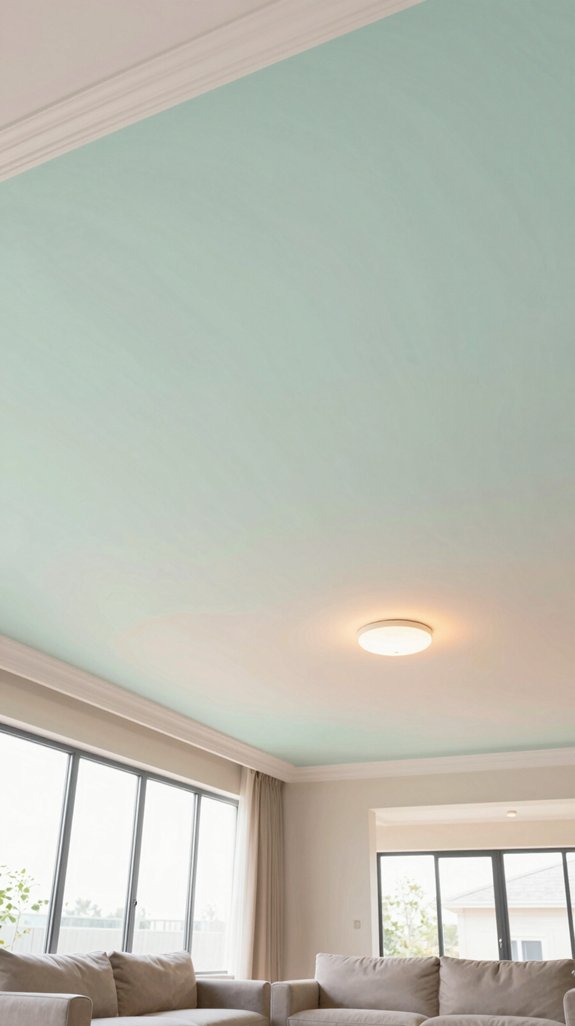
One of my favorite ways to calm a living‑room while still adding a whisper of personality is to paint the ceiling in a soft pastel hue—think muted mint, blush pink, or powdery sky blue.
I choose pastel because it reflects light, lifts the vertical space, and subtly frames contemporary furnishings without overwhelming them.
Pairing a pastel ceiling with matte white walls creates a layered depth that feels airy yet intentional.
I often integrate recessed lighting that picks up the hue’s undertones, enhancing the tranquil vibe after dark.
When I match the pastel to a single accent piece—like a sculptural rug or a sleek coffee table—the ceiling becomes a quiet anchor, guiding the eye and reinforcing a cohesive, modern aesthetic.
This approach satisfies trend‑savvy homeowners seeking gentle color pops that remain sophisticated and future‑proof.

30 PASTEL COLORS : Shuttle Art pastel colors acrylic paint set come with 30 soft pastel colors acrylic paint in 60 ml/2 oz bottles, and 10 paint brushes for painting and crafting. Pastel tones are perfect for creating lovely and dreamy art projects, and widely applied on warm and romantic backgrounds

6 Vibrant Colors & Rich Pigment: The studio acrylic pastel paint set comes in unique eye-catching vibrant Pastel colors and offers vivid colors and better selections to bring your artwork to life.

Beautiful Pastels Tempera Paint for Kids Bulk Paint Set – Cra-Z-Art features classic tempera paint in 10 beautiful, soft colors!
Bold Dark Navy Ceilings – Depth and Drama in One Coat
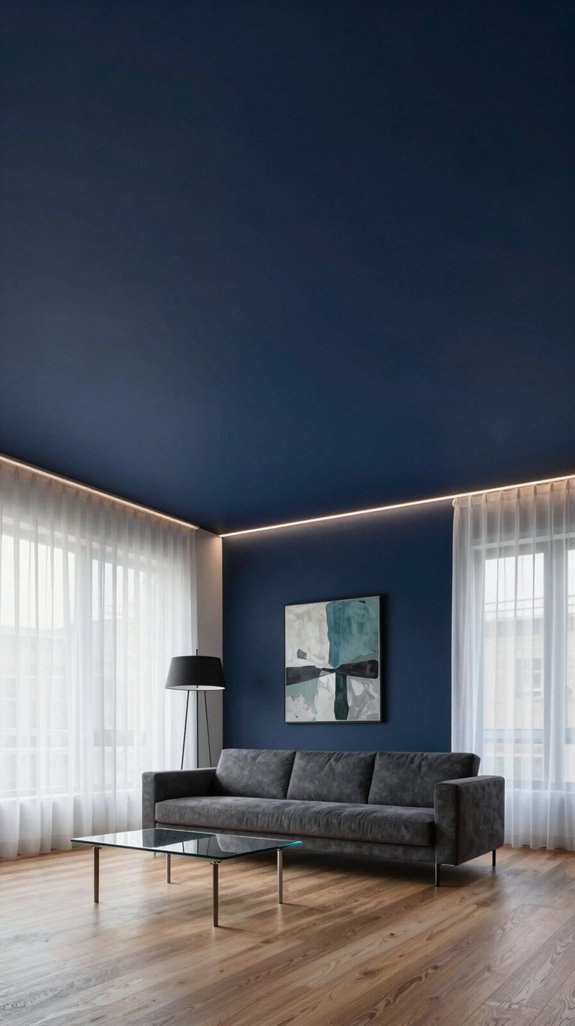
A deep navy ceiling instantly transforms a living‑room into a dramatic, cocoon‑like space, pulling the eye upward while grounding the interior with a rich, saturated tone.
I love how the color creates a visual ceiling that makes high‑ceilinged rooms feel intimate without shrinking them. Pairing navy with sleek, low‑profile lighting accentuates depth, while matte finishes prevent glare and keep the vibe sophisticated.
I recommend using a single‑coat, high‑coverage paint formulated for even coverage; it reduces labor, cuts costs, and delivers the bold hue in one go.
The dark backdrop amplifies metallic or glass décor, turning simple furnishings into focal pieces. When I apply this trend, the room feels both timeless and avant‑garde, a true reflection of innovative spatial design.

Complete 8-foot Coverage for Versatile Installations: this set includes two 48-inch beams, offering a combined 8 feet of coverage; Ideal for ceiling spans, entryways, hallways, or accent walls, you can install them side by side for a continuous run or use them separately for creative, staggered layouts; This flexibility allows you to tailor the faux wood beams for ceiling projects to fit various architectural spaces without needing custom sizing

NRC-Rated Noise Control: Rated NRC 0.70–1.00 depending on beam spacing, these PET fiberboard faux wood beams absorb background noise, reduce echo, and improve speech clarity in open or reverb-prone spaces.

Item Description: Heritage Timber Faux Wood Mena 3-Sided (U-Beam) Beam 3 1/2"W x 3 1/2"H x 48"L, Kona Brown Finish
Warm Wood Beam Accents – Cozy, Natural Vibe on the Ceiling
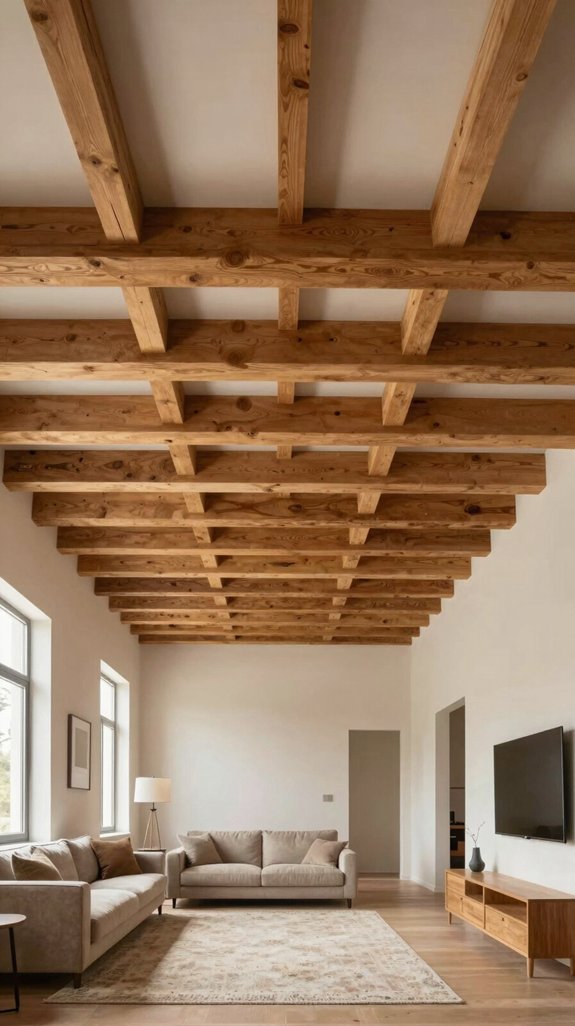
Wood beams, exposed and lightly stained, instantly inject a warm, natural vibe into any living‑room ceiling, making the space feel both grounded and inviting.
I love how the grain runs parallel to the room’s flow, creating visual continuity that ties furniture, lighting, and art together.
By selecting reclaimed pine or sustainably sourced oak, I add texture without overwhelming the palette, and the subtle amber hue complements both muted neutrals and bold accent walls.
I often pair the beams with recessed LED strips that highlight the wood’s depth while preserving a sleek, modern silhouette.
The result is a cozy, organic canopy that feels spacious yet intimate—perfect for anyone seeking a fresh, nature‑infused aesthetic that still feels cutting‑edge.

⚠️Note: It is not real 3D wallpaper, but only looks like it has a 3D effect. It is flat wallpaper.The wallpaper background is black, but with a faint deep blue tint.

Stylish - Authentic wood looking and grain texture, adding timeless feature for your home!

Stylish - Authentic wood looking and grain texture, adding timeless feature for your home
Metallic Gold or Brass Stenciling – Luxurious Highlights Made Easy
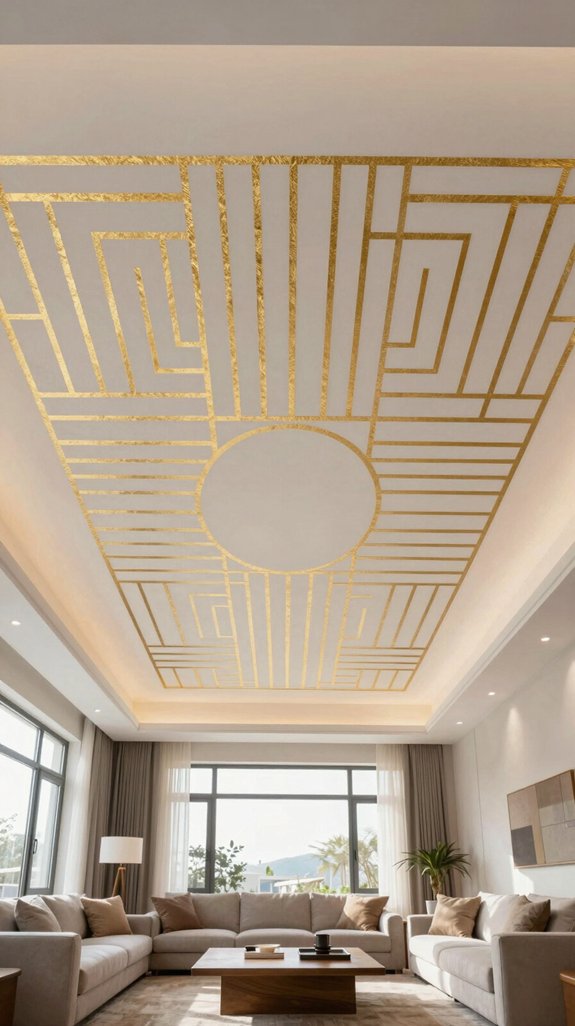
I love how a thin line of metallic gold or brass stenciling can instantly elevate a living‑room ceiling, turning a plain surface into a luxe backdrop without overwhelming the space.
I’ve started using low‑sheen metallic paints that catch ambient light, then I trace geometric or organic motifs with a stencil‑cut template.
The subtle sparkle draws the eye upward, expanding the room’s perceived height while anchoring the décor. I pair the stenciled band with neutral walls and matte flooring, so the ceiling becomes the focal point without competing with furniture.
For a modern twist, I offset the gold line with a recessed LED strip, creating a soft halo that accentuates the pattern at night.
This technique delivers high‑impact elegance, stays budget‑friendly, and adapts to any style—from mid‑century to contemporary.
accent lighting kits can further enhance the ambience by adding layered illumination that highlights the metallic accents.

Use for a variety of indoor and outdoor project surfaces including wood, metal, plaster, masonry or unglazed ceramic
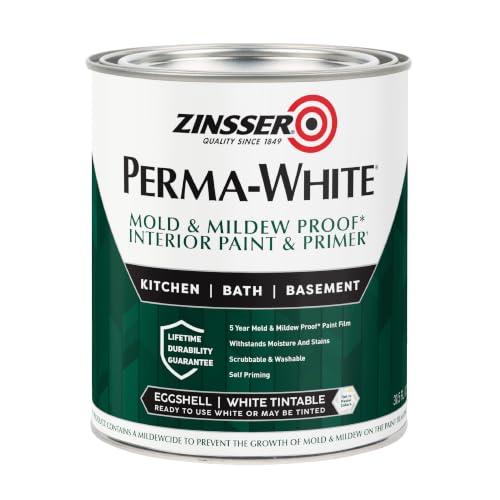
Self-Priming formula - requires no sanding

Use for a variety of indoor and outdoor project surfaces including wood, metal, plaster, masonry or unglazed ceramic
Glossy Black Ceiling Panels – High‑Contrast Statement for Modern Rooms
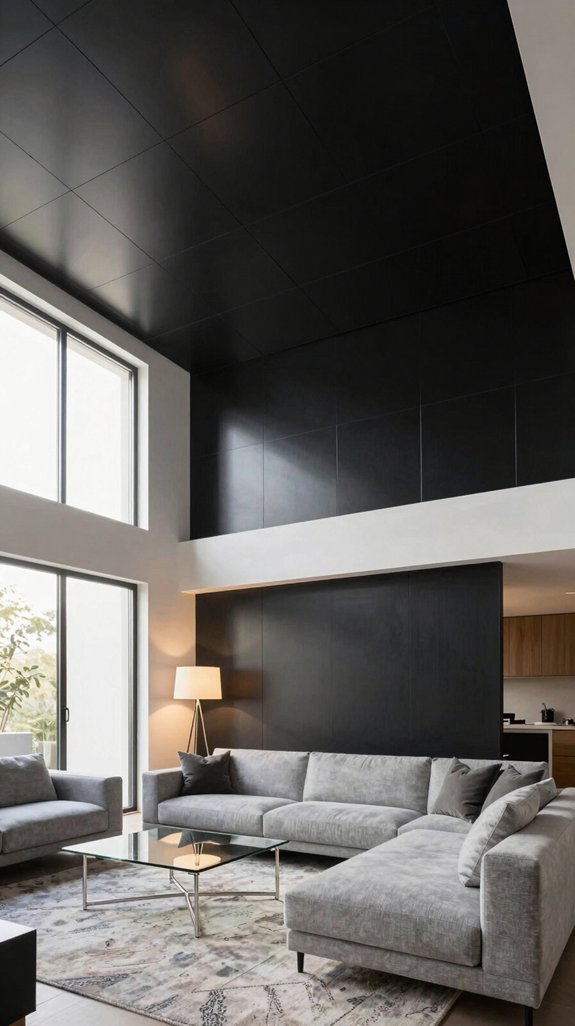
When I install glossy black ceiling panels, the room instantly gains a bold, high‑contrast backdrop that amplifies modern aesthetics. I choose panels with a satin‑smooth finish, allowing subtle light to glide across the surface without creating glare.
The dark plane visually lowers the ceiling, making high‑ceiling spaces feel cozier while preserving vertical openness. Pairing black with crisp white walls or warm wood floors creates a striking chromatic dialogue that guides the eye upward.
I integrate recessed LED strips along the perimeter to accentuate edges, adding depth without compromising the sleek look. The panels also serve as a canvas for future art installations or hanging sculptural lighting, keeping the design adaptable and forward‑thinking.
This approach delivers a sophisticated, avant‑garde ambience that feels both intimate and expansive. The tactile depth of 3D wall art can enhance the visual impact of contrasting surfaces, especially when paired with high‑contrast textures.

Knockdown sponge is intended for small repairs and areas that need textured.

Silk Plaster liquid wallpaper is revolutionary product in the home decor industry.

Sheetrock Brand TexoLite Sanded Paste Stipple produces a light, sand-textured finish on interior surfaces of gypsum, drywall, plaster, concrete, wood and other materials. Applies easily with brush, roller or spray equipment, creating swirl patterns and other designs Conceals minor surface defects Dries to a hard, durable, natural white finish Fast, low-cost application with coverage up to 200 sq. ft. per gallon
Mirror‑Finish Panels – Amplify Light and Space Instantly
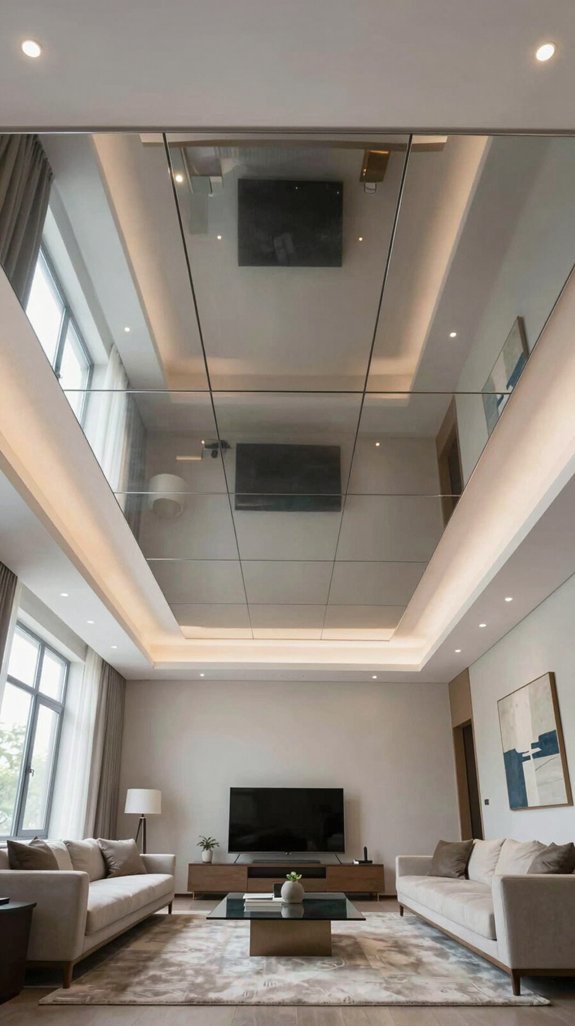
A mirrored panel installed on the ceiling instantly multiplies natural light, turning a modest living room into a luminous, airy space.
I love how the reflective surface captures daylight from windows and skylights, bouncing it across walls and furniture to create an illusion of depth. The sleek, high‑gloss finish feels futuristic, yet it pairs effortlessly with minimalist décor and bold color accents.
I choose thin, lightweight panels that integrate with existing joists, avoiding bulk while preserving structural integrity. By aligning the mirror’s orientation with the room’s focal point, I amplify visual height without overwhelming the eye.
This trend‑savvy solution delivers instant spaciousness, perfect for urban apartments craving openness and modern elegance.

CONVENIENT SIZE & FUN BRIGHT COLORS - This versatile acrylic paint set includes 12 - 2 oz bottles of colorful craft paint. The colors in this kit include: White, Princess Pink, Orange Cream, Pale Yellow, Soft Green, Atlantis, Dark Granite, Light Tan, Wisteria, Electric Blue, Summer Sky, and Acapulco

【24 Soft Pastel Colors】Create lovely, dreamy artwork with 24 curated pastel acrylic colors in 2 oz / 60 ml bottles. The soft color range is ideal for cute crafts, romantic backgrounds, room décor, seasonal projects, handmade gifts, and everyday creative painting.

Includes 24 x 36ml (1.2 US fl.oz) pastel acrylic paint colours: Titanium White, Pastel Naples Yellow, Pastel Yellow, Pastel Lemon, Pastel Cantaloupe, Pastel Marigold, Pastel Apricot, Pastel Pumpkin, Pastel Blush, Pastel Rouge, Pastel Bubble Gum, Pastel Hot Pink, Pastel Mauve, Pastel Iris, Pastel Egg Shell Blue, Pastel Lavender, Pastel Purple, Pastel Turquoise, Pastel Mint, Pastel Pear, Pastel Chartreuse, Pastel Sage, Pastel Taupe, Pastel Mushroom
LED Recessed Lights – Integrated Lighting for Seamless Ceiling Design
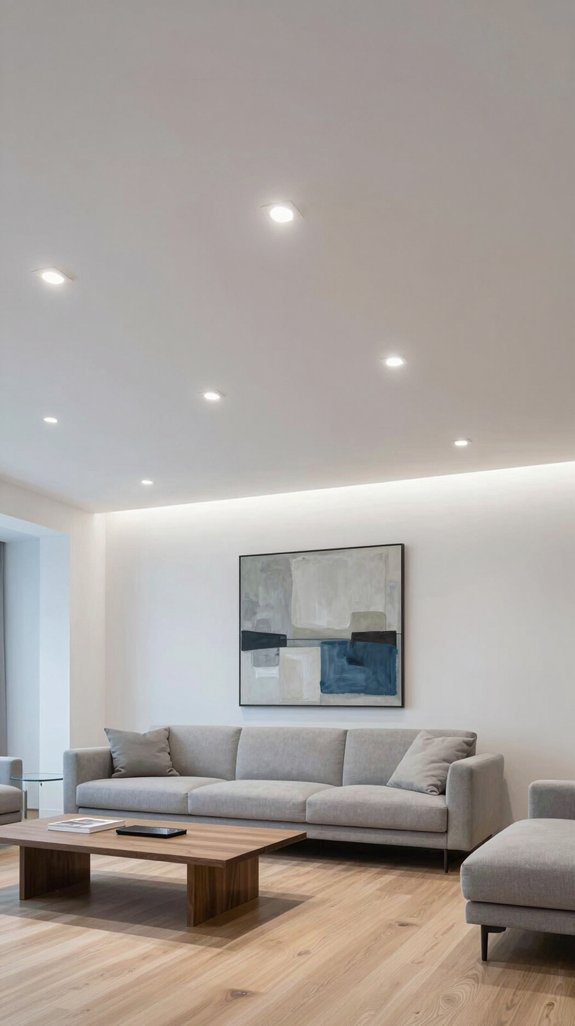
LED recessed lights blend seamlessly into the ceiling plane, delivering a clean, unobtrusive glow that highlights architectural lines without cluttering the visual field.
I choose low‑profile trims and dimmable LEDs that match the room’s color temperature, so the illumination feels like an extension of the ceiling itself. By spacing fixtures 4‑6 feet apart, I create an even wash that accentuates high ceilings while preserving floor space for furniture.
The integrated design lets me hide wiring behind plaster, maintaining a minimalist aesthetic that aligns with contemporary trends. I also favor warm‑white LEDs with high CRI to render textures accurately, ensuring artwork and textiles pop without harsh shadows.
This approach delivers a sleek, functional ceiling that feels both futuristic and inviting.

Complete 8-foot Coverage for Versatile Installations: this set includes two 48-inch beams, offering a combined 8 feet of coverage; Ideal for ceiling spans, entryways, hallways, or accent walls, you can install them side by side for a continuous run or use them separately for creative, staggered layouts; This flexibility allows you to tailor the faux wood beams for ceiling projects to fit various architectural spaces without needing custom sizing

Immersive Acoustic Noise Reduction - High density polyester fiber effectively absorbs indoor echo and blocks daily noise, creating a calm, peaceful atmosphere in your home.

High-Quality PVC Material - Made from high-grade PVC, Art3d panels combining the benefits of being sturdy and lightweight for easy installation and long-time use. Also they are waterproof and paintable, allowing for customization to match any interior design
Integrated Smart Lighting Strips – Adjustable Mood With a Simple Install
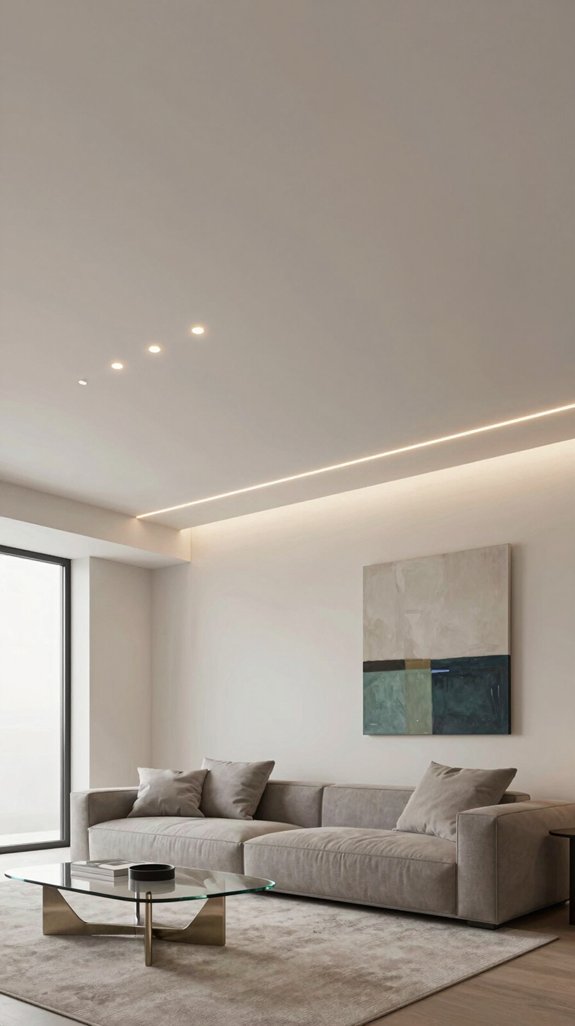
Three flexible LED strips can transform a living‑room ceiling into a mood‑controlled backdrop without sacrificing space.
I mount the strips just behind a thin plaster cove, so the light washes the ceiling rather than glaring directly. Using Wi‑Fi or Bluetooth, I dial colors, brightness, and dynamic scenes from my phone or voice assistant, syncing with music or sunrise cycles.
The thin, adhesive‑backed profiles slide into existing joist channels, so I avoid cutting or drilling. I program scenes for movie night, reading, or a party, and the strips automatically adjust to ambient light sensors for seamless shifts.
Because the system is modular, I can extend or replace sections without rewiring, keeping the ceiling sleek and future‑proof.
A well‑placed freestanding clock can serve as a striking focal point that complements the ambient lighting.

Stylish - Authentic wood looking and grain texture, adding timeless feature for your home!
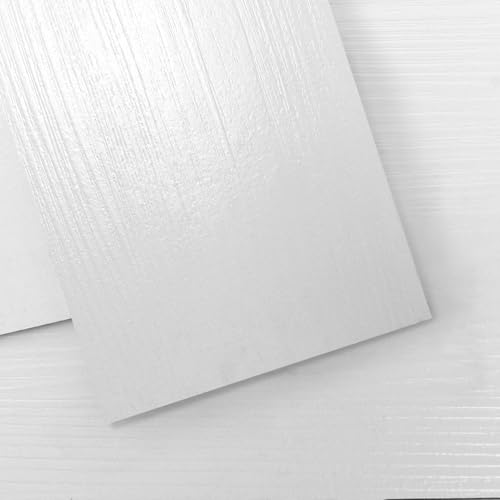
Stylish - Authentic wood looking and grain texture, can meet the individual needs of different decorative styles

High-Quality PVC Material - Made from high-grade PVC, Art3d panels combining the benefits of being sturdy and lightweight for easy installation and long-time use. Also they are waterproof and paintable, allowing for customization to match any interior design
Skylight Installation – Natural Light and Openness From Above
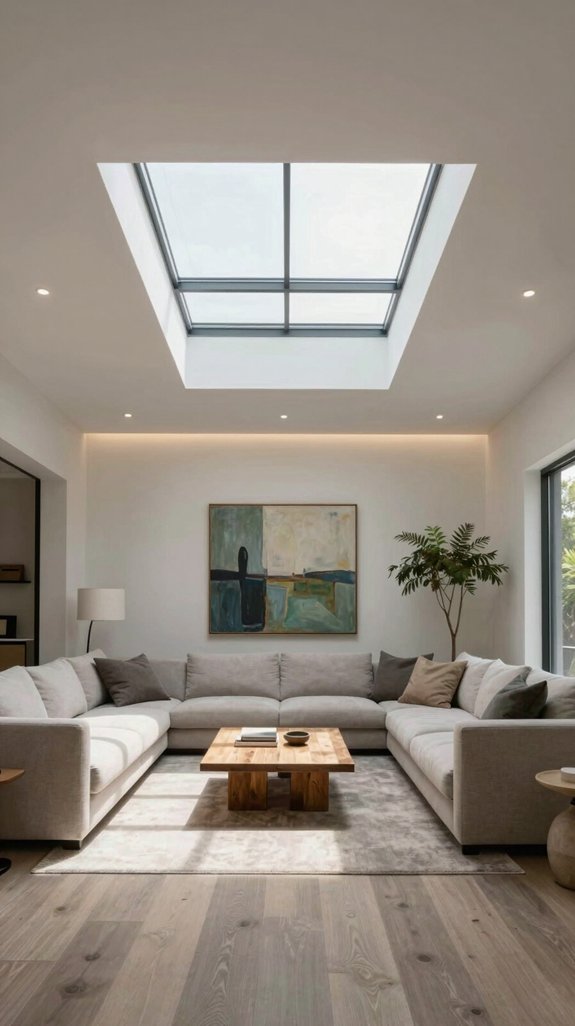
Instead of relying solely on LED strips for ambience, I’ve started adding skylights to let daylight flood the ceiling and expand the room’s sense of space.
I choose low‑profile, double‑glazed units that sit flush with the plaster, preserving clean lines while delivering a seamless sky view. The light spreads horizontally, reducing shadows and highlighting architectural details like recessed beams.
I pair the skylight with motorized blinds that dim automatically at sunset, maintaining control without sacrificing the open feel. Strategic placement over the seating zone creates a natural focal point, while reflective ceiling finishes amplify the illumination.
This approach aligns with the biophilic trend, delivering energy‑efficient brightness and a sense of vertical continuity that modern living rooms crave.
bookshelves compared by size, style, and storage
Ceiling Coffers With Decorative Molding – Classic Elegance in Detail
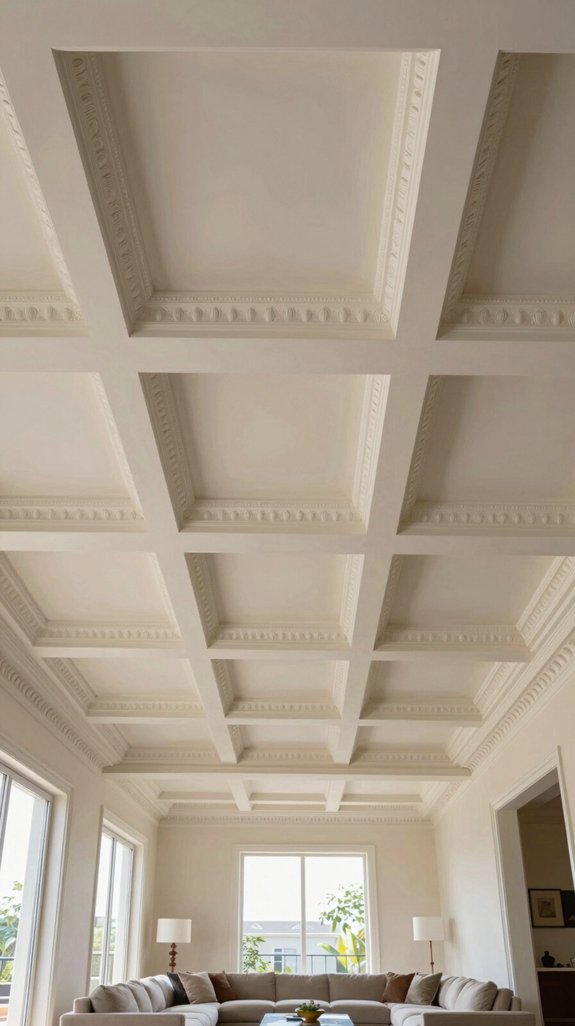
I’ve found that installing ceiling coffers with decorative molding instantly adds a timeless, sculptural rhythm to a living‑room space.
I start by mapping the room’s proportions, then size each coffer to echo the wall‑to‑floor ratio, ensuring the grid feels balanced rather than cramped.
I choose low‑profile, linear molding for a sleek, modern take, or layered, carved profiles for a richer, heritage vibe.
I integrate recessed LED strips inside the recesses for subtle illumination that defines depth without glare.
I finish with a matte, high‑gloss contrast paint palette that mirrors contemporary color trends while preserving classic elegance.
The result is a spatial canvas that guides sightlines, amplifies volume, and invites innovation without sacrificing timeless charm.
Exposed Brick or Stone Tiles – Industrial Charm on the Upper Surface
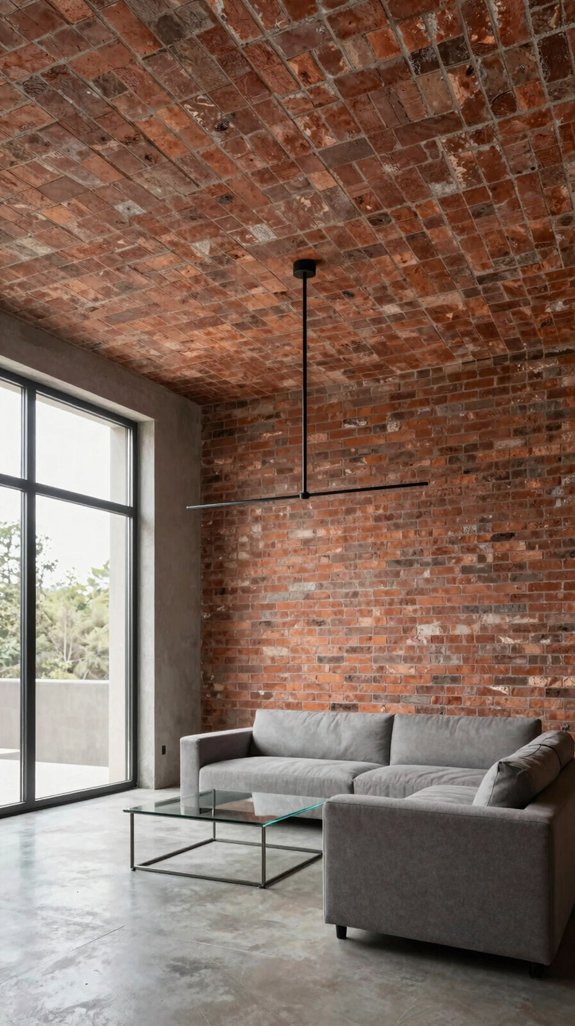
After the coffered ceiling establishes a sculptural rhythm, I turn my attention to the upper surface and introduce exposed brick or stone tiles for an industrial edge. I select reclaimed brick with warm, weathered tones that echo loft aesthetics while preserving acoustic softness.
When I opt for stone, I favor slate or limestone slabs cut to uniform panels, creating a sleek, matte backdrop that balances raw texture with refined proportion. I align the tiles with the room’s grid, letting the vertical joints reinforce the ceiling’s height and guide the eye upward.
Integrated LED strips behind the tiles add subtle illumination, highlighting the natural fissures and enhancing depth. This juxtaposition of historic material and modern lighting delivers an innovative, tactile ceiling that feels both grounded and expansive.
Geometric Patterned Wallpaper – Visual Interest Without Painting
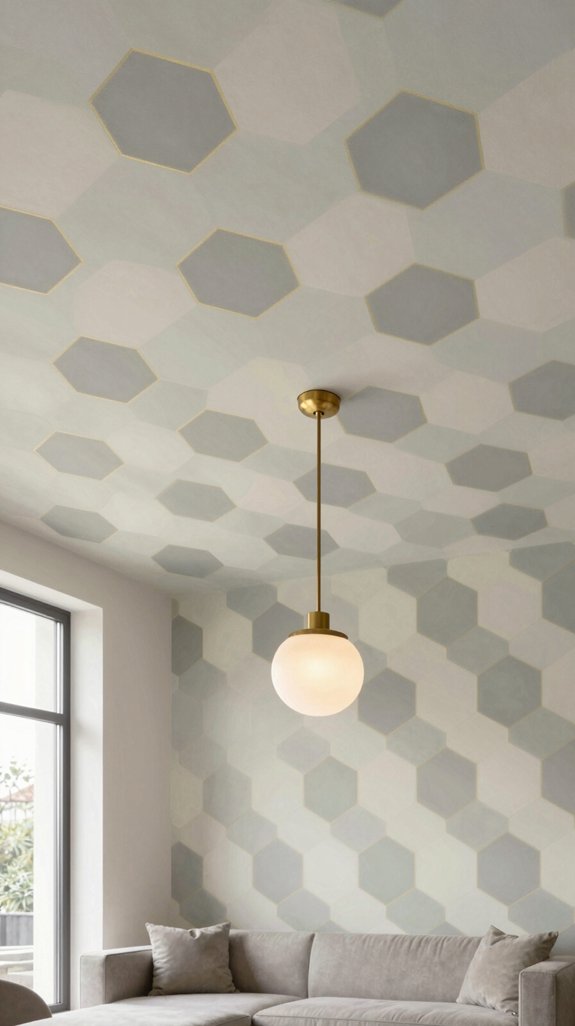
A bold geometric wallpaper instantly transforms a living‑room ceiling, delivering visual intrigue without the mess of paint.
I love how the crisp lines and repeating motifs create depth, making a modest height feel loftier while keeping the floor‑to‑ceiling ratio balanced.
By selecting a pattern with subtle tonal shifts, I can echo the room’s color palette, reinforcing cohesion without overwhelming the space.
The material’s lightweight nature lets me apply it over existing plaster, avoiding costly re‑plastering, and the seamless repeat guarantees no visual breaks when viewed from different angles.
I pair the design with recessed lighting to highlight the geometry, allowing shadows to accentuate the pattern’s rhythm.
This approach delivers a modern, sculptural ceiling that feels both avant‑garde and instantly livable.
Hand‑Painted Murals – Personalized Artistic Flair for Unique Ceilings
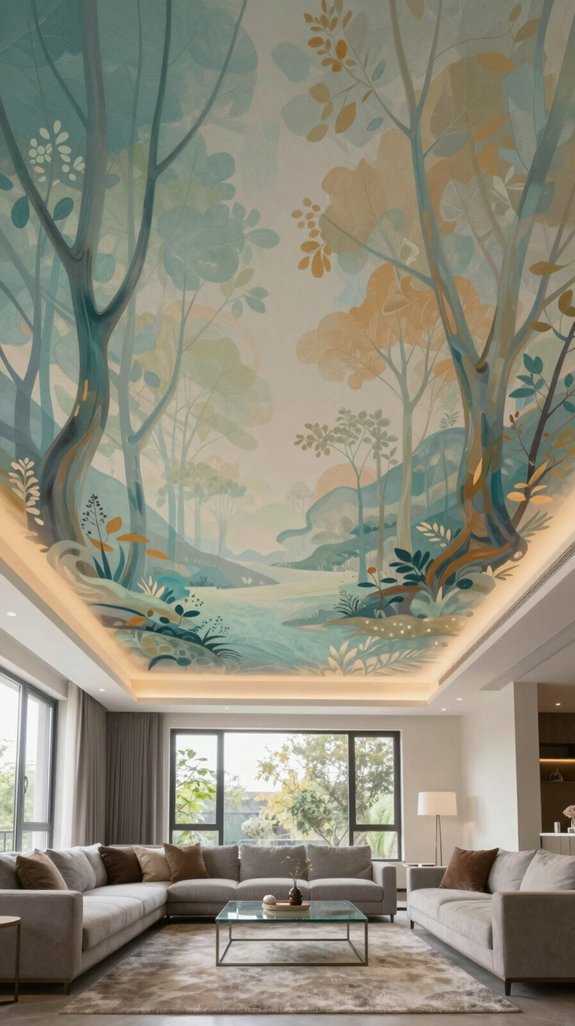
The crisp geometry of patterned wallpaper gives the ceiling a sculptural edge, but when I want the space to tell a personal story, I reach for hand‑painted murals.
I start by mapping the room’s proportions, then sketch a motif that follows the light flow and focal points, ensuring the artwork feels anchored yet airy.
I choose pigments with low VOCs and matte finishes to keep the ceiling soft‑glowing, while subtle metallic accents catch evening light for a dynamic vibe.
Incorporating abstract botanicals or geometric constellations lets the ceiling become a three‑dimensional canvas that expands perceived height.
Acoustic Tiles in Stylish Designs – Sound Control Meets Aesthetic Appeal
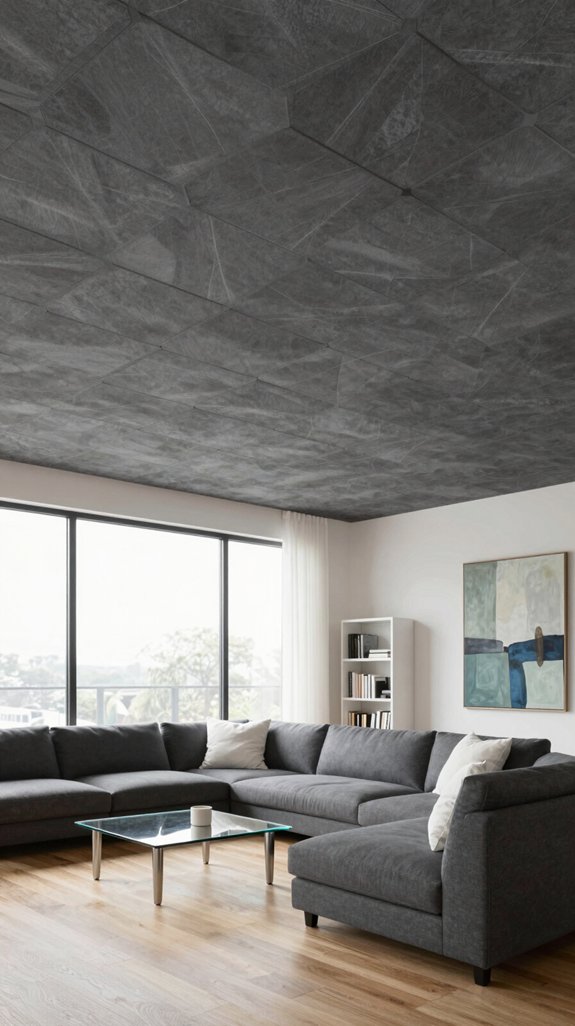
Three‑dimensional panels can transform a living‑room ceiling into a sound‑absorbing work of art, and I’m constantly discovering new ways to blend acoustic performance with visual flair.
I choose acoustic tiles that double as sculptural accents—think hexagonal honeycombs in matte charcoal, woven wool panels in muted teal, or perforated metal sheets brushed gold. Their irregular geometry breaks up echo while adding texture that mirrors contemporary furniture.
I align tile clusters with lighting grids, so recessed LEDs highlight the pattern without overwhelming the space. By varying tile density, I tailor reverberation zones, keeping conversation crisp yet the room feels intimate.
The result is a ceiling that silently regulates sound and loudly declares design ambition.
A well‑designed acoustic panel can also improve speech intelligibility while enhancing visual interest.
Floating Shelves Integrated Into Ceiling Design – Functional Décor up High
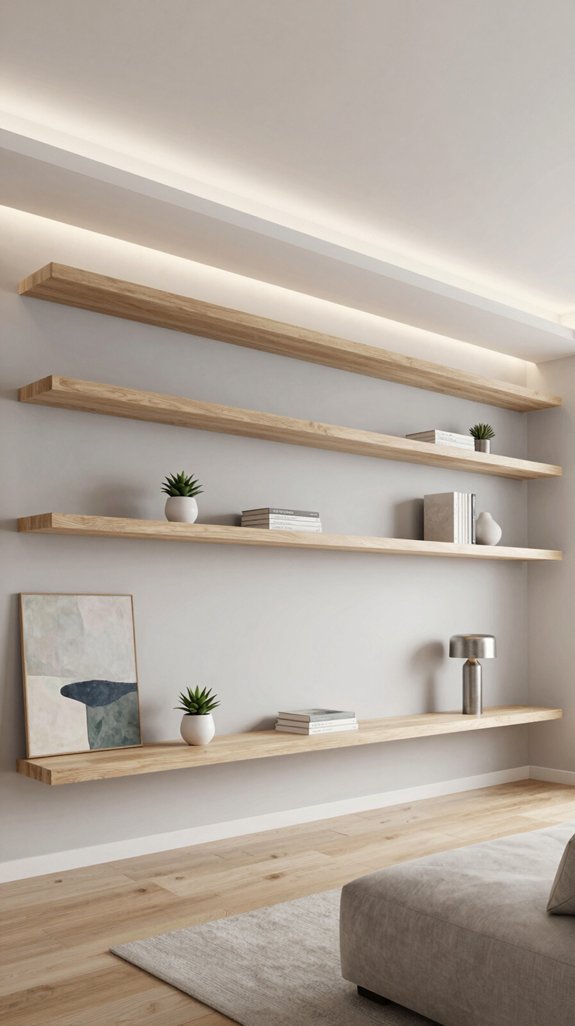
I’ve started pairing my acoustic‑tile ceilings with floating shelves that seem to hover just inches below the surface, turning the upper zone into both a sound‑buffer and a display platform.
The shelves are slim, matte‑black brackets anchored to recessed joists, so they disappear into the ceiling’s texture while supporting sculptural books, curated ceramics, or low‑profile lighting strips.
By aligning the shelf depth with the tile’s ribbing, I create a visual ripple that guides the eye upward, amplifying vertical space without sacrificing floor area.
Integrated LED backlighting adds a subtle glow that accentuates the floating effect after night.
This approach merges function and fashion, delivering a sleek, high‑tech aesthetic that feels both airy and purposeful.
Textured Fabric Canopies – Soft, Romantic Ambiance for Bedrooms
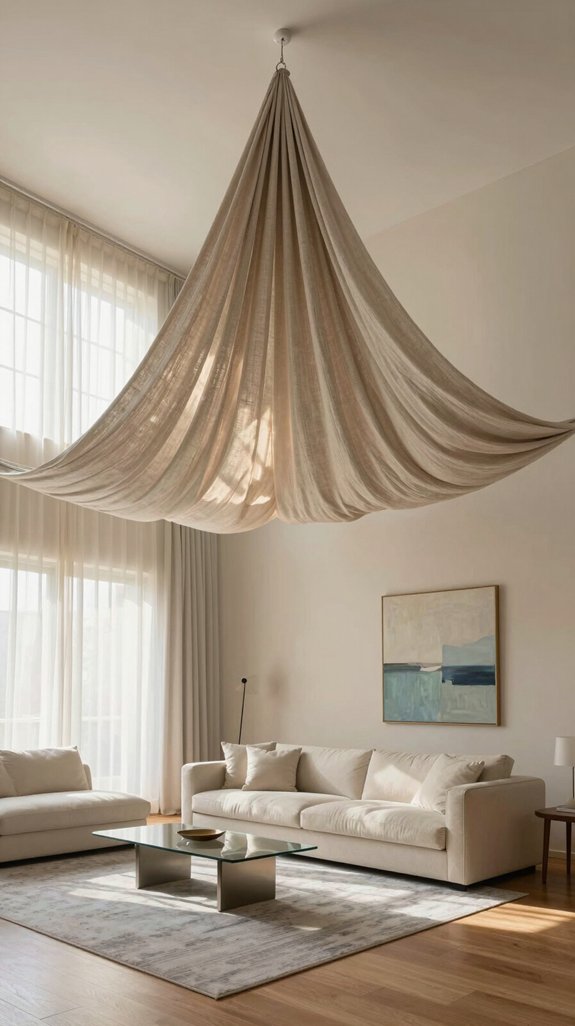
Often I drape a softly textured fabric canopy over my bedroom bed, instantly turning the space into a romantic retreat that feels both intimate and expansive. I choose breathable linen or silk blends in muted jewel tones, then attach the canopy to ceiling hooks that align with my ceiling’s recessed lighting, creating a seamless vertical flow.
The drape adds depth, while strategic pleats guide the eye upward, amplifying ceiling height. I pair the canopy with low‑profile LED strips hidden behind the fabric, delivering a warm glow that highlights the texture without harsh shadows.
Choosing a surge protector with a low clamping voltage helps protect delicate lighting fixtures from voltage spikes.
Vinyl or PVC Ceiling Tiles – Easy‑Maintenance Solutions for Busy Homes
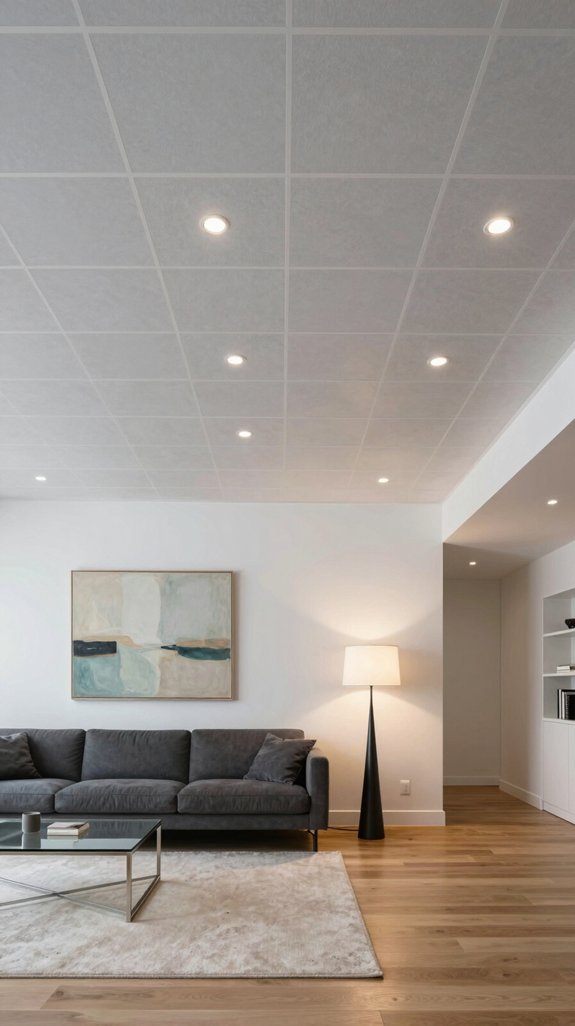
Vinyl and PVC ceiling tiles have become my go‑to for busy households because they combine durability with sleek, modern aesthetics.
I love how the low‑gloss, matte finishes mimic concrete or wood while resisting scratches, stains, and moisture—perfect for high‑traffic living rooms and open‑plan kitchens. Their interlocking panels snap together quickly, letting me cover large spans without bulky scaffolding, and the lightweight panels keep floor‑to‑ceiling ratios balanced, preserving a airy, spacious feel.
I’m also drawn to the subtle tonal palettes that echo current color trends, from muted greys to warm ochres, which harmonize with both minimalist and eclectic décor.
Maintenance is a breeze: a damp cloth removes spills, and the tiles are recyclable, aligning with sustainable design goals.
This solution delivers both visual polish and practical resilience for the modern, on‑the‑go homeowner. Carpet shampoo can also be used on these tiles for deeper cleaning when needed.
3‑D Wall‑Ceiling Hybrids – Dynamic Depth for Contemporary Spaces
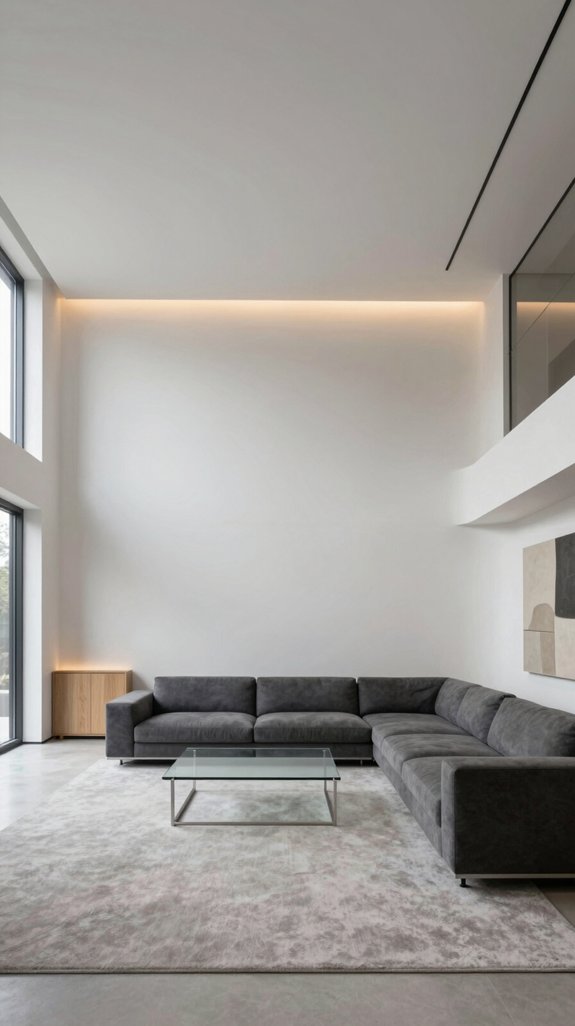
The fusion of wall and ceiling into a single, sculptural plane is reshaping how I design living rooms, delivering depth without sacrificing floor space. I start by mapping the room’s geometry, then extend the upper wall upward, creating a seamless “D” contour that folds into the ceiling.
This hybrid form introduces visual layers, amplifying height while preserving a sleek, minimalist aesthetic. I choose lightweight gypsum or metal panels with integrated LED strips to accentuate the curve and maintain a clean line.
The result feels futuristic yet warm, as light bounces off the angled surfaces, generating subtle shadows that enhance texture. By treating wall and ceiling as one entity, I unveil new spatial narratives and keep the floor uncluttered. Ceiling light fixtures provide general illumination while complementing the sculptural design.
Color‑Blocking Ceiling Sections – Define Zones With Bold Hues
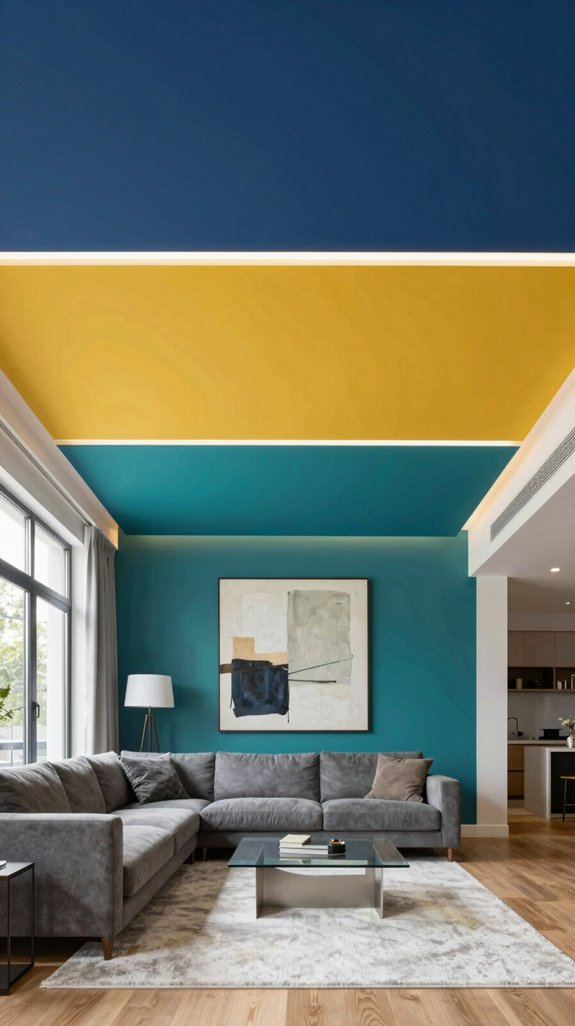
After the flowing curves of a wall‑ceiling hybrid, I shift the focus to flat planes that can be painted in striking blocks of color.
I treat each segment as a visual zone, using saturated teal, mustard, or charcoal to carve out conversation nooks, media corners, and reading alcoves.
By aligning the color boundaries with architectural lines—recessed coves, beam runs, or ceiling‑to‑wall junctions—I reinforce spatial hierarchy without adding furniture.
The bold hues act as a low‑key backdrop that amplifies artwork and lighting, while the contrast draws the eye upward, expanding perceived volume.
I pair matte finishes with subtle metallic accents for depth, and I test the palette under daylight and warm LEDs to guarantee harmony across moods.
This approach delivers a contemporary, daring ceiling that defines zones effortlessly.
Ceiling‑Mounted Plants – Fresh Green Touches for Biophilic Design
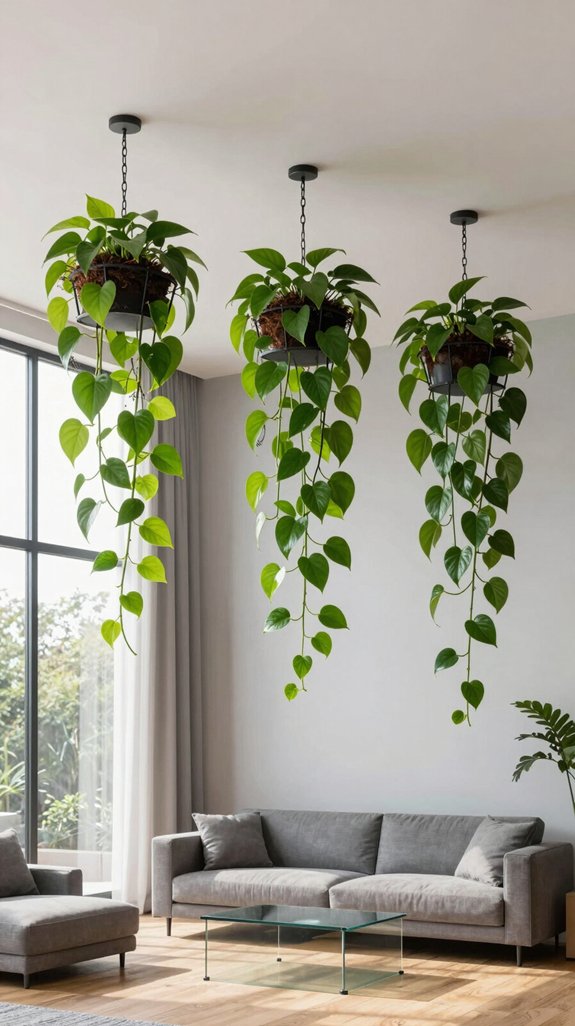
When I suspend a cascade of trailing pothos or a compact fiddle‑leaf fig from a ceiling hook, the room instantly feels larger and more alive, turning unused vertical space into a living, breathing design element.
I choose lightweight, moisture‑resistant planters that cling to brushed‑steel brackets, letting the foliage drift like a soft cloud.
By grouping three to five pots at varying heights, I create a tiered canopy that frames the ceiling while preserving sightlines to art and lighting.
I pair the green with matte black or brass hardware to echo contemporary hardware trends, and I use low‑light tolerant species for energy‑efficient ambience.
The result is a biophilic statement that adds texture, improves air quality, and redefines the ceiling as an active, sculptural surface.
Stylish benches can also complement this vertical garden by providing a cohesive entryway aesthetic.
Frequently Asked Questions
How Do Ceiling Designs Affect Room Acoustics?
I’ll tell you that ceiling shapes, materials, and textures directly shape sound diffusion, absorption, and echo, so sleek, angled panels or acoustic clouds can tame reverberation while adding visual drama to your living space.
Can I Combine Multiple Ceiling Styles in One Living Room?
I’ll tell you—mixing a sleek, recessed panel with a bold, exposed beam feels like a right‑brain, left‑brain handshake, and it works if you zone the space, balance heights, and keep the palette cohesive.
What’s the Best Way to Maintain Metallic Ceiling Finishes?
I recommend dusting weekly with a soft microfiber cloth, then applying a matte polyurethane spray; avoid abrasive cleaners, spot‑test any solvent, and keep humidity below 50 % to prevent tarnish and preserve the finish.
Do Ceiling-Mounted Plants Require Special Humidity Control?
I’ll tell you, ceiling‑mounted plants do need humidity monitoring; I keep a hygrometer nearby, mist lightly when levels dip below 45%, and choose moisture‑loving species to thrive in elevated, airy spaces.
Are There Fire‑Rating Concerns With Fabric Canopy Ceilings?
8570% of fabric‑canopy ceilings fail fire‑rating tests when installed without proper backing. I recommend using a fire‑retardant substrate and certified flame‑resistant fabric, ensuring compliance and preserving your room’s sleek, airy aesthetic.