
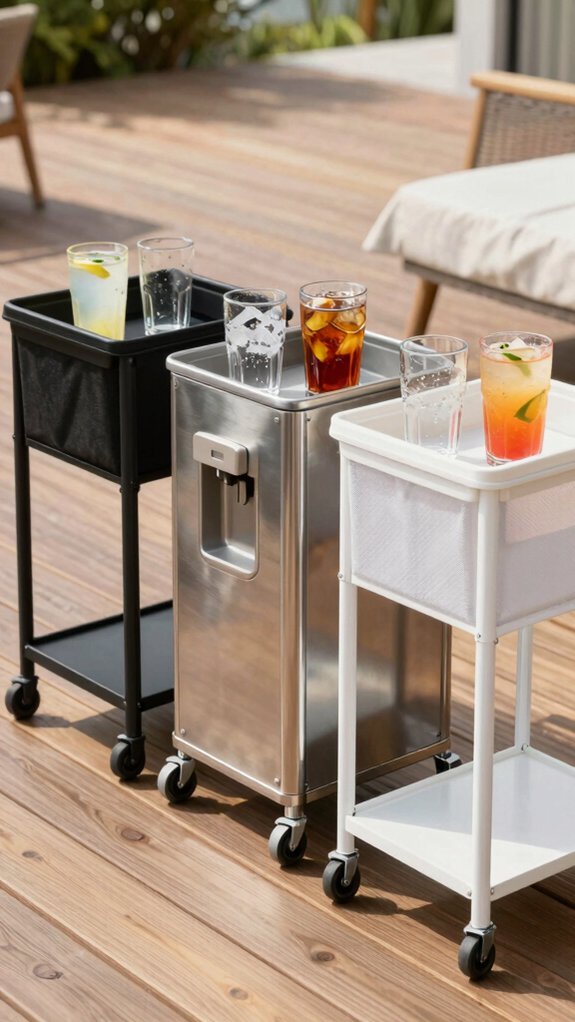
I’ve found three patio cooler carts that keep drinks frosty and stay easy to move. The 104‑qt cart holds 185 twelve‑ounce cans, has a 44‑lb capacity, lockable four‑wheel casters, and a removable flip‑top lid with recessed cup holders. Cuisinart’s 80‑qt outdoor cooler features a powder‑coated frame, dual‑sided lid, and 48‑hour cold retention for up to 100 cans or 50 bottles. Permasteel’s 120‑qt rolling cooler offers a classic farmhouse finish, 36‑hour retention, and a spacious insulated basin. You’ll discover more details on portability, organization, and warranties if you keep going.
| Patio Cooler Cart 104 Qt Portable Rolling Ice Chest | Premium Capacity | Capacity: 104 qt | Wheels: Four wheels, two lockable casters | Bottle Opener: Built‑in bottle opener & cap collector | CHECK PRICE AT AMAZON: | Detailed Review | |
| Cuisinart 80 Qt Outdoor Cooler Cart with Shelf | Best Value | Capacity: 80 qt | Wheels: Four swivel casters, rear locking wheels | Bottle Opener: Integrated bottle opener & cap catcher | CHECK PRICE AT AMAZON: | Detailed Review | |
| Permasteel Rolling Patio Cooler – Large Outdoor Ice Chest | Classic Durability | Capacity: 120 qt | Wheels: Four swivel caster wheels, two lockable | Bottle Opener: Included bottle opener & cap catcher | CHECK PRICE AT AMAZON: | Detailed Review |
More Details on Our Top Picks
Patio Cooler Cart 104 Qt Portable Rolling Ice Chest
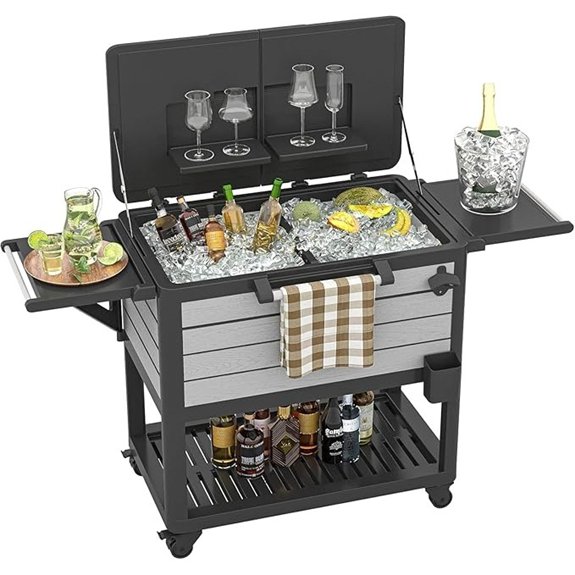
If you’re hosting a backyard bash or a weekend pool party, the 104‑qt Patio Cooler Cart is the perfect sidekick—its massive, 44‑lb capacity and rugged polypropylene build let you stock drinks, fruit, and ice without breaking a sweat. I love the four‑wheel system, with two lockable casters that keep the cart steady while I slide it across the patio. Side handles and a front towel rack add convenience, while the built‑in bottle opener and cap collector keep everything within reach. Foldable side tables and a lid shelf expand usable space, and internal shelves separate drinks, fruit, and ice. Drainage holes plus a bottom hose whisk away melt‑water, making cleanup effortless. The high‑strength PP shell resists impacts, and the sleek grey finish blends with any outdoor décor. This cart is a functional, stylish workhorse for any gathering.
- Capacity:104 qt
- Wheels:Four wheels, two lockable casters
- Bottle Opener:Built‑in bottle opener & cap collector
- Drainage System:Drainage holes + bottom hose
- Lid Design:Lid with side shelf & foldable tables
- Material:High‑strength impact‑resistant polypropylene (PP)
- Additional Feature:Foldable side tables
- Additional Feature:Built‑in bottle opener
- Additional Feature:Side towel rack
Cuisinart 80 Qt Outdoor Cooler Cart with Shelf
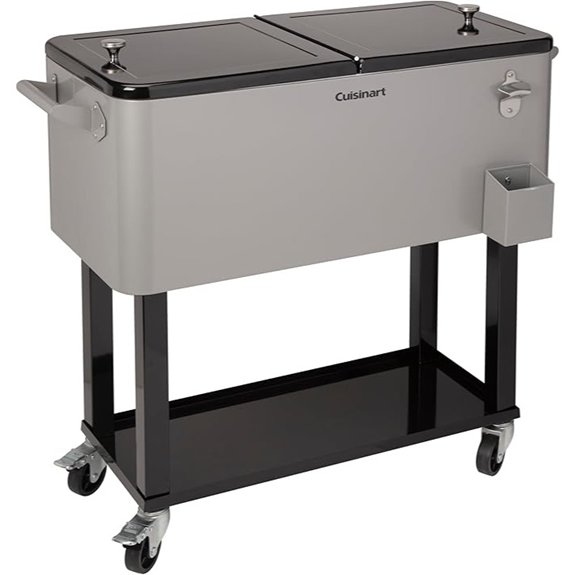
Looking for a cooler that can keep a crowd refreshed all day? I chose the Cuisinart 80 qt Outdoor Cooler Cart because its sleek, powder‑coated frame blends into any patio while holding 100 cans or 50 bottles with ice, staying cold up to 48 hours. The dual‑sided lid snaps open quickly, minimizing chill loss, and the built‑in bottle opener with cap collector keeps serving mess‑free. Four swivel casters glide smoothly, and the rear wheels lock for stable placement. A lower shelf stores cups or plates, and the integrated drainage system empties water in seconds, making refills effortless and the cart ready for the next gathering.
- Capacity:80 qt
- Wheels:Four swivel casters, rear locking wheels
- Bottle Opener:Integrated bottle opener & cap catcher
- Drainage System:Built‑in drainage for rapid water removal
- Lid Design:Dual‑sided lid for quick access
- Material:Not specified (presumed insulated plastic)
- Additional Feature:Dual‑sided lid
- Additional Feature:Lower shelf for plates
- Additional Feature:Quick‑access lid
Permasteel Rolling Patio Cooler – Large Outdoor Ice Chest
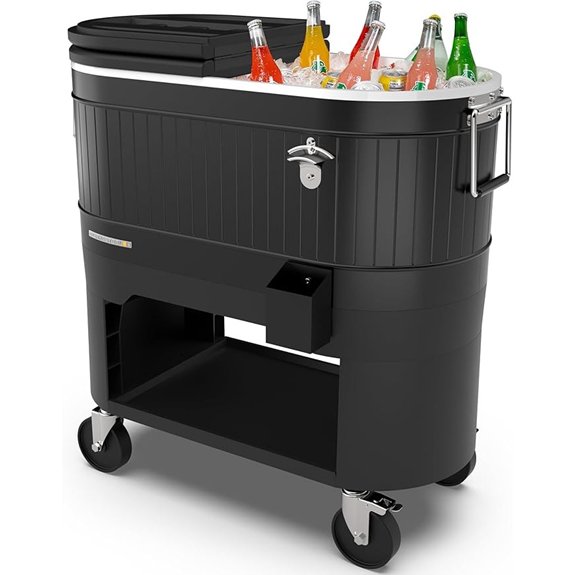
I love how the Permasteel Rolling Patio Cooler’s 120‑qt insulated basin holds up to 185 twelve‑ounce cans, making it the perfect companion for backyard parties, picnics, or any outdoor gathering where you need a reliable, high‑capacity ice chest. The classic white‑black farmhouse finish gives it a timeless look, while the power‑coated steel guarantees durability. I appreciate the removable flip‑top lid with recessed cup holders, and the two drink dividers that create three compartments or can double as a flat counter. Four swivel caster wheels—two lockable—plus sturdy side handles make moving it effortless. Ice stays cold for up to 36 hours, and the included bottle opener and cap catcher add practical convenience.
- Capacity:120 qt
- Wheels:Four swivel caster wheels, two lockable
- Bottle Opener:Included bottle opener & cap catcher
- Drainage System:Built‑in drainage system
- Lid Design:Removable flip‑top lid with recessed cup holders
- Material:Power‑coated steel (metal)
- Additional Feature:Removable flip‑top lid
- Additional Feature:Classic farmhouse color
- Additional Feature:Flat counter divider
Factors to Consider When Choosing Patio Cooler Carts
I’ve found that matching the cart’s capacity and dimensions to your typical gatherings is the first step, because it dictates how much ice and food you can keep chilled. Next, I look for portability features like wheels, handles, and easy‑to‑lift designs, plus smart storage organization that keeps utensils and supplies within reach. Finally, I check drainage options, maintenance ease, and the durability of the materials to guarantee the cart stands up to outdoor use season after season.
Capacity And Dimensions
When you size up a patio cooler cart, start by calculating the total storage volume in quarts or liters so you know it can hold the food and drinks you plan to serve. I’ll then measure the external length, width, and height, making sure the cart slides through doorways, rests on patio tables, and fits in a car trunk. I compare its footprint with my patio’s floor space, allowing extra clearance for wheels and side tables. I check the empty‑cart weight and its maximum loaded capacity to gauge stability and how easy it will be to move. Finally, I evaluate lid and side‑table heights, ensuring seated guests can reach comfortably and the cart aligns with my existing outdoor furniture.
Portability Features
If you want a patio cooler cart that moves effortlessly from the kitchen to the patio, prioritize lockable casters, side handles, and smooth‑rolling wheels. I look for casters that lock firmly, so the cart stays put when I set it down for a cocktail. Side handles give me a secure grip, and extra towel racks let me carry a napkin or a bottle while I’m on the move. Wheels must glide over grass, concrete, and gravel without jarring, reducing the effort of a single‑person push. A lighter empty frame improves maneuverability, especially when I’m traversing tight spaces. I also appreciate foldable side tables or lid shelves that tuck away, keeping the cart’s footprint compact while I’m transporting it.
Storage Organization Options
What matters most in a patio cooler cart is how intelligently it stores everything you need for a seamless outdoor gathering. I look for internal shelves or partitions that keep drinks, ice, and food separate, stopping soggy snacks. Foldable side tables or lid shelves add surface area for plates, utensils, and extra bottles without crowding the main compartment. Built‑in bottle openers and cap collectors keep caps tidy and reduce clutter. I also check the number and placement of racks—side racks, inside‑lid racks, removable dividers—so I can customize the layout for each party. A well‑designed cart lets me organize essentials at a glance, ensuring everything stays accessible and the setup stays sleek.
Drainage and Maintenance
Even the best‑organized cooler cart can become a soggy mess without proper drainage, so I always check that the base includes a dedicated hole or channel to let melt‑water escape quickly. I look for a removable or flexible bottom hose that snaps onto that opening, letting me pull the water out without spilling. The drain sits far from the storage compartment, so water never drips back onto my drinks or snacks. A sloped interior floor nudges liquid toward the exit, cutting down on manual wiping. I verify the hose and drain are rust‑resistant and can be unscrewed for a thorough clean after each gathering. These details keep the cart dry, hygienic, and ready for the next party.
Durability and Materials
I always start by checking the material because a sturdy cart can survive heavy loads and weather without cracking. I look for high‑strength impact‑resistant polypropylene (PP) that keeps the body lightweight yet tough, preventing cracks when I pile drinks, ice, and snacks inside. The frame should be power‑coated steel, offering rigidity and rust resistance for sunny patios or rainy evenings. Double‑walled, insulated walls and lid guard against temperature swings and add structural strength. Reinforced corner brackets and side panels keep the cart from warping when it’s fully loaded, while lockable casters and reinforced handle attachments guarantee smooth, stable movement without wear. These details give me confidence the cart will endure season after season.
Cold Retention Performance
Wondering how long your ice will last on a sunny patio? I look at insulation first—thick, high‑density foam or vacuum‑sealed walls can keep ice solid for 24–48 hours. Next, I pack the cart to about 70–80 % ice; more ice relative to volume slows melt. I also shield the cooler from direct sun; a reflective, shaded cover can boost ice life by up to 30 %. The lid matters too—tight‑sealing, low‑profile designs block warm air and add several hours of chill. Finally, I choose a cart with a quick‑drain system; removing melt water prevents warm pooling that would otherwise accelerate thawing. Balancing these factors gives me reliable, long‑lasting cold for any patio gathering.
Price and Warranty
Value isn’t just about the sticker price; it’s the balance between what you pay up front and how long the manufacturer stands behind the cart. I compare the total purchase price with the warranty length to gauge long‑term value, noting that a 60‑day warranty often hints at lower durability, while a six‑month or longer term signals confidence in build quality. I also factor in potential repair or replacement costs after coverage expires; a higher upfront price paired with an extended warranty can shave future expenses. I check whether the warranty covers key components—wheels, casters, drainage systems—since they wear quickly. Finally, I verify if the warranty is manufacturer‑provided or third‑party, because claim speed and coverage scope can differ dramatically.


