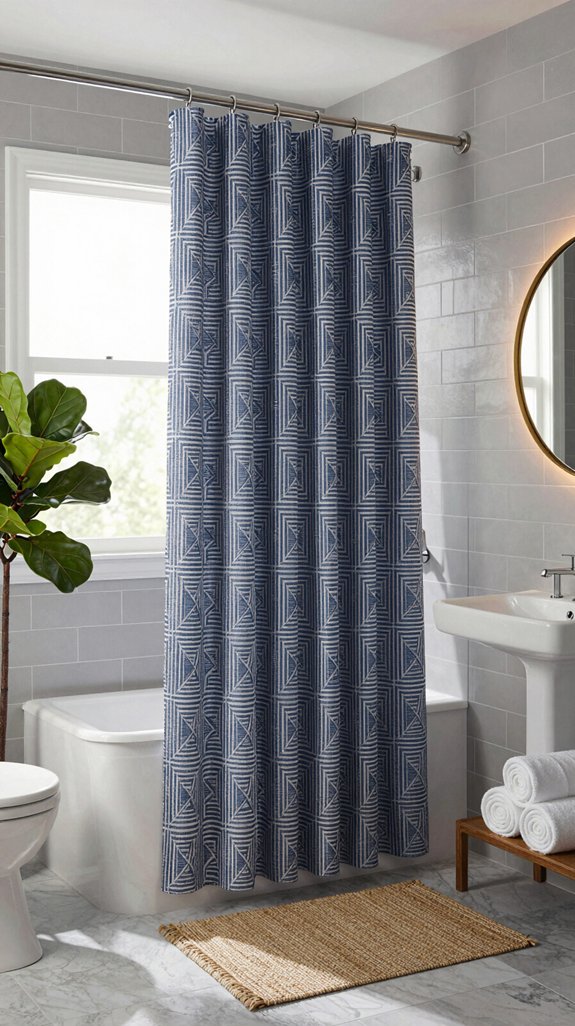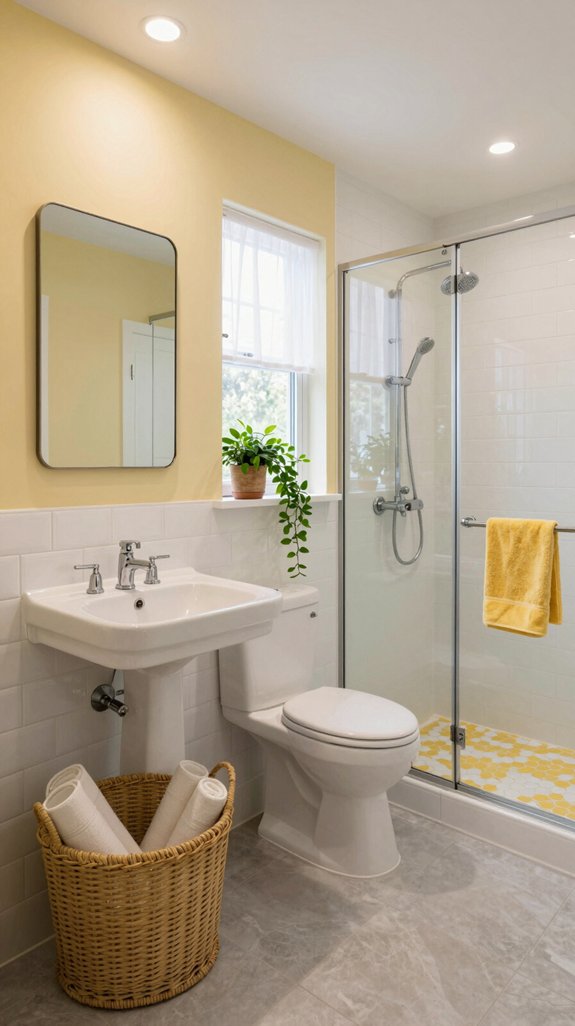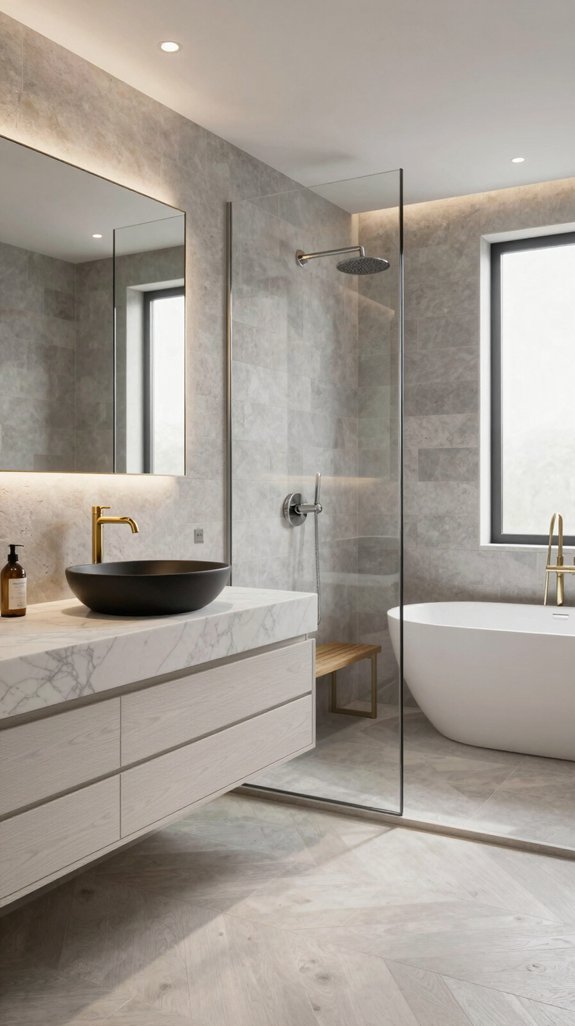
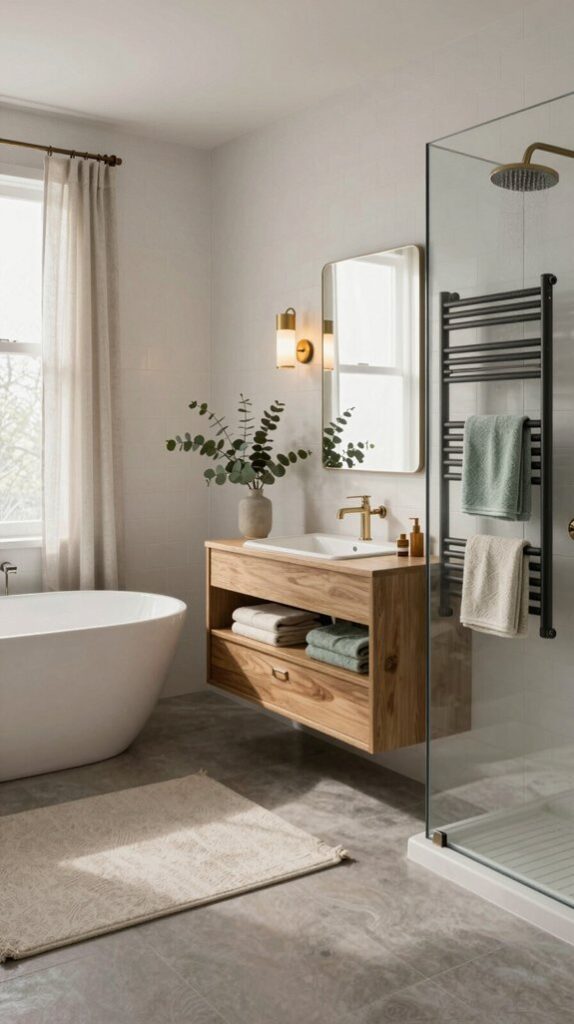
You’ll transform your bathroom into a unified sanctuary by layering strategic design choices—from monochromatic palettes and spa-inspired textures to bohemian eclecticism and mid-century geometry—that work together to create visual harmony rather than compete for attention. Whether you’re drawn to Victorian glamour’s ornate fixtures, Japanese Zen’s natural materials, or rustic cabin’s reclaimed wood, cohesion emerges through intentional color schemes, complementary finishes, and purposeful texture combinations. Discover how to blend these nineteen distinct themes.
How to Use This Guide: Mix and Match Bathroom Styles for Your Space
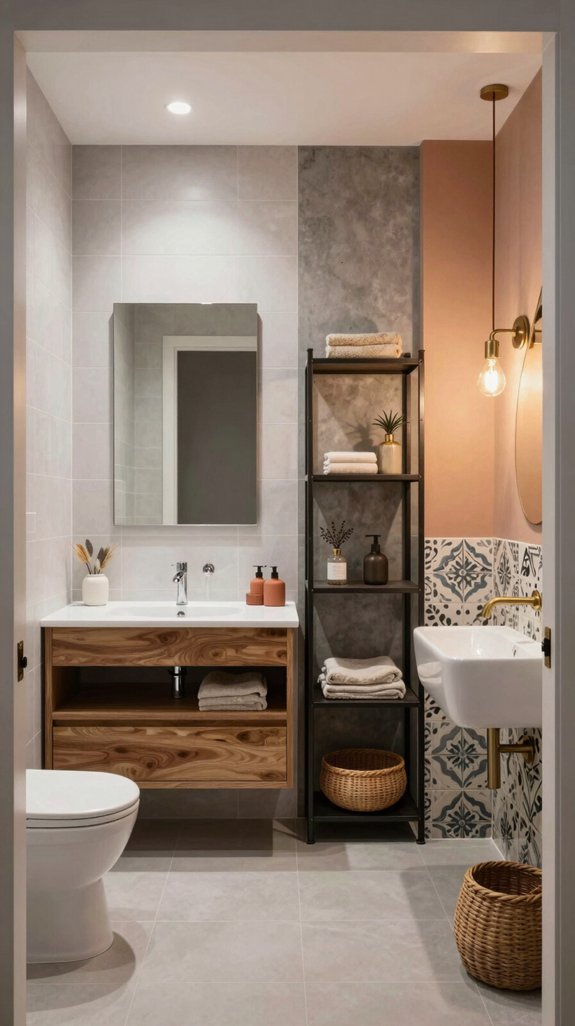
Creating a cohesive bathroom doesn’t require adhering to a single design philosophy—instead, you’ll strategically layer color, pattern, finish, and metal elements to build visual interest while maintaining harmony.
Apply the 80/20 rule to establish dominant and secondary colors through complementary or analogous schemes.
Combine tile scales—pairing small-scale mosaics with larger oblong patterns—for balanced dimensionality. Regular maintenance with tile surface cleaning products will keep these varied textures looking fresh and vibrant.
Juxtapose matte and glossy finishes across surfaces to amplify depth. Glazed tiles can be slippery, so consider textured or matte options in wet areas to enhance both safety and grip.
Select a dominant metal, then accent with secondary finishes like brushed nickel and brass.
Limit your palette to two-three tile types maximum.
This systematic approach transforms your bathroom into a sophisticated, innovation-driven sanctuary without visual discord.
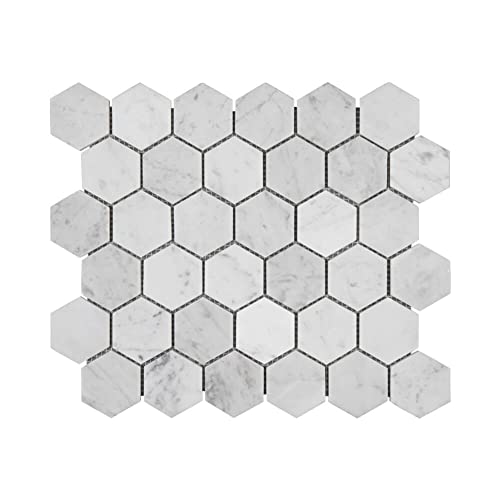
Sheet size: 11.7"x10.2"x0.3"(298mm×258mm×8mm); 5 sheets/box; 4.1SQ.FT./box

Elegant Marble Look: Transform your kitchen or bathroom with the stunning appearance of genuine stone, without the heavy cost. Our peel and stick marble tile features a clean, repeatable pattern that aligns easily and minimizes waste. These peel and stick tiles deliver a high-end aesthetic, ideal for renters who want a premium upgrade on a tight budget.
Monochrome Bathrooms: Build Calm With Single-Color Design
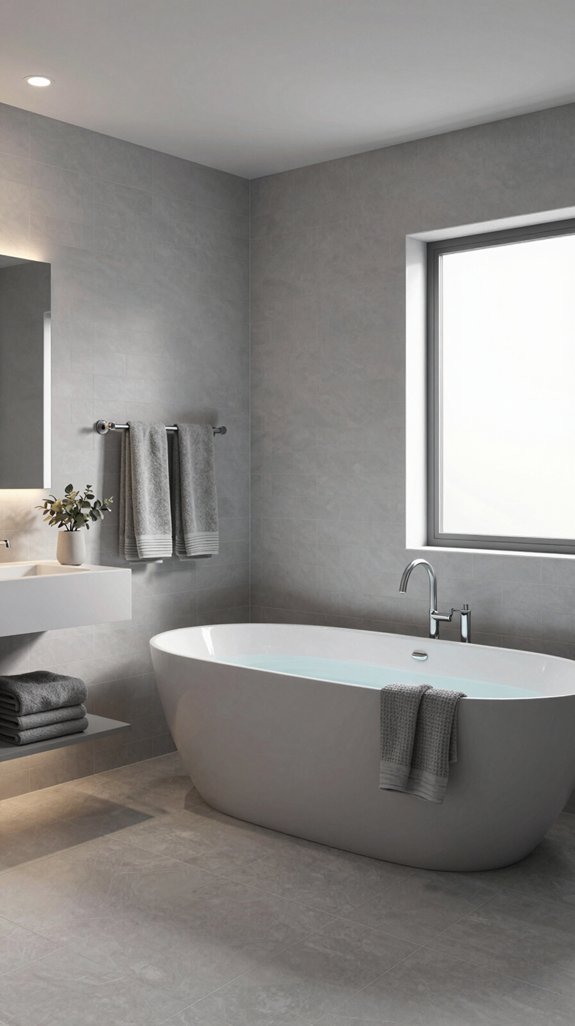
When you’re ready to move beyond layered patterns and competing finishes, monochromatic design offers a sophisticated alternative that’s dominated bathroom trends since 2024.
You’ll achieve hotel-style luxury by applying single-color palettes—think graphite, calico, or grey—across fixtures, walls, and accessories.
Pair large-format tiles with matte black focal points like toilets and basins for dramatic impact.
You can introduce visual depth through varied tile shapes, such as hexagons, and strategically placed metallic accents.
Balance intensity by layering subtle texture contrasts and employing thin white grout lines.
This approach creates a cohesive, therapeutic environment that transcends temporary aesthetics.


Vivid Cobalt Blue 3x3 Mosaic: Rich, saturated blue porcelain in a clean square pattern for pools, spas, and feature walls.

Vivid Cobalt Blue 2x2 Mosaic: Rich, saturated blue porcelain in a classic square pattern for pools, showers, and accent walls.
Spa Bathrooms: Pale Blues, Soft Greens, and Natural Textures
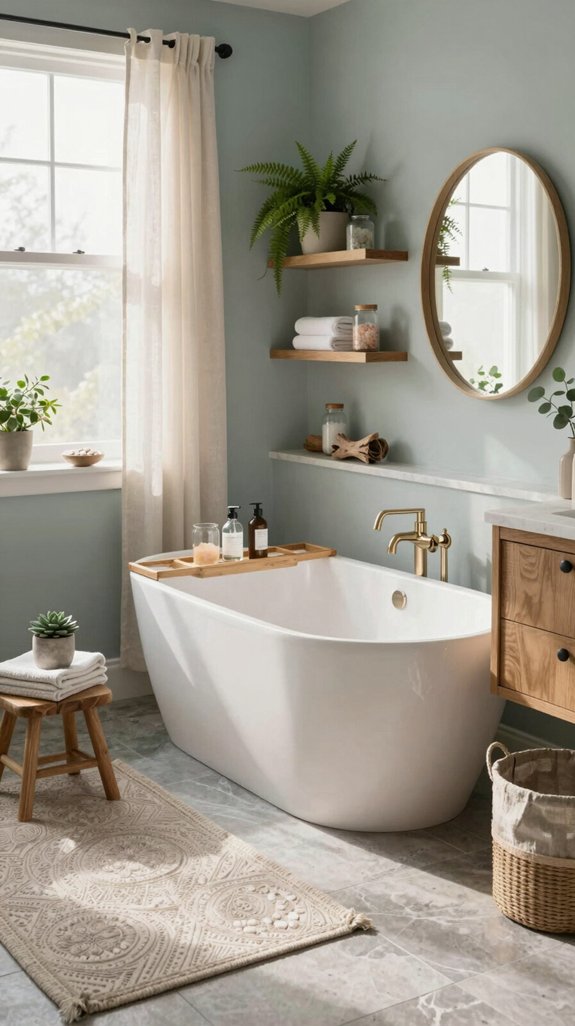
As you shift from monochromatic restraint, spa-inspired bathrooms embrace nature-connected palettes that prioritize tranquility through color and material authenticity.
Pale blues and soft greens create biophilic environments supporting circadian rhythms, while natural textures—travertine, limestone, and handcrafted zellige tiles—introduce tactile depth.
Large-format porcelain slabs and terrazzo finishes elevate organic minimalism. Curbless showers with heated benches, radiant floor heating, and frameless glass enclosures establish serene spatial flow.
Integrated chromotherapy lighting and aromatherapy diffusers enhance wellness features. Dimmable ambient lighting layers through sculptural tilework, transforming your bathroom into a personalized sanctuary balancing innovation with restorative design principles.

【ELEVATE EVERYDAY WALLS INTO DECOR】Inspired by classic Victorian architecture and Baroque ornamentation, these decorative wall plates transform ordinary switches and outlets into elegant decorative accents that enhance the character of any room.

【ELEVATE EVERYDAY WALLS INTO DECOR】Inspired by classic Victorian architecture and Baroque ornamentation, these decorative wall plates transform ordinary switches and outlets into elegant decorative accents that enhance the character of any room.

【ELEVATE EVERYDAY WALLS INTO DECOR】Inspired by classic Victorian architecture and Baroque ornamentation, these decorative wall plates transform ordinary switches and outlets into elegant decorative accents that enhance the character of any room.
Coastal Bathrooms: Whites, Soft Grays, and Nautical Accents
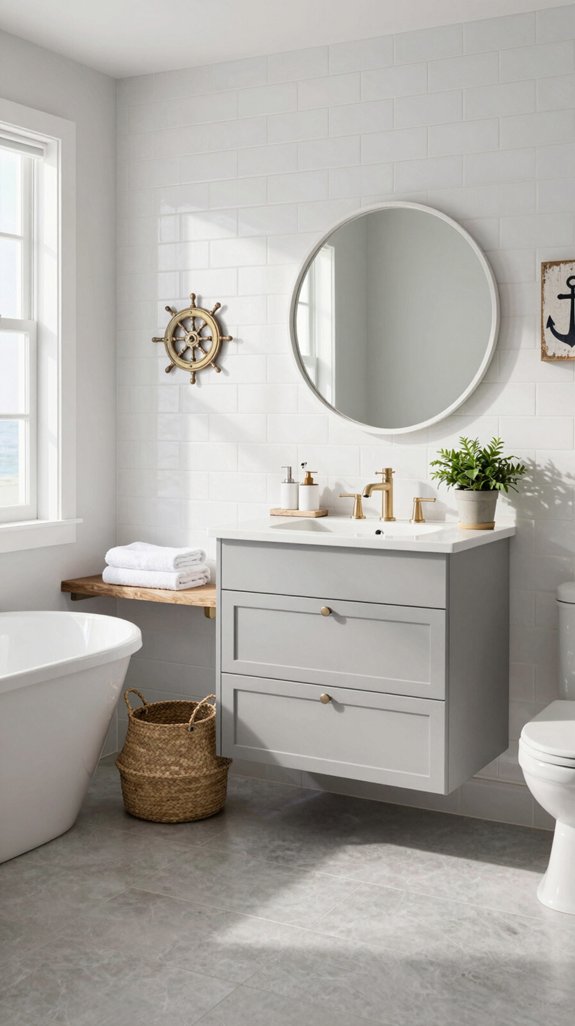
Coastal bathrooms pivot from wellness-centered palettes toward breezy seaside aesthetics, where whites and soft grays establish a crisp maritime foundation without veering into nautical kitsch.
You’ll incorporate marble-look porcelain with wave relief and herringbone accents that evoke motion, paired with natural wood vanities and brass fixtures for refined sailor style.
Limestone and travertine in light beige anchor 2026 trends.
Layer textural elements—pebble mosaics, jute rope accents, and hand-painted fish scales—to create dimensional depth.
Frameless glass surrounds and floating vanities expand perceived space, while minimal grout lines guarantee seamless modern appeal.

𝐃𝐫𝐲𝐢𝐧𝐠 𝐅𝐚𝐬𝐭: The diatomite stone's small pores provide excellent water absorption, quickly soaking up splashes and self-drying within minutes. A practical sink protector that helps keep your sink area dry, clean, and free from annoying drips

Water Absorption and Fast Drying --- Our stone drying tray is made from natural diatom mud and plant fibers, the small pores in diatomaceous earth give it amazing water absorption. They can absorb water and dry out in a few minutes. This diatomite stone sink tray makes the bathroom countertop more dry and tidy.

ELEVATED PREMIUM SINK ORGANIZER: The Siren Stone sink caddy features an innovative raised design with stainless steel legs and non-slip rubber feet, creating optimal 360° airflow that ensures rapid drying. This sophisticated slate tray measures 10" x 4" x 1.25" and transforms your sink area into a thoughtfully curated space while preventing water damage to countertops.
Modern Minimalist: Consistent Tones and Hidden Storage
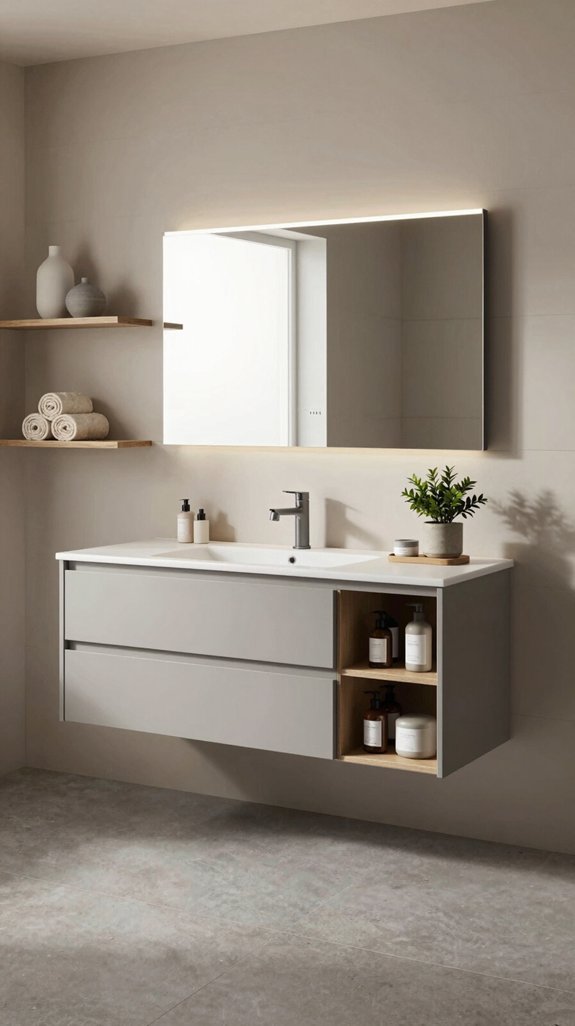
While coastal design celebrates textural layering, modern minimalism strips bathrooms to their essential elements through consistent neutral palettes and strategic concealment.
You’ll achieve visual serenity by deploying muted tones—soft grays, warm beiges, blacks—across floor-to-ceiling expanses using large-format marble tiles like Carrara or Travertine.
Streamlined vanities, wall-mounted fixtures, and frameless glass enclosures eliminate visual clutter.
Mirrored cabinets and floating shelves conceal grooming essentials while maintaining clean lines.
This approach prioritizes quality materials over decorative excess, creating purposeful spaces where every element serves function.
Transparent surfaces and minimalist geometry foster tranquil environments supporting mindful daily routines.
Consider how organizing storage solutions in your bathroom can enhance the minimalist aesthetic by keeping all items neatly tucked away behind closed cabinetry.
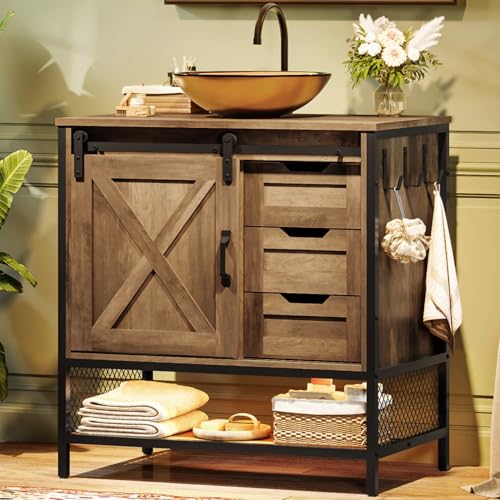
Tempered Glass Vessel Sink: As a core feature of this farmhouse bathroom vanity, the tempered glass sink is shock-resistant and shatterproof for long-lasting use. Its non-stick, smooth surface enables effortless cleaning—dirt and stains wipe away in seconds with no residues. It resists discoloration from water spots, toiletries, and daily wear, keeping your vanity cabinet bright and new. Equipped with a premium drain, the optimized structure of this bathroom sink cabinet ensures fast drainage, preventing water accumulation, balancing beauty and practicality.

FARMHOUSE STYLE - Elegantly rustic appeal of this centuries-old style, the farmhouse-style Rectangle mirror creates an excellent working space, it feels like you've gone back in time

Handcrafted Wood-and-Iron Statement Mirror: The substantial rectangular solid wood frame pairs dark antique iron corner brackets with decorative rivet accents, creating balanced presence above larger furniture without looking overly ornate
Industrial Bathrooms: Dark Fixtures Balanced With Light Vanities
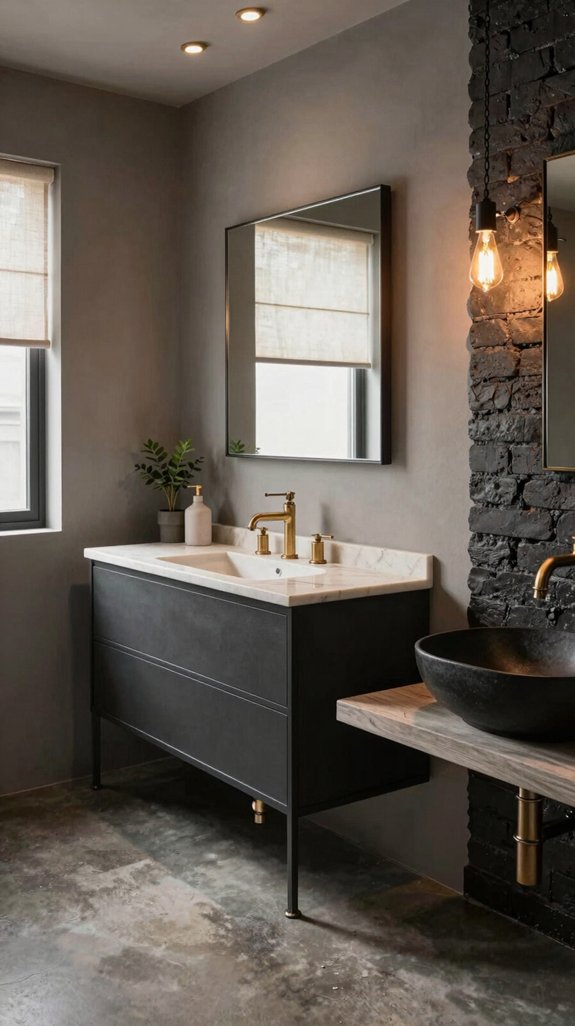
Industrial bathrooms thrive on dynamic contrast—pairing dark fixtures with light vanities creates visual tension that energizes the space while maintaining functional balance.
You’ll anchor the design with matte black shower enclosures, polished chrome faucets, and exposed steel-framed elements. Counter this with white fireclay sinks, reclaimed wood shelving, and beige floor tiles that brighten the palette.
Layer in concrete, brick, and stainless steel surfaces for textural depth. Incorporate filament-bulb pendant lighting and brushed nickel bath fixtures to unify disparate materials.
This interplay between dark and light establishes sophisticated visual rhythm while delivering practical elegance that transforms your bathroom into an innovative sanctuary. Complement these industrial elements with decorative cushions on bathroom seating areas to add softness and warmth to the utilitarian aesthetic.

Size : 12" x 12" x 1mm, (5 tiles per box), this marble peel and stick floor tile can cover 5 square feet

[Ultra-realistic Surface Texture Restoration]: Realistic texture and a durable surface with excellent wear resistance; the surface won't scratch easily, doesn't retain stains, and is easy to clean.

Thickened Glossy Vinyl Tile Sticker - For home/office/business place wall decoration or renovation.
Jewel Tone Drama: Navy, Emerald, and Charcoal in Small Spaces
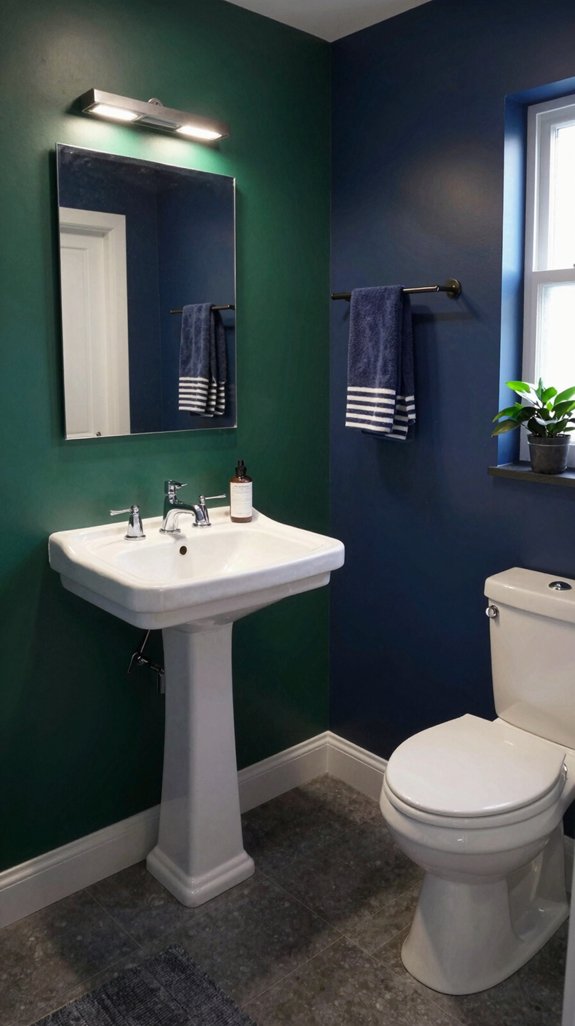
Where industrial design celebrates material contrast, jewel tone bathrooms harness chromatic intensity to create psychological refuge within confined footprints.
You’ll strategically deploy navy, emerald, and charcoal as accent elements—through statement tiles, cabinetry, or fixtures—rather than dominant walls, preventing visual compression.
Layered lighting and polished metallics counterbalance dark palettes, expanding perceived space emotionally and visually.
Textured finishes on vanities and white marble surfaces provide essential contrast, while neutral grout softens jewel tone harshness.
This calibrated approach delivers sophisticated drama without sacrificing the breathing room your compact bathroom demands.

5 Sheets Pebble Tiles: Pebble tile sheet size is around 12x12 inch, 1/4 inch thickness. Strong carton box packed.

12x12x3/8" Blue Pearl Granite Floor Tile Kitchen Bath Wall Backsplash

Dimensions: Sheet size: 11.8"x11.8"/300mm x300mm ;Chips size: 0.8"x 0.8"/20mmx20mm;Thickness: 0.16"/4mm. This mosaic tile is mesh mounted
Scandinavian Modern: Light Woods, Clean Lines, and Neutral Palettes
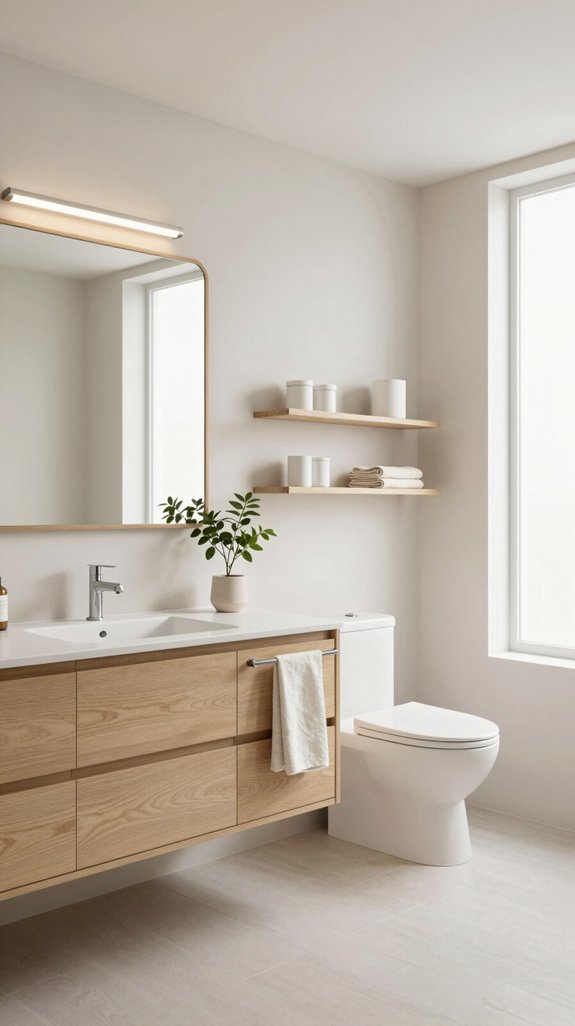
If you’re seeking to transform your compact bathroom into a sanctuary of calm clarity, Scandinavian Modern design offers a philosophy grounded in purposeful simplicity—where every element serves function without sacrificing warmth.
You’ll integrate light oak vanities and large-format porcelain tiles to establish cohesive surfaces that minimize visual noise. Neutral palettes—whites, grays, and soft pastels—expand spatial perception while floating fixtures optimize floor flow.
Incorporate matte black hardware for contemporary edge, complemented by hidden storage solutions and soft textiles. For additional privacy without compromising the minimalist aesthetic, consider installing freestanding modular panels that maintain clean sightlines while creating functional separation. Strategically placed plants and warm lighting create hygge-inspired atmospheres.
This refined approach transforms utilitarian spaces into serene, nature-connected retreats balancing Nordic minimalism with accessible luxury.

【ELEVATE EVERYDAY WALLS INTO DECOR】Inspired by classic Victorian architecture and Baroque ornamentation, these decorative wall plates transform ordinary switches and outlets into elegant decorative accents that enhance the character of any room.

Antique Gold Victorian Aesthetic: Inspired by Victorian interiors and old-world European décor, this 18 inch antique gold fandelier blends ornate scrollwork, crystal accents and a richly detailed caged silhouette. The warm aged-gold tone gives this flush mount ceiling fixture a vintage chandelier-inspired character, creating a decorative focal point for bedrooms, dining rooms, living rooms and foyers.

【ELEVATE EVERYDAY WALLS INTO DECOR】Inspired by classic Victorian architecture and Baroque ornamentation, these decorative wall plates transform ordinary switches and outlets into elegant decorative accents that enhance the character of any room.
Mediterranean Warmth: Terracotta, Cream, and Rustic Stone
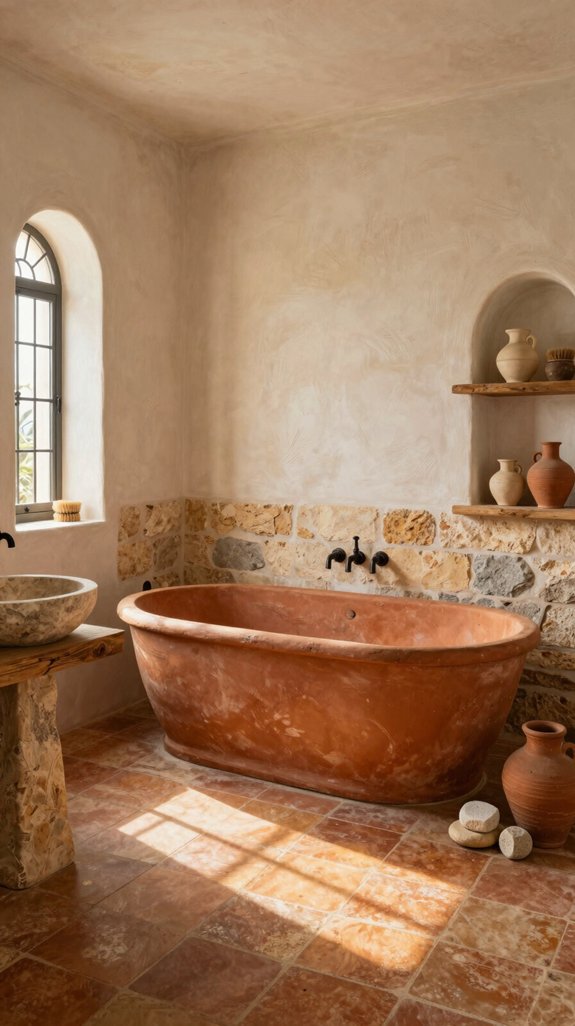
Transport your bathroom to sun-drenched coastal villages by layering warm earth tones—terracotta, cream, and sandy beige—that evoke timeless Mediterranean living.
Incorporate hexagonal terracotta tiles and natural stone elements like travertine and limestone for authentic texture.
Introduce archways, exposed wood beams, and stucco finishes that establish architectural character.
Anchor spaces with distressed wooden vanities and sculptural stone sinks featuring unique veining.
Layer wrought iron fixtures and arched mosaic mirrors for visual depth.
Integrate hand-painted ceramics, intricate mosaics, and linen textiles as decorative accents.
The textural depth created by layering varied materials enhances the sensory experience of your bathroom sanctuary while reinforcing the Mediterranean design narrative.
Strategic greenery and wicker accessories complete the cohesive aesthetic, prioritizing artisanal craftsmanship throughout your design.

Great Sink Mat: Keeps the back of sink clean and dry, sink splash guard quickly absorbs any water and has protected your countertop

Quick Water Absorption and Fast Drying --- Our fast drying stone sink tray is made from natural diatom mud and plant fibers,the small pores in diatomaceous earth give it amazing water absorption.They can absorb water and dry out in a few minutes.This water absorbing stone makes the bathroom countertop more dry and tidy.

Gorgeous for Bathroom Counter: Stone drying trays soak the water up nicely and help stuff stay dry, work perfectly for skincare products & toiletries; Good at keeping countertop clean and organized, great accessory for bathroom
Farmhouse Charm: Shiplap, Vintage Hardware, and Soft Textures
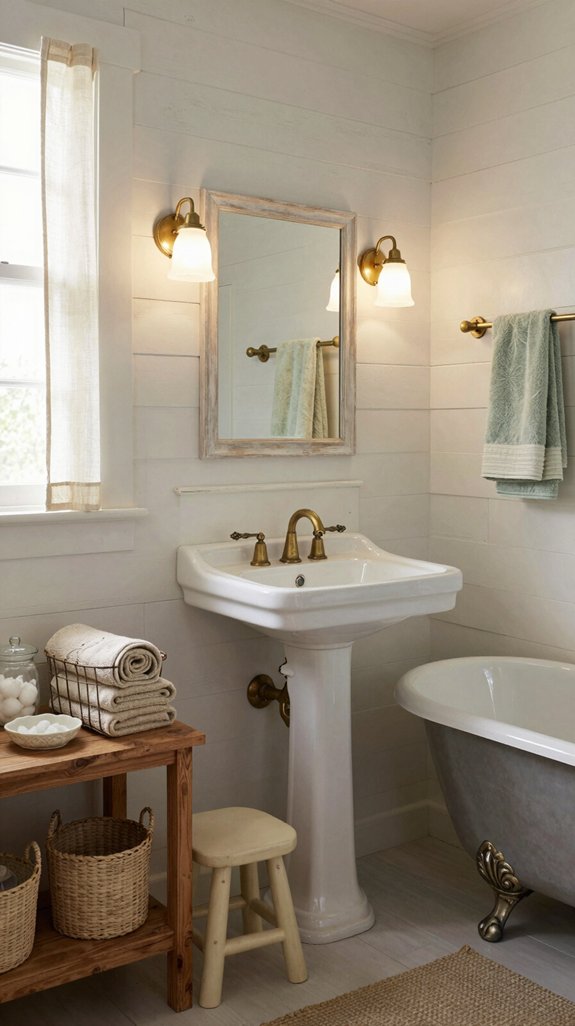
Farmhouse charm hinges on textural authenticity and vintage character—elements you’ll achieve through shiplap walls, reclaimed materials, and curated hardware that whispers rather than shouts nostalgia.
Crisp whites and creams on shiplap establish your clean foundation, while reclaimed barn wood vanities introduce weathered depth. Layer natural stone accents alongside distressed furniture for visual richness.
Select brushed nickel or oil-rubbed bronze fixtures that marry function with patina-rich aesthetics. Incorporate open shelving with wooden planks and metal brackets to showcase storage as design.
Your neutral palette—whites, soft grays, muted greens—cultivates spa-like tranquility while showcasing authentic textures that define contemporary farmhouse sophistication. Consider matching accent table sets to anchor your bathroom layout and tie together the layered textures of your farmhouse design scheme.

Farmhouse Rustic Wall Mirror-- This effortlessly elegant accent mirror will brighten your room. The rustic wood-framed wall mirror is the perfect addition to any farmhouse style. The frame of this bathroom mirror has a rectangular shape and is finished in a deep woodgrain. The location of the mirror will mostly rely on the appearance you want to achieve.

STUNNING DESIGN: Metal vanity light showcases a brushed nickel finish with seeded glass shades, fitting styles such as rustic and industrial. Reclaimed oak wood finish linear bar adds extra wow factor to homes and offices & allows for up/down installation

【Farmhouse Vanity for Small Spaces】 Bring warm farmhouse style and practical storage to compact bathrooms with this 24 inch bathroom vanity. The distressed brown wood grain finish, black metal rail accents, and sliding barn door design create a rustic look for powder rooms, guest bathrooms, apartments, and small bathroom remodels.
Art Deco Glamour: Geometric Tiles With Gold or Brass Fixtures
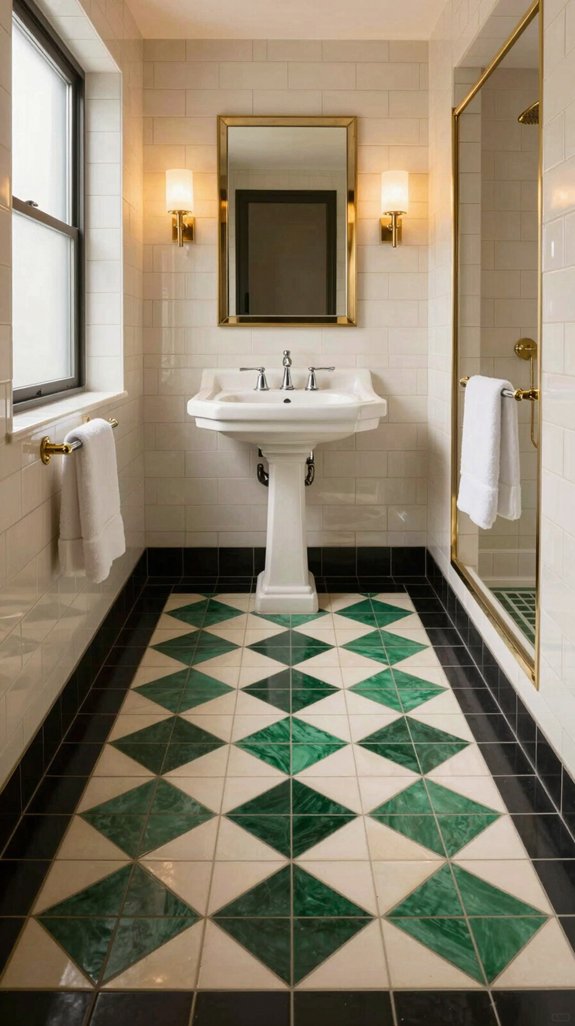
Farmhouse design whispers understated elegance, while Art Deco glamour demands bold declaration through geometric precision and metallic opulence.
You’ll orchestrate visual drama by pairing hexagonal and diamond-shaped tiles with gold brass fixtures, creating layered, expressive effects.
Select rich color palettes—emerald green, deep blue, bordeaux—with contrasting grout lines that amplify geometric intrigue.
Feature walls showcase hexagons, while penny round mosaics provide non-slip flooring.
Sculptural sinks and vanities with metallic accents embody form and function.
This curated approach synthesizes 1920s innovation with contemporary design, delivering timeless sophistication through architectural strength and lustrous detailing. Keep window treatments clean and sophisticated by utilizing essential blind cleaning tools to maintain the pristine appearance of any bathroom’s architectural elements.
Mid-Century Modern: Retro Vanities With Clean Lines and Warm Wood
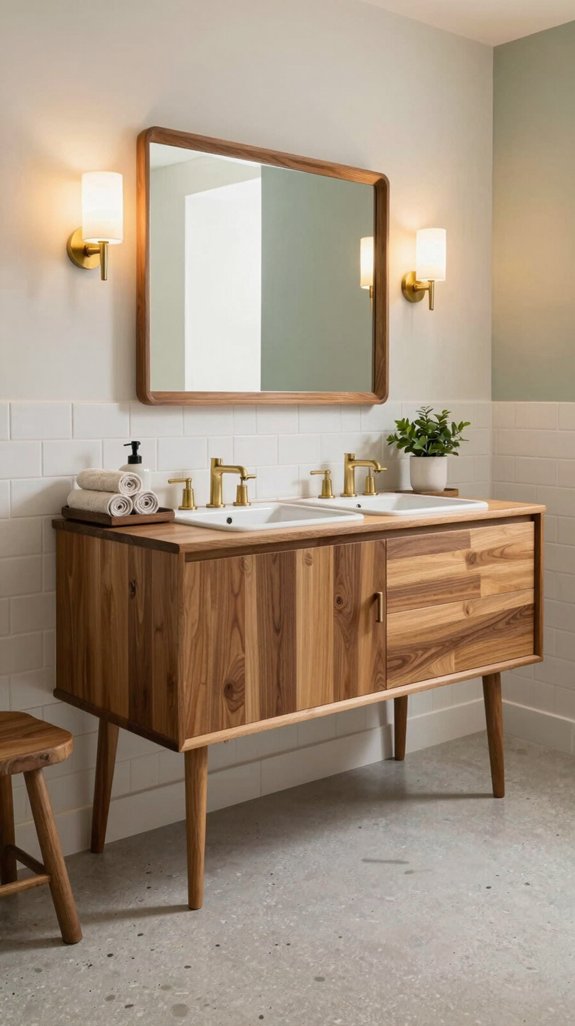
Mid-Century Modern bathrooms embrace functional elegance through retro vanities that strip away unnecessary ornamentation while celebrating natural materials.
You’ll appreciate walnut or teak finishes that introduce warmth without compromising spatial perception. Streamlined designs featuring straight legs and integrated hardware—brass, matte black, or chrome—reflect mid-century principles of efficiency.
Consider floating vanities in standard widths like 48 or 72 inches, which enhance your bathroom’s visual flow. Soft-close drawers and spacious storage optimize organization while maintaining minimalist aesthetics.
Like versatile murphy beds, mid-century vanities maximize functionality in compact spaces through thoughtful design.
Pair these vanities with geometric mirrors and terrazzo tiles to complete your cohesive mid-century narrative, creating timeless sophistication through thoughtful material selection and purposeful design.
Tropical Bathrooms: Rich Greens, Rattan, and Living Plants
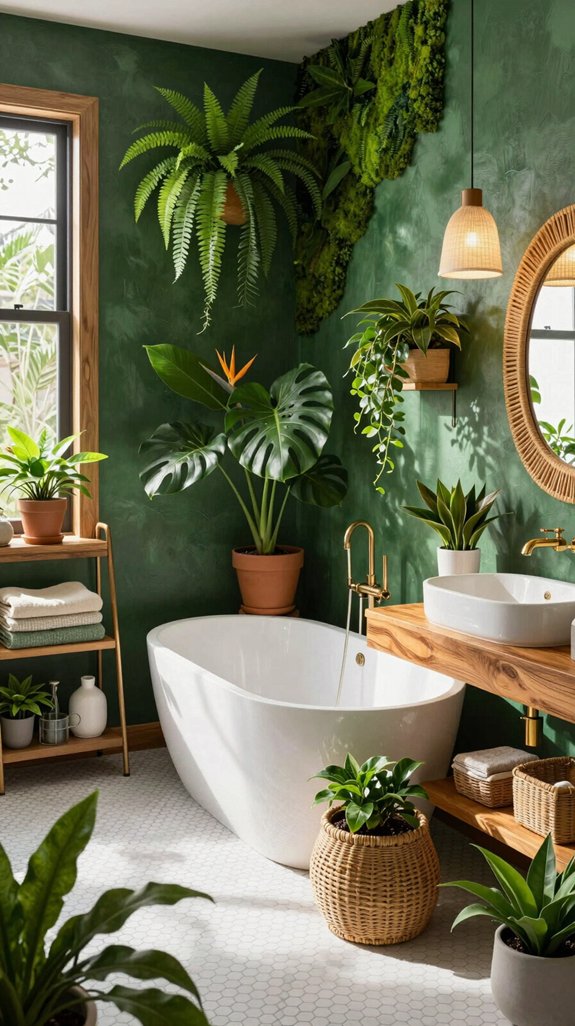
Tropical bathrooms transport you to lush rainforest sanctuaries through strategic layering of rich greens, natural textures, and living vegetation.
You’ll achieve this aesthetic by incorporating emerald walls as bold focal points, paired with light green marble cladding and botanical wallpapers.
Rattan textiles—towels, curtains, rugs—introduce warmth while bamboo fixtures withstand humid environments.
Integrate ferns, orchids, and pothos vertically to enhance air quality and biophilic appeal.
Combine moisture-resistant teak vanities with stone flooring, accenting with copper or brass metallics.
Consider pairing your tropical vanity with a stylish waterfall edge console table to enhance the natural flow and sophistication of your bathroom design.
These layered elements create a cohesive, nature-inspired sanctuary that innovatively merges indoor comfort with tropical authenticity.
Contemporary Elegance: Sleek Black Hardware and White Quartz
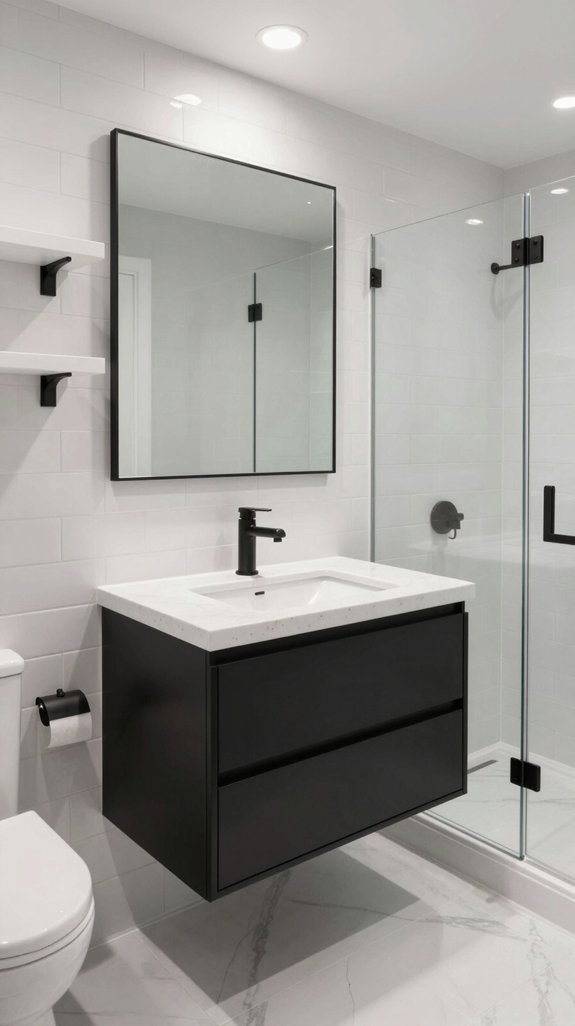
As bold minimalism dominates 2026 bathroom design, you’ll find that sleek black hardware paired with white quartz creates an undeniable contemporary statement—one defined by high-contrast precision and architectural clarity.
Frameless glass showers with matte black faucets establish sculptural lines against luminous quartz surfaces, while floating vanities showcase streamlined profiles.
Linear drains and curbless entries integrate seamlessly, enhancing fluid aesthetics. Recessed lighting amplifies black hardware’s subtle glow, grounding expansive white surfaces.
You’re investing in durable, low-maintenance materials that resist stains while delivering wellness-focused spa retreats.
Invisible aging-in-place elements and integrated smart systems remain discreetly hidden, ensuring your space evolves effortlessly with future needs.
Transitional Design: Traditional Details Meet Modern Minimalism
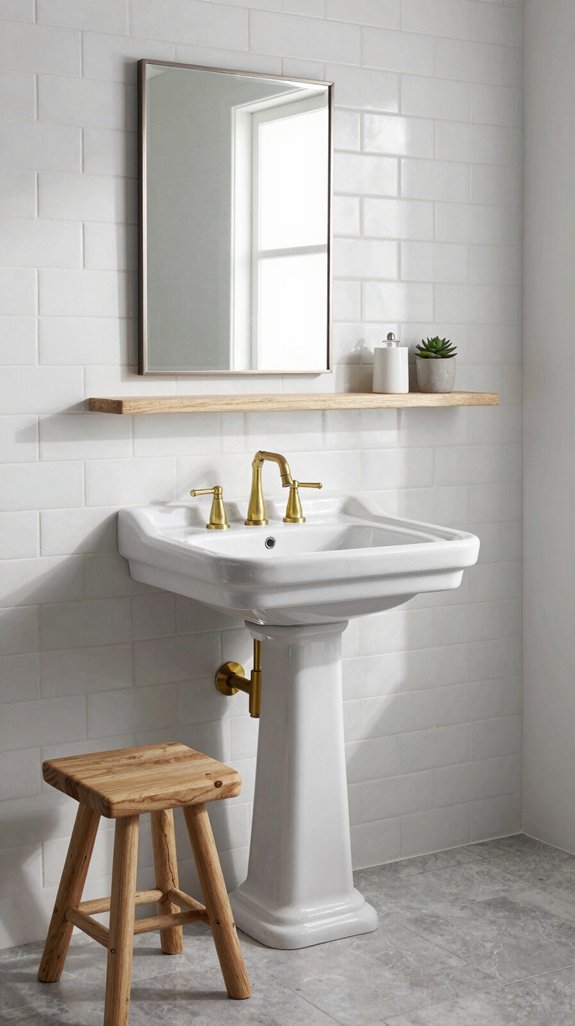
While the contemporary elegance of black hardware and white quartz demands an uncompromising aesthetic commitment, changeover design offers you a more flexible approach that honors both classical craftsmanship and modern sensibility.
You blend marble checkerboard floors with frameless glass showers, pairing ornate mirrors against minimalist cabinetry. Incorporate brushed brass fixtures with clean-lined vanities, marrying traditional wooden accents to sleek surfaces.
This layered strategy creates visual depth without sacrificing functionality. You establish timeless interiors by balancing elaborate hardware pulls on strong maple cabinetry alongside contemporary lighting.
The result: sophisticated spaces that adapt gracefully, honoring heritage while embracing innovation.
Japanese Zen: Natural Stone, Bamboo, and Neutral Palettes
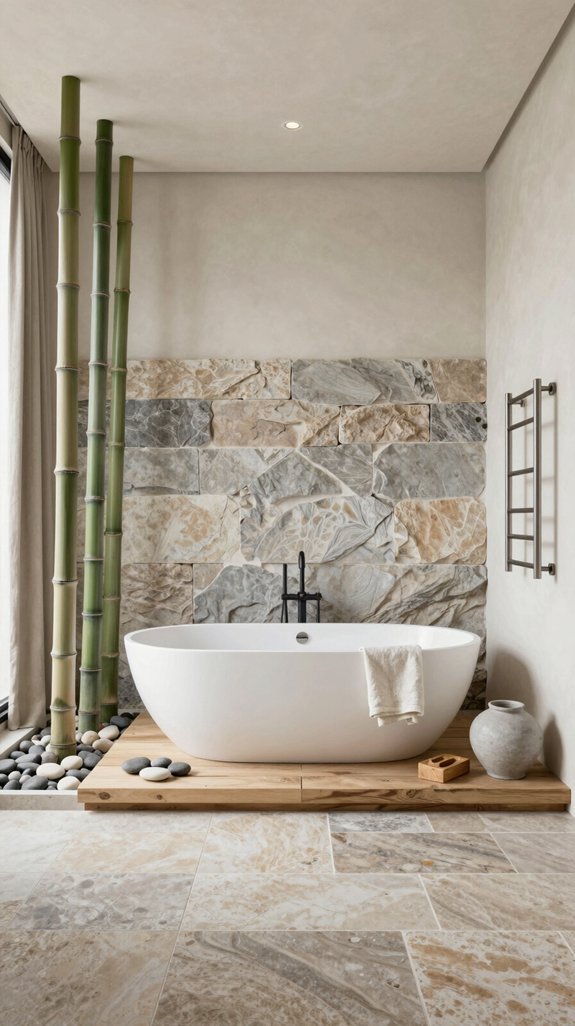
When you’re designing a Japanese Zen bathroom, you’re establishing a sanctuary grounded in natural materials and restrained aesthetics.
You’ll integrate hinoki, cedar, and bamboo to create authentic tactile warmth while anchoring the space with natural stone flooring and pebbled surfaces. Your neutral palette—earth tones, soft greens, and warm whites—cultivates serenity without visual overstimulation.
You’ll position a soaking tub as your design’s focal point, embracing the principle of “Ma” through negative space and minimalist fixtures.
Large windows and skylights amplify natural light, while strategically placed plants and water features complete your tranquil environment.
Bohemian Eclectic: Patterned Tiles, Woven Accents, and Vintage Finds
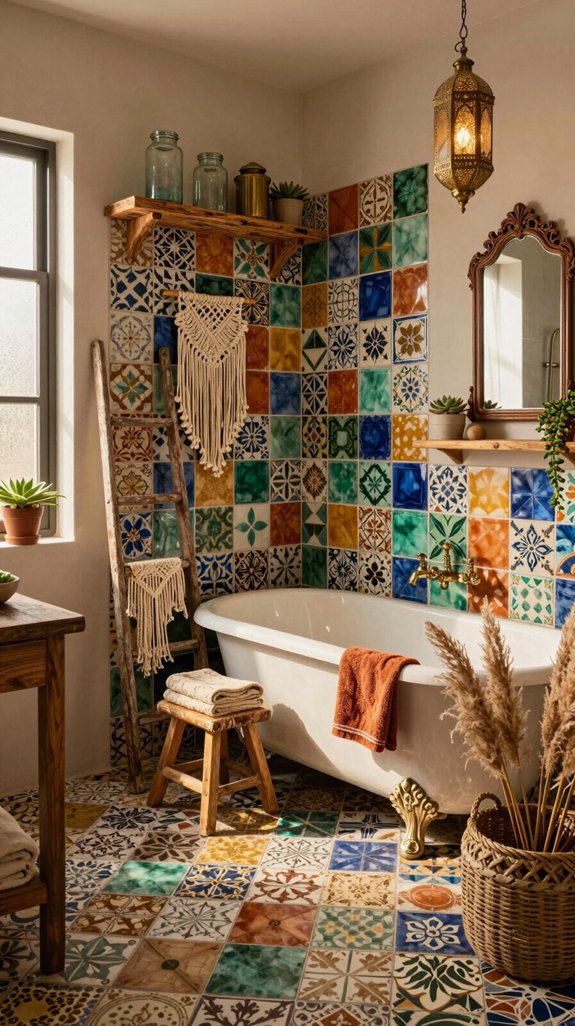
If you’re seeking visual richness and layered textures, a bohemian eclectic bathroom abandons restraint in favor of purposeful maximalism.
You’ll integrate patterned tiles—zellige mosaics, hydraulic designs, and wavy Picasso layouts—creating dynamic focal points around shower zones.
Layer woven accents through macramé hangings, rattan baskets, and jute textiles for organic warmth.
Source vintage furniture, brass fixtures, and wooden vanities from antique markets, establishing temporal depth.
Employ a jewel-tone palette with terracotta, turquoise, and dusty pinks.
Fuse global elements—Moroccan lanterns, Indian textiles—with mid-century pieces.
This eclectic fusion transforms your bathroom into a curated sanctuary balancing bohemian spontaneity with intentional design sophistication.
Victorian Revival: Clawfoot Tubs, Pedestal Sinks, and Ornate Mirrors
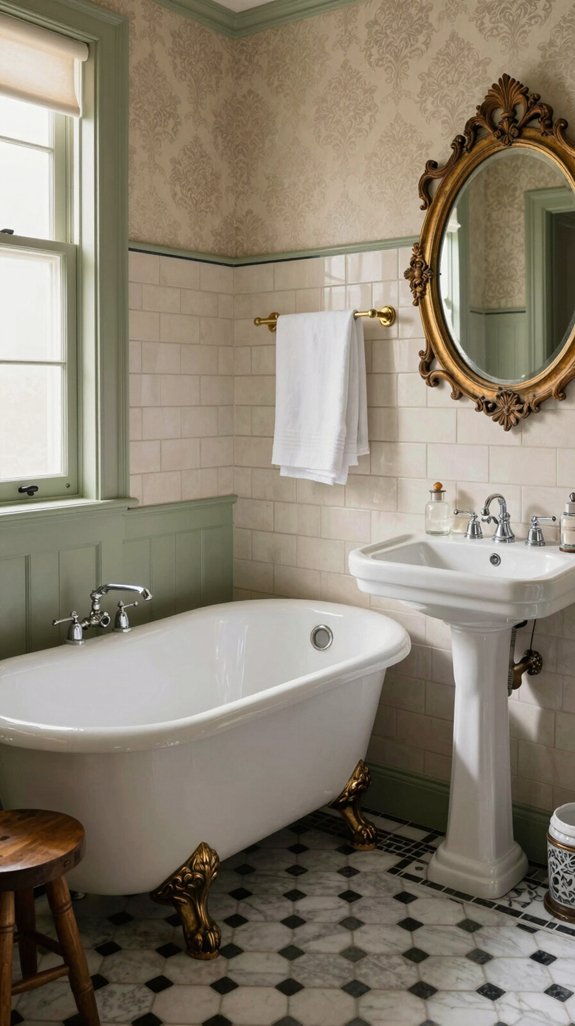
Where bohemian maximalism celebrates global eclecticism, Victorian Revival bathrooms channel refined opulence through historically-inspired fixtures and ornamental precision.
You’ll anchor your space with iconic cast-iron clawfoot tubs featuring porcelain enamel finishes and ornamental feet that command visual attention.
Pair freestanding pedestal sinks topped with marble surfaces alongside brass fixtures showcasing intricate scrollwork and floral motifs.
Gold- or silver-framed mirrors become focal points reflecting your curated aesthetic.
Layer geometric hexagonal tile flooring with deep jewel tones—burgundy, forest green, navy—creating luxurious visual depth.
This cohesive approach transforms your bathroom into an authentic Victorian retreat blending historical authenticity with contemporary design sophistication.
Rustic Cabin: Reclaimed Wood, Stone, and Warm Lighting
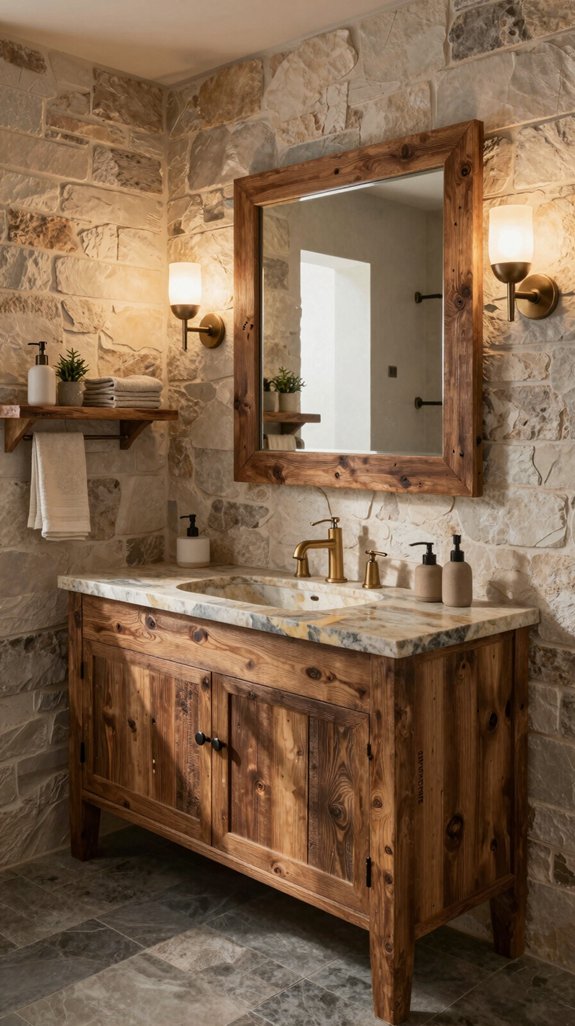
Warmth and authenticity define the rustic cabin bathroom—a retreat anchored by reclaimed wood‘s mixed textures and patina, complemented by natural stone surfaces and strategically layered amber lighting.
You’ll integrate salvaged wood cladding and vanities as focal points, pairing them with engineered quartz or sealed stone countertops for durability.
Warm vanity lights highlight grain patterns while contrasting cold tile finishes, reinforcing the cozy atmosphere.
Protect your investment through bathroom-grade sealants and adequate ventilation to combat moisture.
Customize shelving and wooden accents to match your base wood character, creating a contemporary-rustic fusion that transforms your bathroom into an innovative sanctuary balancing aesthetics with longevity.
Frequently Asked Questions
How Do I Choose Grout Color to Enhance Tile Patterns and Create Visual Continuity?
You’ll literally transform your bathroom into an art gallery by selecting grout that either matches tile undertones for seamless cohesion or contrasts dramatically to accentuate geometric patterns, test samples under actual lighting conditions first.
What Lighting Fixtures Best Complement Different Bathroom Themes While Maintaining Cohesion?
You’ll match fixtures to your theme’s aesthetic: coastal employs weathered bronze with lantern shapes; contemporary utilizes brushed nickel with integrated LEDs; farmhouse integrates aged bronze with frosted glass; art deco showcases brass with geometric forms—each maintains visual coherence.
How Can I Incorporate Accent Colors Without Disrupting a Monochromatic Design Scheme?
You’ll strategically deploy saturated accent walls or feature elements in plum or wine tones above sinks, pairing bold mixers with minimalist basins to create focal points that punctuate your monochromatic palette without compromising cohesion.
Which Hard Materials Should I Repeat Across Bathrooms to Ensure Home Flow Consistency?
You’ll standardize flooring tiles, countertop materials, hardware finishes, and window frames across bathrooms. Matching grout colors and metal tones reinforces visual continuity, creating seamless changes throughout your residence’s architectural language.
How Do Decorative Elements Like Plants and Textiles Add Personality to Minimalist Bathrooms?
You’re literally transforming austere spaces into sanctuaries. Strategic plant placement and neutral-toned textiles create focal points while preserving clean lines. Organic materials introduce tactile warmth, establishing visual hierarchy and enhancing your minimalist aesthetic’s sophisticated innovation.
References
- https://beisselhome.com/tips-for-matching-colors-and-finishes-to-design-a-cohesive-bathroom/
- https://www.edwardmartin.com/blogs/information/how-to-achieve-a-cohesive-bathroom-design
- https://www.hacketthousestudio.com/post/bathroom-design-cohesion
- https://www.hammercontractors.com/bathroom-decor-ideas-to-transform-your-space/
- https://www.houzz.com/photos/bathroom-ideas-phbr0-bp~t_712
- https://www.rockymountainhardware.com/elegant-bathroom-ideas/
- https://www.edwardmartin.com/blogs/information/how-to-mix-and-match-bathroom-tiles-like-a-pro
- https://www.houzz.com/magazine/9-tips-for-mixing-and-matching-tile-styles-stsetivw-vs~49033568
- https://megcohomes.com/how-to-mix-metals-in-the-bathroom-guide/
- https://totalproflooring.com/the-art-of-mixing-and-matching-tile-a-designers-guide-to-cohesive-spaces/