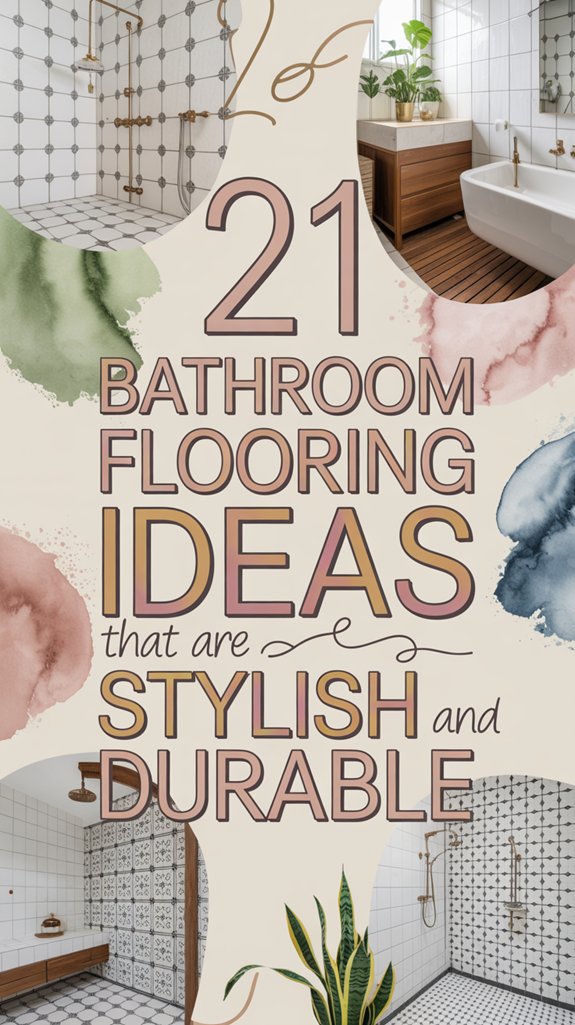
You’ll find that porcelain tile offers unmatched durability and waterproofing for wet bathrooms, while ceramic tile provides budget-friendly alternatives under $5 per square foot. Luxury vinyl tile combines affordability with waterproof performance and realistic aesthetics. Natural stone delivers timeless elegance but demands regular maintenance. Dark grout conceals stains effectively, and large-format tiles minimize moisture-trapping grout lines. Matte finishes enhance slip resistance for safety. Whether you’re prioritizing budget savings or long-term investment value, proper installation and sealing techniques guarantee your bathroom flooring performs beautifully for decades. The right material selection depends on your specific needs and preferences.
How to Choose Bathroom Tile: Durability, Budget, and Style
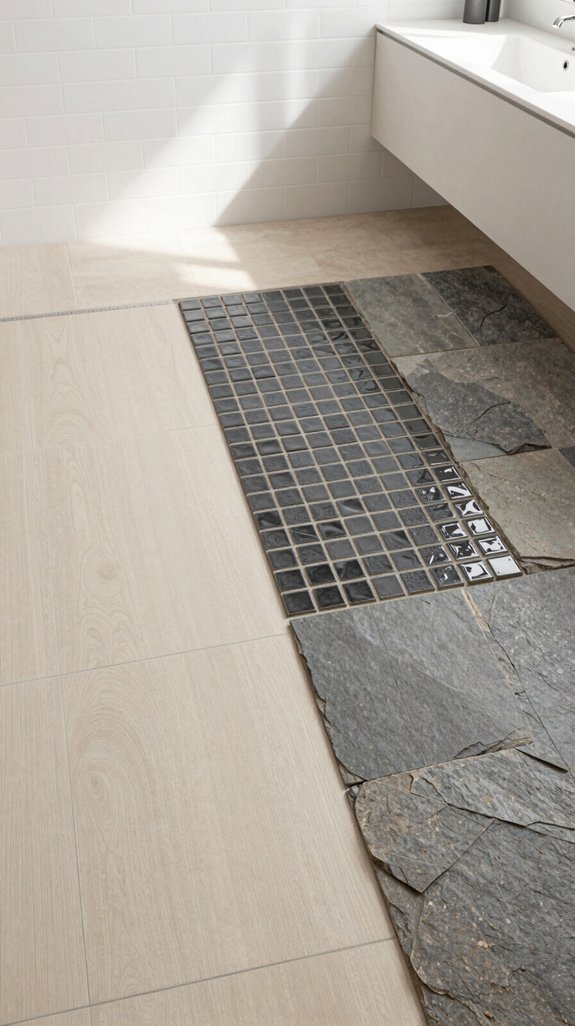
Selecting the right bathroom tile requires balancing three critical factors: durability, budget, and aesthetic appeal.
You’ll find porcelain tiles outperform ceramic with superior scratch and stain resistance, though they cost 60% more.
Luxury vinyl offers exceptional value, outlasting laminate by 15 years while degrading only 12% after a decade. LVT’s multi-layer waterproof design prevents water damage and mold growth, making it significantly more effective than laminate in high-moisture bathroom environments. For stubborn stains and buildup on bathroom floors, consider using deep cleaning machines to maintain your flooring’s appearance over time.
Prioritize water absorption rates below 0.5% for wet areas and PEI ratings for wear resistance.
Style-wise, hexagon and octagon mosaics provide contemporary aesthetics while increasing slip resistance through grout lines.
Textured matte finishes enhance grip without compromising visual sophistication, delivering both safety and innovation in your bathroom design.

Wide Application - This touch up paint pen adheres to a wide range of surfaces, including tile, tub, bathtub, sink, enamel, porcelain and refrigerators. It allows you to easily repair scratches, stains, chips, spots, yellowing, and other surface paint imperfections
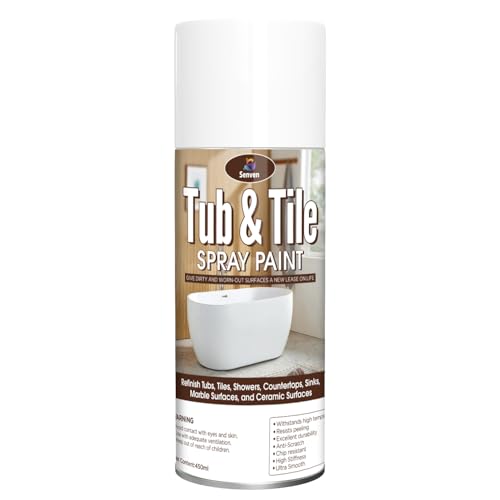
SENVEN TUB & TILE REFINISHING SPRAY PAINT: Apply this Tile Spray Paint to ceramic, porcelain, or fiberglass surfaces, including tiles, sinks, and tubs. Specifically for ceramic, porcelain surfaces like bathtubs, tile floors/walls, toilets, sinks and countertops. DIY refinish your bathroom with just one quick and easy spray step for a refreshed look. The SENVEN Tub & Tile Refinishing Kit is here to reduce costs without breaking the bank on new fixtures or hiring a contractor

Fast Repair and Durable: Our white touch up paint features a high-quality acrylic resin formula, specifically designed for precise application and strong adhesion to repaired white furniture. It perfectly repairs scratches, stains, chips, blemishes, yellowing, and other surface paint defects.
Porcelain Tile: The Most Durable Option for Wet Bathrooms
Porcelain tile stands as the gold standard for bathroom flooring in wet environments, offering unmatched durability that ceramic and other alternatives simply can’t match.
Fired at over 2,000 degrees Fahrenheit, porcelain achieves exceptional density with absorption rates below 0.5%, rendering it completely waterproof. You’ll benefit from superior crack and chip resistance comparable to wood’s bending strength.
The non-porous composition prevents mold and mildew proliferation while resisting thermal shock in steam showers. With minimal maintenance—merely water and mild soap—your investment endures 20-30 years without fading or staining, delivering innovation-driven performance for demanding bathrooms.

𝐏𝐫𝐞𝐦𝐢𝐮𝐦 𝐏𝐞𝐫𝐟𝐨𝐫𝐦𝐚𝐧𝐜𝐞: Our peel and stick wall tiles are designed with high-performance PVC polymer material, offering waterproof, heat-resistant, stain-resistant, anti-scratch, and fadeless properties. Rest assured, the super-strong adhesive ensures the tiles stay securely in place!

🎨 VALUE PACK: 12 high-quality glossy white ceramic bisque tiles, perfect for a variety of decorating techniques including overglazes, ceramic decals, enamel paints, alcohol inks, and glass markers.

4 1/4"x4 1/4" White Ceramic tile, thickness: 1/4"
Ceramic Tile: Affordable and Water-Resistant
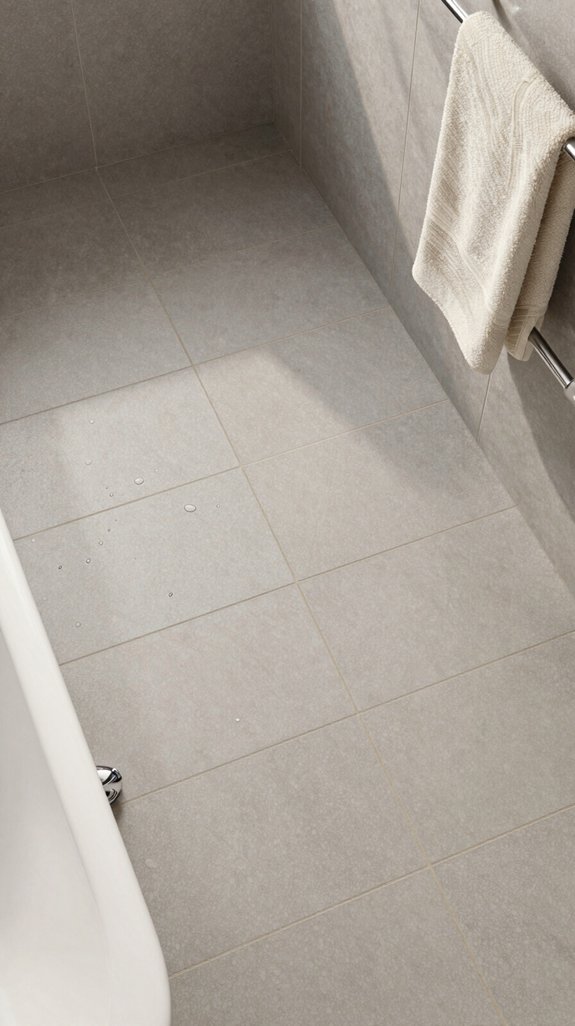
If you’re seeking a practical flooring solution that doesn’t compromise on performance, ceramic tile delivers exceptional value without the premium price tag of porcelain or natural stone.
Installation averages just $5 per square foot, making it budget-conscious without sacrificing durability.
Glazed varieties create impervious surfaces that resist moisture and stains—ideal for shower zones and high-humidity environments.
You’ll appreciate the minimal maintenance: simple sweeping and damp mopping sustain its pristine condition.
Ceramic tiles last over 20 years, offering impressive longevity that justifies lower upfront costs.
With advanced antimicrobial options and diverse aesthetic capabilities, you’re investing in both innovation and practicality.

RENTER FRIENDLY UPGRADES & MESS-FREE INSTALL: Refresh outdated or stained floors without extra tools, grout, or demolition. The self-adhesive, pre-cut 12” x 12” square-edge checkered marble vinyl tiles ensure easy alignment for a clean home upgrade in hours. Simply trim with a utility knife, then peel, stick, and press firmly over clean, even subfloors, concrete, vinyl, ceramic, or porcelain tiles. (Note: Fill deep grout lines and repair loose areas before installation).

Textured & Versatile: Available in popular wood look and marble textures, featuring a natural matte finish that replicates the authentic feel of natural materials. The luxury vinyl tiles seamlessly complements Nordic, modern minimalist, industrial and other trending decor styles, instantly elevating any space's overall aesthetic. Ideal for bathrooms, kitchens, living rooms, bedrooms and beyond.

⌛ Timeless Charm - Stylish wood finishes offer an authentic and natural look that brings the beauty and warmth of nature into your flooring décor.
Luxury Vinyl Tile (LVT): Waterproof Without the Cost
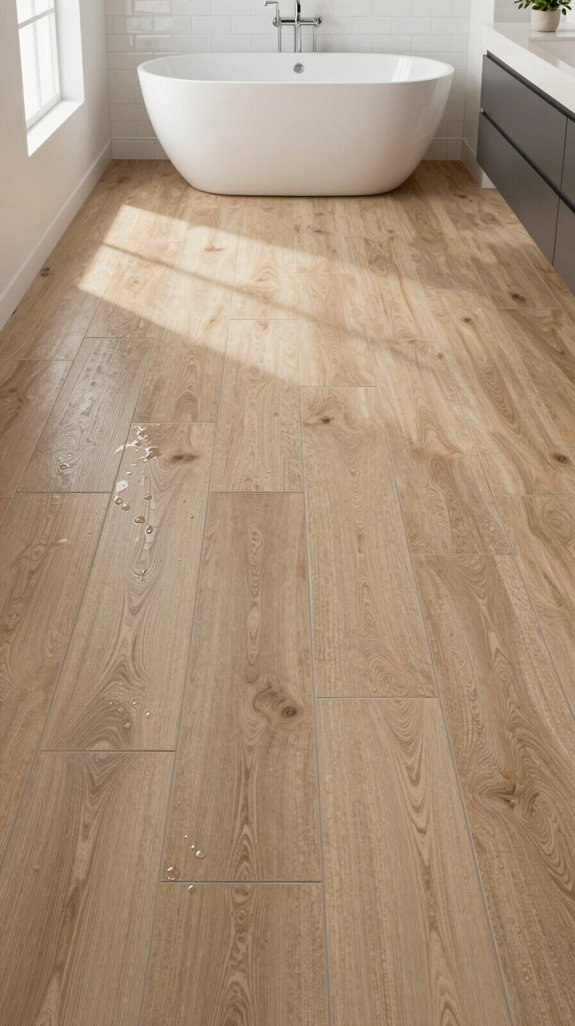
Luxury vinyl tile offers you the waterproof performance of ceramic at a fraction of the cost, combining engineered durability with authentic aesthetic appeal.
You’ll benefit from a non-porous surface that resists mold, mildew, and stains while maintaining structural integrity during moisture exposure.
The reinforced wear layer withstands heavy foot traffic and daily wear without scratching or peeling.
Installation flexibility lets you achieve realistic wood, stone, or tile aesthetics suited to your design vision.
Maintenance requires only simple sweeping and damp mopping—no sealing or waxing necessary.
Compatibility with radiant heating systems and slip-resistant finishes enhances comfort and safety, delivering superior performance beyond traditional alternatives.

CONCENTRATED FLOOR CLEANER – Granite Gold Stone and Tile Floor Cleaner is a cleaning solution specially formulated for your stone, slate and tile floors. It comes in a cost-saving, concentrated 32 ounce bottle.

Safe for All Natural Stone – Gently cleans marble, travertine, granite, slate, limestone, ceramic, and porcelain tile without damage or dulling the surface.
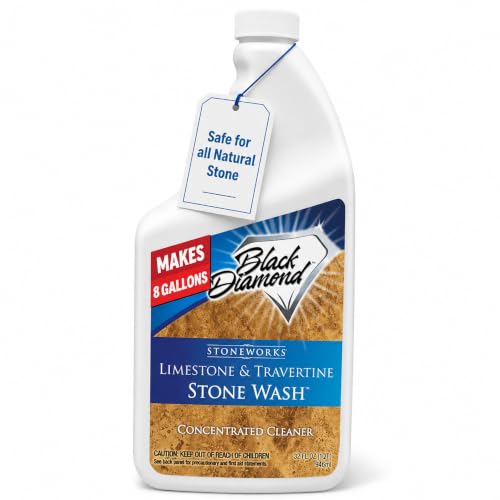
Safe for All Natural Stone Floors: Specially formulated for limestone, travertine, marble, granite, slate, sandstone, quartzite, flagstone, and all other sealed and unsealed natural stone flooring
Natural Stone Tile: Luxury Bathroom Flooring With Maintenance
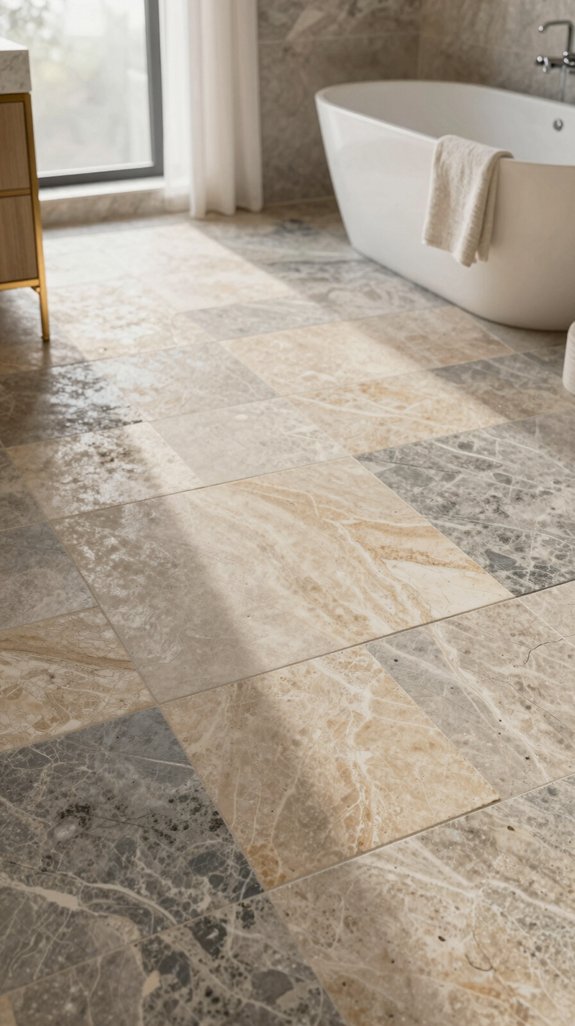
Natural stone tile delivers timeless elegance and unmatched durability to your bathroom, though it demands a committed maintenance routine to preserve its beauty and structural integrity.
You’ll need to seal porous stones like limestone and travertine every 6–12 months, while granite requires less frequent treatment.
Employ pH-neutral cleaners and microfiber mops for daily upkeep, avoiding acidic substances that etch surfaces. Conduct water drop tests biannually to assess sealing efficacy.
Professional deep cleaning restores lustre and removes etching. With proper care tailored to your stone’s specific properties, you’ll enjoy decades of sophisticated, scratch-resistant flooring that outperforms standard alternatives.

Nexus Vinyl Tiles: Refresh your home for a low cost and no hassle with the Nexus Vinyl Floor Tiles. Our tiles can be used in any room in your home including the kitchen, dining room, bedrooms, bathrooms, foyers, and basements. No messy glue or adhesives needed. Includes 20 vinyl tiles.

Nexus Vinyl Tiles: Refresh your home for a low cost and no hassle with the Nexus Vinyl Floor Tiles. Our tiles can be used in any room in your home including the kitchen, dining room, bedrooms, bathrooms, foyers, and basements. No messy glue or adhesives needed. Includes 20 vinyl tiles.

Nexus Vinyl Tiles: Refresh your home for a low cost and no hassle with the Nexus Vinyl Floor Tiles. Our tiles can be used in any room in your home including the kitchen, dining room, bedrooms, bathrooms, foyers, and basements. No messy glue or adhesives needed. Includes 20 vinyl tiles.
Vitrified Tile: Zero-Sealing Option for Moisture-Heavy Spaces
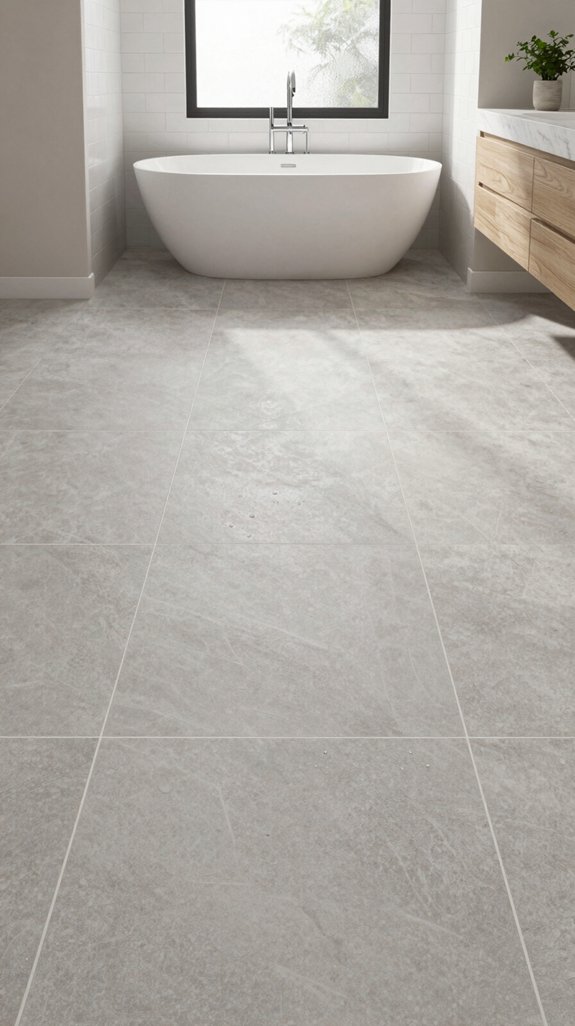
Because bathrooms demand flooring that withstands constant moisture exposure without specialized maintenance, vitrified tile emerges as a superior alternative to natural stone.
You’ll benefit from its non-porous surface, which achieves water absorption rates of 0.5% or less through advanced vitrification. This innovation eliminates sealing requirements entirely, reducing long-term maintenance costs considerably.
The tiles’ 9-10mm thickness and high-temperature firing create scratch and stain resistance that preserves appearance across decades.
You can choose from glossy, matte, or textured finishes while enjoying waterproof and anti-skid options tailored for moisture-heavy environments, delivering both aesthetic versatility and functional reliability.

Apply Tub and Tile Spray Paint to ceramic, porcelain or fiberglass including tiles, sinks and tubs

Prepare and paint surface the same day with a tough, with tub and tile’s 2-part epoxy acrylic formula that withstands moisture and resists corrosion

Give Home a New Look - Peel and stick floor tiles can be adhered to any flat, clean and dry surface and can be removed without leaving a trace, making them perfect for renters.
SPC Vinyl: The Most Durable Budget Flooring for Wet Bathrooms
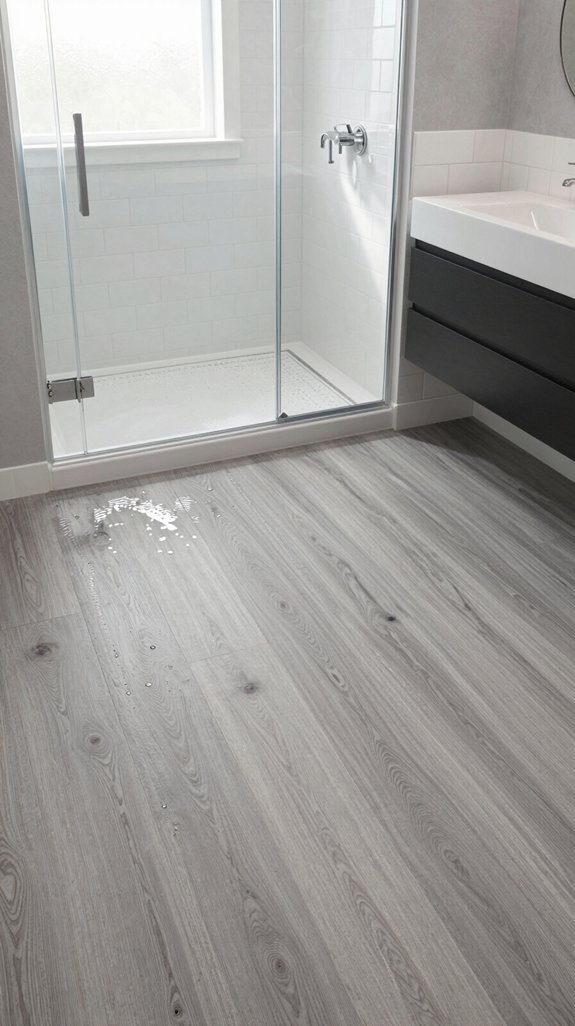
While vitrified tile offers unmatched water resistance through specialized manufacturing, SPC vinyl delivers comparable moisture protection at a fraction of the cost, making it the most practical choice for budget-conscious homeowners upgrading wet bathroom spaces.
You’ll benefit from a 100% waterproof core combining limestone powder, PVC, and stabilizers that resists warping and flooding.
The solid dense construction outperforms flexible alternatives, offering superior dent and scratch resistance through polyurethane wear layers.
With 20–25 year lifespans and click-lock installation requiring no specialized tools, you’re investing in innovation-driven durability that maximizes long-term value without compromising performance.

Realistic Ceramic Tile Look: Glossy and shiny hexagon tile is scratch-resistant, high-impact and fade-resistant, creating a high-end look for you, long hexagon design can be installed vertically or horizontally.

Elegant Marble Texture - Featuring a stunning marble design with intricate veining, these self-adhesive backs plash tiles add a touch of sophistication and luxury to any space, enhancing the overall aesthetic of your home

Enhanced Adhesive Strength: Our peel and stick tile improved backing glue ensures a firm grip on smooth and lightly textured surfaces for a lasting upgrade.
Porcelain vs. Ceramic: Which Tile Lasts Longer
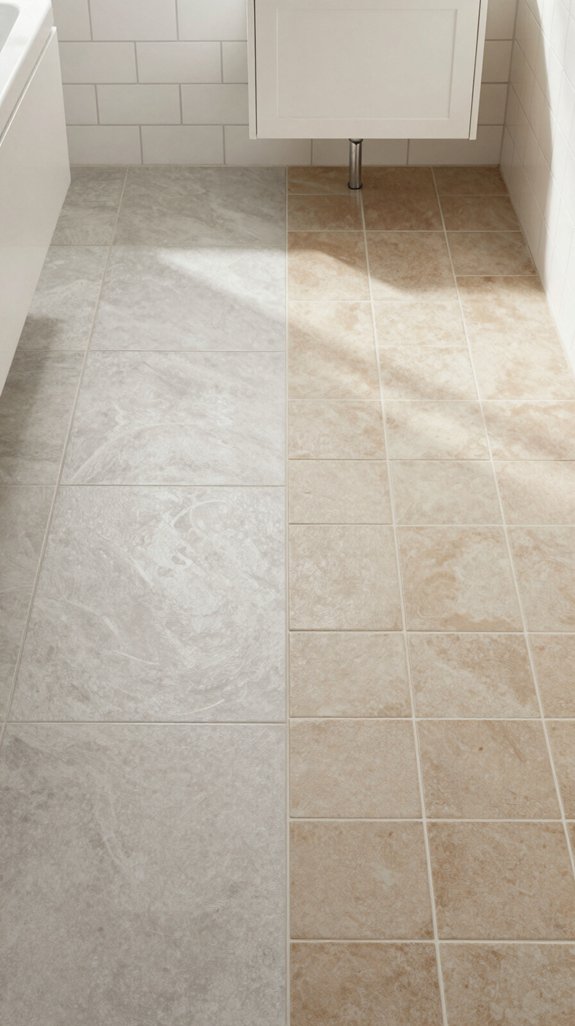
Though SPC vinyl delivers impressive durability at an economical price point, ceramic and porcelain tiles represent the gold standard for bathroom longevity and performance.
Porcelain’s superior density and sub-0.5% water absorption make it ideal for moisture-intensive environments, while ceramic’s 3-7% porosity limits its bathroom viability.
You’ll appreciate porcelain’s resistance to cracking, chipping, and staining—requiring only sweeping and mopping for maintenance.
Ceramic demands frequent grout sealing to prevent water damage. For optimal results, consider using tile grout cleaners to maintain the appearance and integrity of grout lines over time.
With porcelain fired at over 1200°C versus ceramic’s 1000-1100°C, you’re investing in engineered durability that withstands heavy foot traffic and environmental stress for decades.

[Widely applicable] This products is specially customized by us,high-quality vinyl floor roll have realistic wood grain textures and semi matte surfaces, providing slip resistance and barefoot comfort. By enhancing moisture resistance with a thick aluminum layer, its durable structure is more resistant to wear and moisture than ordinary vinyl stickers, ensuring long-term use without frequent replacement. If you need to purchase better quality products, I believe this vinyl flooring will not disappoint you.Suitable for flooring in bedrooms, living rooms, kitchens, lounges,offices, school classrooms.Of course, you can also DIY it for wall, cabinet, and countertop decoration.

Textured & Versatile: Available in popular wood look and marble textures, featuring a natural matte finish that replicates the authentic feel of natural materials. The luxury vinyl tiles seamlessly complements Nordic, modern minimalist, industrial and other trending decor styles, instantly elevating any space's overall aesthetic. Ideal for bathrooms, kitchens, living rooms, bedrooms and beyond.
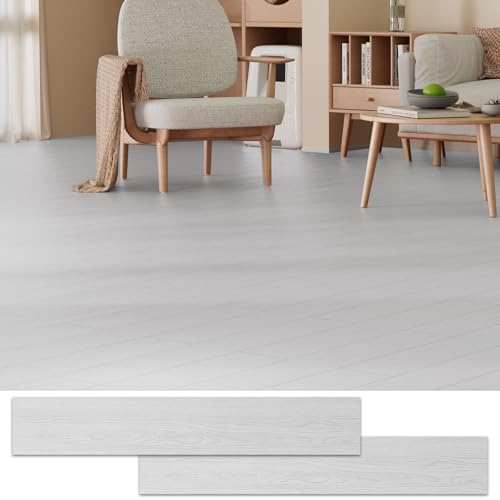
Textured & Versatile: Available in popular wood look with a natural matte finish that replicates the authentic feel of natural materials. The luxury vinyl plank flooring seamlessly complements Nordic, modern minimalist, industrial and other trending decor styles, instantly elevating the overall aesthetic of any space. Ideal for living rooms, bedrooms, kitchens and more.
LVT vs. LVP: Which Vinyl Flooring Works Best in Bathrooms
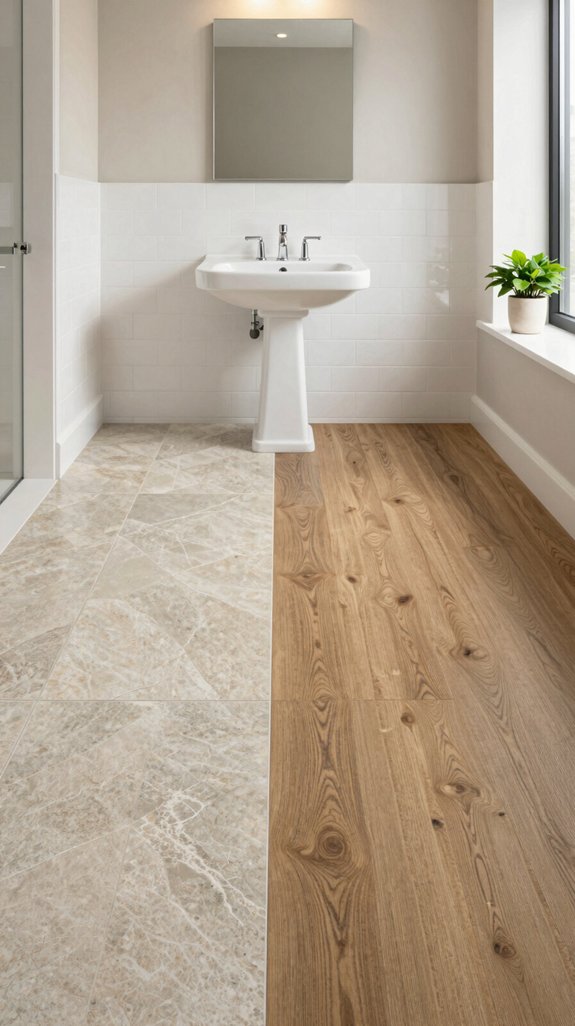
How do you choose between two flooring options that both deliver waterproof protection yet serve distinctly different aesthetic purposes?
LVT excels in bathrooms through its dense structure and tile-mimicking design, handling standing water and heavy moisture effectively.
LVP offers 100% waterproof composition ideal for spills and humidity, yet its wood aesthetic may clash with traditional bathroom spaces.
Consider your design priorities: LVT replicates stone and marble for contemporary or classic looks, while LVP provides warmth.
Both feature seam-locking systems and easy maintenance, making them simpler to care for than traditional flooring materials with effective cleaning solutions.
Select LVT for authentic tile aesthetics and superior moisture management in wet zones.

Safe Deep Cleaning – Gently removes dirt and grime from polished and honed natural stone and tile without damage.


LUXURIOUS AND FUNCTIONAL: Elevate your bath mats for showers with Tosoro Bath Stone Mat. Designed to bring the perfect balance between innovative, sophisticated spa-like design and utility to your home
Matte Bathroom Tile: The Low-Maintenance Finish
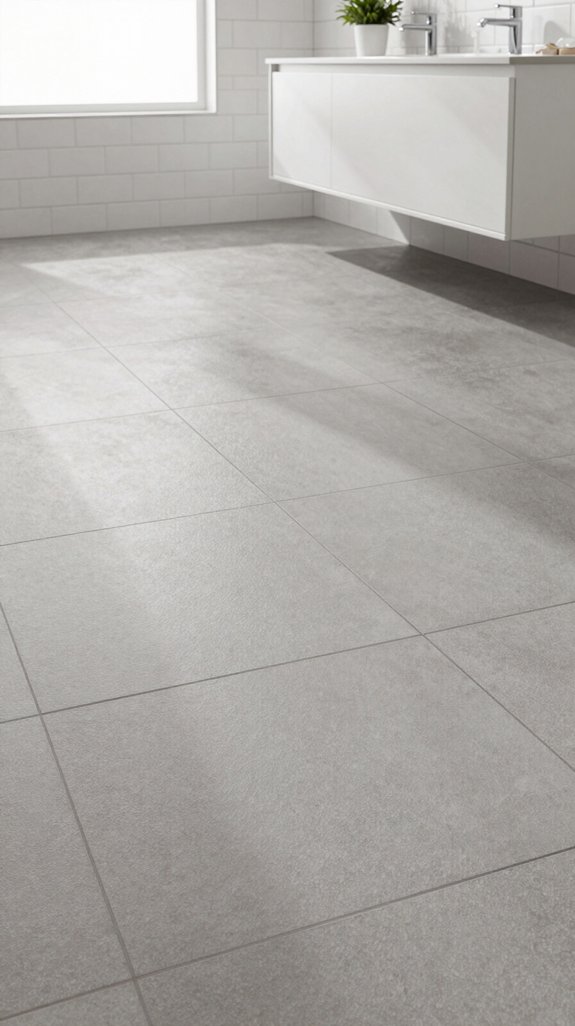
Once you’ve selected your vinyl or tile flooring type, you’ll want to contemplate the finish that best serves your bathroom’s functionality and design.
Matte tiles deliver superior slip resistance and durability in moisture-heavy environments, making them ideal for families with children or elderly members. Their non-reflective surface effectively hides water spots, smudges, and daily wear, requiring minimal maintenance.
Porcelain variants offer enhanced density and longevity. While deeper cleaning demands extra attention in grout lines, the sophisticated aesthetic complements contemporary and rustic styles alike, creating a spa-like atmosphere without compromising practical performance standards.


Elegant do-it-yourself tiles – These vinyl wall tiles by Palisade are easy to install and look quite elegant with a no-mess grout appearance; The decorative, photo-realistic pattern repeats about every eight tiles; The location on each tile where the pattern repeats is always different, however, resulting in a unique look for each tile; Some of the natural stone look designs include color variations, various lines, and cracks to emulate the look of natural stone

Elegant do-it-yourself tiles – These vinyl wall tiles by Palisade are easy to install and look quite elegant with a no-mess grout appearance; The decorative, photo-realistic pattern repeats about every eight tiles; The location on each tile where the pattern repeats is always different, however, resulting in a unique look for each tile; Some of the natural stone look designs include color variations, various lines, and cracks to emulate the look of natural stone
Glazed Bathroom Tile: When High-Shine Works Best
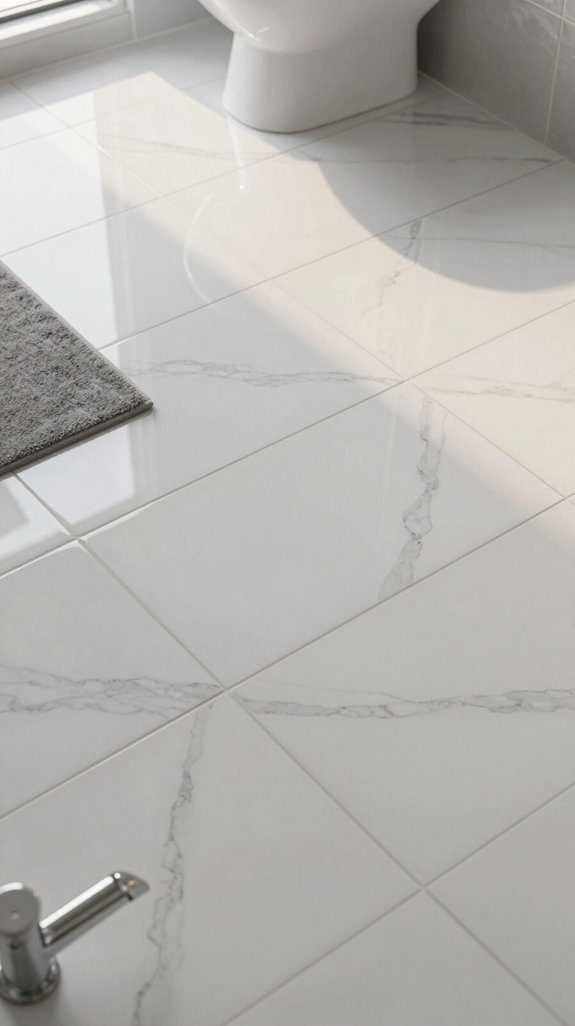
If you’re seeking a flooring option that combines aesthetic versatility with practical performance, glazed tiles deliver on both fronts.
You’ll appreciate their non-porous surface, which creates an exceptional moisture barrier preventing water infiltration and mold growth. The glass coating enables unlimited color variations and realistic pattern replication through high-definition printing. You can select from matte, satin, or high-gloss finishes matching any design aesthetic.
Their durability withstands daily foot traffic, while stain and bacterial resistance guarantee hygienic environments requiring minimal maintenance. You simply sweep and occasionally mop—no specialized cleaning protocols needed. For stubborn soap scum buildup, top shower cleaners can maintain your glazed tile surfaces between routine maintenance.
This combination of innovation and practicality positions glazed tiles as an intelligent long-term investment for modern bathrooms.
Large-Format Tiles: Fewer Grout Lines Mean Fewer Water Traps
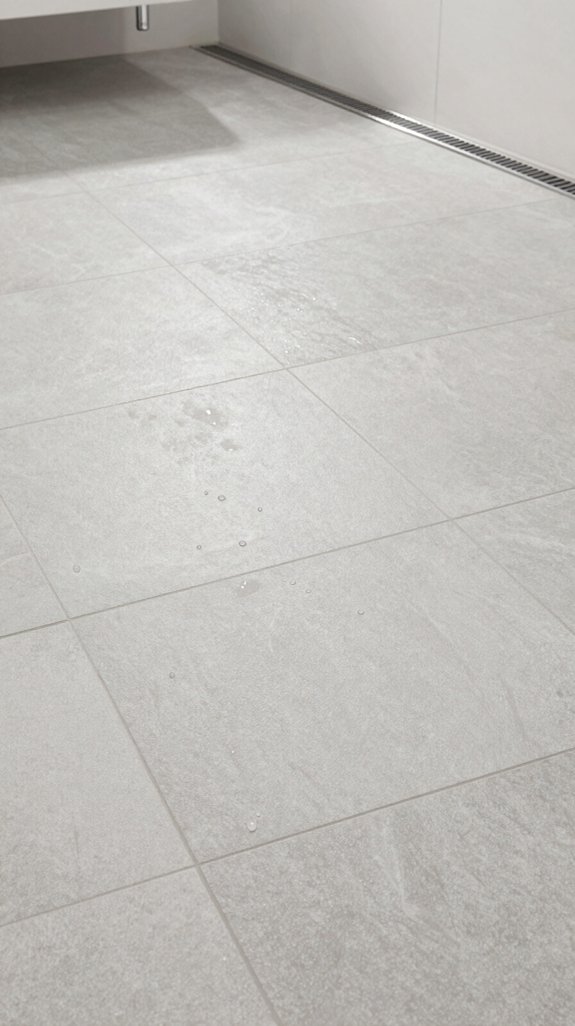
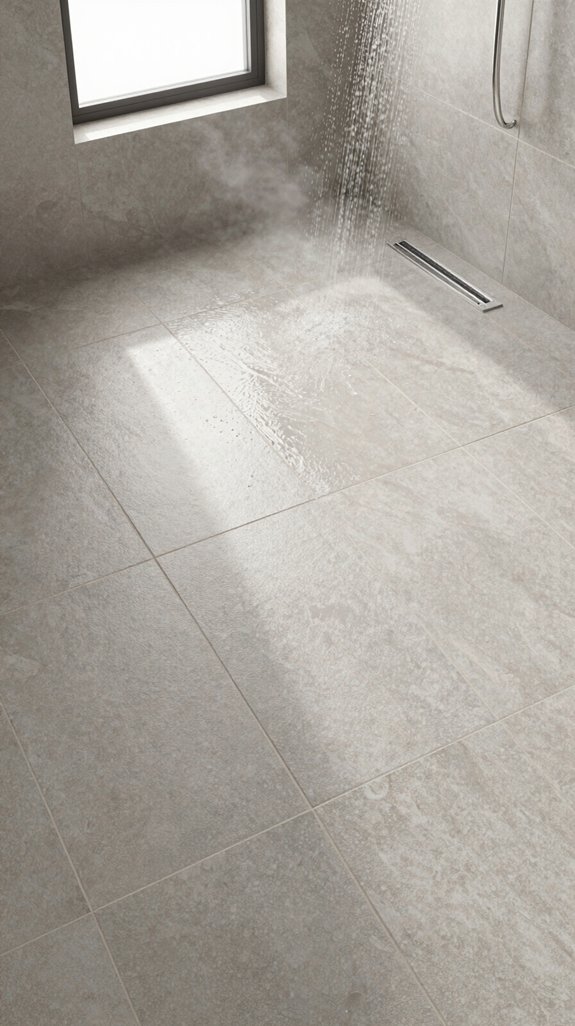
Large-format tiles take the moisture-management advantages of glazed surfaces one step further by dramatically reducing the number of grout lines in your bathroom.
You’ll minimize water traps and moisture absorption that typically compromise smaller tile installations. Fewer joints mean you’re blocking microbial growth and mold development in humid environments.
The seamless aesthetic also simplifies maintenance—you’re focusing on tile surfaces rather than scrubbing grout.
When professionally installed with rectified edges and proper substrate preparation, large-format tiles deliver superior durability and stain resistance.
Linear drains enhance shower performance, making this solution ideal for sophisticated, high-performance bathrooms.
Decorative Bathroom Tile Patterns: Hidden Benefits
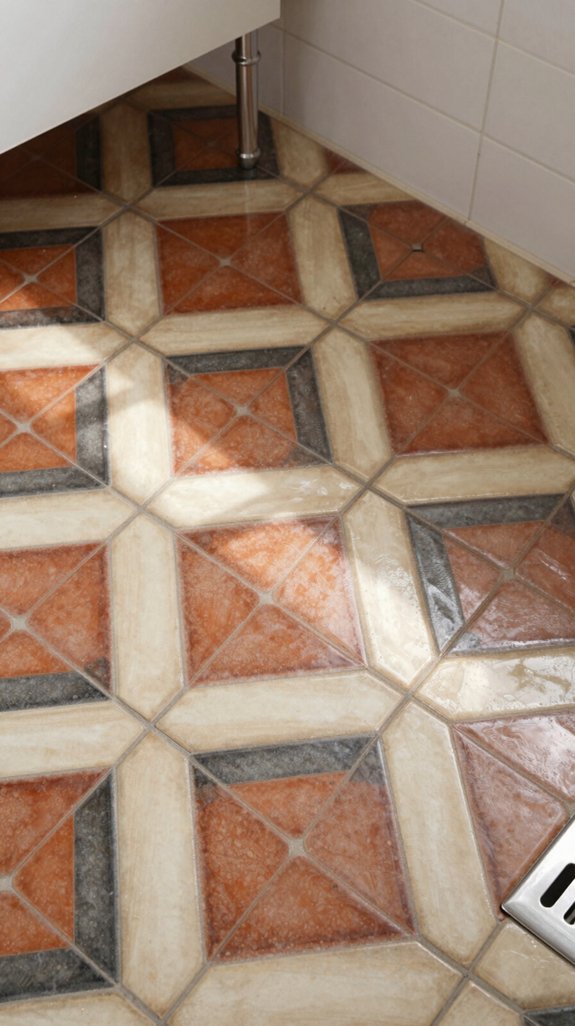
While decorative tile patterns deliver striking visual appeal, they offer substantial hidden benefits that extend far beyond aesthetics.
Strategic geometric designs psychologically influence spatial perception—diagonal patterns expand narrow bathrooms, while intricate layouts energize expansive areas. You’ll discover that carefully selected patterns modulate emotional atmosphere and guide visual attention through functional zones.
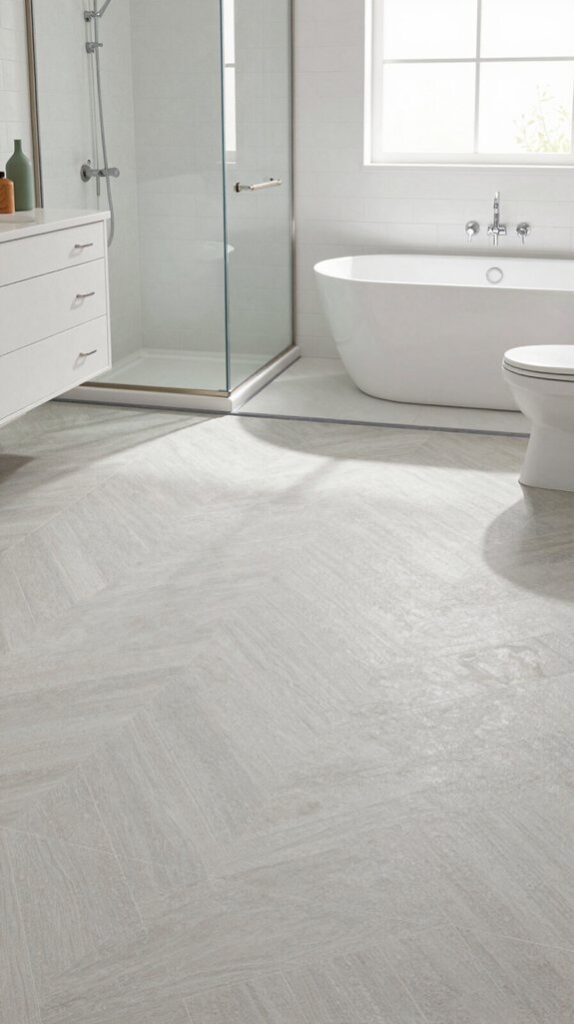
Chevron and basketweave designs create directional flow and visual depth, transforming utilitarian spaces into sophisticated environments.
Beyond psychology, patterned tiles strategically conceal imperfections while enhancing light reflection. Similar to how modular privacy panels organize interior spaces, thoughtfully arranged tile patterns establish clear visual boundaries and functional zones within your bathroom.
When you coordinate patterns across floors and walls, you establish cohesive design continuity that anchors your bathroom’s visual hierarchy, creating focal points that distinguish premium installations.
Wood-Look Tile: Hardwood Warmth Without Water Damage
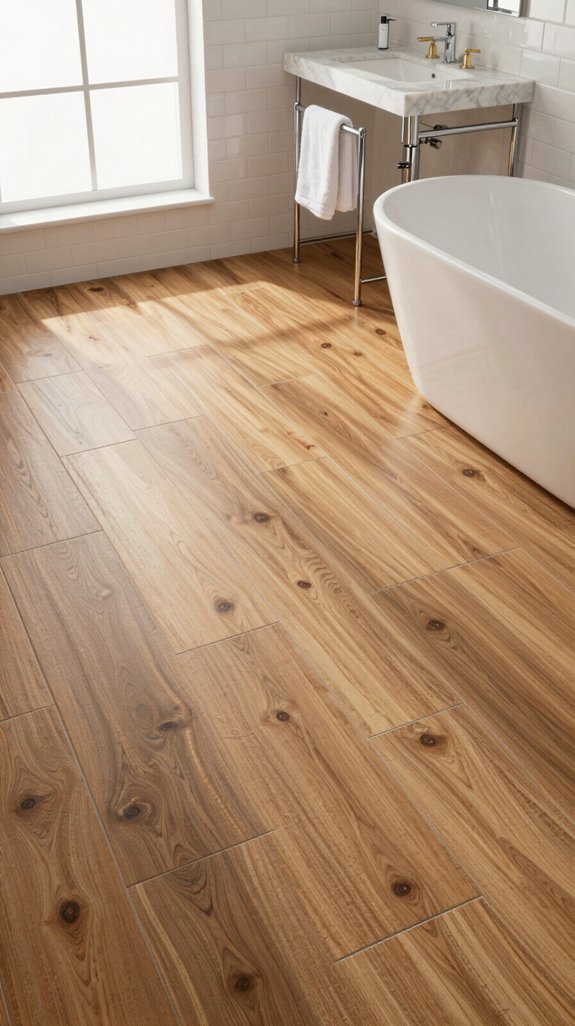
Because bathrooms demand both aesthetic appeal and practical resilience, wood-look tile delivers an ideal solution that traditional hardwood simply can’t match.
You’ll gain authentic hardwood aesthetics—complete with realistic grain patterns and warm tones—while maintaining superior moisture resistance that prevents warping and rot.
High PEI ratings guarantee exceptional durability against daily wear, pet damage, and heavy foot traffic.
The porcelain or ceramic composition resists water absorption, eliminating mold concerns.
Installation accommodates radiant heating systems, enhancing comfort.
You’ll appreciate minimal maintenance requirements; simple sweeping and mild mopping preserve the floor’s pristine appearance indefinitely, keeping your bathroom free from soap scum buildup and other stubborn residues.
Wood-look tile represents the convergence of innovation, functionality, and sophisticated design.
Stone and Concrete Tile: Modern Looks That Hide Stains
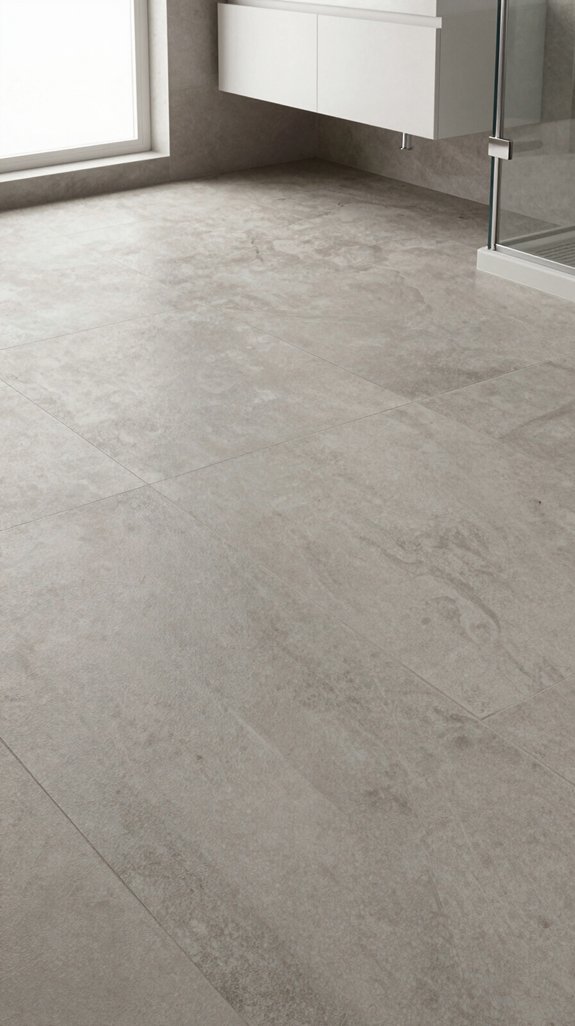
Stone and concrete tiles offer the modern sophistication you’re seeking without requiring pristine maintenance—their inherent texturing and varied coloration naturally camouflage stains and imperfections that’d be glaringly obvious on lighter, glossy surfaces.
When properly sealed, concrete resists water seepage while hiding discoloration effectively. Natural stone develops character from wear, enhancing aesthetic appeal over decades. Both materials demand minimal upkeep: sealed cement needs only water and natural cleaning solutions, while stone requires periodic sealant reapplication. Maintaining these surfaces is straightforward with essential cleaning tools designed for bathroom environments.
You’ll benefit from superior durability, heat conductivity for radiant systems, and eco-friendly composition without industrial chemicals, ensuring longevity and improved indoor air quality.
Radiant Heated Tile: Faster Drying and Added Comfort
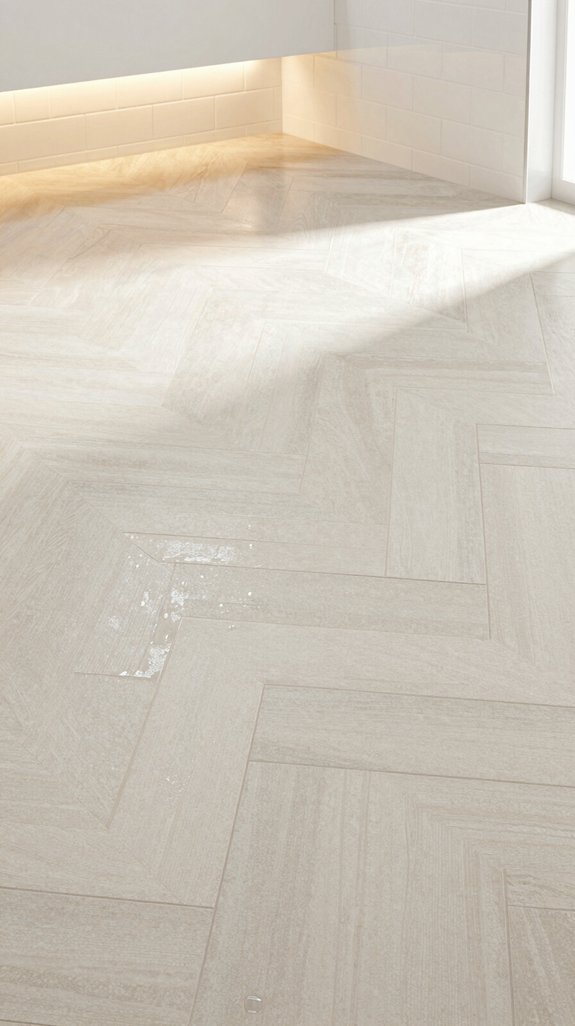
Radiant heated tile systems elevate bathroom functionality beyond aesthetic appeal by integrating thermal comfort directly into your flooring infrastructure.
You’ll experience up to 20 percent greater energy efficiency than forced-air alternatives, with programmable thermostats enabling targeted heating during peak usage times.
The thermal mass properties of tile maintain comfortable temperatures for eight to ten hours without additional input. Heated surfaces accelerate moisture evaporation, substantially reducing slip hazards and preventing mold proliferation.
Enhanced blood circulation benefits individuals with arthritis, while allergen minimization advantages those with respiratory sensitivities.
Electric systems offer cost-effective installation for bathroom remodels, delivering both performance and wellness advantages.
Non-Slip Bathroom Tile: Safety Without Sacrificing Style
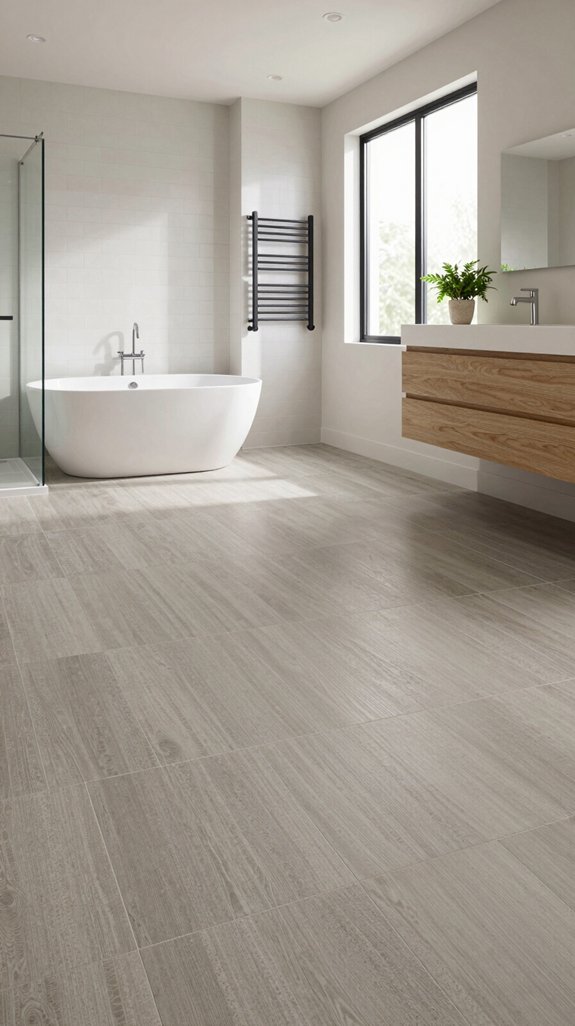
While safety remains paramount in bathroom design, you don’t have to compromise on aesthetics when selecting non-slip flooring.
Porcelain tiles with StepWise™ technology deliver DCOF ratings exceeding 0.60, providing 50% greater slip resistance than standard options. Matte and textured finishes enhance traction without sacrificing visual appeal—consider Sierra Beige Wood Plank for contemporary sophistication.
Mosaic tiles inherently reduce slip risk through grout lines and geometric edges. Natural stone like slate offers exceptional grip through honed finishes.
These innovations combine functionality with design versatility, allowing you to create bathrooms that prioritize safety while maintaining elegant, modern aesthetics.
Dark vs. Light Grout: Making Water Stains and Dirt Less Visible
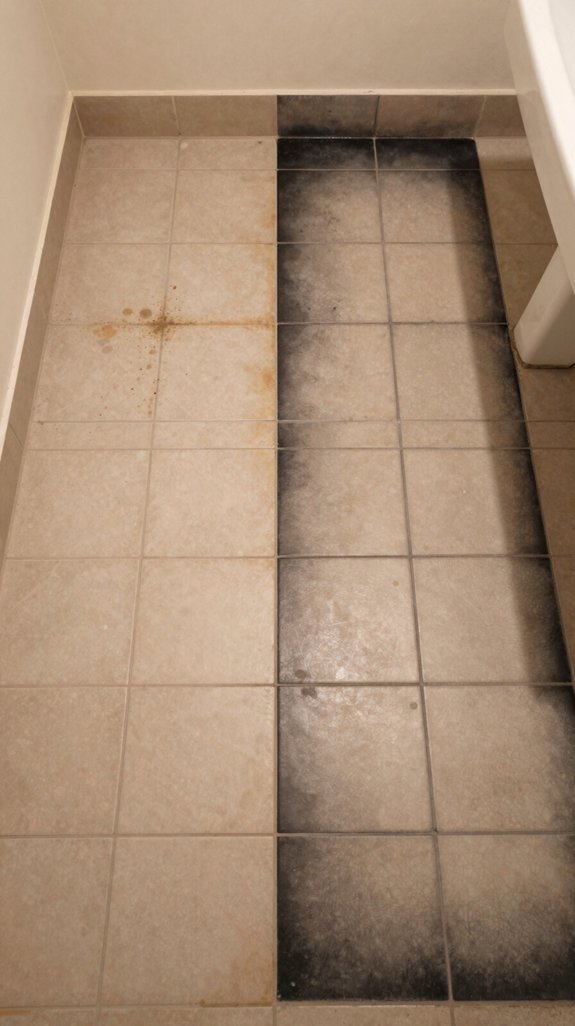
The grout you select fundamentally impacts both your bathroom’s visual longevity and maintenance demands.
Dark grout—charcoal, medium gray, or bronze—conceals dirt, stains, and wear effectively on high-traffic floors. You’ll notice reduced cleaning frequency and minimal discoloration over time.
Conversely, light grout requires diligent maintenance and sealer application to prevent moisture absorption and staining, particularly in shower environments. For bathroom floors prioritizing durability, darker shades mask imperfections while contrasting tiles aesthetically.
If you prefer an airy aesthetic, light gray with epoxy sealant protects against water damage while maintaining spaciousness. Like selecting output and safety features in home fixtures, choosing the right grout requires balancing practical performance with your lifestyle needs.
Strategic grout selection balances your maintenance tolerance with design aspirations.
Affordable Bathroom Tiles: Ceramic and Vinyl Under Porcelain
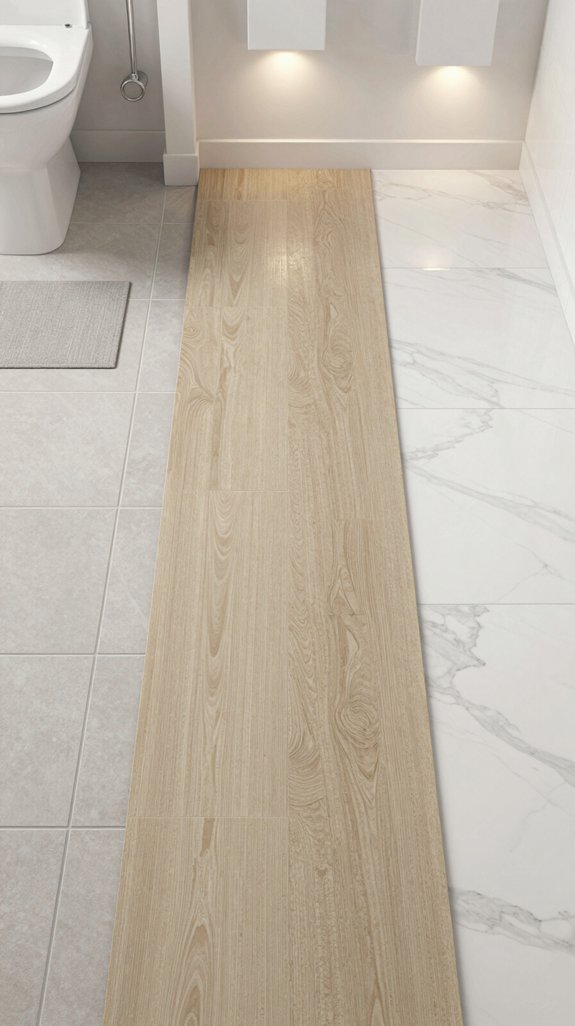
If you’re seeking budget-conscious flooring without sacrificing functionality, ceramic and vinyl tiles offer compelling alternatives to premium porcelain.
Ceramic tiles range $1.25–$30 per square foot, while vinyl costs $2–$7, delivering substantial savings on material expenses.
Vinyl installation proves 40% less expensive and 60% faster, enabling DIY approaches without professional labor.
Ceramic provides superior longevity—40 years versus vinyl’s 10-year lifespan—and excels in wet environments with enhanced water resistance.
However, vinyl resists scratching and requires minimal maintenance.
For bathrooms prioritizing immediate cost reduction and installation speed, vinyl dominates.
For long-term durability and moisture protection, ceramic justifies its moderate investment.
Premium Bathroom Tile: When Splurging on Stone and Porcelain Pays Off
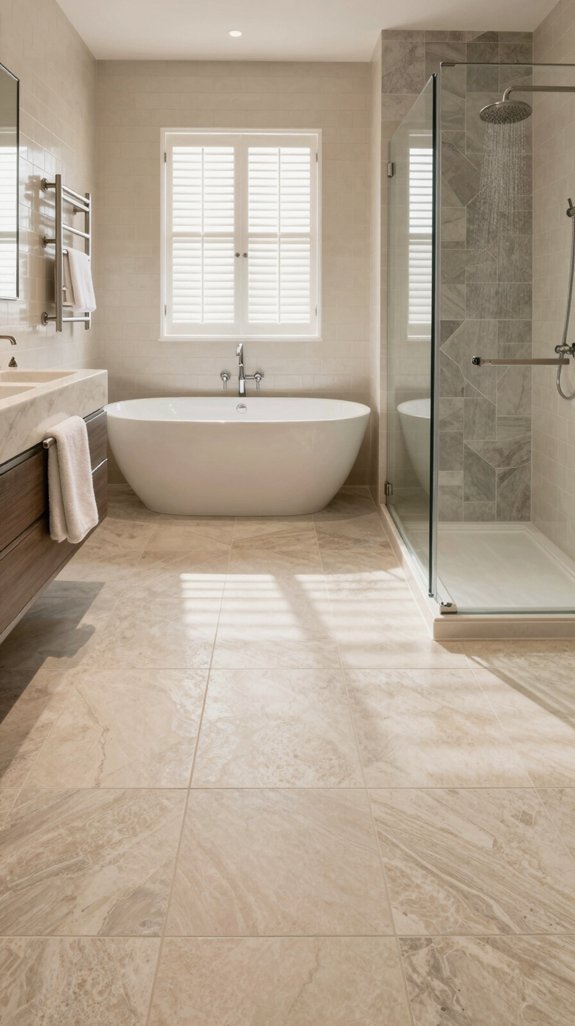
When you’re ready to invest in bathroom flooring that’ll outlast cheaper alternatives by decades, porcelain and natural stone tiles deliver exceptional long-term value.
Porcelain’s non-porous composition eliminates sealing requirements and prevents mold growth, while its superior density resists chipping and warping better than ceramic.
Advanced printing technologies enable porcelain to authentically replicate marble’s elegance without demanding annual maintenance.
Natural stone offers timeless sophistication, though it requires professional sealing.
Both materials justify premium pricing through extended lifespans, reduced replacement costs, and minimal upkeep.
You’ll achieve high-end aesthetics while avoiding the ongoing expenses associated with lower-tier alternatives.
Bathroom Tile Installation, Sealing, and Long-Term Care
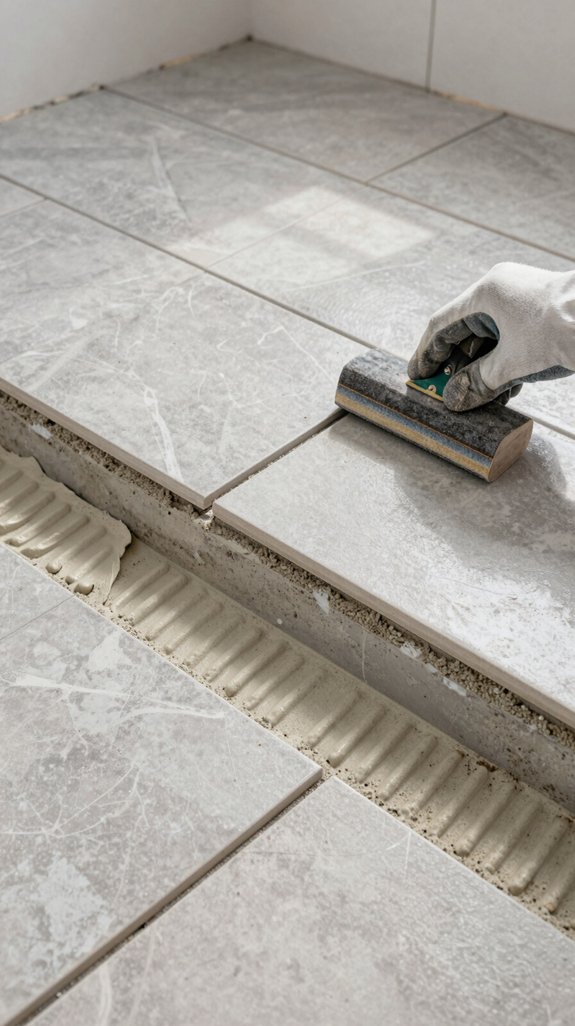
Once you’ve selected premium porcelain or natural stone, proper installation determines whether your investment performs as intended.
You’ll spread thin-set mortar at forty-five-degree angles, combing in single directions to eliminate air bubbles. Press tiles firmly with spacers maintaining consistent gaps, leveling every three to four pieces.
After installation cures, you’ll vacuum and mop thoroughly, then apply sealant in thin coats. Mist grout twice daily for three days during curing. Seal grout afterward to prevent mildew.
This meticulous approach protects your material investment while ensuring long-term durability and aesthetic integrity.
Frequently Asked Questions
How Often Should I Reseal Natural Stone Tiles in My Bathroom?
You should reseal your bathroom natural stone tiles every 6-12 months. Test with water droplets monthly—if they’re absorbed rather than beading, it’s time to reseal. High moisture environments demand consistent maintenance for ideal protection.
Can I Install Bathroom Tile Flooring Myself, or Hire a Professional?
You can install bathroom tile yourself if you’ve got tiling experience and tackle small, simple projects. However, you’ll want to hire professionals for complex layouts, large areas, or high-end materials requiring specialized expertise and waterproofing precision.
What Causes Grout Discoloration, and How Do I Prevent It?
Your grout’s a sponge absorbing stains from porosity, installation errors, and harsh cleaners. You’ll prevent discoloration by sealing periodically, choosing darker tones, using pH-neutral cleaners, and cleaning spills immediately.
Is Radiant Heating Compatible With All Bathroom Tile Types?
No, you’ll need to select tiles strategically for radiant heating compatibility. Porcelain and ceramic tiles work best, while you must verify R-values stay at or below 1.0 and use modified thin-set mortar in moisture-prone areas.
How Do I Repair Cracked or Chipped Tiles Without Replacing Entire Sections?
You’ll apply epoxy putty into damaged areas, sand flush, then feather matching paint over the repair. For hairline cracks, inject clear epoxy before painting. This approach preserves your tile’s integrity while delivering seamless results.
References
- https://floorboys.com/moisture-resistance-in-lvt/waterproof-lvt-vs-laminate-flooring-10/
- https://www.edwardmartin.com/blogs/information/what-bathroom-tile-is-most-durable
- https://www.modobath.com/inspiration/the-ultimate-guide-to-bathroom-flooring-durability-aesthetics-and-comfort/
- https://makeitright.ca/holmes-advice/bathroom-renovation/best-material-for-bathroom-flooring/
- https://www.orientbell.com/blog/comparison-of-different-floor-tile-materials-and-their-durability/
- https://www.consumerreports.org/home-garden/flooring/best-flooring-for-high-traffic-area-a2992906171/
- https://www.americanflooringhgtv.com/what-flooring-materials-are-best-for-bathrooms
- https://www.ranneyblair.com/blog/best-flooring-for-bathroom/
- https://www.arizonatile.com/how-durable-is-a-porcelain-floor-tile/
- https://www.totalbathsystems.com/posts/the-pros-and-cons-of-4-types-of-bathroom-tiles