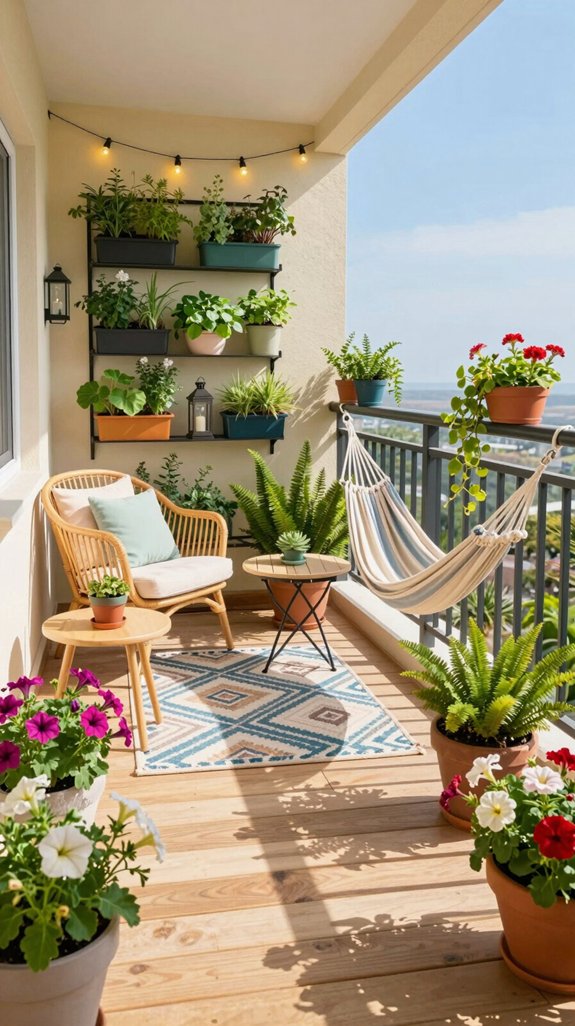
You’ll transform your balcony into a lush urban oasis by stacking vertical gardens and tiered planters that maximize every square inch. Match sun-loving succulents to bright spots and shade-tolerant pothos to dim corners. Upcycle vintage containers for budget-friendly style, then install drip irrigation systems to keep plants thriving with minimal effort. Layer solar lighting and compact water features for evening ambiance. Finally, sequence native blooms to attract pollinators year-round, creating an enchanting retreat that rivals professionally designed spaces—discover how to orchestrate each element into your perfect balcony sanctuary.
Maximize Balcony Space With Vertical Gardening
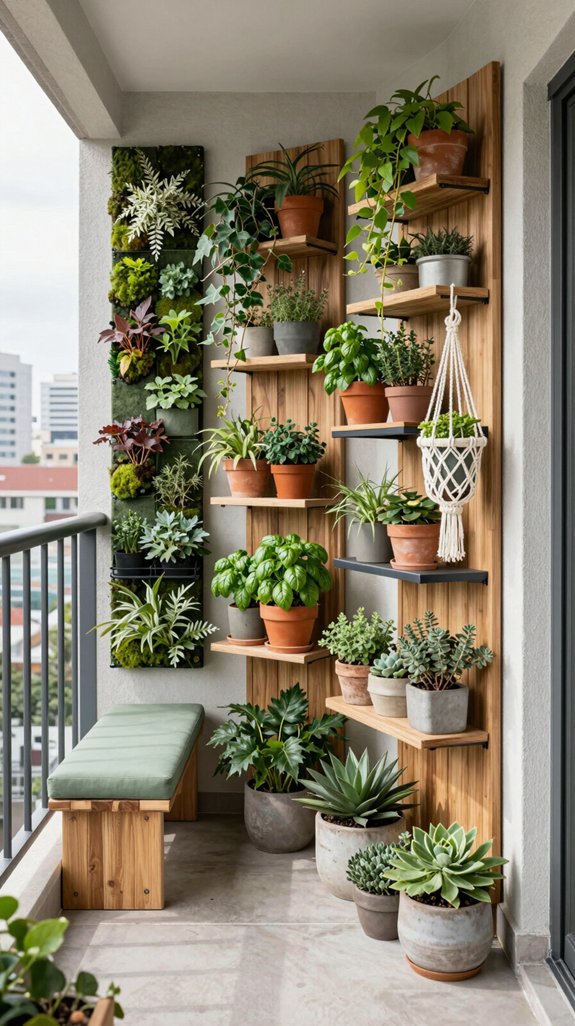
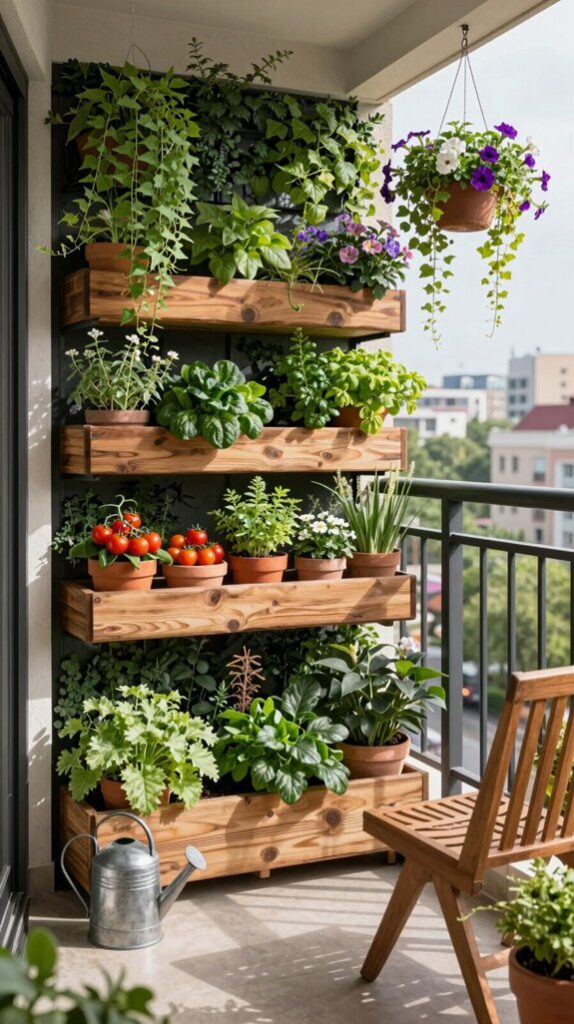
When you’re working with limited square footage, vertical gardening transforms your balcony into a productive growing zone without crowding the floor.
Install wall-mounted pots, tiered planters, and pocket systems that optimize upright surfaces.
Consider living walls with modular designs for succulents and ferns.
Repurposed bottle planters on frames add innovative appeal while maximizing every inch of your urban space. Drip irrigation systems ensure your vertical garden maintains consistent moisture without daily manual watering. You can also incorporate popular board games into your balcony space for entertainment while enjoying your garden area.

Space-Saving : This strawberry planter maximizes your gardening space by stacking 5 layers to grow more plants in a compact area. The strawberry tower planter is ideal for patios, balconies, or indoor use

Sturdy and Durable-The vertical garden planter is made with a sturdy all-metal frame to ensure durability and longevity. The stable triangular design provides reliable support for your herbs, flowers, vegetables and more

Balcony Rail Planter: Rectangular outdoor planters was designed to maximize inside growing space allowing dirt and roots to grow strong and deep.This special design can be hung on the balcony, window, garden,railing, anywhere in the room,also can be used as desktop.
Assess Your Balcony’s Light Before Choosing Plants
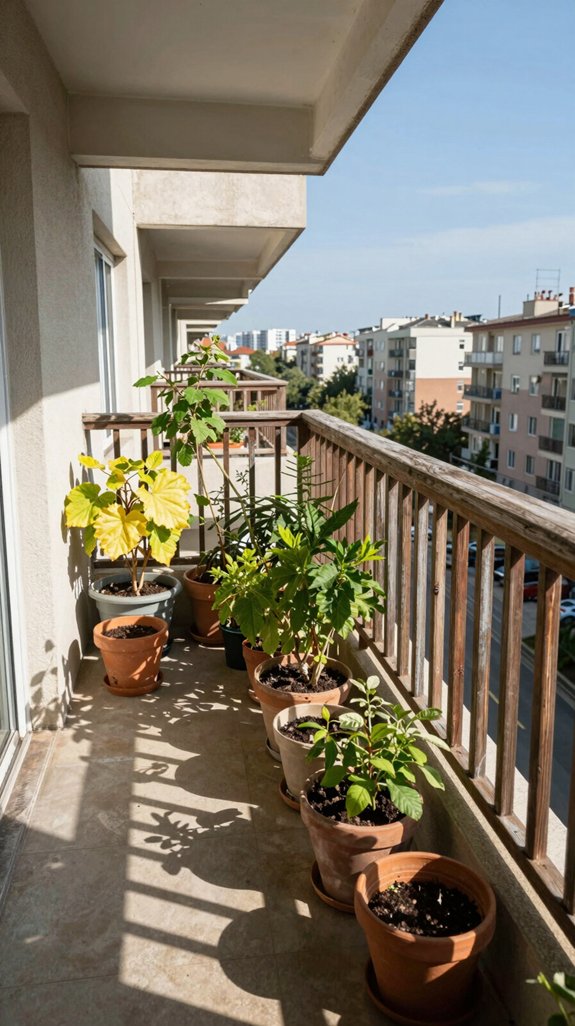
You’ll need to map your balcony’s sun exposure by direction—south-facing spots deliver intense warmth ideal for heat-lovers, while north-facing areas suit shade-tolerant varieties.
Match plants to light compatibility by measuring foot-candles at canopy height or using the paper shadow test at midday to gauge whether you’re working with bright, filtered, or low-light conditions.
Track seasonal shadow patterns across your space, as winter angles differ dramatically from summer, especially on east-facing balconies where morning sun shifts considerably throughout the year.
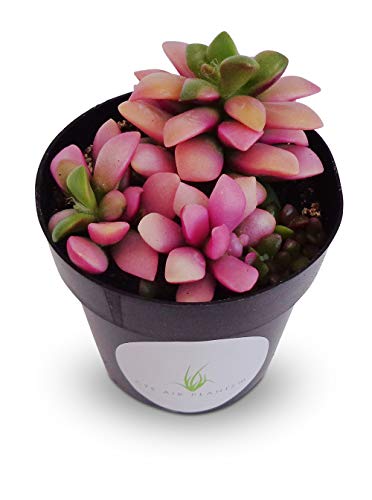
Anacampseros Sunrise Succulents Small Cluster in 2.5" Pots. Change color in sunlight! More sun more pink, less sun more green. Anacampseros have pink, green, and yellow...
Sun Exposure Mapping
Before you select a single plant, map your balcony’s light patterns—it’s the foundation of a thriving garden.
Use digital tools like SunCalc or Shadowmap to visualize seasonal sun paths, or employ manual methods: photograph hourly shadows on sunny days, dividing your space into quadrants.
Track exposure shifts across months. This precision positioning optimizes plant placement, transforming constraints into strategic design opportunities for your urban sanctuary.
Plant-Light Compatibility Guide
Now that you’ve mapped your balcony’s light patterns, matching plants to those specific conditions transforms your space from trial-and-error gardening into purposeful design.
Bright zones thrive with succulents and dracaenas, while medium-light areas perfect philodendrons.
Shadier corners welcome pothos and ZZ plants.
This strategic pairing maximizes visual impact while minimizing maintenance, creating a curated urban oasis reflecting innovative horticultural thinking.
Seasonal Shadow Patterns
Because shadows shift dramatically across seasons, your balcony’s light profile isn’t static—it’s a dynamic landscape that transforms your planting possibilities throughout the year.
Winter’s extended shadows—stretching 2-3 times longer due to low sun angles—create deeper shade zones.
Summer’s elevated sun shortens shadows dramatically, revealing previously shaded microclimates.
Track these quarterly shifts using smartphone solar-path apps and light meters, reassessing viable planting zones every three months to maximize your garden’s adaptive potential.
Match Plants to Your Light Conditions
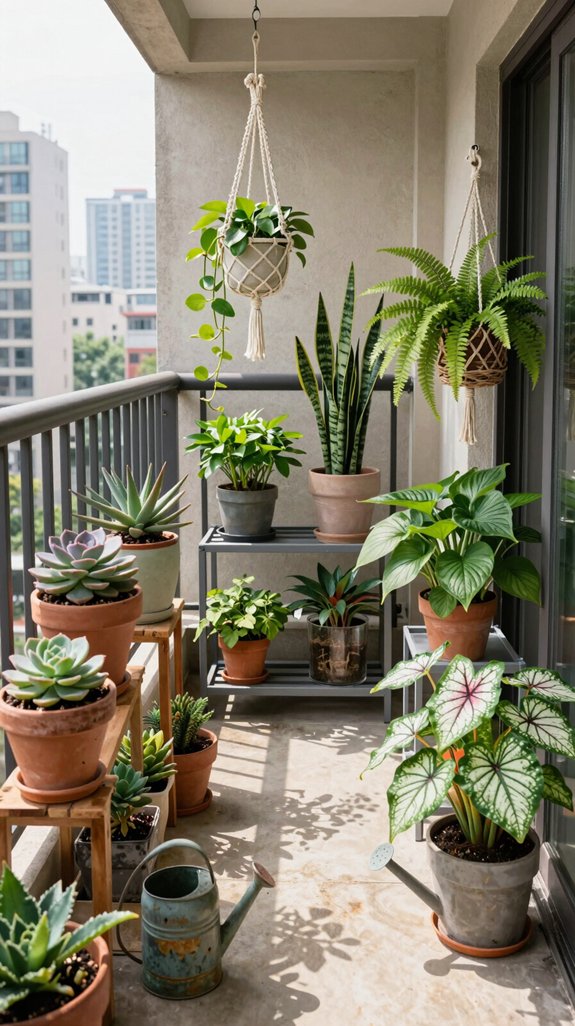
Your balcony’s light exposure is the single most critical factor in determining which plants’ll thrive—and which’ll languish.
Full sun demands cacti and hibiscus; part-shade suits herbs like thyme; shade-tolerant varieties include Calathea and ZZ plants.
Track seasonal shifts with a compass, monitor directional exposure, and position sun-lovers higher on tiered arrangements.
This strategic placement maximizes your compact urban space’s potential.

[Automated Plant Sitter] No more worrying about plants withering after you go home for a long holiday! This solar powered self watering system automates daily care to keep your plants hydrated while you are away.

Efficient Automatic Watering Kit: This irrigation system delivers water directly to the roots, reducing waste and keeping soil evenly moist; Precise flow control helps plants grow stronger and healthier, so your plants thrive with less effort

🔹 [Smart Timer Included – Hands-Free Watering, Fully Programmable | 2026 Upgraded]No more daily hose duty. The built-in automatic timer lets you customize watering schedules by time, frequency, and duration. Features Rain Delay Mode (1–15 days) to pause watering during rainy days and resume automatically, plus a Child Lock for added peace of mind. Note: Batteries are not included. Please follow the instructions to set watering schedules
Upcycle Containers to Build Your Garden on a Budget
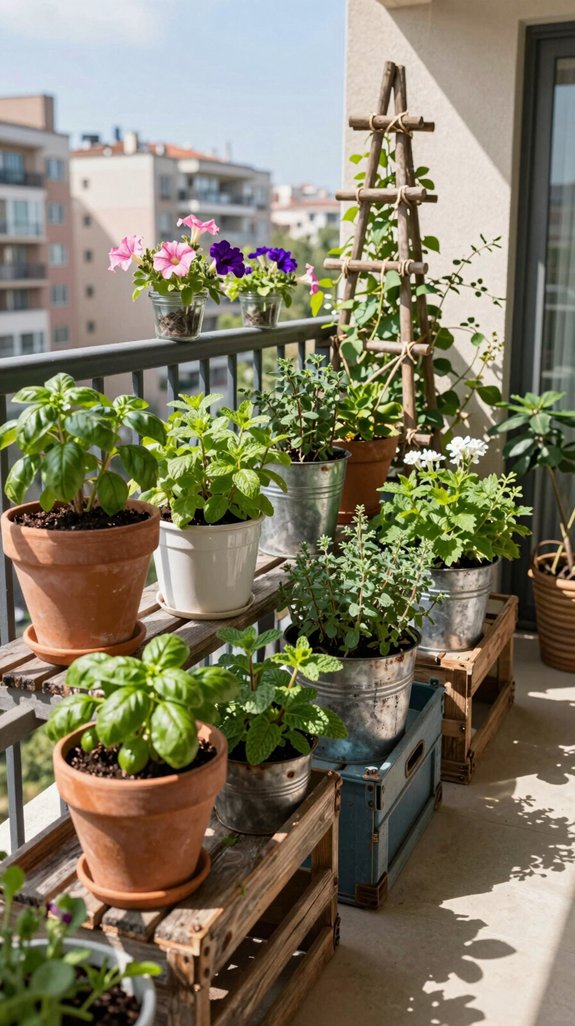
Once you’ve positioned your plants for ideal light, it’s time to house them beautifully without breaking the bank.
Transform vintage metal pieces—galvanized buckets, old toolboxes, and bent fencing—into striking planters. Upcycle household items like enamelware and glass jars.
Line containers with cocoa coir, drill drainage holes strategically, and group similar styles for cohesive visual impact on your compact balcony.

Enhancing Atmosphere and Extending Enjoyment–Transform the ambiance of your outdoor space and extend its enjoyment well after sunset with our outdoor lights. These stair lights seamlessly enhance the atmosphere, allowing you to tailor the mood to any occasion—whether cozy, romantic, modern, or festive. By illuminating your patio, garden, backyard into the evening hours, and create an inviting setting for dinners, gatherings, and cherished moments with family and friends.

Enhancing Atmosphere and Extending Enjoyment–Transform the ambiance of your outdoor space and extend its enjoyment well after sunset with our outdoor lights. These stair lights seamlessly enhance the atmosphere, allowing you to tailor the mood to any occasion—whether cozy, romantic, modern, or festive. By illuminating your patio, garden, backyard into the evening hours, and create an inviting setting for dinners, gatherings, and cherished moments with family and friends.

DESIGN MEETS FUNCTION – Minimalist, modern design meets everyday functionality. Use it as a stylish LED table lamp, or remove the solar module to place a candle inside for an atmospheric candle lantern look.
Install Self-Watering Systems to Reduce Maintenance
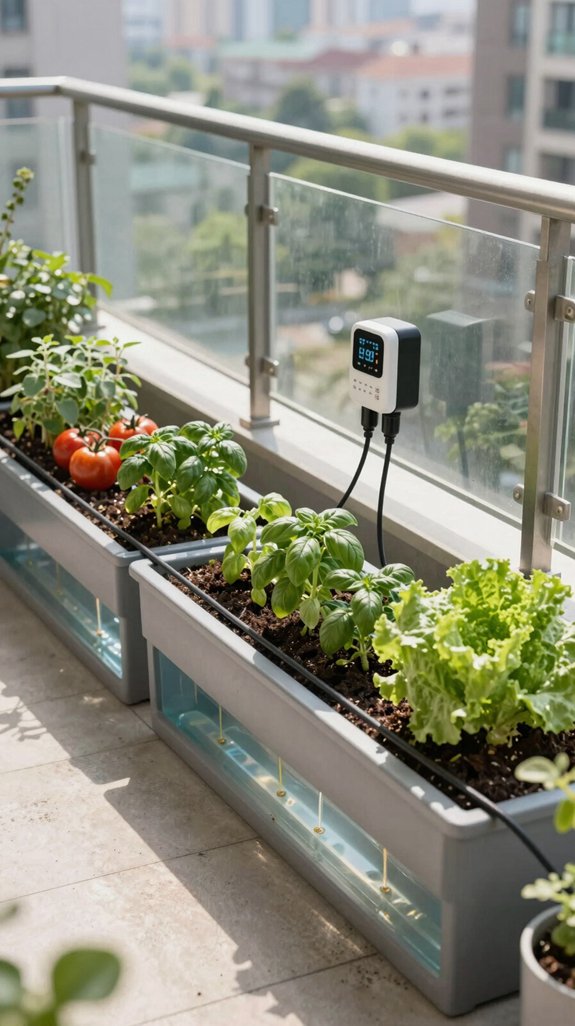
You’ll transform your balcony’s watering routine with self-watering systems that deliver precise hydration through drip irrigation, eliminating daily maintenance without sacrificing plant health.
These automated technologies adapt to your space’s unique conditions—wind, temperature swings, seasonal shifts—while cutting water consumption by up to 50% compared to traditional methods.


SAVE FLOOR SPACE - Stackable vertical planter tower

【 Vertical Planter Raised Beds with Trellis】Perfect for home gardening lovers, this vertical herb garden planter indoor kit with 4 rectangular planter boxes outdoor let you plant vegetables, herbs, and flowers in separate flower pots while the 11-inch trellis supports climbing plants like tomatoes, strawberries, vines, and peppers. The raised flower beds outdoor create an optimal environment for your plants to thrive.
Drip Irrigation System Benefits
Because balcony space is precious and time is limited, installing a drip irrigation system transforms how you maintain your container garden.
You’ll reduce water consumption by 30-50% while delivering moisture precisely to root zones. Transparent tubing integrates seamlessly into vertical setups, eliminating visual clutter.
Automated watering prevents stress cycles, ensuring consistent plant health across 1-20 specimens simultaneously—freeing your time for creative gardening pursuits.
Automated Watering Technology Options
While drip irrigation systems handle the mechanics of water delivery, smart technology elevates balcony gardening by removing guesswork entirely.
You’ll command your garden via smartphone apps—adjusting cycles in real-time, scheduling waterings automatically, and monitoring soil moisture remotely.
Models like the LetPot kit support twenty plants simultaneously with customizable drip rates, while WiFi-enabled systems expand effortlessly with sensors, ensuring your urban oasis thrives.
Water Conservation and Efficiency
Self-watering systems transform balcony gardening by delivering water precisely where plants need it most—directly to roots through capillary action and bottom reservoirs.
You’ll cut water consumption by up to 80% while maintaining consistent soil moisture.
Clear gauges eliminate guesswork, shifting your watering routine from daily to weekly intervals.
This innovation suits urban living perfectly, protecting plants from stress while minimizing maintenance demands.
Select Waterproof Materials That Protect Your Balcony
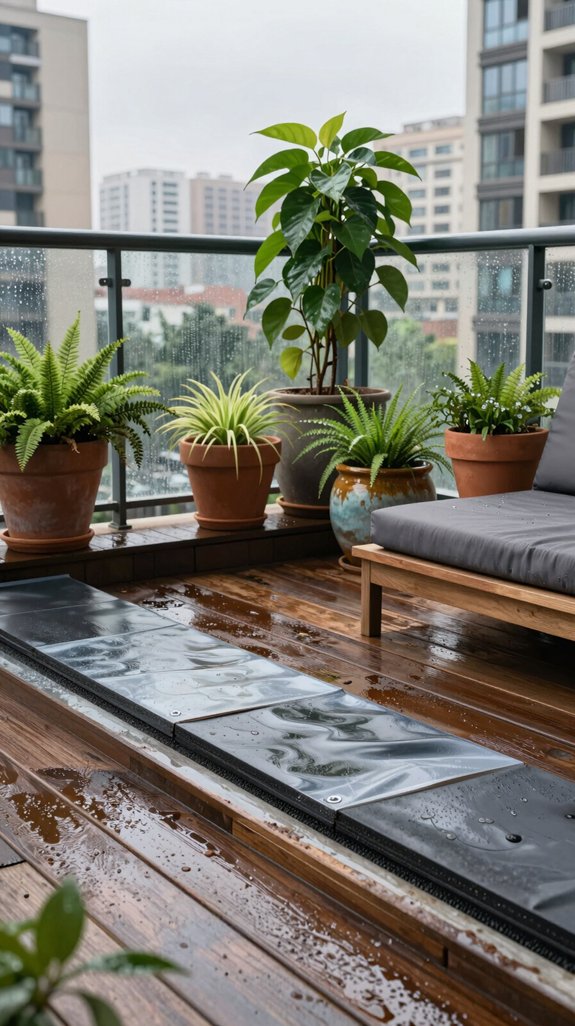
Your balcony’s longevity depends on choosing the right waterproofing material—one that shields against moisture while complementing your garden design.
Consider liquid membranes for irregular layouts or sheet membranes for expansive spaces. PVC vinyl delivers UV protection and non-slip surfaces ideal for planted areas.
Waterproofing tapes seal joints effectively.
Each option balances durability, aesthetics, and maintenance, ensuring your garden thrives sustainably. Pairing waterproofing solutions with furniture anchoring systems will further protect your outdoor space from damage and ensure stability in all weather conditions.
Grow Edible Plants for Fresh Herbs and Vegetables
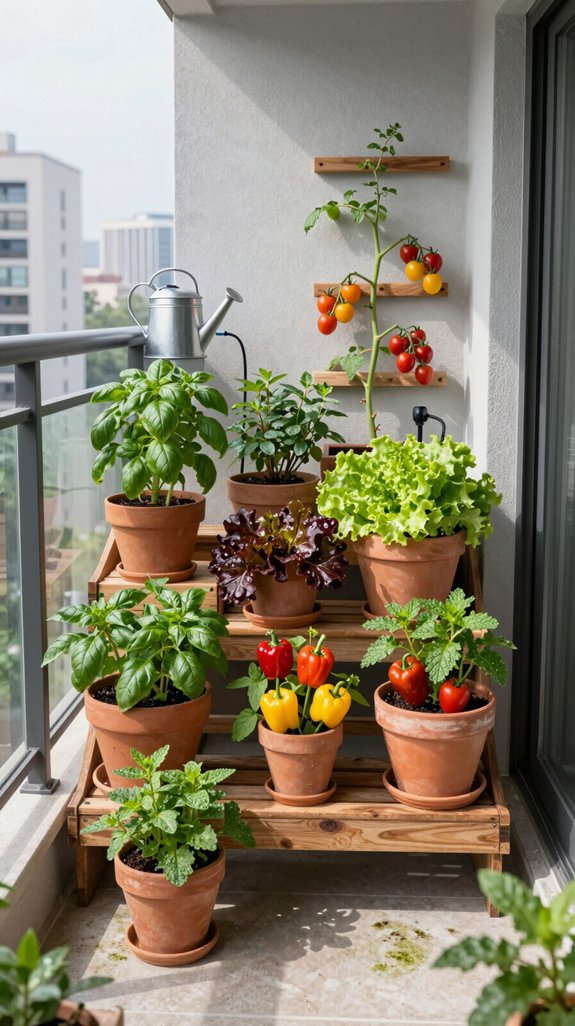
You’ll maximize your balcony’s potential by selecting compact vegetables like cherry tomatoes, peppers, and Spacemaster cucumbers that thrive in appropriately sized containers. Broccoli demands 5-15 gallons while kale fits snugly in 16-18 inch pots.
Intersperse herbs like mint, rosemary, and chives among your vegetables to attract pollinators while optimizing every inch, but contain spreading varieties in individual pots to prevent overtaking your layout.
Strategic placement of sun-loving fruiting crops on south sides and shade-tolerant greens on north-facing areas, combined with vertical planters and hanging baskets, transforms limited space into a productive growing system. For stubborn mineral deposits or algae buildup on your containers, use scrub sponges for tough cleaning to maintain your planters and keep them looking fresh.

Complete Drip Irrigation Kit for expansive Gardens: This comprehensive drip irrigation kit includes everything you need: 15 meters of tubing, 15 tees, 15 adjustable emitters, and a filter. Easily create a custom garden watering system for raised beds, greenhouses, or outdoor potted plants. It also functions as an effective indoor plant watering system near a sunny window.

[EFFORTLESS CARE WITH 490 TIMER MODES] Tailor your garden's exact needs with Beday. Our automatic solar drip irrigation system unlocks a massive 490 unique watering combinations (14 frequencies from 1h to 7 days × 35 durations from 10sec to 30min). Whether you need a quick 10-second splash every hour or a deep 30-minute soak weekly, it ensures optimal growth while you're away on vacation or busy.

Solar-Powered Plant Watering - Solar Panel and Timer Controller Integrated Irrigation System Kit is designed for indoor, garden, balcony, patio and other scenarios where there is no fixed water or power source to irrigate, made of IP65 waterproof and sunproof material for indoor and outdoor garden drip irrigation system. The solar panel is adjustable in angle to get enough sunlight and convert it into electricity for the automatic drip irrigation system
Compact Vegetable Container Selection
Because balcony space demands strategic planning, selecting the right containers and compact varieties transforms your small outdoor area into a productive edible garden.
Choose 5-gallon pots for tomatoes and cucumbers, or 12-inch containers for lettuce with peppers. Lightweight plastic containers optimize mobility. Pair shallow window boxes with radishes and herbs.
Guarantee drainage holes and quality potting mix. Vertical shelving maximizes yields efficiently.
Herb Garden Maintenance Tips
Once containers are established with thriving seedlings, consistent maintenance routines—watering, feeding, pest management, and seasonal adjustments—determine whether herbs flourish or languish on sun-exposed balconies.
You’ll water twice daily in summer, feed weekly with liquid seaweed, and rotate planters biweekly for even growth.
Pinch basil stems to maximize leaf production while minimizing pest attraction through fragrant oils’ natural resistance.
Design Separate Zones for Seating and Plants
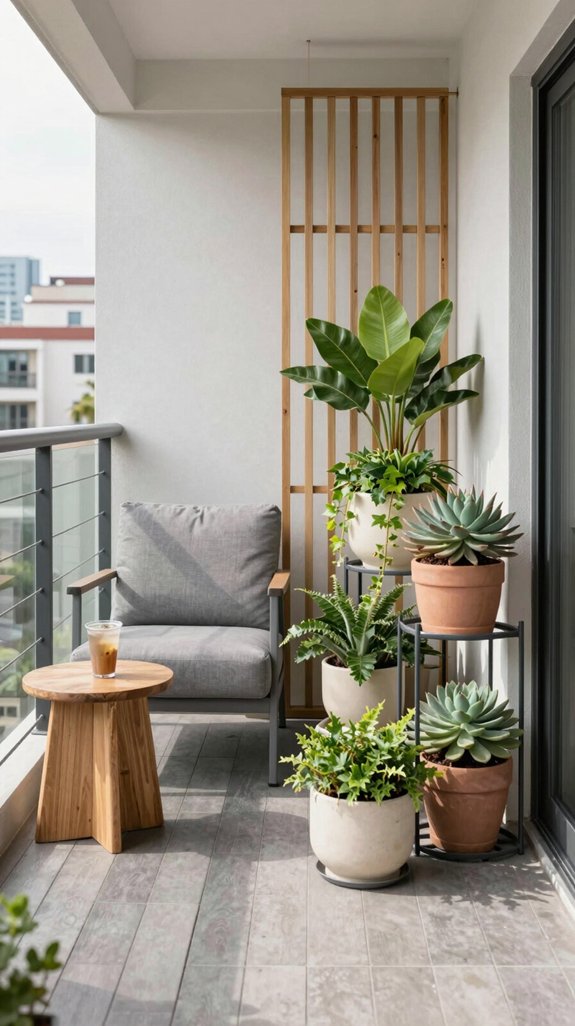
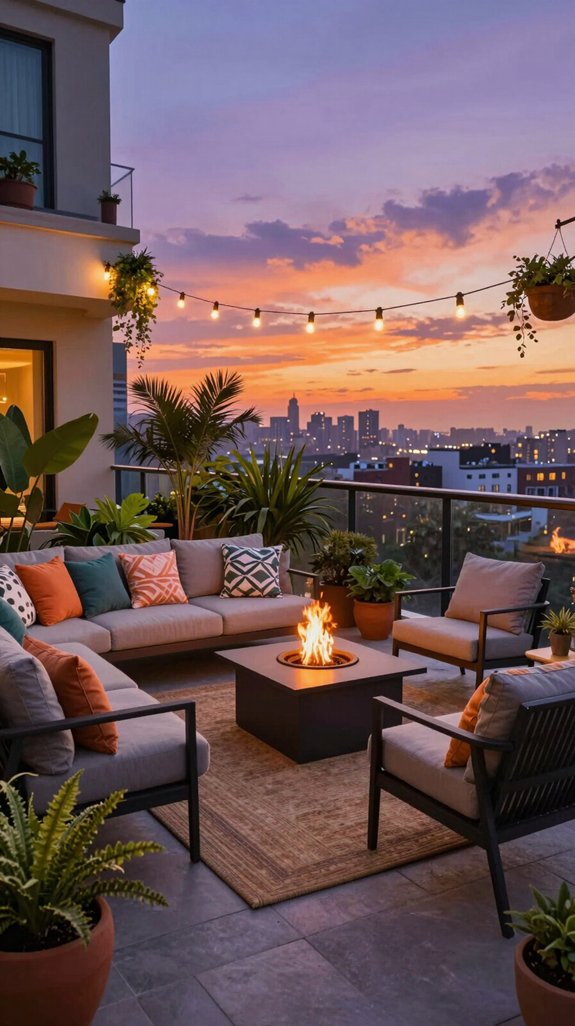
The key to a functional balcony garden lies in thoughtfully dividing your space into distinct areas where plants and seating don’t compete for real estate.
Strategically position gravel or paved patches for seating, then frame these zones with columnar evergreens and cascading flowers.
Use vertical structures—slatted walls, tiered planters, and climbing vines—to maximize greenery without sacrificing comfort or innovative spatial flow.

DESIGN MEETS FUNCTION – Minimalist, modern design meets everyday functionality. Use it as a stylish LED table lamp, or remove the solar module to place a candle inside for an atmospheric candle lantern look.

Vivid Dancing Flame Solar Lantern Outdoor Lights: Enjoy the enchanting flickering effect as it shows a real candle’s glow with upgraded LED brightness. Solar lanterns decorative outdoor are classic design. Mimic the appearance of real candle shapes and designed as a dancing flame, which makes outdoor solar lanterns look so elegant and fervent, creates a romantic and welcoming ambiance. Solar lantern outdoor lights for yard is perfect decoration for your garden, patio, Halloween and Christmas

DESIGN MEETS FUNCTION – Minimalist, modern design meets everyday functionality. Use it as a stylish LED table lamp, or remove the solar module to place a candle inside for an atmospheric candle lantern look.
Attract Pollinators With Bright, Native Plants
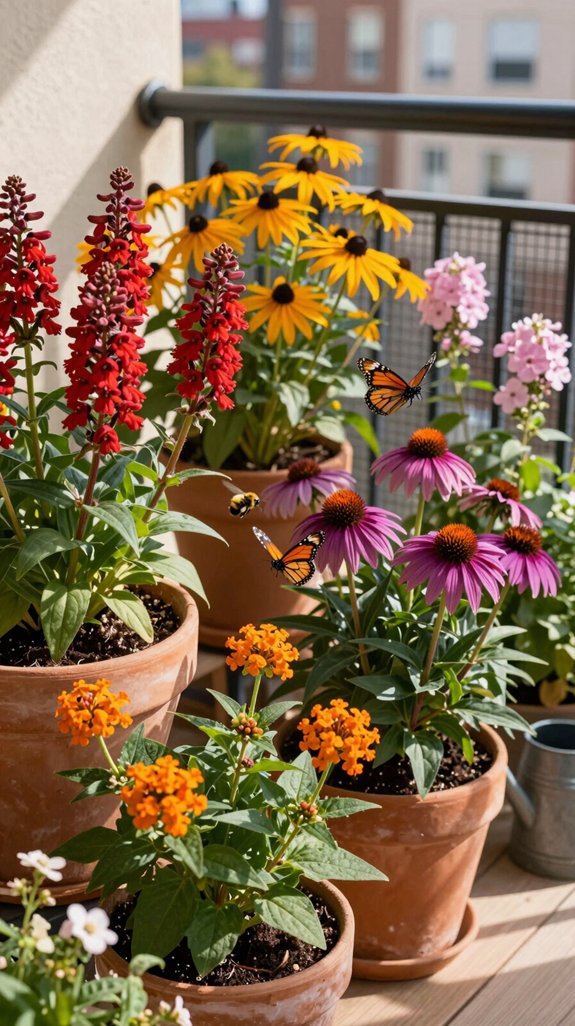
Nothing transforms a balcony garden quite like welcoming pollinators—and you’ll achieve this most effectively by prioritizing native plants that’ve co-evolved with local butterflies, bees, and hummingbirds.
Black-Eyed Susan thrives in containers while Butterfly Weed attracts Monarchs. Layer in Great Blue Lobelia for hummingbirds and Spotted Beebalm for diverse pollinators.
Sequence blooms strategically—spring Nodding Onions through fall Aromatic Asters—ensuring year-round nectar availability in your compact urban space.

Durable and Sturdy: This vertical garden planter is made from high-quality metal with a powder-coated finish for waterproofing and rust protection. It includes adjustable foot pads to ensure a level setup on uneven surfaces while protecting your floors from scratches

Sturdy and Stable: The frame of the vertical garden planter is made of high-quality metal material to create a more stable growing environment for your plants. The drainage hole at the bottom can drain excess water to ensure the soil can breathe.

【 Vertical Raised Garden Bed with Trellis】Perfect for home gardening lovers, this herb planter outdoor with 4 garden boxes let you plant vegetables, herbs, and flowers in separate plant bed while the 11-inch trellis supports climbing plants like tomatoes, strawberries, vines, and peppers. The balcony raised garden beds outdoor with legs creates an optimal environment for your plants to thrive.
Use Tall Plants and Trellises for Privacy
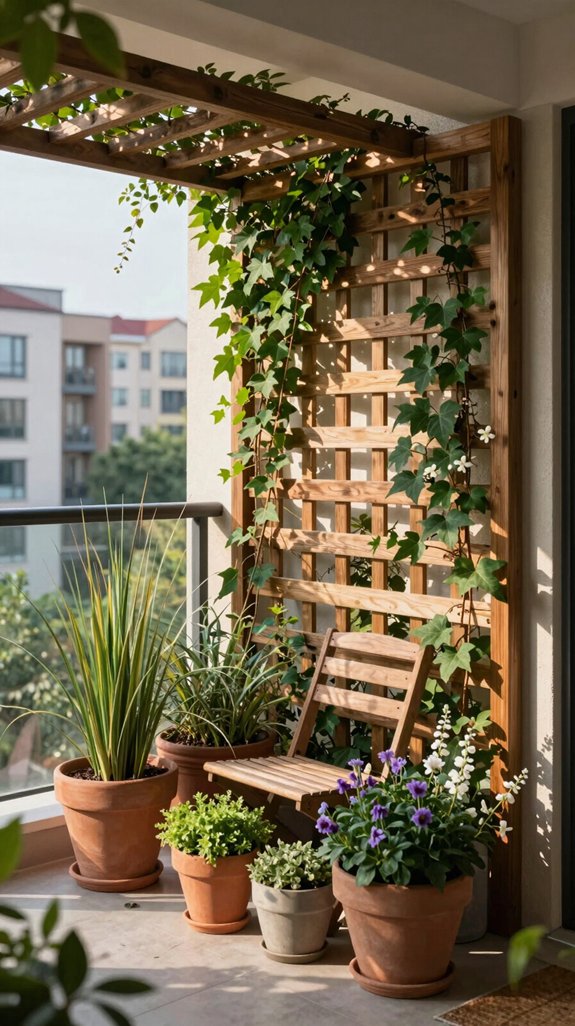
While pollinators bring life to your balcony, strategic layering with tall plants and trellises transforms that same space into a private sanctuary.
Elevate container grasses to eye-level, positioning Switchgrass or Miscanthus alongside climbing Star jasmine on trellises. This vertical arrangement maximizes limited square footage while creating sophisticated visual barriers that enhance rather than obstruct your urban garden’s aesthetic appeal.
Add Solar Lighting and Water Features for Ambiance
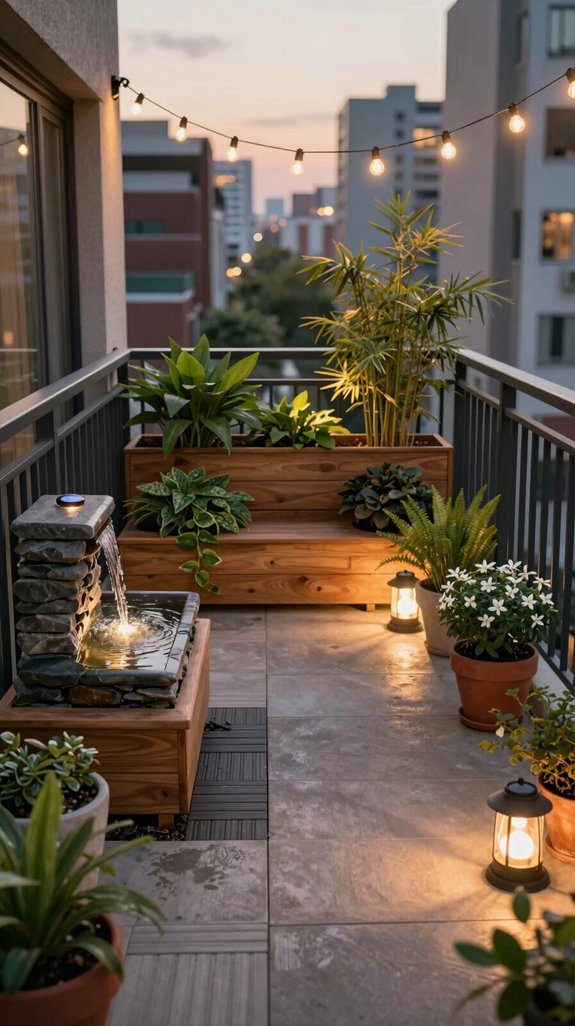
As dusk settles over your balcony garden, solar lighting transforms it into an enchanting retreat that rivals any professionally designed space.
String lights and pathway fixtures charge via sunlight, requiring zero wiring. Pair these with compact water features to highlight botanical elements.
LED bulbs deliver efficiency while creating layered ambiance. Auto on/off switches conserve battery life, ensuring your urban oasis glows nightly without operational complexity.
Adapt Mediterranean Style for Small Balconies
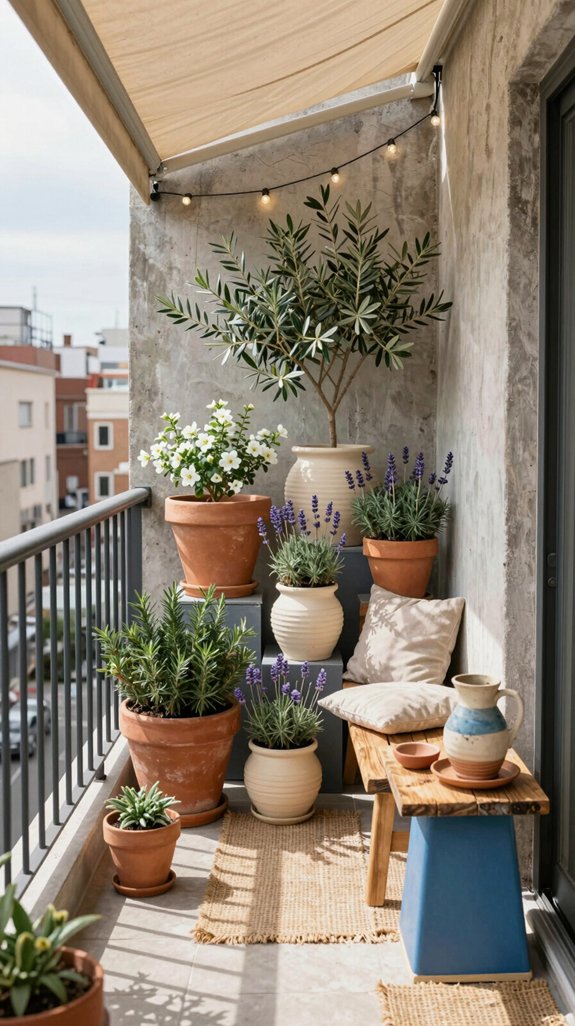
Once you’ve established ambient lighting and water features that anchor your balcony’s evening atmosphere, you’re ready to layer in Mediterranean aesthetics that’ll maximize every square inch.
Cluster terracotta pots near seating areas, train climbing vines over trellises for vertical interest, and select drought-tolerant plants like lavender and rosemary.
Curved flagstone pathways and earth-tone palettes create visual depth while maintaining authentic Mediterranean character without overwhelming confined spaces. Incorporate textured wall art strategically on your balcony’s vertical surfaces to add dimension and visual interest that complements your natural plantings.
Maintain Your Garden Year-Round
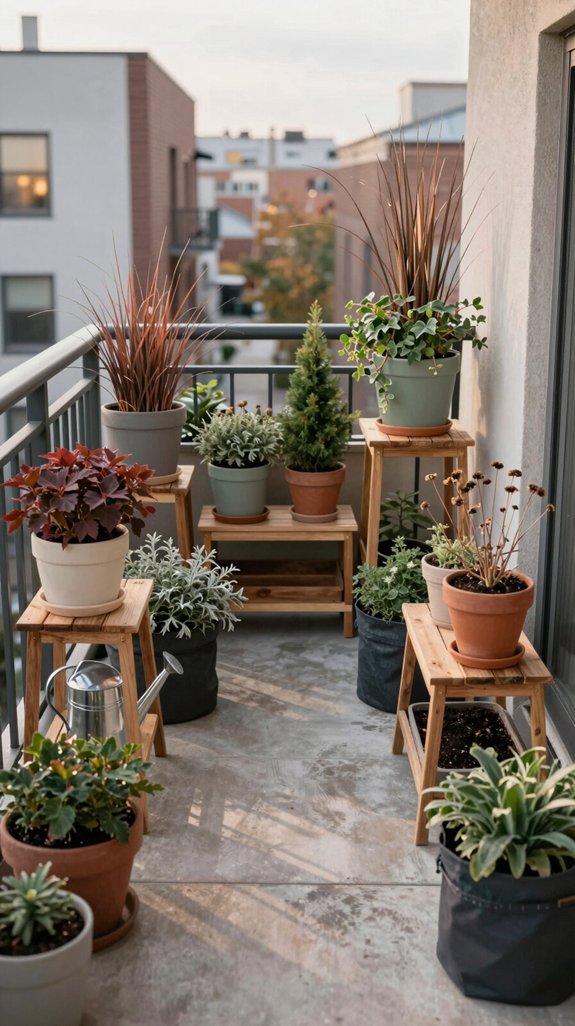
Your Mediterranean balcony garden thrives when you establish consistent care routines that adapt to seasonal shifts.
Choose resilient evergreens and succulents requiring minimal intervention.
Install drip irrigation with timers for effortless moisture management. Secure pots against wind year-round.
Apply balanced fertilizer every few weeks, reapplying after rainfall. Monitor foliage for stress indicators, adjusting watering and positioning accordingly.
This innovation-driven approach transforms your urban space into a perpetually flourishing sanctuary.
Frequently Asked Questions
How Do I Prevent My Balcony Garden From Attracting Pests and Insects?
You’ll safeguard your urban oasis by inspecting new plants, using sterile soil, ensuring drainage, allowing soil to dry between waterings, planting mint and basil strategically, and conducting regular cleanliness sweeps that eliminate pest habitats entirely.
What’s the Best Way to Winterize My Balcony Garden for Cold Climates?
You’ll winterize strategically by wrapping fiberglass containers with insulating burlap, mulching heavily to 3-4 inches, grouping pots against south-facing walls, and relocating tender plants indoors before hard freezes hit.
Can I Grow a Balcony Garden if My Building Restricts Weight Limits?
Yes—you can absolutely cultivate your balcony garden within weight restrictions. Lightweight soil mixes containing 50-60% airy components like perlite slash container weight dramatically. You’ll strategically position fabric grow bags and plastic planters near load-bearing walls, optimizing your compact growing space innovatively.
How Often Should I Fertilize Container Plants in a Small Balcony Garden?
You’ll fertilize every two weeks with half-strength solutions or weekly at full strength. Annuals and edibles demand consistent feeding, while shrubs need just one or two seasonal applications. Leach containers occasionally with plain water.
What’s the Minimum Balcony Size Needed to Create a Functional Garden Space?
You’ll need just 50–100 square feet to cultivate a thriving balcony garden. Start by measuring your space, then strategically layer vertical planters and tiered shelving. This maximizes your growing footprint while maintaining functional movement zones beautifully.